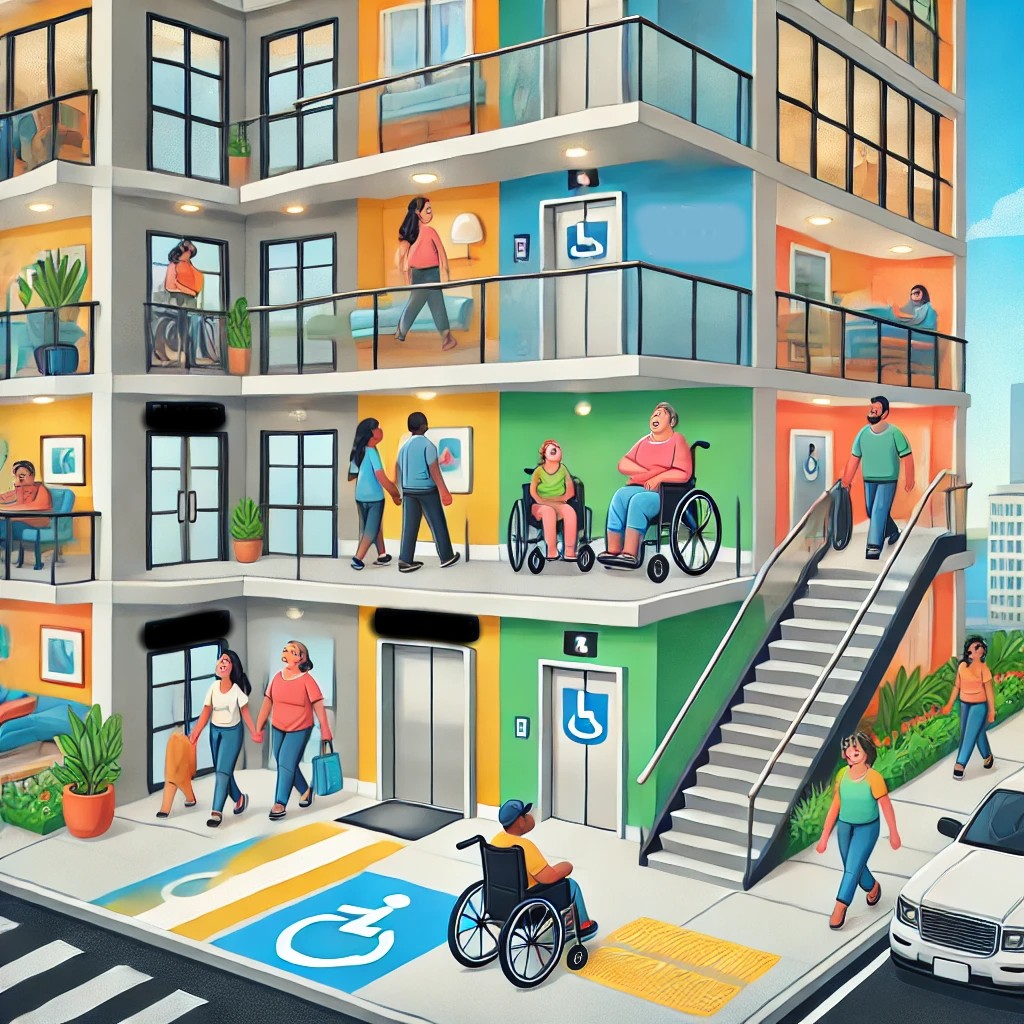
Passed in 1990, the Americans with Disabilities Act (ADA) is landmark legislation aimed at preventing discrimination against individuals with disabilities. Among the five titles of the ADA, Title III focuses on “Public Accommodations,” mandating that private entities that own, lease, lease to, or operate facilities open to the public must ensure those facilities are accessible to individuals with disabilities. One specific area of interest within the realm of Title III is its impact on mixed-use buildings, which might contain a combination of residential spaces, commercial spaces, and other public accommodations.
Mixed-use buildings, as their name implies, are designed to serve multiple purposes within the same structure. This could mean having shops and restaurants on the ground floor, offices in the middle stories, and residential apartments on the upper floors. While these buildings offer a convenient way to combine different functionalities, they also pose unique challenges when it comes to adhering to ADA Title III requirements. Owners and operators of such buildings must be aware of and compliant with the ADA to avoid potential legal liabilities.
This article delves into the intricacies of ADA Title III as it relates to mixed-use buildings. We’ll cover how these regulations impact architectural design, the obligations of building owners, and the overall benefits of making spaces more accessible for people with disabilities. Understanding these aspects can help owners of mixed-use buildings navigate the complexities of ADA compliance more effectively.
The Scope of ADA Title III
ADA Title III mandates that public accommodations—defined as facilities whose operations affect commerce and fall within twelve specified categories—must be accessible to individuals with disabilities. These categories include, but are not limited to, places of lodging, establishments serving food or drink, places of public gathering, and service establishments. Essentially, any privately owned, leased, or leased out facility that is open to the public must comply with ADA regulations.
In the context of mixed-use buildings, this means that all commercial spaces must be designed to facilitate access for persons with disabilities. This could include making adjustments to door widths, installing ramps or elevators, providing accessible restrooms, and ensuring that the layout allows for an unobstructed path of travel. The goal is to enable people with disabilities to enjoy equal access and opportunities in all areas that serve the public.
Residential areas within mixed-use buildings, however, are not generally subject to ADA Title III as they are considered private dwellings. Nonetheless, these areas may still be subject to other federal, state, or local accessibility requirements, such as the Fair Housing Act (FHA), which mandates that multi-family housing built after March 13, 1991, must adhere to certain accessibility guidelines.
The Impact on Architectural Design
Architectural design is profoundly affected by ADA Title III compliance requirements. Architects and designers must take accessibility into account from the very beginning of the design process to ensure that all public areas of mixed-use buildings conform to ADA standards. For example, when designing entrances, considerations must be made for ramp gradients, doorway widths, and automatic doors to simplify access. Interior spaces must be planned with enough clearance for wheelchair users, and amenities such as counters and drinking fountains need to be accessible.
The specific technical standards that guide architectural compliance are outlined in the ADA Standards for Accessible Design. These standards help ensure uniformity in how accessibility features are implemented, which in turn makes it easier for people with disabilities to navigate different environments. For architects working on mixed-use buildings, familiarity with these standards is crucial. They must also be flexible enough to integrate these requirements without sacrificing aesthetic qualities or functional elements of the design.
Not adhering to these design standards, whether through oversight or ignorance, can result in costly retrofits and could open up the property owners to lawsuits or fines. Given the higher stakes involved, investing in sound architectural planning and thorough oversight during construction can mitigate the risks of non-compliance.
Responsibilities of Building Owners
Building owners of mixed-use establishments bear significant responsibility when it comes to ADA compliance. Even though the ADA was established with the intention of promoting equality, the onus falls heavily on property owners to ensure that their buildings meet the necessary standards. Owners should conduct thorough audits of their properties to identify any areas that may not comply with ADA requirements.
Once potential issues are identified, building owners should work closely with architects, contractors, and possibly even accessibility consultants to address these shortcomings. This may involve scheduling and financing renovations to install features like ramps, handrails, or accessible entrances and exits.
In addition to physical modifications, building owners must also consider policy changes that can improve accessibility. For example, they might need to develop staff training programs to better assist disabled patrons or establish maintenance routines to ensure that accessibility features remain in good working order. These policies should be integrated into the broader operational framework of the building to ensure consistent compliance.
Legal Implications of Non-Compliance
The legal stakes for failing to adhere to ADA Title III guidelines are substantial. Non-compliance can lead to lawsuits from individuals who find the facilities inaccessible, as well as potential fines from federal or state enforcement agencies. Moreover, litigation can be both time-consuming and financially draining, tarnishing the reputation of the building and its owners.
In some cases, building owners may be required to pay for damages or make further modifications to comply with ADA standards as determined by the courts. Additionally, non-compliance can undermine business operations by discouraging customers with disabilities from patronizing inaccessible facilities, thereby reducing the potential customer base.
To mitigate these risks, many building owners opt to take a proactive approach to compliance by conducting regular accessibility assessments, maintaining open lines of communication with disability advocacy groups, and remaining informed about any updates or changes to ADA regulations. Legal counsel specializing in ADA compliance can also provide invaluable guidance to ensure that the building owner’s obligations are met in full.
Benefits of Compliance
While the initial costs to comply with ADA Title III can be substantial, the benefits of accessibility often far outweigh these expenses in the long run. An ADA-compliant building is more welcoming to all individuals, including those with disabilities, which can enhance the overall appeal and marketability of the property. Accessibility improvements can also serve to boost the building’s resale value.
Moreover, fostering an inclusive environment can have broader societal benefits. When all individuals, regardless of physical abilities, can access and enjoy public accommodations, it creates a more inclusive and equitable community. This fosters goodwill and can improve the public image of building owners and businesses housed within mixed-use buildings.
Financial incentives for ADA compliance also exist in the form of tax credits and deductions, which can help offset some of the costs associated with making necessary alterations. These governmental incentives are designed to encourage property owners to invest in accessibility, which ultimately serves the greater good.
Conclusion
The importance of ADA Title III compliance in the context of mixed-use buildings cannot be overstated. By adhering to these guidelines, building owners not only fulfill their legal obligations but also contribute to creating environments that are accessible and welcoming to all. From the initial stages of architectural design to the ongoing maintenance and policy implementation, every aspect of building management must consider accessibility.
Navigating the complexities of ADA compliance may seem daunting, but the benefits—both tangible and intangible—make it a worthwhile investment. Accessible buildings are better positioned to serve a diverse audience, including those with disabilities, thereby enhancing their functionality and appeal.
It is important for building owners and operators to stay informed about ADA regulations, seek expert guidance when necessary, and adopt a proactive approach toward accessibility. In doing so, they not only avoid legal ramifications but also contribute to the goal of an inclusive, equitable society where all individuals have the opportunity to participate fully in public life.
In summary, while ADA Title III brings certain challenges, it equally offers substantial benefits by promoting inclusivity and equality. For mixed-use buildings, these regulations are integral to ensuring that public spaces are accessible to everyone, reinforcing the broader societal commitment to fairness and accessibility.
Frequently Asked Questions
1. What exactly does ADA Title III require for mixed-use buildings?
ADA Title III requires that the public accommodations facilities within mixed-use buildings be accessible to individuals with disabilities. This legislation mandates accessibility in places of public accommodation which can include retail spaces, restaurants, and other commercial facilities that are part of a mixed-use development. The requirements include ensuring accessible paths of travel, entrances, bathrooms, communication devices like elevators or assistive listening systems, and any additional elements open to the public.
The law applies to the design and alteration of spaces within these buildings. Responsibility for compliance generally rests on the building owner and the businesses operating within the spaces designated as public accommodations. New constructions and renovations after 1990 must adhere to ADA Standards for Accessible Design, creating an equitable experience for all individuals who visit or patronize these buildings.
2. How does ADA Title III impact businesses operating within mixed-use buildings?
Businesses operating within mixed-use buildings must ensure that their facilities are readily accessible and usable by individuals with disabilities. This means implementing design features or structural modifications, such as installing ramps, ensuring doorways meet minimum width requirements, and equipping restrooms with grab bars and accessible fixtures. These businesses must continually assess and adapt to ADA standards to ensure compliance.
Interior spaces must be navigable for individuals with mobility devices. This involves considering not just physical access but also ensuring that fixtures, signage, and service counters accommodate individuals of varying abilities. Moreover, businesses need to address areas like curb cuts, parking spaces, and accessible entry routes. Such accommodations are part of creating an inclusive and compliant business environment.
3. Are residential areas of mixed-use buildings affected by ADA Title III?
ADA Title III generally does not apply to residential areas within mixed-use buildings because its focus is on public accommodations. However, any amenities or spaces within the building shared with the public or considered as common areas (such as lobbies, gyms, or pools open to tenants and their guests) must be accessible to individuals with disabilities.
Although residential areas are not directly under Title III requirements, developers and landlords should still consider it as best practice to enhance accessibility within residential sections. Tenants with disabilities often seek reasonable modifications under the Fair Housing Act (FHA), which also encourages accessibility and inclusivity in residential environments.
4. What steps should developers take when designing new mixed-use buildings to comply with ADA Title III?
Developers planning new mixed-use buildings must integrate ADA compliance into the initial design and construction process. This involves partnering with architects and engineers well-versed in the ADA’s requirements. Key design considerations include creating accessible routes of entry, well-arranged floor plans for easy navigation, and installing necessary accessibility features like elevators and visual alarms in compliance with ADA Standards for Accessible Design.
Developers should also integrate technology solutions, like automated doors and clear, braille signage, to enhance accessibility. These steps not only ensure compliance but also promote a broader market appeal by embracing inclusivity as an integral design philosophy. Early engagement with legal experts and ADA consultants ensures that the project meets both current standards and anticipates future updates to regulations.
5. How can existing mixed-use buildings improve accessibility compliance under ADA Title III?
Existing mixed-use buildings can undertake both simple and comprehensive strategies to improve ADA compliance. Initial steps include conducting an ADA audit or assessment to identify existing non-compliance areas. This evaluation should cover access routes, bathroom facilities, public entrances, and communal areas. Often, small changes like adjusting door pressures, installing accessible hardware, and signage improvements can drastically impact access.
For more significant issues, building modifications may be required, such as creating ADA-compliant pathways or modifying entries to ensure they are barrier-free. For ongoing compliance, building operators should review policies and employee training around customer service for individuals with disabilities, ensuring that all staff can assist and accommodate disabled patrons effectively. Regular assessments and staying informed on ADA updates play a crucial role in maintaining compliance and fostering a supportive atmosphere for all visitors.