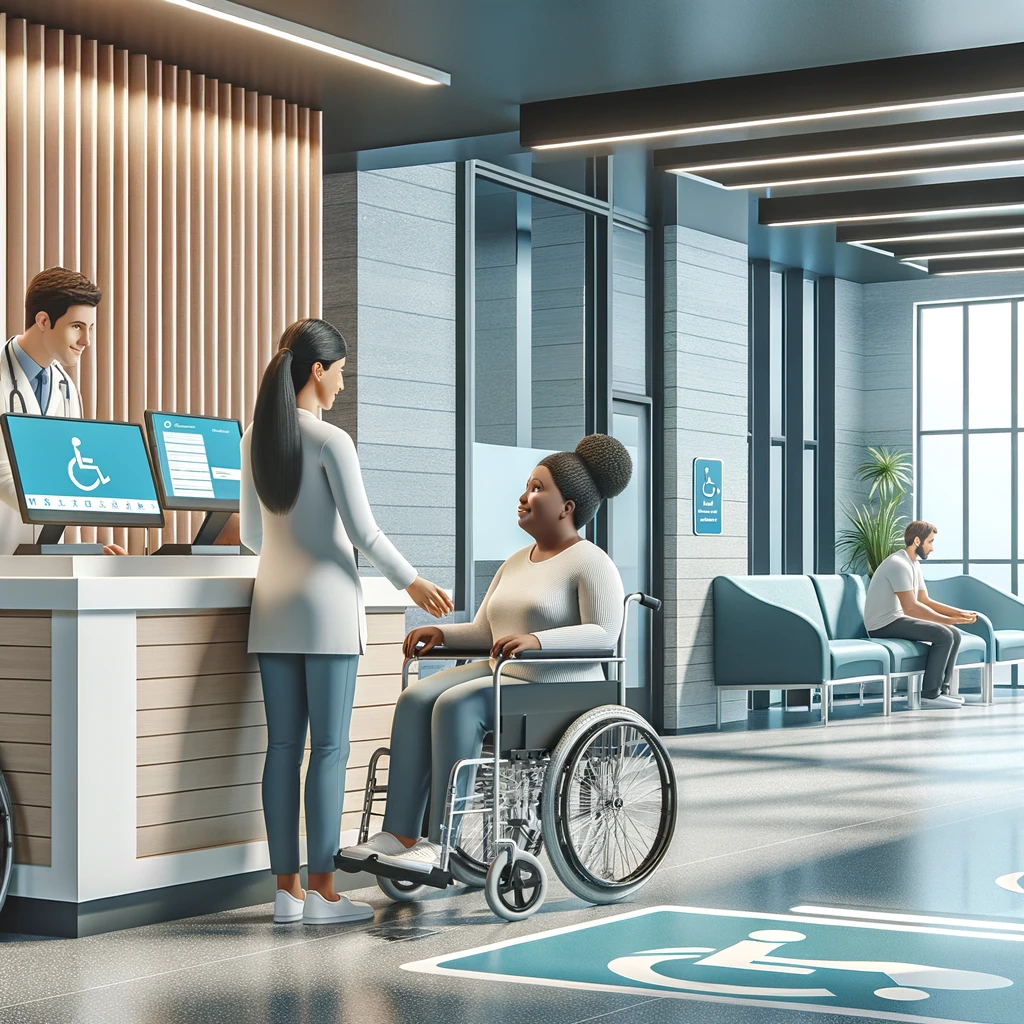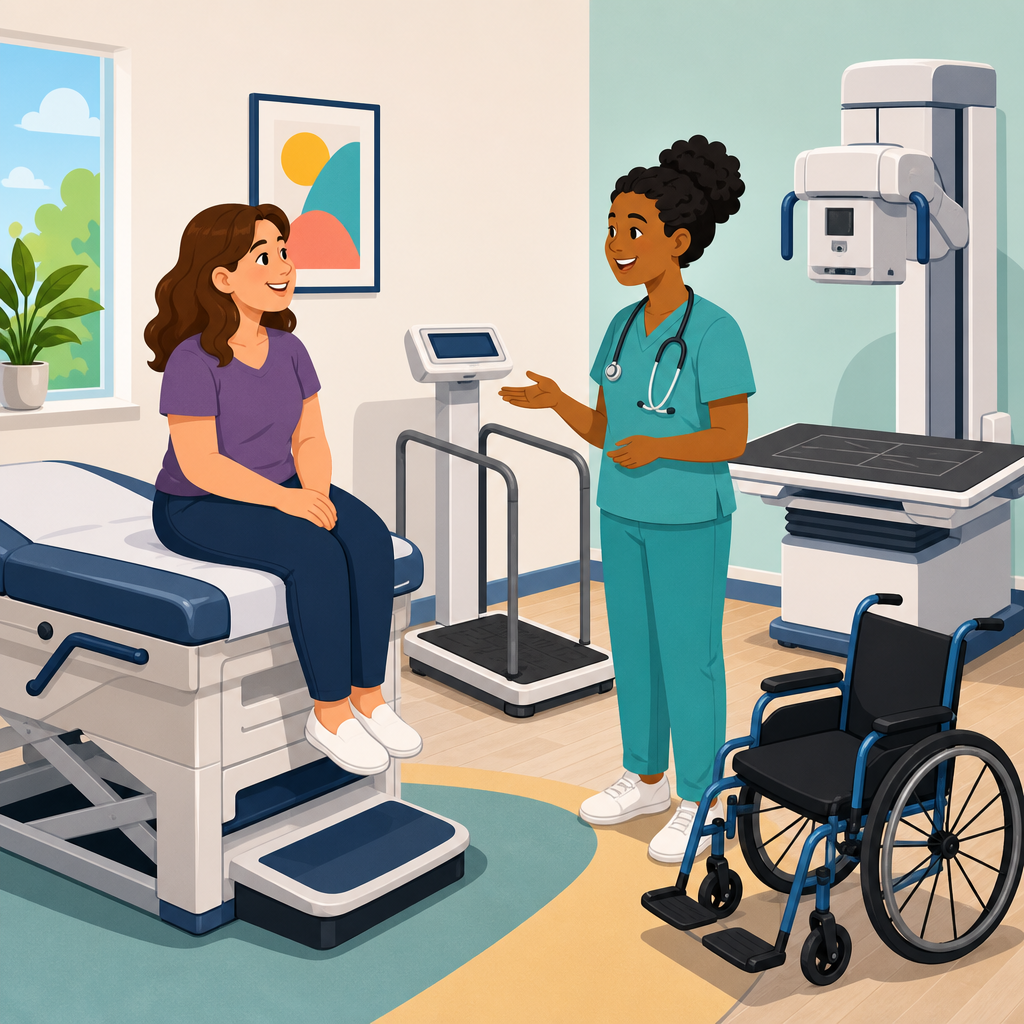
ADA rights related to exam tables, scales, and imaging equipment directly affect whether people with disabilities can receive basic medical care safely, privately, and on equal terms. In healthcare settings, accessible medical diagnostic equipment includes height-adjustable exam tables, wheelchair-accessible weight scales, mammography machines designed for positioning support, and imaging systems that allow safe transfer or accommodate seated positioning. These tools matter because the Americans with Disabilities Act requires healthcare providers, hospitals, and clinics to provide equal access to services, not just an open front door or a ramp at the entrance. In practice, I have seen access failures happen at the exact point where care should begin: a patient cannot transfer onto a fixed table, cannot be weighed because the scale is too narrow, or cannot complete imaging because staff have no transfer plan. When that happens, the result is not a minor inconvenience. It can mean missed diagnoses, delayed treatment, preventable injuries, and a loss of dignity. This hub article explains the core rights, the legal standards that shape them, and the practical questions patients, caregivers, advocates, and providers should understand when evaluating accessible exam tables, accessible scales, and accessible imaging equipment under disability law.
The key legal idea is equal access to healthcare services. Under the ADA, healthcare entities must make reasonable modifications to policies and practices, furnish appropriate auxiliary aids and services when needed, and remove barriers where doing so is required by law. Accessible equipment is part of that obligation because an inaccessible exam table or diagnostic machine can block the service itself. The ADA Standards for Accessible Design do not create a complete technical rule for every piece of medical equipment, but federal guidance, Department of Justice enforcement positions, Section 504 obligations for federally funded providers, and technical work by the U.S. Access Board all point in the same direction: providers must deliver examinations and diagnostic services in an accessible manner. This article serves as a hub for focused explorations of ADA rights in this area, including transfer assistance, accessible mammography, wheelchair weight access, policy modifications, staff training, documentation, and complaint options. If you need to understand what the law expects and what accessible care looks like in real settings, this page gives you the framework.
What ADA Rights Cover in Medical Examinations
ADA rights in medical settings cover more than architecture. They apply to the full patient experience, including scheduling, intake, communication, physical examination, diagnostics, treatment planning, and follow-up. For equipment access, the central question is whether a disabled patient can obtain substantially equivalent care. If a non-disabled patient receives a complete physical exam on an adjustable table, a wheelchair user cannot lawfully be limited to a partial exam performed while seated unless the provider can show that no accessible method is available and that the limitation is unavoidable. In my experience reviewing access complaints, this distinction is critical. Clinics sometimes assume that seeing the patient in the wheelchair is enough. Usually it is not. Many examinations require supine positioning, supported transfer, or accurate weight measurement to determine medication dosing, nutrition status, fluid balance, or anesthesia planning.
Equal access also includes safety and privacy. A patient should not be asked to bring family members to lift them when staff assistance or accessible equipment is required. Nor should they be weighed in a public hallway because the only accessible scale is improvised and exposed. The right is to accessible healthcare, not merely entry into a building. The Department of Justice has repeatedly emphasized that providers may need to acquire accessible equipment as part of nondiscrimination compliance, especially when existing equipment excludes patients from routine care. The same principle applies across specialties: primary care, obstetrics and gynecology, orthopedics, cardiology, oncology, radiology, and outpatient surgery all rely on equipment that must be usable by patients with different mobility limitations.
Accessible Exam Tables: Why They Matter and What to Look For
An accessible exam table typically has a low transfer height, powered height adjustment, adequate stability, transfer supports, and enough clearance around the table for wheelchair positioning and assisted transfer. The most important practical feature is height adjustability. Fixed high tables are one of the most common barriers in outpatient care because they create an unsafe gap between the wheelchair seat and the exam surface. The U.S. Access Board’s medical diagnostic equipment standards work identified transfer surfaces around 17 to 19 inches as critical for many wheelchair users, though individual needs vary. In clinics that use low-height power tables, I have consistently seen more complete exams, fewer canceled appointments, and less staff improvisation.
Accessible exam tables support preventive care as well as urgent treatment. A patient may need a skin check, pelvic exam, wound assessment, abdominal palpation, or musculoskeletal evaluation that cannot be performed adequately from a wheelchair alone. If the clinic lacks an adjustable table, the provider may skip elements of care, refer the patient elsewhere, or attempt a rushed manual lift. Each option carries risk. Manual lifting without proper equipment increases staff injury risk and patient fall risk, and referral delays can postpone diagnosis. Good practice includes having at least some rooms equipped with power exam tables, keeping them available for scheduling when requested, and training staff to use transfer boards, gait belts, or mechanical lifts where appropriate.
Accessible Scales: Accurate Weight Is a Clinical Necessity
Wheelchair-accessible scales are not a luxury item. Accurate weight is a core clinical measure used for medication dosing, chemotherapy planning, dialysis assessment, heart failure monitoring, and evaluation of nutrition or fluid status. When a patient is told, “We will just estimate,” that can produce serious medical error. Accessible scales generally provide a ramped platform, sufficient size for mobility devices, handrails when appropriate, and a display readable by staff and, where possible, the patient. In hospitals and specialty clinics, integrated wheelchair scales, bariatric scales, and bed scales may all be necessary depending on the patient population served.
A common access failure occurs when offices record an old weight for every visit because the patient cannot step onto a stand-on scale. Another occurs when staff subtract the wheelchair weight without verifying the device’s current weight, leading to inaccurate results. The better approach is straightforward: maintain a calibrated wheelchair-accessible scale, document the weighing method, and ensure staff know when exact weight is clinically necessary. For patients, this right matters because an inaccessible scale can compromise treatment even when the visit appears otherwise successful. A complete healthcare encounter includes obtaining the vital data needed to make safe decisions.
Accessible Imaging Equipment and Diagnostic Services
Accessible imaging equipment includes diagnostic systems and room setups that allow patients with mobility disabilities to obtain X-rays, mammograms, CT scans, MRI studies, bone density tests, and other imaging without being excluded because of transfer barriers or positioning limitations. The exact solution depends on the modality. In mammography, features such as adjustable height, movable components, and seated positioning options are especially important. In radiography and CT, transfer space, lateral access, stretcher compatibility, and lift-assisted positioning can determine whether the study is possible. In MRI, additional safety screening is required because many transfer aids and mobility devices contain metal, so staff need both disability access training and modality-specific safety competence.
Imaging access is often misunderstood because providers may assume that if a hospital somewhere can perform the study, an outpatient site may simply refer the patient out. Referral can be appropriate in some cases, but routine reliance on inaccessible equipment can still raise discrimination concerns, particularly when the provider network regularly serves the public and the service is ordinarily offered at that location. For example, a woman who uses a wheelchair should not face repeated delays in breast cancer screening because the clinic has not planned for seated mammography or safe transfer assistance. Equal access means building workable pathways into normal operations, not solving the issue only after a complaint.
| Equipment type | Common barrier | Accessible feature | Why it matters clinically |
|---|---|---|---|
| Exam table | Fixed height too high for transfer | Powered low-height adjustment and supports | Allows full physical exams and reduces fall risk |
| Weight scale | Only stand-on scale available | Ramped wheelchair-accessible platform | Improves dosing accuracy and ongoing monitoring |
| Mammography unit | Standing-only positioning | Seated positioning and adjustable components | Supports timely breast cancer screening |
| X-ray or CT setup | No safe transfer path | Clear floor space, transfer aids, trained staff | Prevents delays in diagnostic imaging |
Reasonable Modifications, Transfer Assistance, and Staff Training
Accessible equipment works only when policies support its use. The ADA requires reasonable modifications to usual practices when needed to avoid discrimination, unless a fundamental alteration or undue burden applies. In healthcare, that often means flagging access needs during scheduling, reserving the accessible room or device, allocating enough appointment time, and providing trained staff for transfer assistance. Staff training is not optional in any practical sense. A clinic may purchase an adjustable table and still deny equal access if employees do not know how to position the wheelchair, lock brakes, explain the transfer, or use a slide board safely.
Transfer assistance should be individualized. Some patients transfer independently with a board; others need one-person assistance, two-person assistance, or a mechanical lift. Providers should ask about transfer needs before the appointment and confirm them on arrival. They should never rely on guesswork or pressure a patient into an unsafe method. The Occupational Safety and Health Administration has long recognized patient-handling injury risks, and many health systems use safe patient handling programs to reduce manual lifting. Those same programs help support ADA compliance by making accessible care repeatable and safe. The strongest clinics combine equipment, written protocols, competency-based training, and a culture that treats accessibility as part of clinical quality.
How These Rights Are Enforced and Documented
Patients who experience inaccessible exam tables, scales, or imaging equipment can document what happened and seek correction through several channels. Useful documentation includes the appointment date, department, names of staff, what equipment was unavailable, what care was denied or modified, whether an injury or delay occurred, and what accommodation was requested. Photos of inaccessible equipment setups can help when taken appropriately, though privacy rules must be respected. Internal grievance systems, patient advocates, risk management offices, disability coordinators, state civil rights agencies, the U.S. Department of Justice, and the U.S. Department of Health and Human Services Office for Civil Rights may all be relevant depending on the provider type and funding.
Enforcement usually turns on facts, not slogans. Was the patient denied the same exam others receive? Did the clinic have accessible equipment elsewhere but fail to schedule it? Did staff refuse assistance as a blanket policy? Was a referral offered only after significant delay? These details matter. They show whether the access problem was isolated, avoidable, or systemic. For providers, documentation matters too. Equipment inventories, maintenance logs, calibration records, staff training files, and access protocols can demonstrate good-faith compliance efforts. For patients and advocates, this hub connects to deeper topics within rights and protections, including complaint strategy, evidence gathering, communication accommodations, and discrimination remedies across healthcare settings.
What Patients and Providers Should Do Next
The practical takeaway is simple: accessible medical equipment is part of equal healthcare, not an optional courtesy. Exam tables, scales, and imaging equipment shape whether a patient receives a complete examination, an accurate diagnosis, and treatment without unnecessary risk. Patients should ask in advance whether a clinic has a height-adjustable exam table, a wheelchair-accessible scale, and a plan for accessible imaging or transfer assistance. Providers should audit their equipment, scheduling workflows, room assignments, and staff competencies, then fix the gaps that predictably exclude disabled patients. Waiting for a crisis or complaint is poor risk management and worse patient care.
As the hub for focused explorations of ADA rights in this area, this page establishes the baseline: equal access requires usable equipment, trained staff, modified procedures, and reliable follow-through. The details will vary by specialty and disability, but the principle does not change. If you are a patient, caregiver, advocate, or healthcare leader, review your current process against these standards and identify where access breaks down. Then take the next step: request the equipment, document the barrier, update the policy, or escalate the complaint. Better access begins when someone treats inaccessible care as a solvable problem instead of an unavoidable one.
Frequently Asked Questions
What does the ADA require when it comes to exam tables, weight scales, and imaging equipment in healthcare settings?
The Americans with Disabilities Act, especially Title II for state and local government healthcare providers and Title III for private medical offices, hospitals, and clinics, requires covered providers to give people with disabilities an equal opportunity to benefit from medical services. In practice, that means care cannot be offered in a way that is inaccessible, unsafe, or meaningfully inferior simply because a patient has a mobility, strength, balance, or positioning limitation. When exam tables are too high, scales cannot be used from a wheelchair, or imaging equipment cannot accommodate safe transfer or seated positioning, patients may be denied basic diagnostic care on equal terms.
Although the ADA does not always name a specific model of equipment that every provider must buy, it does require effective access to medical services and reasonable modifications in policies, practices, and procedures when necessary, unless doing so would fundamentally alter the service. It also requires the provision of appropriate auxiliary aids and services when needed for communication. In the context of medical diagnostic equipment, accessible features often include height-adjustable exam tables, wheelchair-accessible scales, transfer supports, positioning supports, and equipment layouts that allow safe approach and use.
The key legal principle is equal access to the healthcare service, not just access to the building. A clinic may have a ramp at the front door and still violate the ADA if a patient cannot get onto an exam table, be weighed, or receive imaging in a medically appropriate way. Providers are expected to evaluate whether their equipment and procedures allow patients with disabilities to receive routine and preventive care safely, privately, and with the same clinical quality available to other patients.
Do patients have a right to be examined on an accessible exam table instead of remaining in their wheelchair?
In many situations, yes. If a patient needs an examination that can only be properly performed on an exam table, the provider generally must make that examination accessible rather than defaulting to a wheelchair-based exam that is incomplete, less accurate, or less private. Telling a patient, “We can just examine you in your wheelchair,” may not satisfy the ADA if that approach prevents the provider from performing the standard medical assessment or deprives the patient of equal care.
Accessible exam tables are important because they can lower close to wheelchair seat height, making lateral transfer or assisted transfer safer and more realistic. They also help reduce the risk of injury to both patients and staff. For many people with disabilities, being examined on an inaccessible fixed-height table is not merely inconvenient; it can be dangerous or effectively impossible. If the clinic’s routine care depends on table-based examinations, then having no practical way for disabled patients to access that care raises serious ADA concerns.
That said, the ADA focuses on equal access in the real-world context of the medical service. Whether a particular office must obtain specific accessible equipment can depend on factors such as the size of the practice, the nature of the services offered, resources available, and whether other effective methods truly exist. But “other methods” must be safe, appropriate, and clinically effective. If the result is a reduced exam, skipped preventive care, or repeated referrals elsewhere for basic services, the patient may have a strong argument that their ADA rights are not being met.
Are healthcare providers required to have wheelchair-accessible scales and accessible imaging equipment?
If a provider offers services where accurate weight measurement or imaging is part of ordinary care, then accessibility matters in a very practical and legal sense. A wheelchair-accessible scale allows patients who cannot stand safely to be weighed accurately and privately. Without one, a provider may miss essential information used for medication dosing, monitoring chronic conditions, anesthesia planning, pregnancy care, oncology treatment, and many other clinical decisions. Estimating weight or skipping it altogether can lead to substandard care and may undermine equal access under the ADA.
The same general principle applies to imaging equipment. Accessible imaging may include machines that allow transfer with support, provide enough clearance and positioning assistance, or permit seated imaging when clinically appropriate. Mammography equipment, for example, may need features that support positioning for patients who cannot stand for long periods or who use wheelchairs. If imaging is available to the general patient population but is effectively unusable for disabled patients because of equipment design, room configuration, or staff refusal to assist with positioning, the provider may be denying equal access to a core medical service.
Whether a specific provider must immediately purchase every type of accessible diagnostic device can depend on ADA standards about reasonableness and barrier removal, but providers cannot simply ignore the issue. They should assess what services they offer, where access barriers exist, what accessible equipment is needed, and whether referral practices are truly equivalent rather than burdensome or delayed. In many cases, a pattern of sending disabled patients elsewhere for routine weighing or standard imaging—when other patients receive those services on site—can signal an ADA compliance problem.
What should a patient do if a doctor’s office says it cannot accommodate them with accessible medical equipment?
Start by making a clear, specific request. Explain what you need and why. For example, you might ask for a height-adjustable exam table, a wheelchair-accessible scale, extra transfer time, staff assistance consistent with your instructions, or imaging that can be performed with seated positioning or transfer support. It often helps to state that you are requesting an accommodation for equal access under the ADA and to put the request in writing by email or patient portal so there is a record.
If the office says it cannot help, ask follow-up questions. Find out whether the equipment exists at another location in the same health system, whether scheduling changes could solve the problem, whether staff have been trained on safe transfer procedures, or whether a comparable alternative is available without delay, extra cost, loss of privacy, or reduced quality of care. The goal is to determine whether the refusal is based on a real limitation or simply a lack of planning, training, or awareness.
If the problem is not resolved, document what happened. Keep notes of dates, names, what you requested, and what was said. You can also escalate the issue to a practice manager, hospital patient advocate, compliance office, disability coordinator, or civil rights office within the health system. Depending on the provider type, you may also file a complaint with the U.S. Department of Justice, the U.S. Department of Health and Human Services Office for Civil Rights, or a relevant state agency. In some cases, consulting a disability rights organization or attorney can help you understand your options. Many ADA access disputes improve once a provider recognizes that inaccessible equipment is a civil rights issue, not just a scheduling inconvenience.
Can a healthcare provider rely on staff lifting, family assistance, or referrals to other facilities instead of accessible equipment?
Usually, those approaches are not ideal substitutes, and in some cases they may be legally inadequate. Manual lifting by staff can create serious safety risks for patients and employees, especially when done without proper equipment or training. It can also compromise dignity and privacy. Family members should not be treated as default assistants for transfers or positioning, particularly when the medical provider is responsible for delivering the service safely and professionally. Requiring a patient to bring someone to help them access routine care may place an unfair burden on the patient and can undermine equal treatment.
Referrals to another facility may sometimes be appropriate for specialized services, but they are not a blanket solution for basic medical care that the provider routinely offers to others. If non-disabled patients can be weighed, examined, or imaged during a standard visit, but disabled patients are consistently sent elsewhere because of inaccessible equipment, that difference can amount to unequal access. Extra travel, delay, inconvenience, fragmented care, and missed preventive services all matter when evaluating whether the patient is receiving healthcare on equal terms.
The better approach is for providers to plan for accessibility as part of routine operations. That includes evaluating diagnostic equipment, training staff on disability accommodations and safe transfer practices, adjusting scheduling where needed, and creating procedures that preserve patient autonomy and informed consent. The ADA is about integration, dignity, safety, and equal participation in everyday healthcare. Accessible exam tables, scales, and imaging equipment are not luxury items in that framework; they are often essential tools for delivering basic care fairly and lawfully.