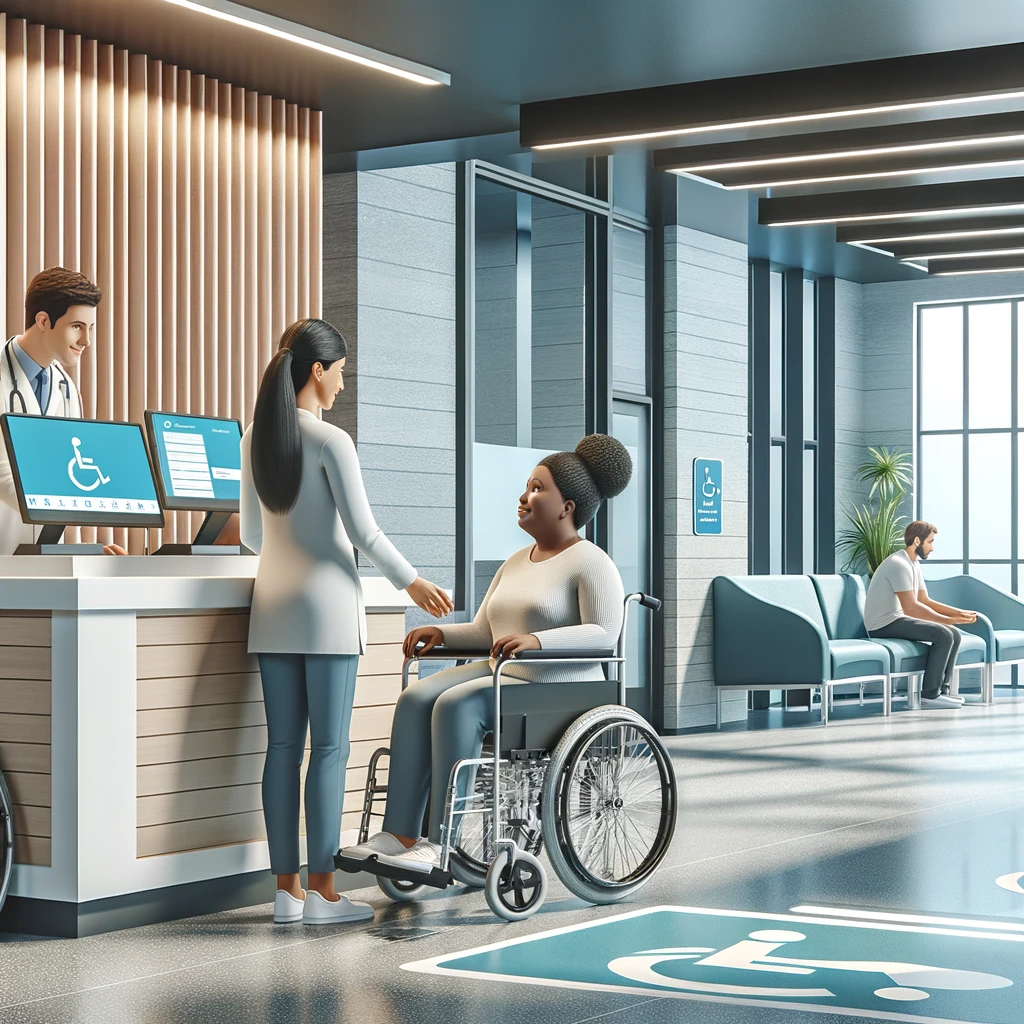
ADA rights in public benefits applications and eligibility interviews matter because the doorway to food assistance, Medicaid, cash aid, housing support, and disability-related services is often an interview, a form, or an online portal, and those entry points must be accessible. In practice, “public benefits” refers to government programs that provide income, health coverage, nutrition support, child care, or other basic supports, while “eligibility interviews” are the screening conversations agencies use to verify identity, income, disability status, household composition, and other requirements. The Americans with Disabilities Act, especially Title II for state and local government services, requires public entities to provide equal access, reasonable modifications, effective communication, and nondiscrimination. Section 504 of the Rehabilitation Act adds parallel duties for programs receiving federal funds, which includes most benefits agencies. Together, these rules shape how agencies must design applications, conduct interviews, communicate notices, and resolve barriers.
I have worked with applicants who could qualify for benefits on paper but still lost access because a county office would only schedule phone interviews, mailed notices in tiny print, or expected people with cognitive disabilities to navigate dense forms without help. Those failures are not minor inconveniences. They can lead to hunger, loss of medication, eviction risk, and interrupted home services. A missed interview may trigger a denial; an inaccessible notice may prevent an appeal; a refusal to accept a support person may make the process unusable. That is why ADA rights in public benefits applications and eligibility interviews are not abstract civil rights principles. They are operational rules that determine whether people can actually obtain essential services.
This hub covers the core rights and the wider landscape of public services and civic access. It explains what applicants can request, what agencies must do, where limits exist, and how related issues connect to transportation, voting, digital access, court systems, and emergency services. If a person has a physical, sensory, intellectual, developmental, psychiatric, neurological, or chronic health disability, the agency must evaluate access barriers individually rather than rely on one-size-fits-all procedures. Key concepts include reasonable modification, auxiliary aids and services, effective communication, program accessibility, and the integrated setting mandate. Understanding these terms helps applicants, family members, advocates, and caseworkers identify both obvious barriers and subtle process failures before they become unlawful denials.
What ADA rights apply during benefits applications and interviews
The baseline rule is straightforward: a public agency cannot screen out or burden a qualified person with a disability through avoidable procedures. During a benefits application, that means the agency must offer an accessible way to apply, communicate, and verify eligibility. During an eligibility interview, that means the agency must modify standard practices when needed unless doing so would fundamentally alter the program or create an undue financial and administrative burden. Those defenses exist, but agencies must analyze them carefully and still choose an alternative that provides the greatest access possible.
Reasonable modifications cover policy and procedure changes. Common examples include extra time to complete forms, permission for a representative or support person to help, home visits when travel is impossible, rescheduling missed interviews caused by disability-related crises, accepting signatures in alternative formats, and conducting interviews by video relay or text-based methods. Effective communication is a separate duty. If an applicant is Deaf, hard of hearing, blind, low vision, or has a speech disability, the agency may need a qualified sign language interpreter, real-time captioning, Braille, large print, accessible electronic documents, screen-reader compatible forms, or plain-language explanations. The proper aid depends on the person and the context, not on agency convenience.
Agencies also must avoid methods of administration that disproportionately deny meaningful access. I often see problems in online benefits systems. A portal may technically exist, but if labels are missing for screen readers, timeout periods are too short, CAPTCHAs lack an accessible alternative, or required uploads cannot be completed on a phone used by many low-income applicants, access is not meaningful. The Department of Justice has made clear that digital government services fall within accessibility obligations. In a benefits context, inaccessible web design can be just as exclusionary as stairs at the entrance to an office.
Common accommodations applicants can request
Applicants often ask a simple question: what exactly can I request? The answer is practical. You can request any modification or communication aid that is necessary for equal access to the application, interview, recertification, fair hearing, or case management process. The request does not need magic words, though being specific helps. An applicant can say, “Because of my disability, I need notices by email and large print,” or “I need my eligibility interview by video with captioning and extra processing time.” Agencies should engage in an interactive process to identify an effective option.
| Barrier | Possible accommodation | Why it matters |
|---|---|---|
| Cannot travel to office due to mobility limits or immune risk | Phone or video interview, home visit, remote document submission | Prevents denial based on physical inaccessibility |
| Blind or low vision applicant | Screen-reader compatible portal, large print, Braille, oral reading of forms | Allows independent review and accurate responses |
| Deaf or hard of hearing applicant | Qualified interpreter, captioning, relay services, written follow-up | Ensures complete communication during interviews |
| Intellectual or cognitive disability | Plain-language forms, extra time, support person, reminder calls | Reduces misunderstanding and missed deadlines |
| Mental health disability causing episodic impairment | Flexible scheduling, good-cause consideration, quiet setting | Avoids penalizing disability-related symptoms |
Some accommodations are especially important in public services and civic access because benefits systems are deadline driven. Reminder calls or texts, permission to record instructions, simplified written summaries after interviews, and extensions for verification can make the difference between approval and closure. Agencies should document accommodation needs so applicants do not have to repeat the same request at every recertification. A centralized accommodation flag, when implemented carefully and confidentially, reduces recurring failures.
Application forms, notices, and digital access requirements
Forms and notices are where many rights are won or lost. A lawful process requires more than offering help if someone complains. Agencies should build accessibility into initial forms, recertification packets, verification checklists, fraud notices, sanction letters, and hearing instructions. Written communications must be available in alternate formats when needed. That includes large print with readable contrast, accessible PDFs or HTML documents that work with screen readers, and language that is understandable to people with cognitive disabilities. Complex legal standards may be unavoidable, but agencies can still pair them with plain-language explanations of deadlines, next steps, and consequences.
For digital systems, recognized technical standards matter. Web Content Accessibility Guidelines, commonly WCAG 2.1 AA and increasingly WCAG 2.2 AA, provide the accepted benchmark for keyboard navigation, color contrast, error identification, headings, alt text, and form labels. If an online application portal is inaccessible, an agency cannot simply tell applicants to call instead and consider the problem solved. Telephone-only workarounds often create longer waits, less privacy, and reduced independence. Equal access usually means the main pathway itself should be accessible, with alternatives available when needed.
Notices deserve special attention because due process depends on understanding what the agency decided and how to challenge it. If a denial notice is mailed in standard print to a person who requested large print or electronic delivery, the appeal clock may start running before the person can even read the decision. That undermines both disability rights and procedural fairness. In my experience, the most effective agencies audit notice templates regularly, test portals with assistive technology users, and train eligibility staff to recognize that communication access is part of eligibility administration, not an optional customer service feature.
Eligibility interviews, verifications, and good-cause protections
Eligibility interviews often create the sharpest access barriers because they combine strict scheduling, high information demands, and immediate credibility judgments. Agencies may ask about income, assets, household members, work activity, immigration status, medical expenses, and functional limitations. For applicants with memory impairments, brain injuries, PTSD, autism, anxiety disorders, or limited stamina, this format can be overwhelming. The ADA requires interview methods that give the person a fair chance to participate. That can include breaking the interview into shorter sessions, allowing written responses, involving an authorized representative, or postponing for a disability-related medical episode.
Verification rules can also be applied in discriminatory ways. An applicant who cannot stand in line at multiple offices to obtain paperwork may need the agency to help gather records, accept collateral contacts, or extend deadlines. Federal benefits programs often already permit flexibility, and disability law reinforces the need to use it. For example, Medicaid agencies commonly have access to electronic data sources for income and identity verification. Requiring unnecessary paper proof from a person whose disability makes document collection unusually difficult can create an avoidable barrier.
Good-cause protections are critical when disability affects compliance. Missing an interview because of hospitalization, a psychiatric crisis, transportation failure linked to disability, or an inaccessible communication method should trigger reconsideration, not automatic blame. Applicants should explain the disability connection as clearly as possible and ask for the denial or closure to be reopened with an accommodation in place. Agencies that track no-show rates by office and accommodation type often discover systemic failures, such as interpreter scheduling gaps or rigid call-center scripts, rather than applicant neglect.
How this hub connects to broader public services and civic access
Public benefits do not exist in isolation. They sit inside a larger network of public services and civic access rights. Transportation determines whether someone can attend an interview. Accessible sidewalks and building entrances affect whether an office is reachable. Court access matters when someone appeals a benefits sanction or seeks guardianship-related orders. Voting access matters because elections shape the rules governing Medicaid waivers, housing funding, and county administration. Emergency management matters because disasters interrupt benefits, displace applicants, and force rapid communication through systems that may not be accessible.
That is why this page functions as a hub under rights and protections. If you are researching ADA rights in public benefits applications and eligibility interviews, you will likely also need guidance on accessible government websites, public transit paratransit obligations, accommodations in public meetings, communication rights in emergency alerts, and disability access in administrative hearings. These topics reinforce each other. A person denied an accessible hearing notice may also face inaccessible transit to the hearing location. A voter with a print disability may encounter the same notice-format barrier in jury service or tax communications. Looking across systems helps identify patterns and stronger remedies.
What to do when an agency denies accommodation or access
Start by making the request in writing, even if you already asked verbally. State the disability-related barrier, the accommodation needed, and the deadline or action affected. Keep copies of notices, screenshots of inaccessible portals, dates of calls, names of staff, and any medical or service-provider support letters that explain functional limitations. Ask for the agency’s ADA coordinator, civil rights office, or grievance process. Title II entities should have a grievance procedure if they employ enough staff, and many state human services departments publish accommodation policies online.
If the problem affects an immediate benefit decision, pursue both tracks at once: request the accommodation and protect appeal rights. That may mean filing a fair hearing request, asking for aid paid pending when available, and asserting that the denial resulted from failure to provide effective communication or reasonable modification. External complaints may be filed with federal or state oversight bodies, depending on the program. Useful evidence includes inaccessible notices, interpreter denials, call logs showing repeated failed contact, and proof that a requested alternative would have worked. The goal is not only to fix one case but to create a record showing a systemic barrier that the agency must correct.
ADA rights in public benefits applications and eligibility interviews protect access to essentials: food, health care, income support, and housing stability. The main rules are clear. Agencies must provide reasonable modifications, effective communication, accessible digital and paper processes, and fair treatment when disability affects interviews, verification, or deadlines. Applicants can request practical accommodations such as alternate formats, remote interviews, support persons, extra time, and flexible scheduling. When barriers appear, documentation, prompt written requests, and timely appeals matter. As a hub for public services and civic access, this topic connects directly to transportation, hearings, emergency communication, and other government systems people rely on every day.
The biggest benefit of knowing these rights is simple: it turns preventable denials into solvable access problems. Instead of accepting “that’s just our policy,” applicants and advocates can identify the exact change needed for equal participation. Review your current applications, notices, and interview practices, or if you are applying yourself, put accommodation requests in writing before the next deadline. Small procedural fixes often open the door to life-sustaining benefits and more equal access to public life.
Frequently Asked Questions
What ADA rights do applicants have when applying for public benefits or attending an eligibility interview?
People with disabilities generally have the right to meaningful access when applying for public benefits and participating in eligibility interviews. That means a state or local agency cannot run its application process in a way that shuts out, screens out, or unfairly disadvantages a qualified person with a disability. Under the Americans with Disabilities Act, and often related disability laws, agencies that administer benefits such as SNAP, Medicaid, TANF, housing assistance, child care subsidies, and similar programs are expected to make reasonable modifications to policies, practices, and procedures when needed to provide equal access.
In real terms, these rights may include accessible application forms, help completing paperwork, effective communication during interviews, auxiliary aids and services for people who are deaf, hard of hearing, blind, have low vision, or have speech disabilities, and adjustments to deadlines or interview procedures when disability-related limitations make the standard process inaccessible. Applicants may also be entitled to accessible digital portals, alternative formats such as large print or Braille, plain-language explanations where appropriate, and communication supports for cognitive or intellectual disabilities.
Just as important, agencies should not force applicants to rely on family members or friends to interpret, explain forms, or navigate the process if an accommodation is needed. The responsibility to provide access belongs to the agency. An eligibility interview is often the gateway to critical benefits, so ADA protections apply not only to the final decision, but to the entire process of getting in the door, understanding what is required, and having a fair chance to qualify.
What kinds of accommodations or reasonable modifications can someone request during the benefits application process?
The right accommodation depends on the person’s disability and the barrier they are facing, but many modifications are common in public benefits settings. Someone may request more time to submit documents, a phone interview instead of an in-person appointment, a home visit if travel is not possible, permission to have a support person participate, help reading or completing forms, or notices sent in an alternative format. A person with anxiety, PTSD, autism, a traumatic brain injury, chronic illness, mobility limitations, or vision or hearing disabilities may need a process that looks different from the standard workflow.
Communication-related accommodations can include a qualified sign language interpreter, CART or real-time captioning, TTY access, relay-friendly communication, written follow-up instructions, screen-reader accessible online forms, or verbal reading of written notices. For applicants with mental health disabilities, agencies may need to allow breaks during interviews, use simpler and clearer questions, reschedule missed appointments for disability-related reasons, or communicate through an authorized representative if appropriate. For people with limited hand use or dexterity, agencies may need to help with signatures, paperwork, uploads, or digital navigation.
A reasonable modification is not limited to physical access. It can also involve changing how rules are applied when a disability creates a barrier to compliance. For example, if an applicant misses an interview because of hospitalization, cognitive impairment, or a disability flare, the agency may need to provide another opportunity rather than deny the case automatically. If an online-only system is inaccessible, the agency should offer another equally effective way to apply. The key question is whether the change is necessary to give the applicant an equal opportunity to seek and receive benefits.
How should someone ask for an ADA accommodation for a benefits application or eligibility interview?
A person does not always need to use special legal language to request an accommodation. In many cases, it is enough to clearly say that a medical condition, mental health condition, or disability is making it hard to complete the application process in the standard way and that a specific change is needed. Requests can often be made by phone, in writing, through an online portal, in person, or through an authorized representative. It is usually best to be as concrete as possible. For example, instead of saying “I need help,” an applicant might say, “Because of my vision disability, I need notices in large print and someone to read the interview questions aloud,” or “Because of my anxiety and PTSD, I need a phone interview instead of coming into the office.”
Keeping records can help. Applicants should try to note the date of the request, the name of the worker or office, what accommodation was requested, and any response received. If the agency has a designated ADA coordinator, disability rights contact, or accommodation form, using that process may help move the request along, but applicants generally should not be denied simply because they did not use a perfect form or phrase. The agency’s obligation begins when it knows, or reasonably should know, that a disability-related accommodation may be needed.
Sometimes the agency may ask for limited information to understand the need for the accommodation, especially if the disability or need is not obvious. Even then, the request should stay focused on verifying the need for the modification rather than becoming an unnecessary barrier. If the first staff member does not understand the request, applicants can ask to speak with a supervisor, ADA coordinator, fair hearing representative, or disability services contact. Asking early is helpful, but a request can often be made at any stage of the process, including after a missed interview or denial if the barrier was disability-related.
What happens if a benefits office, online portal, or interviewer is not accessible?
If the application system is inaccessible, the agency is generally expected to provide another effective way to apply and participate. A public benefits office should not insist on an in-person process if the building, waiting area, interview room, or kiosk cannot be used by a person with a disability. Likewise, an agency should not require use of an online portal that is incompatible with screen readers, inaccessible by keyboard, or otherwise unusable for applicants with disabilities. The right to equal access applies whether the barrier is physical, digital, communication-based, or procedural.
When an interviewer communicates too quickly, refuses to provide an interpreter, fails to explain questions in an understandable way, or penalizes disability-related behavior without adjusting the process, that may also create an accessibility problem. In many cases, the right response is not to abandon the application, but to notify the agency of the barrier and request an immediate fix, such as a rescheduled interview with accommodations, a different format, a different communication method, or help from a supervisor or ADA coordinator. Agencies are expected to address access barriers in a timely way because delays in benefits can affect food, housing, health care, and safety.
If the problem is not resolved, applicants may have multiple options depending on the program and location. These can include filing an internal ADA or disability discrimination complaint, asking for a fair hearing if benefits were denied or reduced, contacting a legal aid office, or reaching out to a protection and advocacy organization or disability rights group. It is often helpful to save screenshots of inaccessible portals, copies of notices, appointment records, and any written accommodation requests. Documentation can make it easier to show that the barrier was not just inconvenient, but a denial of equal access to a government benefit.
Can a person challenge a denial, delay, or missed interview if disability-related barriers affected the application?
Yes. If an applicant was denied benefits, lost benefits, or experienced delays because the agency failed to provide needed accommodations or meaningful access, that issue can often be raised in an appeal or fair hearing. This is especially important when the underlying problem was not ineligibility, but an inaccessible process: a missed interview caused by hospitalization, confusion from notices that were not in an accessible format, inability to use an online system, lack of interpreter services, or failure to modify standard procedures for a disability-related need. In those situations, the person may be able to ask for the decision to be reconsidered, reopened, or reversed.
During an appeal, it can help to explain exactly what happened, what disability-related barrier was present, what accommodation was requested if any, and how the lack of access affected the outcome. For example, a person might show that they never understood the deadline because notices were not provided in a readable format, or that they missed a recertification interview because they requested a phone accommodation that was never arranged. If available, supporting materials such as letters from providers, hospital records, screenshots, case notes, emails, or witness statements can strengthen the argument.
Applicants should also remember that ADA rights are not limited to people already receiving disability benefits. A person does not need to be on SSI or SSDI to request an accommodation in a public benefits process. The legal question is whether the person has a disability and whether the agency provided equal access. Because benefit deadlines can be short, acting quickly matters. Requesting a hearing, asking for aid continuing when available, and raising disability access problems as early as possible can protect both eligibility and the record of what went wrong.