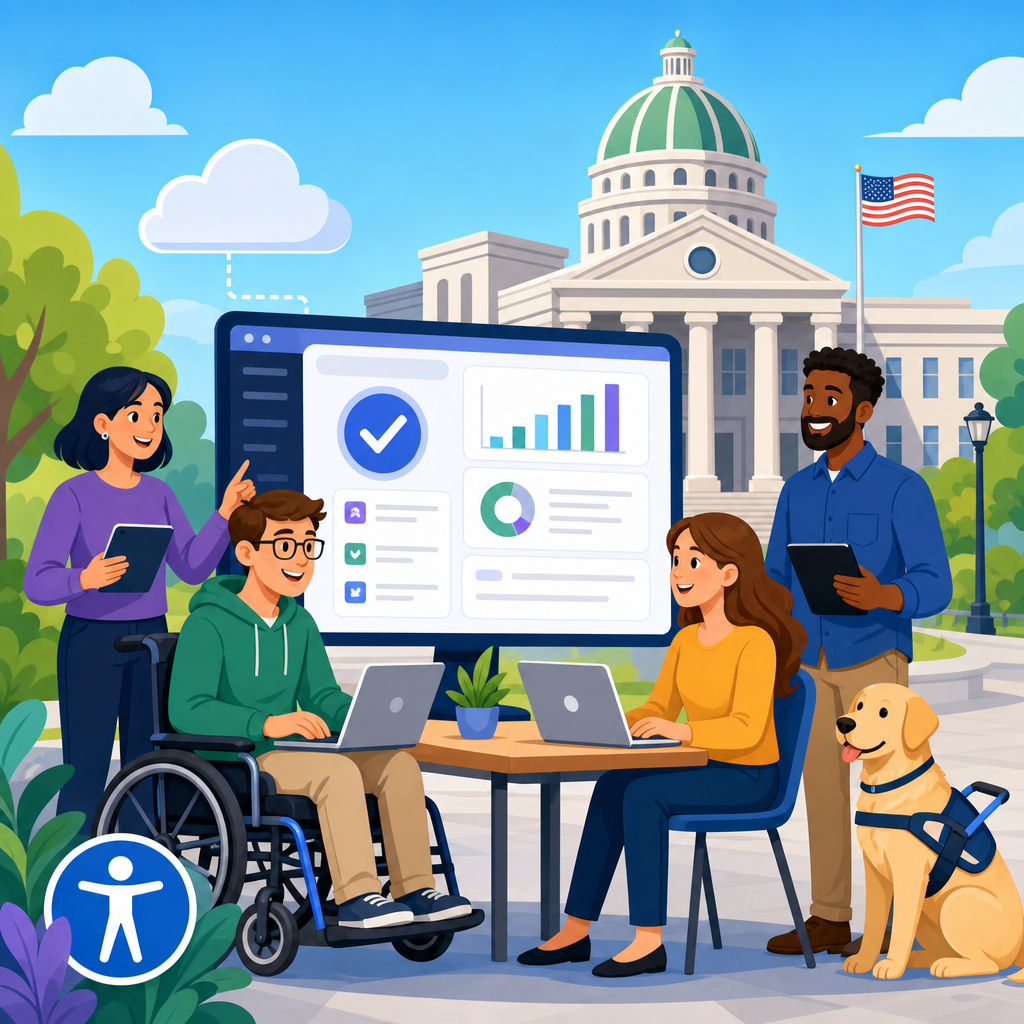
SaaS companies selling to public entities face a distinct accessibility burden because software offered to government buyers is scrutinized under the Americans with Disabilities Act, Section 508, and related state procurement rules. In practice, that means a product demo, website, help center, onboarding flow, mobile app, and core platform all need to work for users with disabilities, not just the marketing site. I have worked with software vendors through public-sector security reviews and accessibility remediation plans, and the same pattern appears repeatedly: teams assume accessibility is a design preference, then discover it is a legal, contractual, and revenue-critical requirement. For a technology company building recurring revenue in education, local government, transit, healthcare, or public administration, ADA compliance is not a side project. It is part of product strategy, sales enablement, procurement readiness, and customer retention.
This ADA guide for SaaS companies selling to public entities explains what matters, what buyers ask for, and how to operationalize compliance without stalling product delivery. Public entities include state agencies, counties, cities, public universities, school districts, courts, libraries, and quasi-governmental bodies. These organizations must provide equal access to digital services, so they evaluate software accessibility before purchase and after deployment. Key terms matter. The ADA prohibits discrimination based on disability. Section 508 governs federal information and communication technology and heavily influences state and local purchasing. WCAG, the Web Content Accessibility Guidelines, provides the technical benchmark most procurement teams use, typically version 2.1 Level AA. A VPAT, or Voluntary Product Accessibility Template, is the standardized document vendors use to report conformance. Understanding how these pieces fit together is essential for any technology sector company treating government sales as a serious growth channel.
Why accessibility determines whether a public-sector deal closes
Accessibility affects nearly every stage of a public-sector software sale. During market research, buyers may exclude vendors whose websites, product documentation, or contact forms are inaccessible. During the request for proposal process, procurement teams ask for a VPAT, recent audit results, roadmap commitments, and examples of accommodations. During security and legal review, counsel may assess whether contract language should require remediation deadlines, indemnity provisions, or termination rights for noncompliance. After launch, the agency remains responsible for serving constituents and employees with disabilities, so inaccessible software becomes an operational and legal risk for the buyer. That risk directly reduces a vendor’s chance of winning and expanding an account.
In the technology sector, this issue is especially pronounced because SaaS products often become systems of record or essential service channels. A resident portal for permit applications, a student information platform, a transit scheduling app, or an HR system for public employees can all trigger accessibility concerns at scale. If a keyboard-only user cannot submit a form, if a screen reader cannot interpret table headers, or if color contrast obscures error states, the buyer may conclude the product creates unequal access. That conclusion is enough to delay procurement, require expensive custom remediation, or disqualify the vendor entirely. I have seen agencies move a vendor from preferred to nonresponsive solely because the accessibility documentation was vague or outdated.
The legal framework SaaS leaders need to understand
For SaaS companies, the ADA matters because public entities are covered by Title II, which requires state and local governments to provide equal access to programs, services, and activities. When those services are delivered through digital channels, software accessibility becomes part of compliance. Federal agencies also procure under Section 508, and even where Section 508 does not directly apply, its technical standards and documentation practices influence procurement across the country. Many states have adopted their own laws, policies, or accessibility manuals that mirror WCAG or Section 508 requirements. The practical takeaway is simple: a vendor cannot rely on a narrow interpretation of one statute. Government buyers evaluate the full accessibility posture of the product.
The most common technical benchmark is WCAG 2.1 Level AA, published by the World Wide Web Consortium. Public buyers often ask whether the platform supports keyboard navigation, focus visibility, text alternatives, captions, semantic headings, status messages, proper form labels, sufficient color contrast, and compatibility with assistive technology such as JAWS, NVDA, and VoiceOver. They may also ask whether PDFs, dashboards, exported reports, and embedded third-party widgets meet the same standard. Accessibility is not limited to websites. Native mobile apps, kiosks, document workflows, video players, and authentication screens all fall within the buyer’s review if they are part of the delivered service. For SaaS leaders, knowing this scope prevents a common mistake: treating accessibility as a front-end website issue instead of an end-to-end product requirement.
What public buyers expect from accessibility documentation
Government customers expect evidence, not promises. The baseline document is usually a VPAT, most commonly using the Information and Communication Technology industry format maintained by the Information Technology Industry Council. A strong VPAT is specific, current, and written by people who understand the product. It identifies each relevant criterion, states the level of support, explains exceptions, and describes how testing was performed. A weak VPAT uses generic language like “supports with exceptions” without describing the actual user impact. Procurement reviewers notice the difference quickly. If your sales team cannot answer follow-up questions about known gaps, remediation timing, or testing methods, confidence drops.
Beyond the VPAT, mature buyers may ask for manual audit reports, automated scan summaries, accessibility statements, product roadmap items, and sample issue logs. They may also ask whether the vendor has an internal accessibility policy, designated owner, or release process that checks for regressions. These requests are reasonable because accessibility conformance changes over time as the product evolves. A VPAT created two years ago against an old interface is not persuasive for a rapidly shipping SaaS product. The strongest vendors pair documentation with process evidence: they show that accessibility is tested in design reviews, engineering acceptance criteria, QA cycles, and major releases.
How to build an accessibility program inside a SaaS company
Accessibility becomes manageable when it is treated as an operating system rather than a one-time audit. In my experience, the most effective SaaS programs start with executive ownership, then connect product, design, engineering, QA, support, and legal around a shared standard. Product managers define accessibility requirements in the backlog. Designers use accessible component libraries and annotate focus order, contrast, and error behavior. Engineers implement semantic markup, keyboard support, ARIA only where necessary, and resilient form validation. QA verifies behavior with both automated tools and manual assistive-technology checks. Support captures user-reported barriers and routes them into remediation. Legal and sales ensure claims in proposals match the product’s actual state.
A practical rollout usually follows a staged sequence. First, define the applicable standard, typically WCAG 2.1 AA, and inventory every user-facing asset. Second, audit the highest-risk workflows such as login, navigation, search, forms, tables, dashboards, and file exports. Third, fix blockers that prevent task completion. Fourth, build durable controls in the design system and development lifecycle. Fifth, document status honestly in the VPAT and customer-facing accessibility statement. The companies that make the fastest progress are not always the largest; they are the ones that stop treating accessibility defects as optional polish and instead classify them alongside security, privacy, and reliability issues.
| Program Area | What Public Buyers Expect | Operational Standard for SaaS Teams |
|---|---|---|
| Documentation | Current VPAT, known exceptions, testing dates | Update after major releases and annual audits |
| Design | Readable interfaces and predictable interaction | Accessible components, contrast checks, focus specs |
| Engineering | Keyboard access and screen reader compatibility | Semantic HTML, correct labels, limited ARIA misuse |
| Quality Assurance | Evidence beyond automated scans | Manual testing with NVDA, JAWS, VoiceOver, keyboard |
| Procurement Support | Fast answers during RFP review | Central repository for VPATs, audits, roadmap notes |
| Remediation | Timelines for fixing material issues | Severity model, owner assignment, release tracking |
Testing methods that hold up under procurement review
Automated scanning is useful, but it is not enough. Tools such as axe DevTools, WAVE, Accessibility Insights, and Lighthouse catch recurring issues like missing alternative text, low contrast, empty buttons, or malformed headings. They are efficient for continuous integration and regression spotting. However, automated tools typically detect only a portion of WCAG failures. They cannot reliably evaluate whether link text makes sense out of context, whether focus order matches user expectation, whether a custom widget announces state changes properly, or whether instructions depend only on color. Public buyers that understand accessibility know these limitations, so they often ask whether manual testing was performed.
Manual testing should cover core workflows with keyboard-only navigation and common assistive technologies. For web applications, that usually includes NVDA with Firefox, JAWS with Chrome or Edge, and VoiceOver with Safari, because those pairings reflect real usage patterns. Testing should verify headings, landmarks, modal dialogs, error identification, dynamic content announcements, table relationships, and time-based media controls. Mobile products should be checked with iOS VoiceOver and Android TalkBack. If the SaaS platform exports documents, generated PDFs need tagging, reading order, heading structure, and accessible tables. Accessibility defects should be triaged by user impact, not by developer convenience. A missing decorative alt attribute is different from a date picker that traps keyboard focus and blocks task completion.
Common accessibility gaps in SaaS products sold to government
Most accessibility failures in SaaS are predictable. Complex single-page applications often break semantic structure with custom components that look polished but expose little usable information to assistive technology. Data-heavy platforms misuse tables or convert real tables into visually arranged div layouts, making row and column relationships unreadable. Dashboards rely on color alone to convey status. Rich text editors, drag-and-drop interfaces, and map-based interactions lack keyboard alternatives. Authentication flows fail because password rules are not programmatically associated with fields, CAPTCHA has no accessible option, or multifactor prompts time out before some users can complete them.
Reporting and document output create another frequent problem. A platform may have an accessible user interface but generate inaccessible PDFs, CSV exports with unclear headers, or email notifications that fail contrast and heading rules. Video-based training inside the product may lack captions or transcripts. Embedded third-party tools, including chat widgets, scheduling modules, payment processors, and analytics overlays, can undermine the accessibility of an otherwise compliant experience. Public buyers increasingly ask vendors to identify these dependencies because responsibility does not disappear when a component is outsourced. The vendor still owns the delivered experience contractually and commercially.
Accessibility in procurement, contracting, and post-sale account growth
Accessibility should be positioned as a deal-readiness function, not only a compliance function. Sales teams need concise, accurate answers for common questions: Which WCAG version do you test against? When was the VPAT last updated? What exceptions remain? How quickly are critical issues remediated? Which assistive technologies have you tested with? When those answers are documented and rehearsed, procurement cycles move faster. When they are improvised, agencies escalate scrutiny. I advise SaaS teams to keep an accessibility response packet alongside their security package. It should include the VPAT, summary audit, policy statement, issue-escalation path, and roadmap language that sets realistic expectations.
Contracting also matters. Public entities may request warranty language, remediation commitments, service credits, or termination rights tied to accessibility failures. Vendors should involve counsel and product leadership early so obligations match actual delivery capacity. Overpromising is dangerous. A balanced contract acknowledges current conformance, commits to remediation of material barriers, and defines a process for handling user-reported issues. Done well, accessibility can support expansion. Agencies prefer vendors that respond transparently, fix defects promptly, and improve over time. In the technology sector, that trust often leads to renewals, multi-department adoption, and stronger references across public networks.
How this technology sector hub supports deeper compliance work
This page serves as the technology sector hub within a broader set of industry-specific guides, so its value is directional as well as instructional. SaaS teams rarely solve accessibility with one checklist. They need connected guidance for procurement responses, product design systems, mobile accessibility, document remediation, third-party risk management, and public-sector contracting. A hub structure helps internal teams and buyers navigate those topics logically. Product leaders can use it to prioritize platform fixes. Revenue teams can use it to prepare for RFPs. Compliance owners can use it to align accessibility with privacy, security, and service delivery obligations.
The central lesson is straightforward. If your SaaS company sells to public entities, accessibility must be designed, tested, documented, and maintained as a core capability. The ADA and related procurement standards are not abstract legal concepts; they shape buying decisions, implementation success, and long-term account value. Start with your highest-impact workflows, validate them against WCAG 2.1 AA, produce a credible VPAT, and establish a repeatable remediation process. Then build outward across support content, documents, mobile experiences, and third-party integrations. Companies that do this well remove barriers for users, reduce procurement friction, and become safer choices for government customers. Use this hub as your starting point, then turn the guidance into an operating plan your team can execute this quarter.
Frequently Asked Questions
1. Why does ADA compliance matter so much more when a SaaS company sells to public entities?
When you sell software to a public entity, accessibility is not treated as a nice-to-have feature or a general brand issue. It becomes part of the buyer’s legal, procurement, and risk-review process. Government agencies, public universities, municipalities, and other public-sector organizations are expected to provide equal access to digital services, which means they cannot confidently adopt software that creates barriers for users with disabilities. In that environment, your platform is evaluated not just as a commercial product, but as a tool the agency may use to serve employees, students, residents, or the general public.
That is where the ADA, Section 508, and related state-level accessibility rules start to overlap in practical ways. While the legal framework may vary depending on the buyer and use case, the core expectation is consistent: if your software will be used in a public-facing or public-serving context, it needs to be accessible across the entire user experience. Buyers are increasingly aware that inaccessible software can expose them to complaints, remediation costs, procurement disputes, and reputational harm. As a result, accessibility is often reviewed alongside cybersecurity, privacy, and data handling.
For SaaS vendors, the important point is that scrutiny usually extends far beyond the main application. Public buyers may evaluate your website, demo environment, login flow, onboarding process, documentation, training materials, support portal, embedded third-party tools, and mobile apps. If any of those components are inaccessible, the buyer may conclude that the product introduces unacceptable risk. In many procurements, accessibility defects can delay the deal, trigger additional review, require a corrective action plan, or eliminate the vendor from consideration entirely.
In short, accessibility matters more in public-sector sales because it directly affects eligibility to sell, speed of procurement, legal defensibility, and long-term customer success. A SaaS company that treats accessibility as a product governance issue rather than a marketing checkbox is usually in a much stronger position during public-entity evaluations.
2. What accessibility standards and laws should SaaS companies be prepared to address in public-sector sales?
SaaS companies should be prepared for buyers to ask about multiple overlapping standards rather than a single rule. In most cases, the practical benchmark for digital accessibility is the Web Content Accessibility Guidelines, usually WCAG 2.1 Level AA and, increasingly, WCAG 2.2 Level AA. These standards provide the technical framework reviewers use to assess issues such as keyboard access, color contrast, screen reader compatibility, form labeling, focus management, captions, error identification, and mobile usability. Even when a buyer mentions the ADA or Section 508, WCAG is often the standard used to measure whether the software is accessible in practice.
Section 508 is especially important when selling to federal agencies and often influences state and local procurement as well. It requires federal agencies to procure information and communication technology that is accessible, and many public buyers model their requirements, questionnaires, and contract language on that framework. Agencies may request a Voluntary Product Accessibility Template, commonly called a VPAT, which is used to document how your product aligns with accessibility criteria. A VPAT is not proof of compliance by itself, but it is a standard procurement artifact and often expected early in the review process.
The ADA also remains highly relevant, particularly because public entities must ensure equal access to programs, services, and activities. If your software supports those activities, accessibility becomes part of the agency’s own legal obligations. Depending on the jurisdiction, state laws, university system policies, or local procurement rules may add further requirements. Some buyers have stricter internal standards than the baseline law and may require regular audits, remediation timelines, or documented accessibility roadmaps before a contract is approved.
The best preparation is to understand the legal terms your buyers use, while building your internal accessibility program around recognized technical standards such as WCAG. Your sales, product, legal, and customer success teams should be aligned on what standards you are targeting, what evidence you can provide, where known gaps exist, and how you communicate remediation plans. Buyers are generally more comfortable with vendors who are organized, transparent, and proactive than with vendors who claim blanket compliance but cannot support the claim.
3. What parts of a SaaS product ecosystem need to be accessible when selling to government buyers?
The short answer is: nearly everything a buyer, administrator, employee, resident, student, or end user may interact with. One of the most common mistakes SaaS companies make is focusing only on the public marketing website while overlooking the rest of the customer journey. Public buyers often evaluate the full ecosystem because accessibility problems can occur at every stage, not just inside the authenticated application.
That ecosystem typically includes your marketing site, pricing or request-a-demo forms, product demos, trial environments, sign-up and login flows, password reset processes, onboarding sequences, admin dashboards, end-user interfaces, reporting modules, settings pages, embedded documents, chat widgets, support portals, knowledge bases, training videos, and downloadable resources. If you offer a mobile app, kiosk mode, integrations, or third-party components, those may also be reviewed. In many cases, procurement teams and accessibility reviewers will test exactly the materials your team uses during the sales process, including slide decks, PDFs, and demo scripts.
Accessibility also needs to be considered across user roles. A platform might be accessible for a typical end user but difficult for an administrator who must complete complex setup tasks with a keyboard or screen reader. Likewise, a help center may appear readable visually but fail for users relying on structured headings, alt text, transcripts, or proper link labeling. Government buyers often think in terms of operational access, which means the product must work for real users performing real tasks under normal conditions.
From a practical standpoint, SaaS companies should inventory all customer-facing and user-facing touchpoints, then assess accessibility as a system rather than as a single webpage or feature. This broader view is important because procurement reviewers may reject a product that has an accessible core interface but inaccessible training content, inaccessible user support, or inaccessible account setup workflows. A complete accessibility program recognizes that public-sector usability depends on the full experience being workable for people with disabilities.
4. What documents or proof should a SaaS company have ready during a public-sector accessibility review?
At a minimum, most SaaS companies selling to public entities should be ready with a current VPAT, an accessibility statement, and a clear internal explanation of how accessibility is tested and maintained. The VPAT is often the first document requested because procurement teams use it to understand how your product aligns with applicable accessibility criteria. It should be accurate, specific, and based on a real evaluation of the product. A vague or overly optimistic VPAT can create credibility problems if the buyer’s own testing uncovers issues that the document failed to disclose.
Beyond the VPAT, buyers may ask for audit reports, remediation plans, accessibility policies, product roadmaps for known issues, and information about your development and QA practices. They may want to know whether you test with assistive technologies such as screen readers, whether keyboard-only navigation is included in QA, whether designers follow accessible component standards, and how quickly defects are prioritized and fixed. Some agencies also ask for sample contract language addressing accessibility obligations, support commitments, or post-sale remediation procedures.
A strong documentation package usually includes more than compliance paperwork. It shows that accessibility is integrated into product operations. For example, you may be able to describe how engineering teams use semantic HTML, how design systems enforce contrast and focus states, how product releases are reviewed for regressions, and how customer-reported accessibility issues are triaged. If you have conducted third-party audits or usability testing involving people with disabilities, that can also strengthen your position, especially when paired with evidence that identified issues are tracked to resolution.
What matters most is honesty, structure, and readiness. Public buyers understand that many products are on an accessibility journey. They are often willing to work with a vendor that has documented processes, realistic timelines, and executive ownership. They are far less comfortable with a vendor that has no records, no testing discipline, and no plan. In other words, proof is not just about showing where you comply; it is about showing that accessibility is managed in a disciplined, credible, and ongoing way.
5. How can a SaaS company improve accessibility without slowing down product development or public-sector growth?
The most effective way to improve accessibility without creating constant friction is to build it into your development lifecycle instead of treating it as a late-stage cleanup task. When accessibility is considered during design, engineering, content creation, QA, and release management, improvements become much more efficient and less expensive. Teams move faster when they are using accessible patterns from the start rather than retrofitting complex workflows after a customer complaint or procurement escalation.
A practical starting point is to create an accessibility baseline. That usually means auditing the main product, the website, key conversion paths, support content, and any high-risk workflows such as authentication, form submission, and reporting. Once you understand the current state, prioritize fixes based on customer impact, procurement risk, and frequency of use. Critical blockers affecting keyboard navigation, screen reader access, captions, focus order, or form completion should typically be addressed before lower-severity cosmetic issues.
It also helps to assign ownership across functions. Product leaders should define accessibility requirements, designers should use accessible components and