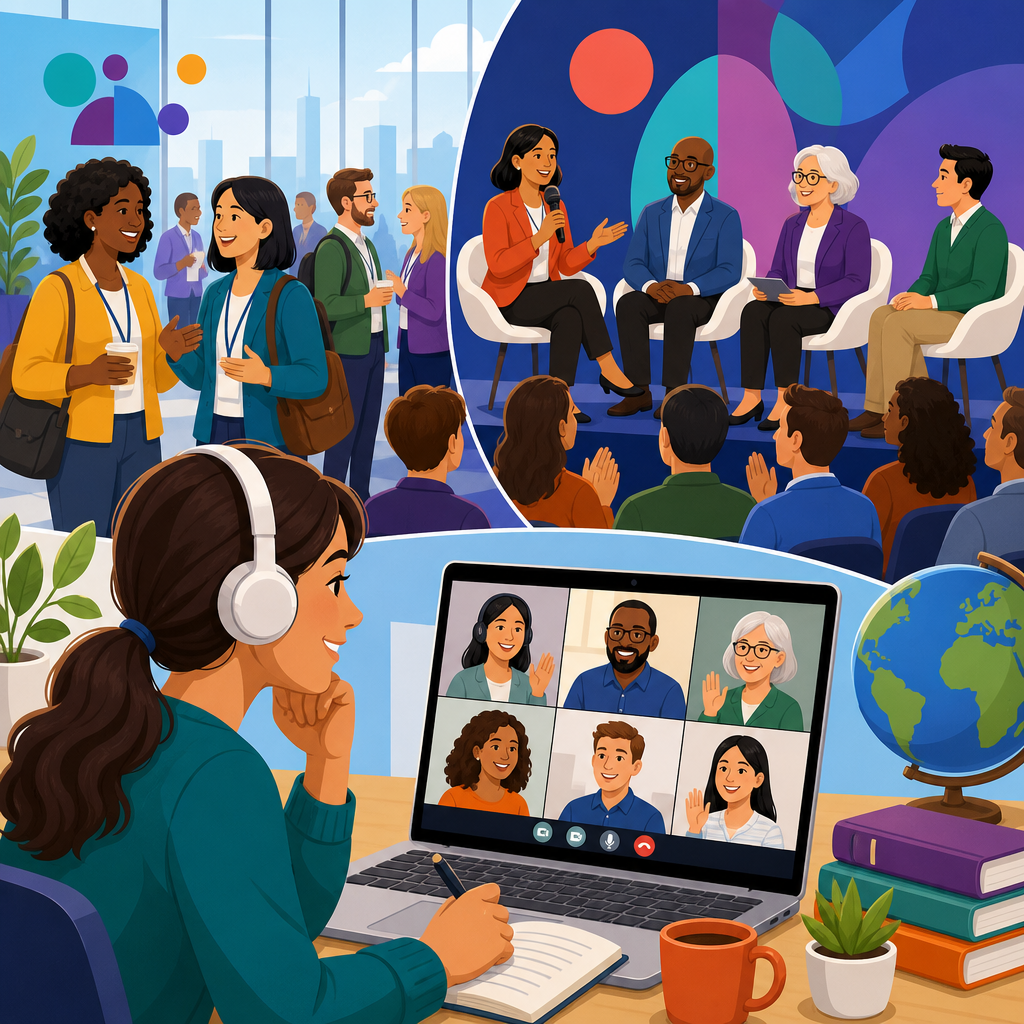
ADA conferences, symposia, and webinars worth following can shape how organizations, advocates, and accessibility professionals understand compliance, digital inclusion, and practical support under the Americans with Disabilities Act. In this context, ADA refers not only to the law itself, but also to the broader professional ecosystem built around disability rights, accessible design, workplace accommodation, higher education access, transportation policy, healthcare communication, and digital usability. I have worked with teams preparing for audits, training staff, and evaluating event calendars, and one lesson is consistent: the right events save time, reduce risk, and connect people to solutions that rarely emerge from regulations alone. This hub article covers advanced ADA support and networking comprehensively by explaining which event formats matter, which organizers consistently deliver value, how to choose among conferences and webinars, and how this resource can guide deeper exploration across the wider resources and support topic. For professionals who need current interpretations, peer examples, and dependable relationships, following the right ADA events is not optional; it is a practical operating advantage.
Why ADA Events Matter for Advanced Support and Networking
ADA events matter because the law is applied in living environments, not in a vacuum. A regulation may set the baseline, but questions about effective communication, reasonable accommodation, website accessibility, service animals, housing intersections, procurement standards, and event inclusion are often clarified through discussion with practitioners. Conferences and symposia create that discussion at scale. Webinars make it continuous. In my experience, the strongest accessibility programs use all three: large annual conferences for strategic direction, specialized symposia for technical depth, and recurring webinars for updates between major gatherings.
These events also help different roles speak the same language. An HR director may arrive focused on accommodation workflows, while a campus ADA coordinator is worried about testing access, and a UX leader is trying to align WCAG conformance with procurement policy. A strong event translates across those silos. That cross-functional value is why this page sits at the center of advanced ADA support and networking. It is a hub by design: readers can use it to identify event categories, evaluate credibility, and then branch into narrower resources such as digital accessibility training, accommodation best practices, or disability compliance tools.
Another reason to follow ADA conferences, symposia, and webinars is that enforcement trends shift. The ADA itself is stable in its core structure, but expectations around digital access, telehealth, mobile apps, self-service kiosks, and online learning evolve through case law, Department of Justice guidance, settlement patterns, and industry adoption of recognized standards. Good events surface those signals early. They do not replace legal advice, but they help professionals ask better questions and prepare smarter policies.
National Conferences That Set the Agenda
Several national events consistently deserve attention because they convene experienced speakers, publish useful agendas, and attract attendees from government, education, business, and disability advocacy. The Annual ADA Symposium is one of the most established. It typically brings together ADA coordinators, employers, architects, attorneys, disability services staff, and accessibility consultants. What makes it valuable is its range: sessions often span Titles I, II, and III, accessible meetings, digital access, transportation, policy updates, and implementation case studies. For anyone building a broad compliance and inclusion strategy, this is one of the best anchor events to follow.
CSUN Assistive Technology Conference is another essential gathering, especially for digital accessibility and assistive technology practitioners. Although it is broader than the ADA alone, it directly supports ADA implementation by showing how blind, low-vision, deaf, hard of hearing, neurodivergent, and mobility-disabled users actually interact with products and services. Sessions commonly cover screen readers, captioning, mobile accessibility, document remediation, procurement, and inclusive design. If your ADA responsibilities touch websites, apps, online services, higher education technology, or enterprise software, CSUN belongs on your radar.
The M-Enabling Summit is especially useful for leaders focused on accessible technology markets, innovation, and policy. It often features corporate accessibility executives, disability advocates, telecom leaders, and public-sector speakers. I recommend it to teams trying to connect ADA obligations with product strategy, procurement roadmaps, and customer experience design. Where some events focus on legal interpretation, this summit often pushes the conversation toward implementation and market adoption.
Professionals should also watch conferences hosted by disability rights organizations, higher education associations, rehabilitation technology groups, and public-sector accessibility programs. The most credible events tend to publish speaker biographies, archived session descriptions, accessibility information for attendees, and practical learning outcomes. When an organizer demonstrates accessibility in the event itself through captioning, sign language interpretation, clear venue details, and accessible registration systems, that is a strong signal of quality.
Specialized Symposia for Deeper Expertise
Symposia are where advanced ADA support and networking often become most useful. They are usually narrower than conferences and therefore better for solving complex problems. In higher education, for example, disability access symposia often address testing accommodations, note-taking alternatives, housing requests, clinical placements, fieldwork accessibility, and the boundary between academic standards and reasonable modification. These are not abstract concerns. They affect retention, litigation risk, and student trust.
Healthcare-focused symposia deserve close attention as well. Hospitals, clinics, insurers, and telehealth providers face ADA questions involving effective communication, accessible patient portals, scheduling systems, exam equipment, service counters, and companion policies. A healthcare symposium can unpack practical issues that a general event may only touch briefly, such as workflows for qualified interpreters, accessible consent forms, or the limits of relying on family members for communication assistance.
Built environment symposia are equally important for architects, facilities leaders, code officials, and project managers. Here the value comes from translating standards into site decisions: slopes, door clearances, wayfinding, seating dispersion, hotel room inventory, restroom layouts, and renovation trigger points. The ADA Standards for Accessible Design provide the baseline, but experienced presenters explain where projects go wrong, how inspections are documented, and how to coordinate accessibility with state and local codes that may differ.
Employment and HR symposia are useful when organizations need help with interactive process documentation, job description review, leave as an accommodation, return-to-work planning, and performance management. In these sessions, nuance matters. Strong speakers do not present accommodation as a script; they explain timelines, undue hardship analysis, confidentiality, and the distinction between medical inquiry limits and legitimate business needs.
Webinars That Keep You Current Between Major Events
Webinars are the most efficient way to maintain ADA knowledge throughout the year. The best starting point for many professionals is the National Network of ADA Centers, which provides regionally grounded training, technical assistance, and frequent webinars on employment, state and local government obligations, public accommodations, and emerging issues. Their value lies in practical interpretation. Sessions are usually designed to answer the exact questions organizations face, and archived recordings make them easy to share internally.
The Job Accommodation Network is another source worth following closely, especially for workplace accommodation. Its webinars and training materials are trusted because they focus on actionable solutions: accommodation examples by limitation, technology tools, supervisory communication, and industry-specific scenarios. For HR teams, JAN content often helps move a conversation from uncertainty to implementation.
Federal agencies and major advocacy organizations also offer strong webinar series. The U.S. Access Board is essential for technical guidance involving the built environment, transportation, and accessible design standards. The Department of Justice occasionally releases guidance or public materials that influence training priorities. Disability:IN, AHEAD, IAAP chapters, and leading universities frequently host webinars that blend policy with field experience. For digital accessibility, webinars from Deque, TPGi, Level Access, and similar firms can be valuable when they are educational rather than purely promotional.
The challenge is volume. Many calendars look impressive, but not every webinar merits an hour of staff time. I advise teams to prioritize webinar series that archive content, identify presenter credentials, provide accessibility features, and address implementation details. A good webinar should answer what changed, who is affected, what actions are needed, and where uncertainty remains.
How to Evaluate Which ADA Events Are Worth Following
Not all ADA events provide the same value, and advanced professionals should screen them systematically. The first criterion is relevance to your role. A municipal ADA coordinator needs different content than a product accessibility lead or a disability services director. The second is speaker quality. Look for presenters with direct implementation experience, not only general familiarity. Attorneys, coordinators, auditors, faculty specialists, rehabilitation engineers, and assistive technology users each add different strengths. The best agendas balance them.
The third criterion is substance. Useful sessions cite standards, guidance, cases, or measurable practices. They explain how a policy works in the field, not just what the law says at a high level. The fourth is accessibility of the event itself. Registration, agenda documents, live captioning, remote participation tools, and venue information should be easy to use. An inaccessible accessibility event is a warning sign.
| Event Type | Best For | Main Benefit | Typical Limitation |
|---|---|---|---|
| National conference | Cross-functional leaders | Broad trend visibility and networking | Less depth on niche issues |
| Specialized symposium | Technical or sector experts | Detailed problem solving | Narrower audience and scope |
| Recurring webinar series | Ongoing staff development | Frequent updates and easy sharing | Lower peer networking value |
| Vendor-hosted training | Tool users and buyers | Product-specific implementation insight | May emphasize sales over neutrality |
Finally, evaluate whether the event creates durable value after it ends. The strongest programs provide slide decks, recordings, transcripts, resource links, or follow-up communities. Those assets turn a one-time event into a reusable support library.
Building a Practical ADA Learning and Networking Plan
Following ADA conferences, symposia, and webinars works best when it is intentional. Start by mapping your responsibilities across employment, facilities, communications, digital services, procurement, and public interaction. Then match each area to event types. A broad annual conference can cover the strategic layer. A specialized symposium can address your hardest domain problem. Monthly webinars can keep your policies current.
I have seen organizations get the most benefit when they designate internal owners for each topic. For example, HR tracks JAN and employment-focused sessions, facilities follows the U.S. Access Board and design symposia, and digital teams monitor CSUN-related content and accessibility vendor education. After each event, the attendee should produce a short debrief: what changed, what actions are needed, which teams are affected, and what follow-up resources matter. This simple discipline converts event attendance into operational knowledge.
Budget planning matters too. Travel-heavy conferences justify themselves when attendees have decision-making authority, active projects, or vendor evaluation needs. Webinars are ideal for broader staff exposure because they are inexpensive and easier to schedule. Membership organizations can also provide hidden value through listservs, communities of practice, and member archives that extend beyond the live session.
As a hub within resources and support, this page should be used as the starting point for a larger learning path. Use it to identify event priorities, then connect those priorities to companion articles on accommodation strategy, digital accessibility support, compliance documentation, disability training, and community partnerships. That is how advanced ADA support and networking become sustainable rather than reactive.
Key Takeaways for Choosing ADA Conferences, Symposia, and Webinars
The best ADA conferences, symposia, and webinars worth following are the ones that help you apply legal obligations in real settings, learn from experienced practitioners, and build relationships you can rely on when difficult questions arise. National conferences such as the Annual ADA Symposium, CSUN Assistive Technology Conference, and M-Enabling Summit provide broad visibility into policy, technology, and implementation trends. Specialized symposia deliver the depth needed for sectors like higher education, healthcare, employment, and the built environment. Webinar sources such as the ADA Centers, Job Accommodation Network, and U.S. Access Board keep that knowledge current between larger events.
For advanced ADA support and networking, the goal is not to attend everything. It is to follow the right mix of events, evaluate them critically, and turn what you learn into better policies, better services, and more accessible experiences. Prioritize credible organizers, experienced speakers, accessible delivery, and practical follow-up materials. Then create a simple internal process for sharing takeaways and assigning next steps.
If you are building your resources and support roadmap, use this hub as your starting point and identify the next event categories most relevant to your role. Choose one national conference to monitor, one specialized symposium aligned to your hardest challenges, and one reliable webinar series for ongoing updates. That approach will strengthen compliance, expand your network, and make your ADA work more effective year-round.
Frequently Asked Questions
What kinds of ADA conferences, symposia, and webinars are most worth following?
The most valuable ADA-related events usually combine legal updates, practical implementation strategies, and perspectives from people with disabilities, compliance leaders, educators, employers, and accessibility specialists. In practice, that means it is worth following conferences and webinars that address several overlapping areas: employment accommodation, digital accessibility, higher education access, healthcare communication, transportation policy, public accommodations, and state or local government compliance. The strongest programs do more than repeat general ADA basics. They explain how regulatory expectations are changing, how courts and agencies are interpreting obligations, and how organizations are turning policy into day-to-day action.
For many professionals, the best event lineup includes a mix of national conferences, specialized symposia, and shorter webinars. Large conferences often provide broad exposure to disability rights trends, technology demonstrations, case studies, and cross-sector networking. Symposia tend to be especially useful when you want deeper analysis of a focused issue such as web accessibility standards, campus accommodation procedures, accessible healthcare services, or workplace leave and interactive process obligations. Webinars are often the most efficient way to stay current throughout the year because they can quickly address emerging guidance, new enforcement priorities, or practical questions from the field.
It is also important to prioritize events hosted by reputable sources. Programs led by ADA centers, disability rights organizations, accessibility associations, higher education consortia, government-affiliated experts, or recognized legal and technical professionals tend to offer the most reliable information. In this space, credibility matters because ADA-related decisions can affect risk management, user experience, hiring, procurement, communications, and institutional policy. Events are most worth following when they translate legal principles into operational steps that organizations can actually apply.
Why should organizations follow ADA events regularly instead of only checking in when a problem comes up?
Following ADA conferences, symposia, and webinars on a regular basis helps organizations move from reactive compliance to informed, proactive accessibility planning. Waiting until a complaint, lawsuit, audit, employee request, or public accommodation issue arises often leaves teams scrambling to interpret requirements under pressure. By contrast, ongoing participation in ADA-focused events helps leaders understand patterns before they become urgent problems. That includes changes in digital accessibility expectations, common accommodation pitfalls, communication barriers in healthcare settings, and evolving best practices in educational access or customer service.
Regular attendance also helps organizations build internal awareness across departments. ADA responsibilities rarely sit with only one team. Human resources may be handling workplace accommodations, legal may be evaluating compliance exposure, IT may be responsible for website and software accessibility, procurement may be reviewing vendor accessibility claims, and communications teams may need guidance on accessible documents, captions, and alternative formats. Conferences and webinars give these stakeholders a common language and shared framework, which makes implementation more consistent and more effective.
Another major benefit is the ability to benchmark against peers. At quality ADA events, organizations hear what others are doing well, where they are struggling, and how they are measuring progress. That kind of insight can be difficult to get from static guidance alone. It helps decision-makers see whether their current approach is current, realistic, and aligned with broader professional standards. In short, ongoing engagement with ADA programming is not just about avoiding mistakes. It is about improving accessibility strategy, strengthening inclusion efforts, and making better-informed decisions across the organization.
Are ADA webinars as useful as in-person conferences and symposia?
Yes, ADA webinars can be extremely useful, especially when the goal is staying current, learning efficiently, and reaching a wider internal audience. In many cases, webinars offer highly focused, practical instruction on topics that matter immediately, such as accessible document design, reasonable accommodation procedures, captioning responsibilities, website compliance considerations, or recent ADA enforcement trends. Because they are easier to attend and often archived, webinars can be a very effective tool for ongoing professional development and team training.
That said, in-person conferences and longer symposia still offer advantages that webinars do not always match. Conferences typically provide broader networking opportunities, informal discussion with experts, exposure to assistive technology vendors, and a more immersive learning environment. They are often better for exploring complex issues that benefit from multiple sessions and cross-disciplinary conversation. Symposia can be especially valuable when they bring together legal, technical, administrative, and lived-experience perspectives around one topic in a way that goes deeper than a standard one-hour presentation.
The best approach is usually not choosing one format over the other, but using each for its strengths. Webinars are ideal for maintaining awareness throughout the year, training staff on specific responsibilities, and responding quickly to new developments. Conferences and symposia are ideal for strategic learning, relationship building, and deeper problem-solving. Organizations that combine all three formats tend to develop a more mature understanding of ADA compliance and accessibility because they get both timely updates and larger-context insight.
Which topics should professionals watch for when choosing ADA events to follow?
Professionals should look for ADA events that cover both foundational and emerging topics. Foundational subjects include the basics of Title I employment obligations, effective accommodation processes, accessibility in public services and public accommodations, auxiliary aids and services, physical access issues, and disability-related communication requirements. These topics remain essential because they affect daily operations in workplaces, schools, healthcare systems, transportation settings, and customer-facing environments.
Emerging and fast-moving topics are just as important. Digital accessibility is one of the biggest areas to watch, including website accessibility, mobile app usability, accessible procurement, electronic document remediation, and alignment with recognized accessibility standards. Higher education access continues to be a major focus as institutions work through questions involving course materials, online learning platforms, testing accommodations, housing, and disability services administration. Healthcare communication access, including interpretation, accessible patient portals, and disability-responsive care practices, is another area where demand for practical guidance continues to grow.
It is also wise to follow events that address implementation, not just theory. Sessions on policy design, documentation practices, complaint prevention, staff training, budgeting for accessibility, cross-functional governance, and measuring progress are often the most actionable. In addition, events that include disabled presenters and community perspectives tend to be more grounded and more useful because they connect compliance obligations with real-world usability and inclusion. The strongest ADA programming helps attendees understand not only what the law expects, but also how to create systems that work better for people.
How can someone tell whether an ADA conference, symposium, or webinar is credible and worth the time?
A credible ADA event usually has three qualities: knowledgeable presenters, practical substance, and a clear connection to recognized legal and accessibility standards. Start by looking at who is speaking. Strong programs often feature ADA specialists, disability rights advocates, attorneys with relevant experience, accessibility practitioners, government or ADA center experts, higher education or healthcare leaders, and presenters with lived disability experience. A diverse speaker lineup is often a good sign because ADA-related issues cross legal, technical, operational, and human dimensions.
Next, review the agenda closely. A worthwhile event should do more than make broad promises about compliance or inclusion. Look for specific session topics, such as reasonable accommodation case studies, accessible technology procurement, effective communication requirements, transportation accessibility updates, employment law developments, or practical website accessibility workflows. The more concrete the agenda, the more likely the event will deliver applicable value. It is also helpful when organizers describe learning objectives, identify the intended audience, and provide materials or recordings that participants can refer back to later.
Finally, pay attention to balance and accessibility. The best ADA events are themselves accessible, offering features such as captioning, sign language interpretation when appropriate, accessible registration and materials, and opportunities for participant questions. They also avoid fear-based messaging and instead focus on accurate, usable guidance. A credible event should help attendees make informed decisions, not simply alarm them about liability. If the program combines expert instruction, practical examples, accessible delivery, and real understanding of disability inclusion, it is usually well worth following.


