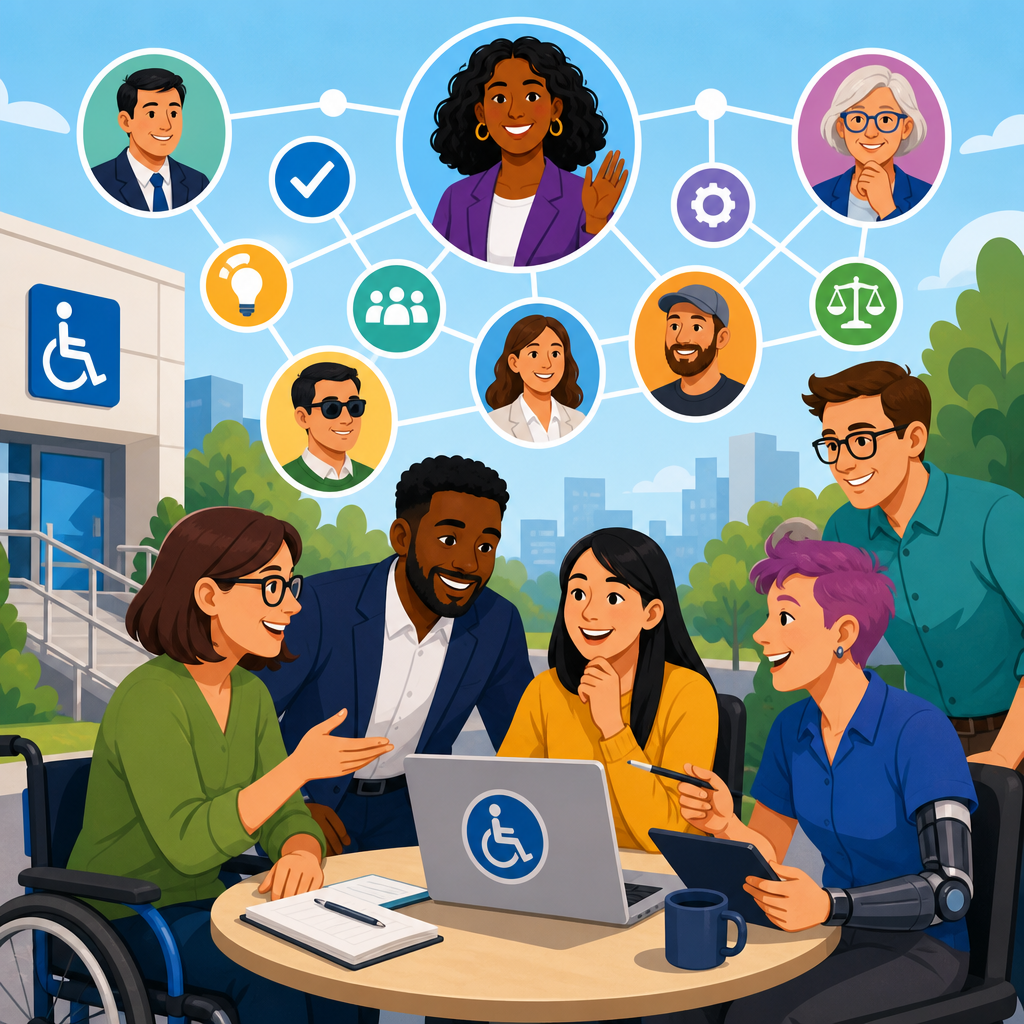
Professional accessibility networks are one of the fastest, most reliable ways to solve ADA problems because they connect organizations with practitioners who already know the laws, standards, tools, and lived realities behind compliant design. In this context, ADA refers to the Americans with Disabilities Act, the federal civil rights law that prohibits disability discrimination in employment, public services, transportation, telecommunications, and places of public accommodation. Accessibility networks are formal and informal groups of consultants, disability advocates, attorneys, peer organizations, technologists, facilities specialists, and trainers who share expertise, referrals, and implementation support. I have used these networks to troubleshoot inaccessible websites, evaluate physical barriers in offices, find captioning vendors on short notice, and pressure-test accommodation policies before they reached employees or customers. That practical value matters because ADA issues rarely sit in one department. A website complaint can involve legal review, procurement, design systems, PDF remediation, and customer service scripts. A building access concern can involve architects, landlords, facilities teams, and disability community input. Trying to solve these issues alone is slow and risky. Using professional accessibility networks gives you faster answers, stronger documentation, better vendor choices, and more credibility when leadership asks what good looks like.
This hub article explains how to use advanced ADA support and networking effectively, not just how to join a listserv or attend a conference. You need to know which networks solve which problems, how to vet the advice you receive, when to use legal counsel instead of peer guidance, and how to turn one-off conversations into an ongoing support system. You also need a working vocabulary. Technical assistance means practical guidance on standards and implementation. Reasonable accommodation means a modification or adjustment that enables an employee or applicant with a disability to participate, unless it causes undue hardship. Effective communication covers auxiliary aids and services such as interpreters, captioning, and accessible formats. Program access, digital accessibility, and barrier removal each involve different operational questions. The goal of professional networking is not simply meeting people. The goal is solving ADA problems with the right expertise at the right time, while building repeatable internal processes that reduce future risk and improve access for real people.
What professional accessibility networks include and why they work
Professional accessibility networks work because ADA compliance is interdisciplinary. No single person typically knows employment accommodations, WCAG conformance, state building code overlays, procurement clauses, service animal policy, and captioning logistics at expert level. The strongest networks bring together specialists from each area. In practice, that includes disability rights organizations, regional ADA centers, rehabilitation engineers, certified access specialists where applicable, accessibility auditors, human resources leaders, procurement officers, assistive technology trainers, and in-house counsel. National groups such as the Job Accommodation Network provide structured accommodation guidance, while the ADA National Network offers region-based technical assistance. Industry communities, including IAAP chapters, digital accessibility Slack groups, legal associations, and procurement coalitions, often surface implementation insights faster than formal publications.
These networks work best because they shorten the distance between a problem and someone who has seen it before. When a university asks whether a legacy PDF archive must be remediated immediately, a mature network can distinguish legal risk, user impact, and phased remediation strategy. When a retailer receives a complaint about inaccessible self-checkout kiosks, network contacts can identify applicable design standards, testing protocols, and hardware vendors with accessible interfaces. When an employer is unsure whether voice recognition software or a schedule adjustment is the better accommodation, peers can share what succeeded in similar roles and what documentation helped support the decision. The cumulative effect is practical pattern recognition. You are not reinventing solutions; you are adapting proven ones to your facts, your budget, and your deadlines.
Where to find advanced ADA support and networking opportunities
The best accessibility networks usually combine public resources, professional associations, and community-based relationships. Start with the ten regional ADA centers, which provide credible technical assistance on the ADA’s core titles and common implementation questions. They are especially useful when your team needs plain-language clarification before policy decisions are made. For workplace issues, the Job Accommodation Network remains essential because it organizes accommodation options by limitation, job function, and industry. For digital accessibility, I regularly look to W3C guidance, IAAP communities, Deque events, WebAIM training, and accessibility-focused product groups tied to platforms such as Microsoft, Google, Adobe, and Salesforce. For the built environment, connect with architects familiar with the 2010 ADA Standards for Accessible Design, code consultants, and local disability commissions that understand recurring enforcement issues.
Do not overlook niche and local networks. Chambers of commerce disability inclusion councils, statewide independent living centers, deaf and hard of hearing service agencies, blind services organizations, and transit advisory committees often solve practical problems that national groups discuss only in broad terms. A hospital system, for example, may need immediate advice on video remote interpreting quality, tactile wayfinding, and accessible patient intake forms. Local partners can identify which interpreting agencies are dependable, which wayfinding consultants understand healthcare settings, and which EHR workflows create barriers for screen reader users. Conferences also matter, but the return comes from follow-up. The most useful contacts are usually the ones you can email two months later with a specific question and receive a grounded answer instead of a sales pitch.
How to match the right network to the ADA problem
Not every accessibility contact can solve every issue, so categorizing the problem upfront saves time. I use a simple triage approach: define the affected activity, identify the governing standards, list stakeholders, then decide whether the issue is legal, technical, operational, or all three. If the issue involves hiring, leave, performance, and essential job functions, start with accommodation and employment experts. If it involves websites, apps, kiosks, documents, or procurement, prioritize digital accessibility specialists who can test with assistive technology and explain remediation. If it involves routes, restrooms, parking, counters, signage, or alterations, pull in built environment professionals. If it involves customer communication, bring in captioning, interpreting, and alternate-format specialists. This sounds obvious, but many organizations lose weeks by asking generalists questions that require specialist judgment.
| ADA problem | Best network contacts | What they can solve |
|---|---|---|
| Employee accommodation request | Job Accommodation Network, HR peers, employment counsel, disability advocates | Interactive process options, documentation, undue hardship analysis |
| Inaccessible website or app | Digital accessibility auditors, WCAG specialists, QA testers, platform experts | Testing, remediation plans, vendor accountability, user validation |
| Physical access barrier | Architects, facilities teams, code consultants, local disability commissions | Barrier removal priorities, alteration standards, site-specific fixes |
| Communication access issue | Captioning vendors, interpreters, plain-language specialists, disability service agencies | Auxiliary aids, workflow setup, quality control, response time standards |
Once the problem is categorized, frame your outreach clearly. Instead of asking, “How do we become ADA compliant?” ask, “Our public meeting videos are posted within twenty-four hours; what captioning workflow meets effective communication needs without delaying publication?” Instead of asking, “Is our office accessible?” ask, “Our leased suite has a heavy manual entry door and no lowered reception counter; what changes are typically considered readily achievable, and what landlord coordination is needed?” Specific questions attract specific answers. They also make it easier for network contacts to share templates, checklists, sample policy language, or vendor names that directly fit the problem.
How to evaluate advice, vendors, and referrals inside a network
Accessibility networks are powerful, but not every recommendation is equally strong. Some advice is grounded in standards and user testing; some is outdated, anecdotal, or shaped by a vendor’s sales agenda. I evaluate every referral on five factors: subject-matter fit, current knowledge, evidence of results, independence, and responsiveness. Subject-matter fit means a web accessibility firm should not be advising on structural doorway alterations unless it has that expertise. Current knowledge matters because WCAG techniques evolve, assistive technology changes, and court expectations shift. Evidence of results includes sample reports, remediation plans, training materials, and references from organizations with similar complexity. Independence matters because the best advisors will acknowledge tradeoffs instead of forcing every problem toward their own service line. Responsiveness matters because ADA issues often come with complaint deadlines, construction schedules, or employee relations pressure.
Ask direct questions before accepting advice. Which standard are you using: the 2010 ADA Standards, WCAG 2.1 AA, WCAG 2.2 AA, Section 508 refresh requirements, or a state code overlay? How do you test: automated tools only, or manual testing with keyboard, screen reader, magnification, and mobile accessibility checks? Have you worked in our sector: healthcare, higher education, retail, government, hospitality? Can you provide examples of remediation roadmaps, not just audit findings? How do you involve disabled users in validation? Strong providers answer precisely. Weak ones hide behind vague promises like “full compliance guaranteed.” No serious expert guarantees zero risk, because accessibility is an ongoing operational discipline, not a one-time certificate.
Turning network connections into repeatable ADA support systems
The real value of advanced ADA support appears when networking becomes an operating system rather than an emergency response. Build a core contact map with categories for employment accommodations, digital accessibility, physical access, communications, procurement, training, and legal escalation. Add primary and backup contacts for each area, along with contract status, response times, and known strengths. Then create internal triggers for when those contacts should be used. For example, procurement should notify digital accessibility reviewers before software purchase, not after launch. Facilities should consult accessibility specialists during planning, not after construction punch lists. Human resources should know when to involve accommodation experts early, especially when a request intersects with technology, schedule changes, or hybrid work arrangements.
Documentation is what turns networking into institutional knowledge. After each meaningful interaction, capture the issue, advice received, standards referenced, decision made, and follow-up owner. Over time, this becomes a living resource center for recurring ADA problems. I have seen teams cut response times dramatically by maintaining a simple internal knowledge base with sample accommodation letters, approved captioning vendors, website testing checklists, accessible event planning guides, and escalation pathways for high-risk complaints. Training should also flow from the network. Invite trusted experts to brief procurement teams, designers, hiring managers, and frontline staff. When those sessions use your actual forms, buildings, and customer workflows, employees retain the lessons and make better decisions before barriers appear.
Common mistakes and the smartest way to avoid them
The biggest mistake is treating accessibility networking as a search for a single guru. ADA problems are too varied for that. Another common error is waiting until a complaint, demand letter, or employee dispute forces action. By then, timelines are compressed and choices are more expensive. Organizations also stumble when they confuse legal sufficiency with practical usability. A technically defensible position can still fail disabled users in everyday conditions. I have also seen teams rely too heavily on automated scanning tools, generic policy templates, or architects who know code minimums but not disability experience. These shortcuts create false confidence. Professional networks help most when they bring multiple perspectives together: legal, technical, operational, and lived experience.
Avoid these pitfalls by setting clear objectives for every network interaction. Know whether you need interpretation of a requirement, confirmation of an implementation approach, a vendor referral, or user feedback. Involve disabled people early, not as a final checkpoint. Cross-check high-impact advice against authoritative sources and, when needed, counsel. Budget for accessibility as a continuing function, not a crisis expense. Most importantly, stay active between problems. Share what you learn, attend targeted sessions, and keep your contact base warm. Accessibility networks reward reciprocity. When you become known as an organization that asks informed questions, implements recommendations, and reports back on outcomes, experts are more willing to help quickly and candidly.
Using professional accessibility networks to solve ADA problems is ultimately about making better decisions faster, with less guesswork and more accountability. The ADA sets the legal baseline, but durable accessibility comes from coordinated expertise applied to real situations: a job accommodation request, a broken online form, an inaccessible entrance, an event without captions, a procurement review that misses screen reader compatibility. Networks give you access to specialists who can narrow options, explain standards, and point to proven solutions. They also help you build internal capacity so every issue does not start from zero. As the hub for advanced ADA support and networking, this topic should guide how you find experts, evaluate advice, structure referrals, and turn individual contacts into a dependable support system.
The main benefit is not simply reduced legal exposure, although that matters. The deeper benefit is operational confidence. Your team can respond to accessibility questions with evidence, process, and credible partners instead of improvisation. That leads to better service, smoother accommodation handling, stronger procurement decisions, and environments that work for more people. Start by mapping your most common ADA risks, identifying the networks that match them, and documenting who to call before the next issue arrives. Then strengthen those relationships through training, follow-up, and shared problem solving. If you build that network now, you will resolve ADA problems more effectively and create access that holds up in daily practice.
Frequently Asked Questions
What are professional accessibility networks, and why are they useful for solving ADA problems?
Professional accessibility networks are formal and informal communities made up of accessibility consultants, ADA coordinators, disability rights advocates, attorneys, auditors, user researchers, assistive technology specialists, inclusive designers, developers, architects, HR leaders, and people with lived disability experience. These networks may exist through industry associations, LinkedIn groups, nonprofit coalitions, conference communities, local accessibility meetups, vendor partnerships, higher education programs, or disability-led organizations. Their value is simple: instead of trying to interpret ADA obligations in isolation, organizations can tap into a trusted group of people who already understand the legal framework, technical standards, operational realities, and human impact of accessibility decisions.
That matters because ADA problems are rarely one-dimensional. A single issue may involve legal risk, customer experience, digital standards, physical design, procurement, staff training, and policy updates all at once. Professional accessibility networks help organizations move faster by connecting them with practitioners who have seen similar problems before and know which solutions are practical, defensible, and scalable. For example, if a business is unsure whether its website issue should be handled as a WCAG remediation matter, a customer service barrier, or a larger ADA compliance risk, the right network can point them to experts in each area and help prioritize next steps.
These networks are also useful because they reduce guesswork. Rather than relying on outdated articles or isolated opinions, organizations can access current perspectives shaped by real audits, remediation projects, enforcement trends, and user testing. In many cases, the most effective guidance comes from professionals who combine technical knowledge with direct input from disabled users. That combination helps organizations solve ADA problems in a way that is not only compliant on paper, but also genuinely usable in practice.
How can an organization use accessibility networks to identify the right expert for a specific ADA issue?
The best approach is to start by clearly defining the problem before reaching out. ADA issues usually fall into one or more categories, such as digital accessibility, physical access, employment accommodations, public-facing communication, transportation access, procurement, or policy and training. Once the organization understands the type of barrier involved, it becomes much easier to use an accessibility network strategically. A website navigation issue may require a digital accessibility specialist and user testing support, while a question about workplace accommodations may call for HR, legal, and disability inclusion expertise. A confusing service-animal policy, inaccessible forms, or missing captioning may require a different mix of practitioners.
When using a professional network, organizations should ask focused, practical questions. Instead of saying, “We need help with ADA compliance,” ask something like, “We need a consultant with experience auditing public-facing web applications against WCAG and advising on ADA-related risk,” or “We are looking for an expert who can review our employment accommodation process under ADA requirements.” Specific requests tend to produce better referrals and faster connections. Good networks often work through reputation, so asking who has successfully handled similar matters is especially valuable.
It is also important to evaluate experts carefully. Look for demonstrated experience in the relevant setting, whether that is healthcare, higher education, retail, hospitality, government, or software. Ask whether they have worked with disabled users, whether they understand both standards and implementation, and whether they can communicate clearly with legal, technical, and operational teams. The strongest experts do not offer one-size-fits-all answers. They ask questions about scope, risk, timelines, and affected users, then recommend a path that is realistic and evidence-based. Accessibility networks help surface these professionals much more efficiently than a general online search because they are built on trust, specialization, and shared professional knowledge.
What kinds of ADA problems can professional accessibility networks help solve most effectively?
Professional accessibility networks are especially effective when an ADA issue is complex, cross-functional, urgent, or unfamiliar to the organization. That includes digital barriers such as inaccessible websites, mobile apps, PDFs, forms, kiosks, and online booking systems. It also includes physical and operational barriers such as inaccessible entrances, service counters, signage, event spaces, customer communication methods, and policies that unintentionally exclude disabled people. In employment settings, networks can help organizations improve accommodation procedures, interview processes, internal systems, and manager training. In public-facing environments, they can support captioning, interpretation access, alternate formats, and broader communication accessibility.
These networks are particularly valuable when the problem is not just “What does the rule say?” but “How do we fix this effectively?” Many ADA-related challenges involve tradeoffs, sequencing, and coordination across departments. For example, remediating a website may require executive sponsorship, procurement changes, vendor management, developer training, quality assurance updates, and user testing with assistive technology. A professional network can help assemble the right mix of skills so the organization does not treat accessibility as a one-time patch instead of a durable process improvement.
They are also helpful in preventive work. Organizations do not need to wait for a complaint, lawsuit, or government inquiry to benefit from accessibility networks. In fact, one of the smartest uses of these communities is early intervention: reviewing products before launch, pressure-testing internal policies, improving design systems, choosing accessible vendors, and building internal governance before problems escalate. That proactive use of accessibility networks often saves money, reduces legal exposure, and leads to better service for everyone.
How do accessibility networks support both ADA compliance and better real-world accessibility?
One of the biggest advantages of professional accessibility networks is that they help organizations bridge the gap between formal compliance and actual usability. ADA compliance is rooted in civil rights obligations, and in many contexts, related technical benchmarks and accepted accessibility standards guide implementation. But checking boxes alone is not enough. A system can appear compliant in theory while still being confusing, frustrating, or unusable for disabled people in real situations. Accessibility networks help close that gap by bringing together legal interpretation, technical practice, operational experience, and lived disability insight.
For example, a digital accessibility auditor may identify missing labels, keyboard traps, or color contrast failures, while a blind screen reader user can explain how those issues affect task completion in a meaningful way. An architect may understand accessible routes and spatial requirements, while a disability advocate may point out barriers in wayfinding, customer interaction, or emergency planning that are often missed. A captioning specialist may address technical media accessibility, while a communications expert helps ensure content is understandable and easy to request in alternate formats. Networks create opportunities for these perspectives to inform each other rather than operating in silos.
This is why accessibility networks often produce stronger outcomes than isolated compliance efforts. They help organizations move beyond minimum risk management and toward durable accessibility maturity. That includes better procurement standards, better design decisions, better testing practices, better training, and more responsive accommodation processes. In other words, these networks do not just help organizations answer, “Are we exposed?” They help answer, “Are people actually able to access what we offer?” That shift is essential for solving ADA problems in a meaningful and lasting way.
What are the best practices for building long-term relationships with professional accessibility networks?
The most effective organizations do not treat accessibility networks as emergency hotlines that they contact only when a complaint arrives. They build ongoing relationships before problems become urgent. A good first step is to identify a few trusted networks that align with the organization’s needs, such as disability-led groups, professional associations, digital accessibility communities, ADA-focused legal and policy forums, or local and industry-specific accessibility coalitions. From there, it helps to participate consistently by attending events, joining discussions, asking informed questions, and staying current on emerging issues and best practices.
Internally, organizations should designate ownership for accessibility so relationships built through networks do not disappear across departments. That might be an accessibility lead, compliance officer, UX leader, ADA coordinator, HR leader, or cross-functional governance group. The key is to create continuity. Keep a vetted list of consultants, trainers, testers, interpreters, remediation partners, and disability community contacts. Document who specializes in what, how quickly they respond, and where they have been effective. Over time, this turns a loose set of contacts into a practical problem-solving system.
It is also important to engage with humility and respect. Accessibility networks are most valuable when organizations listen, compensate experts appropriately, include disabled people in decision-making, and avoid treating accessibility as purely a branding or liability issue. Ask for candid feedback, share enough context to get useful advice, and be prepared to act on what you learn. Long-term relationships are built when organizations show that they are serious about improvement, not just optics. When that happens, professional accessibility networks become more than a referral source. They become a trusted extension of the organization’s capacity to solve ADA problems quickly, responsibly, and with a much better understanding of what accessibility requires in the real world.


