The Americans with Disabilities Act (ADA) is a landmark civil rights law enacted in 1990 that prohibits discrimination against individuals with disabilities. While most people are familiar with the ADA in the context of physical disabilities, there is increasing recognition of its importance for those with mental health conditions. As an essential part of protecting civil rights, the ADA provides comprehensive support and protection for those with mental health disabilities, ensuring equal access and opportunities in various areas of life, including employment, education, transportation, and public accommodations. Let’s delve into how the ADA safeguards mental health, areas of special focus, and the efforts to break the stigma surrounding mental health conditions.
Understanding the ADA’s Protections for Mental Health
The ADA’s protection for mental health conditions is extensive. It classifies a “disability” as a physical or mental impairment that substantially limits one or more major life activities. By encompassing mental health within its purview, the ADA ensures that people with conditions such as depression, anxiety, bipolar disorder, schizophrenia, and post-traumatic stress disorder (PTSD) are not subjected to discrimination. Employers, educational institutions, and public entities must provide reasonable accommodations to these individuals, enabling them to participate fully in societal activities and occupations.
Reasonable accommodations might include modifications or adjustments to the work or learning environment, such as providing flexible work schedules, offering telecommuting options, allowing extended leave for treatment, or adjusting examination settings in educational contexts. The ADA stipulates these accommodations should not impose “undue hardship” on employers or institutions, balancing individual needs with organizational capacities.
Mental Health in the Workplace
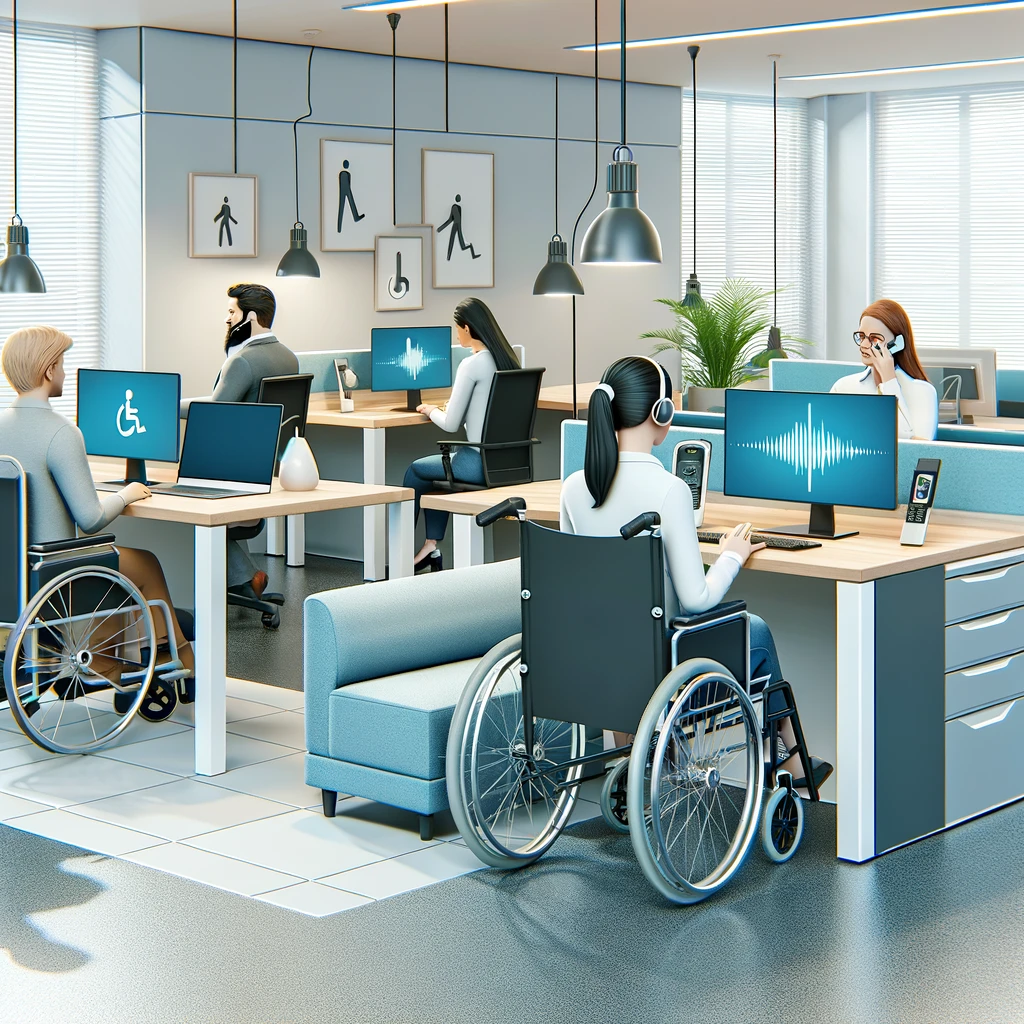
The workplace is integral to many individuals’ lives, and mental health can significantly impact job performance, satisfaction, and overall well-being. The ADA protects employees with mental health conditions from discrimination in all employment practices, ranging from recruitment to promotion and termination. Employers are required to make reasonable accommodations to support employees’ mental health needs.
Creating a supportive and inclusive work environment is crucial. Employers can foster mental health by implementing supportive policies, conducting regular mental health awareness training, promoting work-life balance, and establishing Employee Assistance Programs (EAPs). Employers should also encourage open dialogue about mental health, reducing stigma and ensuring employees feel safe to discuss their conditions without fearing adverse consequences.
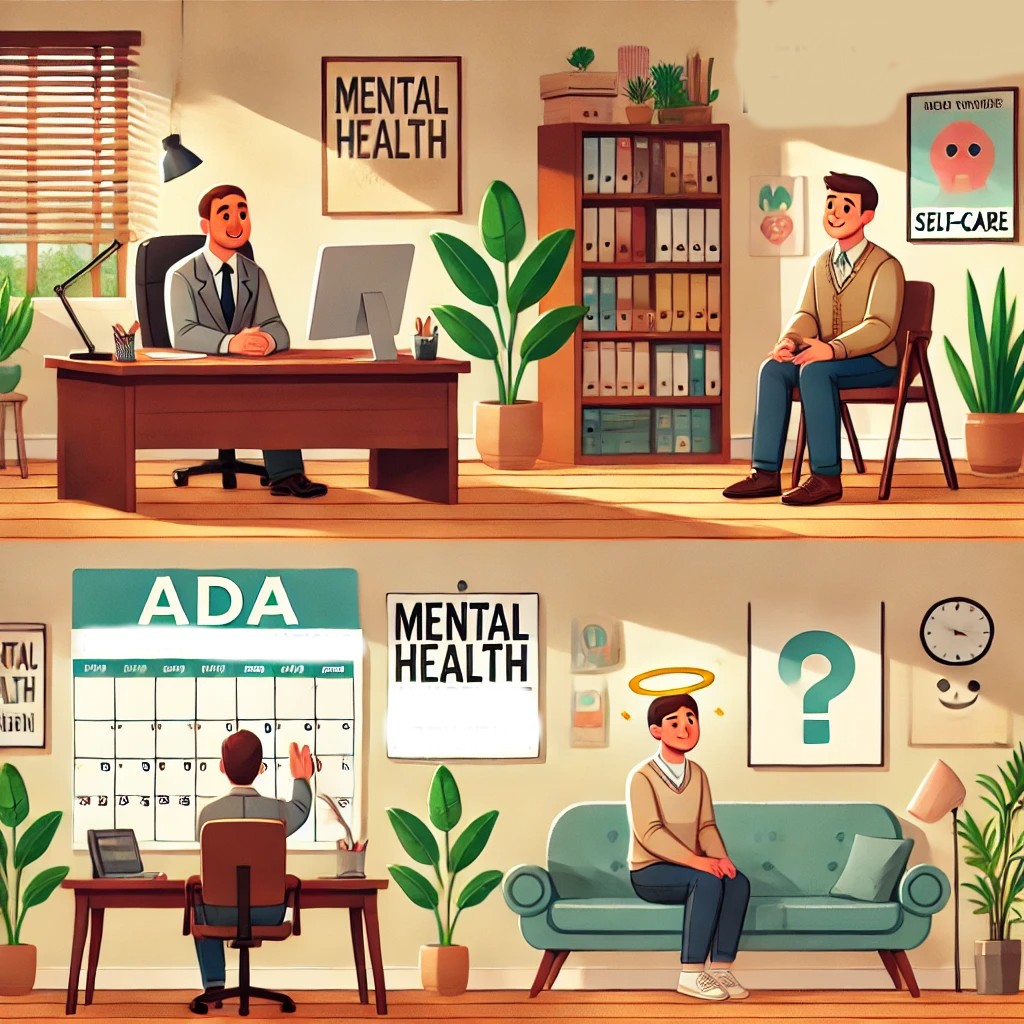
For instance, if an employee with anxiety needs a quieter workspace or flexible scheduling to attend therapy sessions, the ADA obligates the employer to accommodate these needs, provided they do not place undue hardship on the business. These accommodations demonstrate the employer’s commitment to mental health support and can lead to increased productivity and employee loyalty.
Education and Mental Health
Access to education is a fundamental right, and the ADA plays a pivotal role in ensuring students with mental health conditions receive the necessary support to thrive academically. Educational institutions must provide reasonable accommodations to students with mental health disabilities, ensuring they have equal access to learning opportunities.
Accommodations can vary widely based on individual needs and may include extended time on tests, private testing environments, note-taking assistance, and flexibility with attendance policies. Colleges and universities often have dedicated disability services offices that work with students to determine appropriate accommodations and support services.
Furthermore, educational institutions are encouraged to foster an inclusive and supportive environment. This can be achieved through mental health awareness programs, peer support groups, accessible counseling services, and training faculty and staff to understand and address mental health issues effectively. By promoting mental health, schools can help reduce stigma, support academic achievement, and contribute to students’ overall well-being.
Public Accommodations and Mental Health
The ADA ensures that individuals with mental health disabilities have equal access to public accommodations, such as restaurants, hotels, theaters, and recreational facilities. These entities are required to make reasonable modifications to their policies, practices, and procedures to accommodate individuals with disabilities unless doing so would fundamentally alter the nature of the service provided.
For example, a movie theater might offer sensory-friendly screenings with reduced noise and lighting for individuals with anxiety or sensory processing disorders. Another example is providing clear, detailed instructions and support for individuals with cognitive impairments or anxiety when accessing public transportation.
Public entities are also encouraged to create welcoming and inclusive environments by training their staff on mental health awareness and appropriate accommodations. This approach helps ensure that individuals with mental health disabilities can participate fully in public life, reducing isolation and promoting community integration.
Advocacy and Awareness: Breaking the Stigma
One of the ADA’s most significant challenges in the context of mental health is breaking the stigma that surrounds mental health conditions. Despite legal protections, societal attitudes towards mental health can still be discriminatory and dismissive, creating barriers to access and equity.
Advocacy and awareness efforts are essential to combatting this stigma. Organizations, government agencies, and advocacy groups must work together to promote understanding and acceptance of mental health conditions. Public awareness campaigns, educational programs, and community events can help shift perceptions and reduce the prejudices that individuals with mental health disabilities often face.
Moreover, individuals with mental health conditions can share their experiences and stories, fostering empathy and understanding. Media representation also plays a crucial role; positive and accurate portrayals of mental health in films, television, and literature can challenge stereotypes and promote acceptance.
Conclusion
The Americans with Disabilities Act (ADA) is a crucial safeguard for individuals with mental health conditions, ensuring they receive the same rights and opportunities as everyone else. Through its comprehensive protection and support, the ADA fosters inclusive environments across workplaces, educational institutions, and public accommodations.
However, the fight for equality and acceptance is ongoing. Advocacy and awareness are vital in breaking the stigma surrounding mental health, ensuring individuals feel empowered to seek help and accommodations without fear of discrimination or judgment. By fostering understanding and empathy, society can create a supportive environment where everyone, regardless of their mental health condition, can thrive and contribute meaningfully.
As we move forward, it is essential to continue advocating for the rights of individuals with mental health disabilities, ensuring that the principles of the ADA are upheld and that our communities remain inclusive, supportive, and stigma-free. Together, we can break the barriers and create a world where mental health is recognized, respected, and valued.
Frequently Asked Questions
1. What is the ADA’s role in supporting individuals with mental health conditions?
The Americans with Disabilities Act (ADA) plays a pivotal role in supporting individuals with mental health conditions by ensuring their civil rights are upheld and that they are protected from discrimination. The ADA covers a broad spectrum of disabilities, and this includes mental health conditions such as depression, anxiety disorders, bipolar disorder, schizophrenia, and other psychiatric disorders. The purpose is to provide individuals with an equal opportunity to participate in all aspects of society. Under the ADA, employers, public services, transportation, and other entities are required to make reasonable accommodations and remove barriers that could limit the involvement of people with mental health conditions. This can include adapting workplaces, modifying work schedules, or providing auxiliary aids and services, all of which help integrate individuals with mental health challenges into everyday activities without stigma or discrimination. The ultimate goal is to create a more inclusive environment where everyone, regardless of mental health status, can thrive.
2. How does the ADA define a mental health disability, and who is covered?
The ADA defines a disability as a physical or mental impairment that substantially limits one or more major life activities. For mental health disabilities, this definition includes a wide range of conditions that can affect thinking, mood, behavior, and perception. Covered mental health conditions may include, but are not limited to, major depressive disorder, bipolar disorder, anxiety disorders, schizophrenia, PTSD, and obsessive-compulsive disorder (OCD). It’s important to note that the ADA does not provide a specific list of qualifying conditions; rather, it focuses on the impact the impairment has on daily functioning. This approach allows for a wide interpretation, ensuring that individuals who are significantly affected by their mental health issues receive the protection and accommodations they rightfully deserve. Moreover, protection under the ADA applies as long as an individual can prove that their condition, or the perception of their condition by others, limits their ability to perform major life activities, which can range from communicating and interacting, to working and handling daily stress.
3. What are some examples of reasonable accommodations for mental health in the workplace?
Reasonable accommodations in the workplace are modifications or adjustments to a job or work environment that enable individuals with disabilities, including mental health conditions, to perform their job duties effectively. Some examples include:
- Flexible Work Schedule: Allowing changes in start or end times or permitting part-time work to manage symptoms more effectively.
- Remote Work Options: Letting employees work from home, especially if a commute is particularly stressful or if they require a setting with fewer distractions.
- Modified Break Schedules: Providing the option for additional breaks or longer breaks to allow time for rest or symptom management.
- Distraction-Free Workspace: Adjusting the physical workspace to minimize interruptions, such as moving the employee to a quieter area or providing noise-canceling headphones.
- Job Coaching or Supportive Supervision: Offering job coaching services or supportive supervision to help with task organization and focus.
- Temporary Re-assignment: During particularly challenging times, re-assigning specific tasks that may be difficult due to the symptoms of their condition.
These accommodations are designed to prevent any disadvantage the employee with a mental health condition might face and to support their ability to contribute effectively in their workplace.
4. How does the ADA address stigma surrounding mental health conditions?
The ADA plays a crucial role in combating stigma surrounding mental health conditions by promoting a culture of acceptance and inclusion. One of the primary ways it achieves this is by raising awareness and legally mandating equal rights and opportunities for individuals with mental health disabilities. By ensuring these individuals are afforded the same rights in employment, housing, education, and access to public services, the ADA helps to dismantle barriers and challenge misconceptions. Through education and enforcement, the ADA encourages employers and organizations to recognize mental health conditions as valid disabilities that deserve consideration and respect, just as any physical disability would. This protection not only contributes to breaking the stigma but also empowers individuals with mental health conditions to seek help, speak out about their experiences, and advocate for their rights without fear of being marginalized or discriminated against. The ultimate aim is to cultivate an understanding within society that mental health is an integral aspect of overall health and that individuals dealing with mental health issues deserve compassion, support, and equal opportunity.
5. What can individuals do if they feel their rights under the ADA related to mental health are being violated?
If individuals feel that their rights under the ADA, particularly regarding mental health, are being violated, there are several steps they can take to address the situation. Initially, it may be beneficial to communicate directly with the employer or entity involved to discuss the concerns and explore possible solutions or accommodations. Often, a straightforward conversation can lead to resolution. If this does not prove effective, individuals should know they have the right to file a formal complaint. They can reach out to the Equal Employment Opportunity Commission (EEOC) if the issue occurs in the workplace, or the Department of Justice (DOJ) for other types of discrimination, such as those in public services or accommodations. It is important to keep detailed records of any communications, accommodations requested, and evidence of discriminatory practices, as these will be crucial in substantiating the case. Additionally, seeking assistance from a knowledgeable attorney or disability advocate can provide guidance throughout the process. Support groups and mental health organizations can also offer valuable resources and advice. Taking these steps not only asserts one’s rights but also highlights areas where companies or organizations might need further education or policy revision to better support those with mental health disabilities.