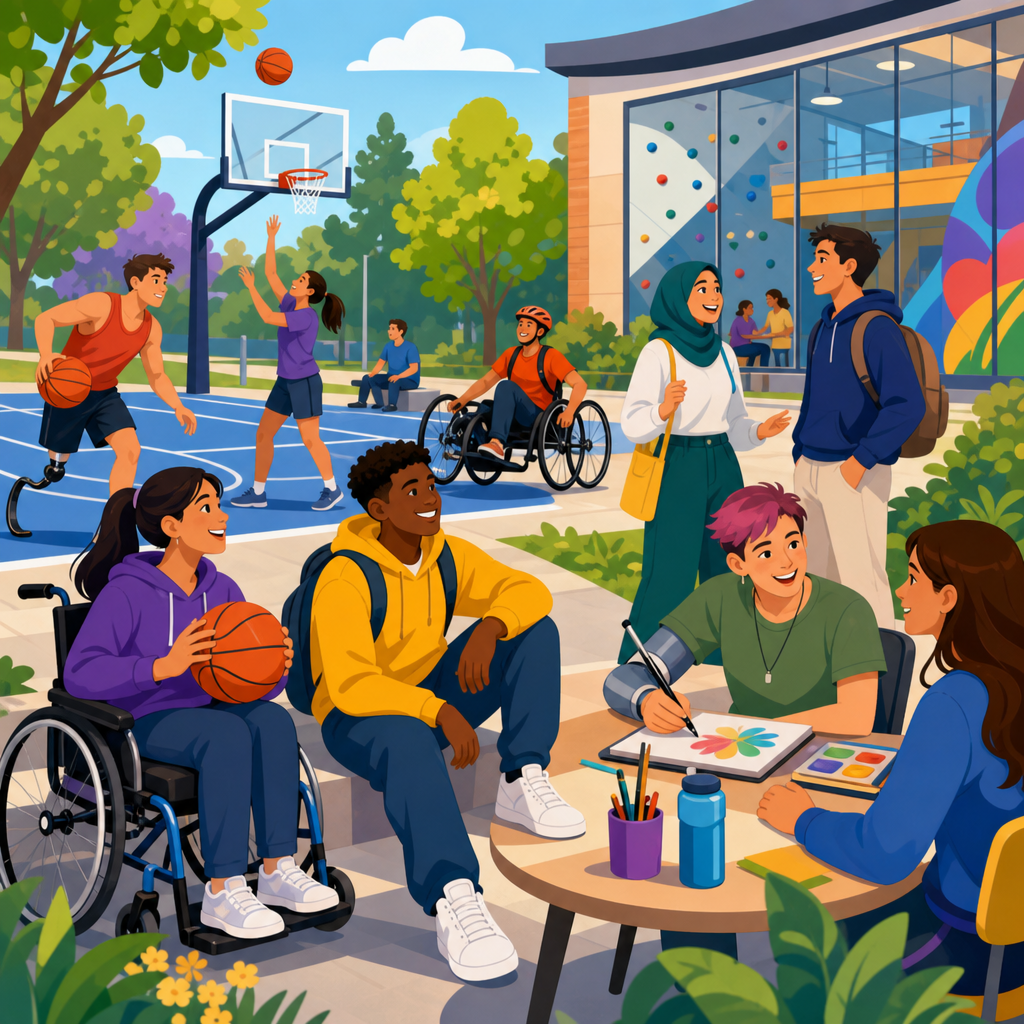
Accessible sports, recreation, and student life programming is the foundation of an inclusive education environment because it determines whether students with disabilities can fully participate in campus culture, build community, and benefit from the same developmental opportunities as their peers. In education, accessibility means designing activities, facilities, communications, and policies so students with physical, sensory, cognitive, psychological, and chronic health disabilities can engage safely and meaningfully. Sports includes varsity, club, and intramural athletics. Recreation covers fitness centers, outdoor programs, aquatics, esports, and informal wellness activities. Student life programming includes orientation, leadership programs, residence life events, student organizations, Greek life, cultural programming, and campus traditions.
I have worked with colleges and schools that assumed classroom accommodations were enough, then discovered that exclusion was happening in the gym, on the field, in the residence hall, and at late-night campus events. That pattern is common. Students often judge belonging not only by academic access, but by whether they can join a pickup game, attend a concert with friends, hold student government office, travel on an outdoor excursion, or navigate a crowded welcome week. When those experiences are inaccessible, retention, mental health, and school satisfaction suffer. Federal disability law, including the ADA and Section 504, establishes baseline obligations, but strong institutions go further by embedding access into planning, staffing, budgeting, training, and assessment.
This hub article explains how education leaders can build accessible sports, recreation, and student life programming across the full student journey. It also serves as a roadmap for related topics under education, including accessible events, recreation center design, adaptive equipment, inclusive communications, transportation, emergency planning, and digital registration systems. The practical goal is straightforward: remove barriers before students encounter them, offer individualized support when needed, and create programs where participation is expected rather than exceptional.
Why accessible programming matters in education
Accessible programming matters because co-curricular participation is directly linked to persistence, leadership development, social connection, and post-graduation success. Research across higher education consistently shows that students who participate in student organizations, intramurals, campus events, and residence life programming report stronger belonging and engagement. For disabled students, those benefits are often harder to access because barriers compound. A student may be able to attend class using accommodations yet still be excluded from a club fair because aisles are too narrow, from intramurals because registration software is incompatible with screen readers, or from a trip because staff have no process for medication storage or mobility equipment transport.
In K-12 settings, the stakes are equally high. Recreation and student activities support peer relationships, confidence, communication skills, and physical health. Accessible school dances, after-school clubs, adapted physical activity, and inclusive field days help students develop independence and social identity. These programs also shape family trust. Parents notice when a school plans proactively for access rather than treating disability support as a last-minute exception. In both K-12 and postsecondary environments, the message of accessible student life is simple: students are not guests in campus culture; they are part of it.
Institutions also benefit operationally. Programs designed with accessibility in mind reduce reactive scrambling, complaints, and avoidable risk. Staff can standardize captioning workflows, ticketing accommodations, transportation procedures, and adaptive recreation protocols instead of reinventing them event by event. Better planning improves attendance and broadens the audience for every activity, not only disability-specific offerings. Clear sightlines, quieter spaces, plain-language instructions, and multiple participation formats help many students, including multilingual learners, students with temporary injuries, and those who are new to campus.
Legal standards, policy frameworks, and institutional responsibility
Education organizations should ground accessible sports, recreation, and student life programming in established legal and policy frameworks. In the United States, Title II of the ADA applies to public institutions and Title III affects certain private operations, while Section 504 of the Rehabilitation Act prohibits disability discrimination in federally funded programs. For colleges and universities, the Department of Education’s Office for Civil Rights has repeatedly emphasized that equal access extends beyond academics to extracurricular activities, athletics, housing, dining, and student services. K-12 schools face parallel obligations for extracurriculars and nonacademic services. The core requirement is equal opportunity, not identical treatment.
That principle has practical consequences. A campus cannot advertise a recreation center as open to all students if entrances, locker rooms, or equipment layouts block wheelchair users. A student activities office cannot rely on uncaptioned videos, inaccessible PDFs, or color-only wayfinding and claim equal communication access. A school cannot deny participation in a trip because staff are uncomfortable administering accommodations if those supports can be arranged reasonably and safely. Policies should define who handles accommodations requests, timelines for response, funding responsibility, emergency procedures, and grievance routes. Without documented ownership, access fails in execution.
Standards and guidance help translate broad legal obligations into operational practice. The 2010 ADA Standards for Accessible Design remain central for built environments. Web Content Accessibility Guidelines, especially WCAG 2.1 AA, provide the benchmark for digital registration, event pages, and student engagement platforms. For adaptive sport and recreation, organizations often reference Paralympic sport classifications, inclusive recreation models, and risk management practices from NIRSA, NCAA guidance, and campus recreation associations. Strong institutions do not treat these standards as checklists. They use them to shape procurement, space planning, communication systems, and staff training from the start.
Designing inclusive sports and recreation programs
Inclusive sports and recreation begins with a program inventory. I typically advise institutions to map every offering: varsity athletics, club sports, intramurals, open recreation, group fitness, aquatics, outdoor adventure, climbing walls, esports, and wellness programming. For each activity, assess participation barriers across physical access, sensory access, communication access, policy access, and staff readiness. This process quickly reveals gaps. A fitness center may have an accessible entrance but no transfer space around resistance machines. An intramural league may welcome all students in theory but offer no adaptive rule modifications, no alternative equipment, and no referee training.
Adaptive and inclusive design strategies vary by setting. In intramurals, common modifications include allowing a buddy runner, using audible balls for blind or low-vision players, adjusting court boundaries, changing contact rules, extending play clocks, or permitting seated participation formats. In aquatics, access may require pool lifts, transfer walls, aquatic wheelchairs, clear deck routes, and trained lifeguards who understand disability-related emergency response. In outdoor programs, accessible recreation can include all-terrain wheelchairs, adaptive kayaks, tactile maps, modified harnesses, and trip planning that accounts for terrain grade, restroom access, and transportation loading procedures.
Equipment decisions matter more than many campuses realize. A single handcycle, sports wheelchair, or tactile game set can open participation, but only if procurement includes maintenance plans, storage, sanitation, and staff who know how to fit and use the equipment safely. Vendors such as Invacare Top End, Freedom Concepts, and specialized adaptive fitness manufacturers can support program development, yet institutions should pilot equipment with users before purchase. The most effective programs are co-designed with disabled students and local adaptive sport partners, because real users identify barriers that architects, coaches, and administrators often miss.
Making student life events, clubs, and traditions accessible
Student life programming often fails on small details that become major participation barriers. Event accessibility starts long before doors open. Promotion materials should include accessibility information, not merely a generic statement. Students need to know whether the venue has step-free access, accessible seating, ASL interpretation, CART captioning, sensory supports, fragrance guidance, nearby accessible parking, and a contact for requests. Registration systems should allow accommodation requests in plain language and send confirmations that explain what will happen next. Last-minute uncertainty is one of the biggest reasons students opt out.
Physical event design should account for circulation, seating choice, rest areas, and sensory conditions. For club fairs, keep aisles wide enough for mobility devices, avoid high counters without lower writing surfaces, and ensure handouts are available digitally. For performances and lectures, reserve integrated seating rather than isolating wheelchair spaces at the back. Provide microphones for all speakers, live captions when possible, strong contrast on presentation slides, and quiet retreat rooms for students who need lower stimulation. These adjustments are not niche. They improve usability for large segments of the campus population.
Campus traditions deserve the same scrutiny. Homecoming, orientation, commencement-adjacent events, late-night programming, residence hall socials, and leadership retreats often rely on fast-moving schedules, crowded spaces, loud music, and heavy visual communication. That combination can exclude students with mobility disabilities, autism, anxiety disorders, traumatic brain injuries, hearing loss, or chronic fatigue. The better approach is layered access: multiple participation options, clear schedules, quiet intervals, transportation support, early venue entry when needed, and alternatives to standing in long lines. When tradition is redesigned thoughtfully, institutions preserve community spirit while expanding who gets to share it.
Operational checklist for education teams
Execution improves when roles, timelines, and tools are standardized. The following comparison shows what accessible programming requires across major operational areas in education settings.
| Area | Common barrier | Effective practice |
|---|---|---|
| Event registration | Forms that do not work with screen readers or lack accommodation fields | Use accessible platforms, keyboard testing, and clear request workflows with response deadlines |
| Facilities | Entrances, seating, locker rooms, and routes that meet minimum code but fail in real use | Conduct user testing, measure turning radius, verify signage, and audit restrooms and emergency exits |
| Communication | Uncaptioned video, image-only flyers, jargon-heavy instructions | Caption media, add alt text, use plain language, and publish accessibility details in every promotion |
| Staff training | Employees who want to help but improvise inconsistently | Train on disability etiquette, accommodation procedures, adaptive equipment, and incident response |
| Transportation | Trips planned without lift access, securement space, or medication protocols | Book accessible vehicles early and document storage, charging, transfer, and emergency procedures |
| Assessment | No data on who participates or why students opt out | Track requests, attendance, complaints, and satisfaction, then revise programs each term |
In practice, the strongest education teams assign ownership across departments. Disability services may advise, but campus recreation, athletics, student affairs, residence life, transportation, facilities, marketing, and IT all carry direct responsibility. Budgeting should reflect that shared ownership. Captioning, interpreters, adaptive equipment, and venue modifications cannot depend solely on one office with limited funds. I have seen progress accelerate when institutions create an accessibility review step for major events and capital projects, supported by procurement standards and a standing cross-functional committee.
Digital access, communication, and student support systems
Digital access is now inseparable from student life access because nearly every participation pathway begins online. Students discover programs through websites, social platforms, email campaigns, and event apps. They register in club management systems, sign waivers, buy tickets, join team chats, and receive schedule changes digitally. If any of those steps are inaccessible, the program is inaccessible. Common problem areas include unlabeled form fields, PDFs used as image scans, low-contrast graphics, auto-playing videos without captions, and QR-only check-in systems that assume all users can scan and navigate quickly on a phone.
Accessible communication should be built into standard content operations. Event pages need headings in logical order, descriptive links, alt text for meaningful images, and clear accommodation contacts. Videos should include synchronized captions and, when necessary, transcripts. Emergency updates should be available in more than one format, especially during athletic events or outdoor trips where rapid changes occur. Student organizations also need guidance, because many access failures happen outside formal administrative offices. Providing templates for accessible flyers, social posts, slide decks, and email announcements raises quality across the entire campus ecosystem.
Support systems should be easy to navigate and not dependent on insider knowledge. Students should not have to guess whether they contact disability services, the event organizer, the coach, housing, or risk management. A centralized accessibility request pathway, paired with visible departmental contacts, reduces confusion. Response timelines matter. If a student asks for interpreting services or adaptive transportation and hears nothing for a week, the practical result is exclusion. Institutions should publish service expectations, escalation paths, and confidentiality practices so students know how requests are handled and what information must be shared.
Building a culture of inclusion through training, assessment, and partnership
Accessible sports, recreation, and student life programming becomes sustainable when it is treated as a culture issue, not a one-time compliance project. Training should move beyond etiquette basics and cover scenario-based operations: how to welcome a student using a power wheelchair onto an outdoor trip, how to adapt a tournament format, how to respond when assistive listening equipment fails, how to manage service animal access in crowded events, and how to de-escalate sensory overload without stigmatizing the student. Supervisors should rehearse these situations the same way they rehearse medical and safety protocols.
Assessment closes the loop. Institutions should review participation data, accommodation requests, event feedback, facility audits, and complaint trends each term. Qualitative input is essential. Student advisory groups, disability cultural centers, and focus groups often reveal friction points that attendance numbers hide, such as inaccessible volunteer roles, confusing signage, or social attitudes that make students feel tolerated rather than welcomed. External partnerships also strengthen programs. Local adaptive sport organizations, rehabilitation hospitals, independent living centers, and disability advocacy groups can provide expertise, referrals, and equipment insights that campus teams may lack.
The central lesson across education is clear: accessible programming is not separate from student success; it is part of student success. When institutions design sports, recreation, and student life with access in mind, they improve belonging, reduce preventable barriers, and expand opportunities for every learner. Start with an audit, assign responsibility, fix the highest-impact gaps, and involve disabled students in every major decision. That approach turns accessibility from a reactive accommodation process into a durable feature of campus life, which is exactly what inclusive education requires.
Frequently Asked Questions
What does accessible sports, recreation, and student life programming mean in an educational setting?
Accessible sports, recreation, and student life programming means designing campus experiences so students with disabilities can participate fully, safely, and with dignity alongside their peers. In practice, this goes far beyond adding a ramp or offering occasional accommodations. It includes accessible facilities, adaptive equipment, inclusive policies, clear communication, trained staff, flexible participation options, and event planning that anticipates a wide range of needs from the start. The goal is not simply physical entry into a gym, club meeting, or student event, but meaningful participation in the social, developmental, and leadership opportunities those experiences create.
In education, accessibility should account for students with physical, sensory, cognitive, psychological, neurodivergent, and chronic health disabilities. That may involve wheelchair-accessible courts and locker rooms, captioned event promotions and videos, sensory-considerate programming, interpreters or communication access services, modified intramural rules, flexible attendance expectations, and inclusive registration systems. When these elements are built into programming proactively, institutions reduce barriers before students encounter them.
Accessible programming is also a matter of equity and belonging. Sports, recreation, and student life are central parts of campus culture. They help students make friends, reduce stress, build confidence, develop leadership skills, and strengthen their connection to the institution. When students with disabilities are excluded, whether intentionally or through oversight, they lose access to the same educational and social benefits available to others. Accessible programming ensures that campus life reflects the institution’s commitment to inclusion in everyday practice, not just in policy statements.
Why is accessibility in campus sports, recreation, and student life so important for student success?
Accessibility in these areas is essential because student success is shaped by much more than classroom instruction. Students thrive when they feel connected to their campus community, have opportunities to explore interests, and can participate in activities that support physical health, mental well-being, identity development, and peer relationships. Sports, recreation, and student life programming often provide exactly those benefits, but only if students can access them. If students with disabilities face barriers to joining a club, using a fitness center, attending events, or participating in leadership opportunities, they may become isolated from the broader campus experience.
Inclusive programming supports retention and engagement by helping students build community and a sense of belonging. Students who can participate in recreation and student life are more likely to form social networks, find mentors, discover support systems, and view themselves as valued members of the institution. These experiences can reduce loneliness, improve self-advocacy, and create pathways for confidence and independence. For many students with disabilities, accessible extracurricular involvement is not a bonus; it is a critical part of navigating college successfully.
There is also a strong wellness component. Recreation and student life activities can help students manage stress, maintain physical activity, explore creativity, and engage in restorative social experiences. If these opportunities are inaccessible, students may miss out on important tools that contribute to resilience and overall health. From an institutional perspective, accessible programming strengthens campus climate, demonstrates legal and ethical responsibility, and helps create an environment where all students can participate fully in the educational experience.
What are the most common barriers students with disabilities face in sports, recreation, and student life programming?
Barriers often appear in multiple forms, and many are preventable. Physical barriers are among the most visible. These can include inaccessible entrances, narrow doorways, inaccessible locker rooms or restrooms, lack of elevator access, uneven paths of travel, inadequate seating options, and equipment that cannot be used by people with different mobility needs. In sports and recreation spaces, inaccessible courts, pools, fields, fitness machines, and spectator areas can make participation difficult or impossible.
Communication barriers are also common. Event information may be shared only in formats that are not accessible to students who are blind, low vision, Deaf, hard of hearing, or who have cognitive processing differences. Examples include images without alternative text, videos without captions, inaccessible PDFs, unclear signage, registration platforms that do not work with screen readers, or announcements that fail to mention available accommodations. If students cannot access information about a program, they are effectively excluded before participation even begins.
Policy and cultural barriers can be just as limiting. Rigid attendance rules, inflexible participation standards, complicated accommodation procedures, and assumptions about what disabled students can or cannot do all create exclusion. Students may also encounter staff or peers who are not trained in disability inclusion, resulting in awkward interactions, reluctance to provide modifications, or a focus on liability instead of access. Sensory overload, lack of quiet spaces, poor lighting, high noise levels, and unpredictable environments can be significant barriers for students with autism, sensory sensitivities, anxiety, PTSD, or migraine conditions. True accessibility requires recognizing that barriers are architectural, technological, procedural, and attitudinal all at once.
How can colleges and universities make sports, recreation, and student life programming more accessible and inclusive?
Colleges and universities can improve accessibility most effectively by adopting a proactive, universal-design approach rather than waiting for individual students to request changes. This starts with planning programs, spaces, and communications to be usable by the widest range of people possible. Facilities should be audited regularly for physical accessibility, including entrances, circulation routes, restrooms, locker rooms, seating, emergency procedures, and activity areas. Recreation centers and athletic programs should also consider adaptive equipment, adjustable machines, accessible transportation, and flexible use of space so students with different abilities can participate comfortably.
Communication practices should be equally intentional. Institutions should provide event details in accessible digital formats, use captions on videos, add alternative text to images, ensure websites and registration forms are screen-reader friendly, and clearly state how students can request accommodations. For live events, accessibility may include sign language interpreters, real-time captioning, assistive listening systems, sensory-friendly options, advance agendas, and accessible wayfinding. The key is to communicate access information upfront rather than forcing students to ask whether they are welcome.
Training is another major factor. Staff, student leaders, coaches, club advisors, and event organizers should understand disability inclusion, respectful communication, accommodation processes, and practical strategies for adapting activities. They should know how to modify rules, offer alternative participation methods, respond to access concerns, and avoid stigmatizing or paternalistic behavior. Most importantly, institutions should involve disabled students directly in planning and evaluation. Accessibility improves when students with lived experience are consulted as partners, not treated as an afterthought. Ongoing assessment, feedback collection, and accountability measures help ensure inclusion becomes part of campus culture rather than a one-time initiative.
What should students look for when evaluating whether a college offers accessible sports, recreation, and student life opportunities?
Students should look beyond broad diversity statements and examine how accessibility is reflected in actual campus life. A strong indicator is whether the institution provides clear, specific information about accessible facilities, adaptive recreation, inclusive student organizations, accommodation procedures, and disability support in extracurricular settings. If a college’s website includes accessibility details for recreation centers, club activities, event spaces, and campus traditions, that often signals a more intentional approach. Students should also look for evidence of accessible transportation, inclusive housing-event coordination, and whether campus communications consistently mention accommodations.
It is also helpful to ask practical questions. Can students with mobility disabilities access fitness areas, locker rooms, fields, pools, and meeting spaces? Are intramural and club sports open to modifications or adaptive participation? Are major campus events captioned or interpreted when needed? Are sensory-friendly options available? Do staff members know how to respond when a student requests access support? These questions can reveal whether accessibility is integrated into everyday operations or handled inconsistently.
Talking with current students, especially disabled students, can offer some of the most valuable insight. They can often speak candidly about whether participation feels realistic, welcoming, and sustainable. Students evaluating a college should also pay attention to campus climate: whether disability is treated as a normal part of diversity, whether disabled students hold leadership roles, and whether inclusion is visible in programming rather than hidden in policy documents. An accessible campus is one where students with disabilities are not merely accommodated on paper, but actively included in the full range of sports, recreation, and student life experiences.