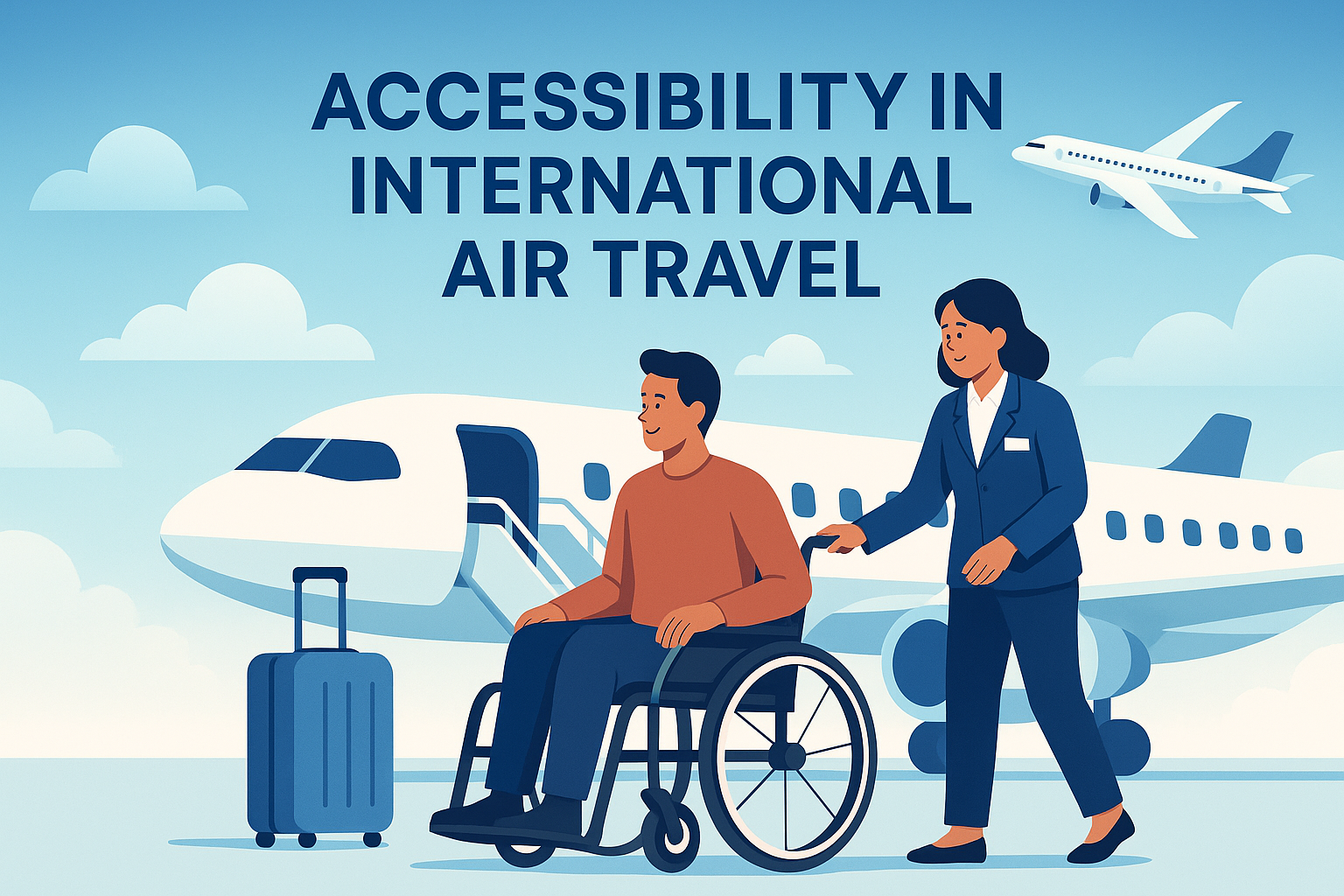
International air travel is an essential component of our globalized world, providing connections that bridge continents and cultures. However, for individuals with disabilities, traveling by air can pose unique challenges. Accessibility in air travel refers to the design and functionality of airports, aircraft, and related services to cater to the needs of all passengers, including those with disabilities. In this context, accessibility encompasses everything from wheelchair ramps and accessible restrooms to signage and communication systems tailored for people with visual or hearing impairments. Ensuring accessibility in air travel is not just about compliance with laws; it’s about inclusivity and equality, making it possible for everyone to enjoy the benefits of international travel. This article will explore the current state of accessibility in international air travel, comparing the practices of different airlines and airports worldwide, to highlight both successes and areas for improvement.
The Legal Framework: Recognizing Accessibility as a Right
The push for accessibility in air travel often finds its origins in legal frameworks established both nationally and internationally. Key among these is the Air Carrier Access Act (ACAA) in the United States, which prohibits discrimination on the basis of disability in air travel. This law requires U.S. and foreign carriers operating flights to or from the United States to provide necessary accommodations to passengers with disabilities. Similarly, the European Union has established regulations mandating nondiscriminatory treatment and accessible services in air travel.
Despite these frameworks, enforcement and implementation can vary significantly. For example, the ACAA provides the right to assistance with boarding, deplaning, and making connections, yet there are countless reported incidents where passengers with disabilities have faced undue hardship. One notable case involves the European Union Court of Justice, where an advocacy group filed a lawsuit against several airlines for failing to accommodate individuals with disabilities properly, highlighting the gap between legislation and real-world application.
Infrastructure: Bridging Physical Barriers
The physical infrastructure of an airport forms the first point of contact for travelers. Many airports have made commendable strides in improving their physical infrastructure to accommodate travelers with disabilities. Key features include ramps, elevators, tactile paving for the visually impaired, and accessible restrooms. Airports like Changi in Singapore and Schiphol in Amsterdam are often cited as exemplars for their comprehensive accessibility infrastructure, offering services like specialized lounges and dedicated assistance teams.
However, not all airports have reached such a commendable level of accessibility. For instance, smaller regional airports, particularly those in developing countries, often lack the necessary infrastructure to support travelers with disabilities fully. A case in point is Brazil’s Galeão International Airport, where advocacy groups have pointed out inconsistencies in the installation of accessibility features like auditory announcements and signage for the visually impaired.
In-Flight Services: Ensuring Comfort and Dignity
In-flight services play a crucial role in ensuring a comfortable travel experience for passengers with disabilities. These services include accessible seating arrangements, broader lavatories, and trained cabin crew who can assist passengers during the flight. Many airlines, such as Delta and Virgin Atlantic, have invested in training staff to handle specific needs and use specialized equipment, such as aisle chairs for boarding and deplaning passengers with restricted mobility.
Yet, there remain gaps in the industry’s offerings. A survey by the Open Doors Organization in 2018 revealed that a significant number of U.S. airlines still struggle with providing adequate on-board services for passengers with disabilities. Experiences shared by passengers, such as lack of accessible in-flight entertainment systems or the inability to access aircraft lavatories, underline the need for more uniform standards across the industry.
Assistive Technology and Innovation: Transforming Experiences
Technology continues to be a transformative force in enhancing accessibility in air travel. Airlines and airports are increasingly adopting assistive technologies to cater to passengers with disabilities. For example, London Heathrow launched a BLE (Bluetooth Low Energy) beacon system that provides real-time navigation assistance to passengers with visual impairments through their smartphones. Other innovations include text-to-speech applications and mobile apps designed to assist with airport navigation and flight updates.
While many technological advancements are promising, their implementations are not yet consistent across the board. Technological advancements need to be more inclusive, with consideration for users who may have multiple disabilities or those unfamiliar with modern tech solutions. For example, while some U.S. airports have moved towards a high-tech design, many lack staff trained to assist travelers less accustomed to digital interfaces.
Comparative Global Practices: Learning from Each Other
Accessibility standards can vary greatly across the globe, influenced by differing legal requirements, cultural attitudes, and available resources. Airports in Japan, such as Narita International, have been praised for their innovations in accessibility, including their use of the smart assistive robots available to guide travelers with disabilities through the airport. These robots can communicate in several languages and can carry passenger belongings.
In contrast, airports in less developed countries might struggle due to resource constraints. For example, while efforts have been made to improve accessibility in African airports, many still lack basic accessibility features due to economic limitations and lack of regulatory pressure. This disparity highlights the need for a global approach to accessibility, where countries can share best practices and resources to ensure more uniform standards worldwide.
| Country/Region | Key Accessibility Features | Challenges |
|---|---|---|
| United States | Mandated assistance, accessible seating | Inconsistent enforcement, limited in-flight accessibility |
| European Union | Comprehensive regulations, mandated training | Varied implementation across member states |
| Japan | Robotic assistants, multilingual support | High cost of technological innovation |
| Africa | Emerging regulatory framework | Resource constraints, slow implementation |
The Role of Airlines: Building a Culture of Inclusivity
Airlines play a pivotal role in shaping the accessibility landscape. While some airlines have taken the lead by implementing robust accessibility programs, others lag due to cost concerns or lack of awareness. For example, Singapore Airlines offers comprehensive pre-flight services, such as providing online information about accessibility options and advanced boarding for passengers who require additional time.
Still, the industry as a whole must move toward a more standardized approach to accessibility. This is exemplified by complaints lodged against airlines that fail to offer sufficient training to staff, leading to poor service for passengers with disabilities. The lesson here is clear: airlines must prioritize training and define service protocols that reflect a genuine understanding of the needs of travelers with disabilities.
Summary and Conclusions: Towards an Inclusive Future
The journey towards comprehensive accessibility in international air travel is ongoing. It is clear from the comparative study that while there are shining examples of airports and airlines that prioritize accessibility, there is still significant work to be done globally. Legal frameworks like the ACAA and EU regulations lay important groundwork, yet challenges in enforcement and consistency still hinder the universal application of these laws.
The role of infrastructure cannot be overstated. Airports and airlines must continue investing in both traditional physical solutions and innovative technologies to cater to passengers with disabilities. This requires a proactive approach where accessibility is incorporated into the basic design rather than as an add-on.
As you plan your future travels, consider your choices carefully. Opt for airlines and airports known for their commitment to accessibility, and don’t hesitate to advocate for your needs as a traveler with or without disabilities. By fostering a culture of inclusivity within the air travel industry, we can work toward a future where international air travel is accessible to everyone, regardless of physical limitations.
Collectively, individual travelers, advocacy groups, airlines, and governing bodies must do their part to ensure that the skies are open and welcoming to all. Keep pushing for improvements, share your experiences with others, and stay informed about your rights to enjoy a seamless and dignified journey every time you fly.
Frequently Asked Questions
1. What does accessibility in international air travel mean?
Accessibility in international air travel is all about making sure that people with disabilities can travel as safely, comfortably, and independently as everyone else. It involves a whole range of considerations and facilities that ensure people with different types of physical, sensory, and cognitive impairments can navigate through airports, board and travel on planes, and access all the services associated with air travel.
This means airports should have things like wheelchair ramps, accessible check-in counters, elevators, and clear signage for those with visual impairments or who might have difficulty understanding spoken language. Airlines should offer aircraft with features like accessible lavatories, moveable aisle armrests, and priority seating. But it’s not just about the physical infrastructure. Accessibility also covers customer service, like having trained staff who understand different disabilities and can offer assistance, as well as providing information in accessible formats, such as braille or large print, and through devices compatible with assistive technologies.
2. How do accessibility standards differ between countries in international air travel?
Accessibility standards in international air travel can vary significantly from country to country depending on local laws, policies, and cultural attitudes towards disability. For instance, the United States enforces a strict set of guidelines known as the Air Carrier Access Act (ACAA), which has clear rules on accommodating passengers with disabilities. In Europe, the European Union provides a layer of regulations through Regulation (EC) No 1107/2006 that guarantees the rights of disabled persons and persons with reduced mobility.
Some countries may not have comprehensive accessibility legislation, resulting in less oversight and potentially fewer accessible facilities and services. In contrast, other countries might offer exemplary accessibility features and services. This disparity means that travelers with disabilities should research and plan in advance, considering the accessibility standards and practices of both their departure and arrival destinations, as well as the airlines they choose to fly with.
3. What challenges do people with disabilities face during international flights?
Travelers with disabilities can face numerous challenges during international flights, impinging on their ability to travel smoothly and independently. A significant issue is the lack of accessibility features on airplanes. While many modern aircraft have some degree of accessibility accommodations, older planes might not have accessible toilets or space for mobility aids, like wheelchairs.
Another major challenge is the inconsistency and availability of help. Assistance at airports is not always reliable, often leading to delays in getting through security or to the boarding gate. Miscommunications about required support can also create stressful situations. During transit, crowded terminals, long walks to gates, and lengthy layovers can become exhausting hurdles. Furthermore, not all airlines are equally equipped or experienced in handling mobility devices, which sometimes result in damaged wheelchairs or lost equipment.
Communication barriers can surface, as the availability of information in accessible formats might be limited. The flying experience itself entails difficulties, such as limited ability to move around during long flights, issues with seating arrangements, and, sometimes, less understanding or aware cabin crew members.
4. How can travelers with disabilities prepare for international air travel?
Preparing for international air travel as a person with a disability requires thorough planning to help mitigate potential challenges. Start by researching your departure and arrival airports to understand what accessibility features they offer. Most major airports have detailed information available online about services and facilities for disabled passengers.
It’s crucial to inform the airline of your specific needs in advance. This includes booking your flight seats that are most accessible for you, requesting any assistance you might need while at the airport, and ensuring the airline is aware of mobility devices you will carry. Airlines have different cut-off times for such requests, typically ranging from 48 to 72 hours prior to departure, which is something to be mindful of.
If you use a mobility device, ensure to note down the dimensions and weight, as this information may be requested by airlines. Make copies of all travel-related documents, and if needed, have medical certifications or letters from healthcare providers explaining your condition and required accommodations handy. Remember to pack medications and any small aids you might need during the flight in your carry-on luggage.
Lastly, consider reaching out to disability advocacy groups or travelers who have had similar experiences to gain insights or tips on your specific travel route or the airlines you plan to fly with.
5. What improvements can be made to enhance accessibility in international air travel?
There is undoubtedly room for improvement in making international air travel more accessible. One essential step is strengthening and standardizing global regulations that enforce accessibility requirements universally, so travelers can expect the same level of access and service regardless of where in the world they are traveling.
Airports and airlines could also invest in better training programs for their staff to improve awareness of various disabilities and appropriate ways to offer assistance. Enhanced airport infrastructure, such as clearly marked, spacious, and obstacle-free pathways, more accessible restrooms, and technology-integrated services like virtual reality navigation aids or real-time mapping apps can greatly reduce the stress of navigating through airports.
For airlines, designing aircraft with accessibility in mind right from the drawing board—including features like wider aisles, accessible onboard bathrooms, and more space for securing mobility aids—would make a significant difference. Implementing advanced booking systems that allow passengers to specify and confirm their needs during the reservation process can improve the journey experience.
Furthermore, investing in technology that facilitates communication, such as providing entertainment systems compatible with assistive technology, offering captioning or audio description, and ensuring information is available in multiple accessible formats, could greatly enhance the overall flying experience for people with disabilities.