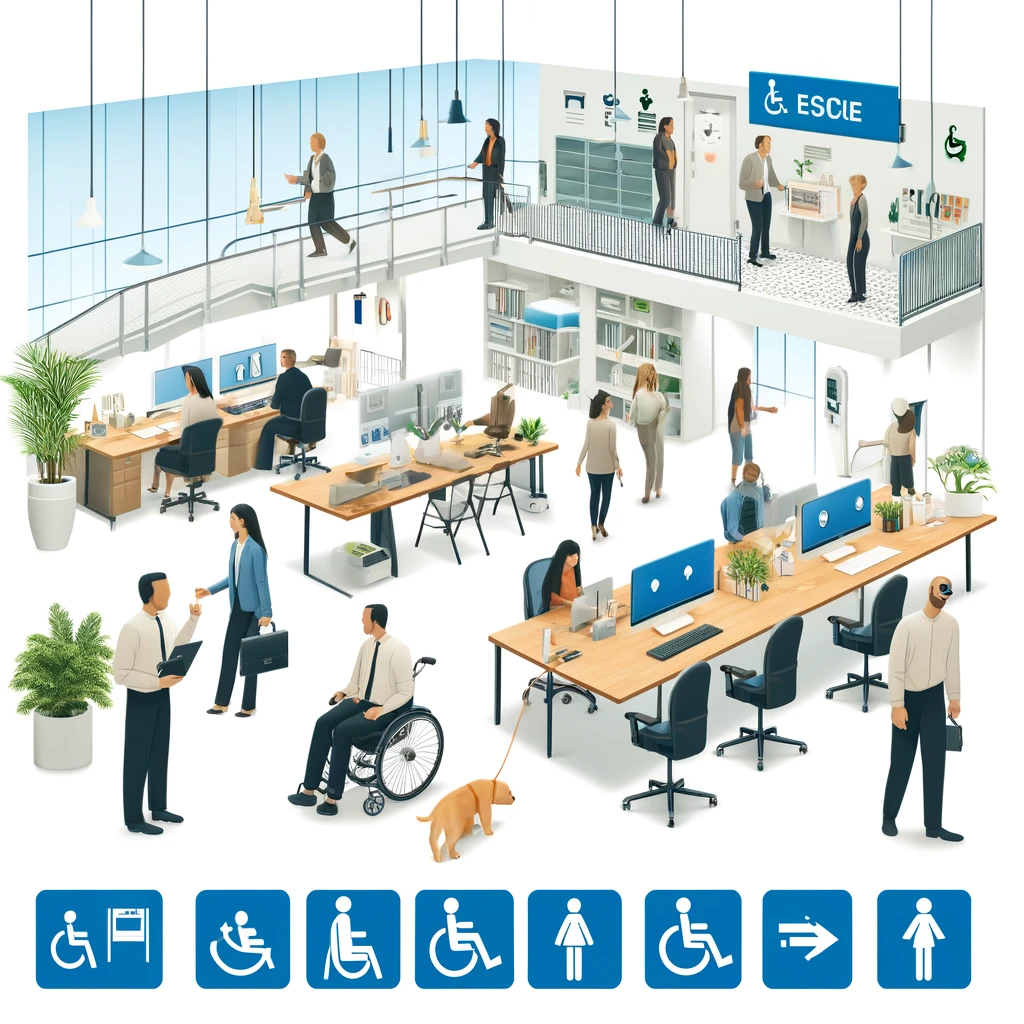
Capital planning for accessibility turns a compliance obligation into a disciplined investment strategy that improves facilities, digital services, transportation assets, and customer experience over time. In practice, the hardest part is rarely identifying barriers. Most organizations can complete surveys, collect complaints, and produce a transition plan that lists curb ramps, restroom renovations, website fixes, elevator upgrades, signage replacements, and policy revisions. The challenge is converting that list into a multi-year budget that leadership can approve, finance can track, operations can deliver, and auditors can defend. That is where capital planning matters.
A transition plan is the management document that identifies barriers, describes methods for removal, sets priorities, and assigns responsibility. Capital planning is the process of aligning those needs with funding cycles, asset lifecycles, procurement rules, and governance. When the two are connected, accessibility work stops being reactive. It becomes part of annual budgeting, capital improvement programming, maintenance planning, and project design standards. I have seen this shift change conversations immediately: instead of asking whether accessibility can be afforded, teams start asking which sequence delivers the fastest risk reduction and the strongest public benefit.
This topic matters because accessibility obligations do not disappear when budgets are tight. Under the ADA and related state and local requirements, public entities and many private organizations must make programs, services, and facilities accessible, with clear expectations around reasonable modifications, effective communication, and barrier removal. A transition plan without a funding pathway creates exposure. It can also waste money by forcing expensive emergency fixes, change orders during construction, or duplicated design work. A multi-year accessibility budget, by contrast, gives leaders a realistic roadmap for compliance and implementation.
Budgeting, prioritization, and governance are the three disciplines that make the roadmap credible. Budgeting determines how work is funded through capital, operating, grant, and maintenance accounts. Prioritization ranks barriers by risk, usage, legal urgency, and opportunity to bundle improvements with planned projects. Governance establishes who owns standards, approvals, reporting, and exceptions. This hub explains how those disciplines fit together so organizations can move from inventory to execution with fewer surprises and stronger accountability.
Start with a transition plan that is decision-ready
A decision-ready transition plan contains more than a barrier inventory. It should identify each asset or service, the applicable technical standard, the observed barrier, the recommended corrective action, a planning-level cost, the responsible department, and a target timeframe. For facilities, that usually means tying findings to recognized standards such as the 2010 ADA Standards for Accessible Design, ICC A117.1 where adopted, Public Right-of-Way Accessibility Guidelines where used by an agency, and any stricter state code. For digital properties, teams typically map issues to WCAG conformance criteria, document affected user journeys, and estimate remediation by template or system component.
If a plan only says “fix entrances” or “update website,” finance cannot use it. Leaders need scope clarity. A usable line item looks more like this: “Civic Center north entrance: replace noncompliant ramp at 11.2 percent running slope, add dual handrails, reconstruct landing, modify door hardware, and update route signage; planning estimate $185,000.” The same principle applies digitally: “Permit portal: remediate keyboard trap in date picker, add form labels, correct error identification patterns, and retest with NVDA and JAWS; planning estimate 120 developer hours and 40 QA hours.” Specificity allows bundling, estimating, and sequencing.
Decision-ready also means the plan reflects operational reality. If a library branch is scheduled for renovation in two years, temporary mitigations may be appropriate now, with full correction inside the larger capital project. If a transit station has low ridership but is the only accessible transfer point for a neighborhood, the priority may rise despite modest usage counts. Strong plans include this context directly so budget reviewers understand why two barriers that look similar on paper may not be funded the same way.
Build a funding model that matches the type of accessibility work
Accessibility improvements rarely fit a single funding source. The most durable approach separates work into funding buckets based on asset life, scope, and urgency. Long-life physical improvements such as elevators, restroom reconstruction, path-of-travel upgrades, parking reconfiguration, and streetscape changes typically belong in the capital improvement program. Shorter-cycle items such as signage, hearing assistance devices, accessible furniture, interpreter services, and staff training often fit operating budgets. Recurring digital remediation may sit partly in application development budgets and partly in central accessibility program funds.
In my experience, organizations make two avoidable mistakes. First, they classify every accessibility expense as a special project, which means nothing gets embedded in normal planning. Second, they put everything into maintenance, which understates strategic risk and crowds out other needs. A better model distinguishes between corrective capital work, accessibility features in new projects, programmatic accommodations, and ongoing quality assurance. That structure makes costs visible and prevents the common problem where a renovation budget forgets to include accessibility because someone assumes another department will cover it.
The table below shows a practical way to categorize accessibility spending across multiple years.
| Work type | Typical examples | Best-fit funding source | Planning note |
|---|---|---|---|
| Capital correction | Ramp reconstruction, elevator replacement, restroom rebuilds | Capital improvement program, bond proceeds where eligible | Bundle with major renovations to reduce mobilization and design costs |
| Project integration | Accessible routes, seating, counters, alarms in new construction | Project budget for each capital project | Make accessibility a nonnegotiable design requirement at kickoff |
| Operating remediation | Signage, assistive listening devices, policy updates, training | Department operating budgets, central compliance fund | Track annually to avoid invisible unfunded mandates |
| Digital accessibility | Template fixes, document remediation, app testing | IT operating budget, product development budget | Fund recurring audits and regression testing, not one-time cleanup only |
| Immediate accommodation | Temporary ramps, CART, interpreters, alternate formats | Program operating budgets, contingency reserve | Do not delay because larger capital corrections are pending |
Grant funding can help, especially for transit, housing, streets, and community development projects, but it should not be the sole plan. Grants are competitive, restricted, and schedule-dependent. Use them to accelerate known priorities, not to justify postponing baseline compliance work. When agencies tie accessibility projects to resilience, safety, or modernization goals, they often gain stronger eligibility and broader political support.
Prioritize barriers using risk, usage, and opportunity
Prioritization should be systematic, documented, and repeatable. The strongest scoring models combine legal risk, user impact, frequency of use, severity of the barrier, availability of alternatives, and coordination opportunity. A missing accessible entrance at a busy service center usually outranks a nonessential amenity in a low-use building because it blocks core program access. Likewise, inaccessible online payment or permit systems often deserve immediate attention because they affect high-volume public transactions and generate documented complaints quickly.
Risk does not mean guessing what might trigger a lawsuit. It means assessing where barriers deny access to essential programs, where complaints are recurring, where temporary workarounds are weak, and where standards are clearly not met. Usage matters because limited funds should first improve the routes, spaces, and systems that serve the greatest number of people. Opportunity matters because some of the cheapest accessibility wins happen when work is integrated into already planned paving, renovation, software release, or furniture replacement cycles.
A reliable method is to score each item from one to five across several dimensions, then weight the categories. For example, user impact and legal urgency may carry more weight than aesthetics. Public entities often add an equity factor for locations serving communities with fewer accessible alternatives. Private organizations may add revenue protection for customer-facing digital or retail systems. The exact formula can vary, but the governance rule should stay firm: once adopted, use the same scoring method across departments so capital requests are comparable and defensible.
Do not ignore low-cost, high-visibility fixes while waiting for major capital dollars. Replacing inaccessible hardware, lowering a transaction counter section, correcting room signage, or repairing an accessible parking route can resolve barriers quickly and build credibility. Quick wins are not a substitute for deep investment, but they show the transition plan is active and responsive.
Set governance so accessibility survives turnover and budget pressure
Without governance, accessibility funding becomes episodic. One mayor, agency head, facilities director, or CIO supports it; the next person has different priorities; the plan stalls. Effective governance puts responsibilities into policy and process. At a minimum, organizations need an executive sponsor, a designated accessibility coordinator or program manager, departmental owners, and a cross-functional review group that includes facilities, finance, procurement, IT, legal, communications, and operations.
The executive sponsor resolves conflicts and signals that accessibility is not optional. The coordinator maintains the transition plan, tracks milestones, monitors standards, and prepares budget requests. Departmental owners scope and deliver projects. Finance integrates accessibility line items into the normal budget calendar. Procurement ensures consultants, contractors, software vendors, and document creators are held to accessibility requirements. Legal advises on obligations and risk, but should not be the only voice driving priorities. Accessibility works best when owned operationally, not treated solely as a legal defense issue.
Governance also requires standards and exception control. Design guidelines, master specifications, digital design systems, and procurement templates should all include accessibility criteria. If a department wants to defer or deviate, there must be an exception process with written justification, interim mitigation, responsible signoff, and a deadline for correction. I have found this single practice prevents many recurring defects because teams know inaccessible outcomes cannot simply be value-engineered away without accountability.
Reporting cadence matters. Quarterly dashboards are usually enough for leadership, while project teams may need monthly detail. Useful metrics include barriers removed, projects completed, percentage of capital projects reviewed for accessibility, digital defects by severity, accommodation response times, complaint trends, and budget spent versus planned. Good reporting makes accessibility legible to non-specialists and protects funding during tough budget cycles because progress is visible.
Integrate accessibility into capital projects, procurement, and asset management
The cheapest time to fix an accessibility problem is before it is built, bought, or deployed. That is why mature programs do not treat accessibility as a punch-list item at the end. They integrate it into project charters, design review checklists, procurement language, and asset management systems. For facilities, every capital project should answer basic questions at initiation: what accessible route is affected, what current barriers exist, what standards apply, and what path-of-travel upgrades are triggered by the scope under local rules? For digital systems, teams should define conformance targets, test methods, and acceptance criteria before vendor selection or sprint planning begins.
Procurement is especially important. Construction RFPs should require demonstrated accessibility experience, not generic claims. Software contracts should include accessibility specifications, testing obligations, remediation timelines, and remedies if promised conformance is not met. Voluntary Product Accessibility Templates can be useful starting documents, but they are not proof. Teams should verify claims through demos, manual testing, assistive technology checks, and pilot use. I have seen expensive enterprise systems arrive with strong paperwork and weak usability because no one validated keyboard access or screen reader behavior before award.
Asset management systems can strengthen long-term budgeting by tying accessibility deficiencies to the same records used for condition, lifecycle, and replacement planning. When an elevator, sidewalk segment, door operator, or web platform is already tracked as an asset, accessibility work can be forecast beside renewal needs. That allows smarter bundling: replace the failing lift during a scheduled modernization, reconstruct curb ramps during resurfacing, remediate templates during a CMS upgrade. Integration reduces cost and avoids duplicate mobilization.
Use phased implementation, but keep the public benefit visible
Multi-year budgeting does not mean indefinite delay. It means sequencing work so the highest-value barriers are removed first while the organization builds sustainable capacity. A practical roadmap often has three horizons. Year one focuses on urgent barriers, governance setup, standards, and quick wins. Years two and three tackle bundled capital projects, digital platform remediation, and procurement reform. Years four and five address deeper asset renewal, network-level improvements, and recurring quality assurance. The exact duration depends on portfolio size and funding capacity, but the principle is constant: phase the work without losing urgency.
Communication is part of implementation. Staff, elected officials, and the public should understand what is being fixed now, what is scheduled later, and what temporary alternatives exist in the meantime. Public-facing schedules, service notices, and accessible project pages build trust. They also reduce the frustration that occurs when people report a known barrier and receive no explanation about timing. Transparency does not eliminate criticism, but it shows that decisions are structured rather than arbitrary.
The best capital planning for accessibility treats the transition plan as a living investment program, not a shelf document. When organizations define scope clearly, match work to the right funding source, prioritize with consistent criteria, and govern delivery rigorously, they turn compliance and implementation into measurable progress. That approach lowers risk, improves service, and protects capital dollars from avoidable rework. If you manage facilities, digital products, transportation assets, or public programs, review your transition plan now and ask a simple question: can finance build a five-year budget from it tomorrow? If the answer is no, this is the moment to fix the plan, the process, and the governance behind it.
Frequently Asked Questions
What is the difference between an accessibility transition plan and a multi-year capital budget?
An accessibility transition plan identifies barriers, documents required improvements, and establishes a roadmap for compliance. It typically includes a list of physical, digital, operational, and policy-related changes such as curb ramp installations, restroom renovations, elevator modernizations, website remediation, signage updates, and program access improvements. A multi-year capital budget, by contrast, is the financial and implementation framework that turns that roadmap into scheduled action. It assigns realistic costs, prioritizes projects, sequences work over multiple fiscal years, aligns improvements with funding sources, and integrates accessibility into broader facility, technology, and transportation investment cycles.
This distinction matters because many organizations complete the planning document but struggle when it comes time to fund and execute it. A transition plan can satisfy an administrative requirement, but without budget integration it often becomes a static list of unfunded needs. Capital planning closes that gap. It translates compliance obligations into a disciplined investment strategy, allowing leadership to compare projects, package related work, reduce disruption through coordinated construction, and make measurable progress year after year.
In practical terms, the transition plan answers, “What needs to be fixed?” The multi-year budget answers, “When will it be fixed, how much will it cost, who is responsible, and how will it be funded?” Organizations that treat the transition plan as a living input to capital planning are far more likely to improve accessibility consistently rather than relying on reactive fixes driven by complaints, emergencies, or litigation pressure.
How should organizations prioritize accessibility projects when they cannot fund everything at once?
When full immediate funding is not realistic, prioritization should be structured, documented, and tied to risk, impact, and feasibility. The most effective approach is to create a decision framework that weighs several factors at the same time. These often include life safety concerns, legal exposure, volume of public use, severity of the barrier, program criticality, whether there is an available alternative access route, coordination opportunities with already planned capital projects, and the cost of delaying the work. This prevents prioritization from becoming arbitrary or driven solely by the loudest complaint.
High-priority items usually include barriers that deny access to essential services, prevent entry into heavily used facilities, block access to restrooms or service counters, interfere with transportation systems, or create substantial digital barriers for key transactions such as applications, payments, registrations, or customer support. Projects that affect many users and remove major access obstacles should typically move toward the top of the list. The same is true for issues that can be corrected efficiently when bundled with larger renovation or infrastructure efforts already on the calendar.
It is also important to distinguish between low-cost quick wins and larger structural upgrades. Quick wins such as signage corrections, hardware adjustments, minor website fixes, policy revisions, or restriping accessible parking can demonstrate immediate progress and improve user experience without major capital outlays. Larger items such as elevator replacement, route reconstruction, platform modifications, restroom reconfiguration, or enterprise digital remediation may require phased funding over several years. A sound prioritization model includes both categories, so the organization can show momentum while working toward more expensive long-term improvements.
Finally, document the rationale for every prioritization decision. If a barrier is deferred, the record should show why, what interim measures are in place, and when the item will be reconsidered. That transparency supports accountability, improves internal decision-making, and helps demonstrate good-faith progress if regulators, auditors, board members, or members of the public ask how accessibility investments are being managed.
What costs should be included when building a multi-year accessibility budget?
A strong accessibility budget includes far more than construction line items. Many organizations underestimate cost because they focus only on the visible repair or renovation and overlook the surrounding expenses required to scope, design, procure, implement, and maintain the improvement. For physical projects, the budget should account for assessments, surveying, design and engineering, permitting, demolition, construction, temporary accommodations, furniture or fixture replacement, inspection, commissioning, and contingency. If the work occurs in occupied facilities, include potential phasing costs, after-hours work, swing space, traffic control, and communications to the public.
For digital accessibility, cost categories often include audits, manual and automated testing, remediation of templates and documents, application redevelopment, vendor coordination, content migration, accessibility training for staff, quality assurance, and ongoing monitoring. These costs are especially important because digital barriers often reappear if organizations fund one-time remediation but do not invest in governance, procurement standards, and sustainable maintenance practices.
Transportation and public right-of-way improvements may require additional budgeting for curb ramps, detectable warnings, sidewalk reconstruction, platform edge treatments, paratransit interface improvements, wayfinding, signal upgrades, drainage impacts, utility conflicts, and coordination with street or corridor projects. For customer-facing operations, policy and program access work may involve staff training, interpreter services planning, accessible communication formats, software upgrades, and updates to procedures that support reasonable modification and effective communication requirements.
Organizations should also include escalation and reserve assumptions. Multi-year capital budgets are vulnerable to cost inflation, market volatility, procurement delays, and scope refinement as conditions in the field are confirmed. Including contingencies and periodic revalidation of estimates helps prevent accessibility work from being postponed simply because early numbers were too optimistic. In short, a realistic budget captures the full lifecycle of accessibility investment: planning, implementation, maintenance, and accountability.
How can accessibility improvements be coordinated with other capital projects to save money and speed progress?
One of the most effective strategies in accessibility capital planning is to integrate barrier removal into projects that are already scheduled for facilities, technology, streetscapes, fleets, stations, campuses, or public spaces. Coordinating accessibility with broader capital work often reduces unit cost, limits disruption, and accelerates compliance because mobilization, design, permitting, and contractor procurement are already underway. For example, if a building is being renovated, that is the right time to address entrances, restrooms, service counters, circulation paths, signage, alarm systems, and door hardware together rather than in separate projects. If a website or software platform is being redesigned, accessibility requirements should be embedded from the beginning rather than added later as a corrective expense.
This coordination starts with governance. Accessibility staff, capital planners, facilities teams, IT leaders, procurement officials, transportation planners, and program managers should share project pipelines early enough to identify overlap. A transition plan becomes much more valuable when each identified barrier can be tagged to an asset, department, geography, planned project, and likely funding window. That allows organizations to package work intelligently instead of treating every accessibility item as a standalone obligation.
Bundling projects also improves procurement outcomes. A contractor already replacing sidewalks can include curb ramp upgrades. A station modernization can incorporate tactile warnings and accessible path corrections. A fleet replacement cycle can prioritize vehicles with improved boarding features and passenger information systems. A digital platform contract can require conformance testing, remediation support, and documentation before launch. In each case, accessibility becomes part of normal asset stewardship rather than a separate emergency request competing for attention later.
The key is to avoid waiting passively for major projects to happen. Coordination should be deliberate, tracked, and supported by standards. Capital planning documents, design criteria, project charters, and procurement templates should all require accessibility review at defined milestones. When accessibility is built into routine investment decisions, organizations save money, avoid rework, and make steady progress across physical and digital environments at the same time.
How do you measure progress and keep a multi-year accessibility budget accountable over time?
Accountability depends on turning broad commitments into measurable deliverables. A multi-year accessibility budget should be managed with the same rigor as any other capital program, using a clear inventory of barriers, project status tracking, assigned ownership, target completion dates, approved funding amounts, and regular reporting to leadership. Each project should be tied back to a specific accessibility need identified in the transition plan, so the organization can show not only how much it spent, but what barriers were removed and what access outcomes improved as a result.
Useful performance measures include the number of barriers removed, percentage of high-priority items funded, percentage of planned work completed on schedule, reduction in repeat complaints, improvement in access to high-use facilities or services, conformance results for digital platforms, and the share of capital projects that included accessibility upgrades as part of their original scope. Financial metrics also matter, such as variance between estimated and actual cost, amount of accessibility work coordinated with larger projects, and deferred liability remaining by asset category. These indicators help leadership understand whether the organization is making strategic progress or simply addressing isolated issues.
Regular review cycles are essential because priorities change. New complaints, facility failures, technology upgrades, evolving standards, inflation, and shifts in service delivery can all affect the budget roadmap. Annual or semiannual updates allow the organization to re-rank projects, refine estimates, and adjust funding without losing sight of long-term obligations. Public-facing reporting can also strengthen trust by showing that accessibility is being addressed through an organized, sustained program rather than through sporadic one-off fixes.
Most importantly, accountability requires ownership at both the executive and operational levels. Someone must be responsible for maintaining the transition plan, someone must manage the capital pipeline, and project teams must be required to deliver accessibility outcomes, not just spend allocated funds. When organizations combine governance, metrics, transparent reporting, and recurring budget review, accessibility planning becomes a durable management practice