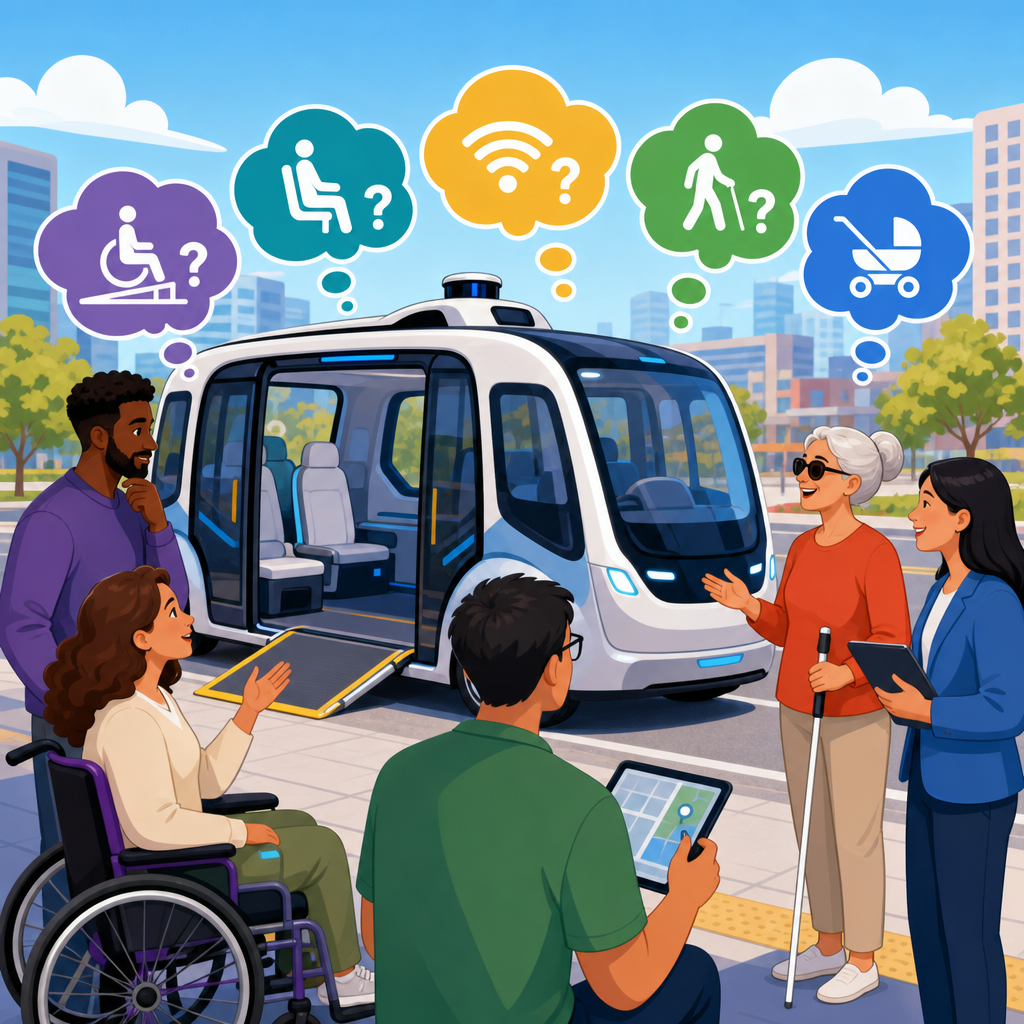
Autonomous vehicle accessibility questions transportation teams should ask are no longer theoretical planning prompts; they are operational requirements shaping procurement, service design, infrastructure upgrades, and public trust. In transportation, accessibility means people with disabilities, older adults, riders with temporary impairments, and travelers with limited digital confidence can use a service safely, independently, and with dignity. Autonomous vehicles, or AVs, include shuttles, robotaxis, low-speed neighborhood vehicles, freight support platforms, and fixed-route transit applications that use automated driving systems for some or all driving tasks. For transportation teams, the challenge is not simply whether the vehicle can drive itself. The real question is whether the full trip chain, from booking to pickup to boarding to communication to emergency response, works for everyone.
I have worked with transit agencies and mobility pilots where promising AV demonstrations stalled because accessibility was treated as a later feature instead of a baseline design condition. Teams focused on sensors, mapping, and safety drivers, then discovered basic barriers: wheelchair securement zones did not support independent use, rider apps failed screen-reader testing, audio announcements were unclear in traffic noise, and remote assistance procedures were too slow for stranded passengers. Those failures matter because transportation is an essential service. If an autonomous transportation program excludes riders at launch, agencies inherit legal exposure, reputational damage, and lower ridership from the start.
This hub article explains the accessibility questions transportation teams should ask before selecting vendors, launching pilots, updating policy, or scaling AV service. It covers vehicles, digital interfaces, curb operations, safety protocols, workforce readiness, and performance measurement. The goal is practical: help transportation leaders build autonomous service that satisfies disability rights obligations, improves passenger experience, and stands up to public scrutiny. Throughout transportation planning, the strongest results come when accessibility is specified early, verified repeatedly, and owned jointly by planners, operations staff, procurement leaders, engineers, and disability communities.
What rider groups and trip types must the service support?
The first question is strategic: who exactly is the autonomous service for, and what journeys must it handle well on day one? Transportation teams should identify rider segments in concrete terms, not broad categories. That means considering wheelchair users, blind and low-vision riders, Deaf and hard-of-hearing riders, people with cognitive disabilities, older adults, passengers with service animals, riders carrying medical equipment, and travelers who do not use smartphones or credit cards. It also means defining trip types such as first-mile and last-mile links, campus circulation, paratransit supplements, airport connectors, downtown circulators, and off-peak neighborhood service.
This matters because accessibility requirements shift by use case. A low-speed shuttle on a closed campus may rely on predictable stops and managed curbs, while a robotaxi program in mixed traffic must solve dynamic pickup challenges, inaccessible loading zones, and remote customer support at scale. A transit agency integrating AVs into paratransit has to think about door-to-door expectations, attendant policies, mobility device dimensions, and no-show procedures. An airport deploying autonomous transportation faces wayfinding complexity, luggage handling, and multilingual communication. If the use case is vague, accessibility commitments remain vague too.
Transportation teams should also ask what degree of independence riders should reasonably expect. Can a wheelchair user board without a companion? Can a blind rider verify they entered the correct vehicle without relying on the public? Can a rider with a cognitive disability complete booking with plain-language prompts? In my experience, writing these expectations into the service concept changes vendor conversations immediately. Instead of asking for generic compliance, teams begin asking for measurable user outcomes tied to real transportation scenarios.
Can riders book, identify, board, and ride independently?
Accessibility in autonomous transportation is often won or lost before the wheels move. The booking channel should support mobile apps, web, call centers, and where relevant kiosk or text-based workflows. Digital tools must work with screen readers, voice control, keyboard navigation, captioning, and high-contrast settings. Time windows, fare rules, cancellation processes, and pickup instructions should be presented in plain language. If the only usable path requires a complex smartphone interface, many riders are excluded before the trip begins.
Vehicle identification is equally critical. Riders need multimodal confirmation that the arriving AV is the correct one. Strong systems combine license plate or fleet number verification, audible external announcements, visible destination displays, app-based confirmation, and secure rider-vehicle matching procedures. Blind riders should not need to guess. Deaf riders should not depend on spoken staff instructions. At busy curbs, these controls reduce both confusion and safety risk.
Boarding and in-vehicle use require attention to geometry and interaction design. Ask whether ramp slopes, doorway clearances, floor heights, handholds, seating layouts, and wheelchair positions allow practical use in real operations, not just laboratory tests. Controls for start, stop, help, climate, and emergency communication should be reachable, tactile where appropriate, and understandable without training. Audio and visual announcements need redundancy. Service animal space, stroller placement, and luggage interaction should be tested because transportation environments are shared environments.
| Trip stage | Accessibility question | What good looks like |
|---|---|---|
| Booking | Can riders reserve without a smartphone? | App, website, call center, and accessible payment options |
| Pickup | Can riders confirm the correct vehicle? | External audio, visual ID, plate match, destination display |
| Boarding | Can mobility device users board independently? | Reliable ramp, adequate clearance, securement support |
| In-ride | Are instructions available in more than one format? | Clear audio, text, icons, tactile controls, live assistance |
| Emergency | Can riders quickly reach help? | Accessible two-way communication and defined response times |
The clearest benchmark is simple: if a rider can complete the journey only with informal help from bystanders, the autonomous transportation service is not genuinely accessible. Teams should test every stage with users who have different disabilities and document where independence breaks down.
How will the vehicle, curb, and street environment work together?
Transportation teams sometimes evaluate the AV as if it exists apart from the street. In practice, accessibility depends on the vehicle interacting successfully with curbs, sidewalks, crosswalks, loading zones, signals, and weather conditions. Ask where pickups will occur, whether curb ramps are present, whether the sidewalk is wide enough for mobility devices, and whether riders can wait safely under shelter. A perfectly designed vehicle can still deliver a failed trip if it stops beside broken pavement or in an unmarked loading area.
Curb management is especially important for autonomous transportation because AVs depend on precise stopping behavior. Teams should map accessible pickup and dropoff zones, define geofenced alternatives when the preferred curb is blocked, and coordinate with city departments on signage, enforcement, and passenger loading rules. The National Association of City Transportation Officials has emphasized curb allocation as a major urban mobility issue, and AV deployments intensify that challenge. If delivery vehicles, micromobility devices, and ride-hail traffic occupy the same frontage, accessible boarding space disappears quickly.
Wayfinding should be treated as infrastructure, not decoration. Blind and low-vision riders benefit from tactile paving, consistent stop placement, audible beacons where appropriate, and route guidance that references fixed landmarks instead of vague instructions. Riders with cognitive disabilities need simple, repeatable pickup logic. Snow, rain, glare, and construction detours should be part of testing because transportation conditions are rarely ideal. Agencies that perform only fair-weather pilot validation miss the very moments when disabled riders are most vulnerable.
Street design also affects emergency scenarios. If an AV stops in a bike lane, median, or travel lane because a curb is blocked, can a wheelchair user disembark safely? If not, the routing logic and operating domain need adjustment. Transportation teams should require operations maps that reflect accessibility constraints, not only automated driving performance constraints.
What safety, assistance, and incident protocols are required?
Autonomous transportation programs must define what happens when the trip does not go as planned. Accessibility planning should cover stalled vehicles, sensor faults, unexpected reroutes, passenger illness, evacuations, communication failures, and inaccessible curbs encountered in real time. A remote assistance center may be able to reassure a passenger, but teams should ask whether response times are fast enough, whether agents are trained to communicate with Deaf or speech-disabled riders, and whether text, voice, and visual channels all work during an incident.
Emergency egress deserves special scrutiny. Wheelchair securement can improve safety, but if release mechanisms are not independently operable or remotely supportable, they create risk. Fire and life safety standards, local first responder protocols, and vehicle manufacturer procedures need alignment. Transportation agencies should conduct drills with fire departments, police, emergency medical services, and disability advocates. In several pilot reviews I have seen, responders knew how to immobilize the vehicle but not how to assist a passenger using a power wheelchair or service animal.
Incident reporting should capture accessibility-specific data. Teams need to know not only whether a disengagement occurred, but whether a rider missed a pickup because the curb was blocked, whether a ramp deployment failed, whether audio prompts were inaudible, or whether a remote agent resolved a communication issue. These are service quality and safety indicators. They should appear in the same executive dashboard as on-time performance and passenger wait time, because inaccessible service is operational failure.
Finally, ask who holds decision authority when safety and accessibility appear to conflict. For example, conservative routing may avoid complex urban curbs but also strand riders far from accessible entrances. Good governance makes those tradeoffs explicit and documents why specific operating rules were chosen.
Do procurement, policy, and metrics make accessibility enforceable?
Transportation teams should convert accessibility goals into contract language, acceptance criteria, and ongoing service-level metrics. Procurement should reference applicable requirements such as the Americans with Disabilities Act, Section 504 obligations for recipients of federal funds, public right-of-way guidance, vehicle standards, and digital accessibility expectations aligned with WCAG 2.2. Vendors should be required to disclose known limitations, provide conformance documentation, support user testing, and remediate defects on defined timelines. If accessibility appears only in a values statement, it will lose to cost and schedule pressure.
Strong evaluation criteria ask for evidence, not promises. Request demonstration videos, third-party test results, human factors documentation, ramp cycle reliability data, securement procedures, rider interface screenshots, and remote support protocols. Ask how the vendor handles software updates that affect accessibility and whether changes trigger regression testing. In automated transportation, a minor interface change can break a previously usable trip flow overnight.
Metrics should measure real rider outcomes: successful independent boardings, accessible pickup accuracy, average remote assistance response time, complaint resolution time, trip completion rate for riders using mobility devices, and parity between disabled and non-disabled rider wait times. Public reporting builds trust and helps agencies justify further investment. The Federal Transit Administration has long tied innovation credibility to measurable service outcomes, and AV programs should be no exception.
Transportation is the right hub for this topic because every adjacent article, from procurement to curb management to digital wayfinding, connects back to one operating truth: autonomy is only valuable when the entire trip is accessible. Start with the questions in this guide, involve disabled riders early, and make accessibility a launch requirement rather than a retrofit.
Frequently Asked Questions
1. Why should transportation teams treat autonomous vehicle accessibility as an operational requirement instead of a future planning topic?
Transportation teams should treat autonomous vehicle accessibility as an immediate operational requirement because accessibility affects every part of deployment, from procurement and contracting to rider communications, curb design, training, safety validation, and performance measurement. If accessibility is handled as a late-stage compliance check, agencies and operators risk launching services that exclude riders with disabilities, older adults, people with temporary injuries, and travelers who are less comfortable with smartphones or digital trip-planning tools. In practice, that creates avoidable barriers to use, increases customer support burdens, slows adoption, and can undermine public trust in the entire AV program.
Accessibility also has a direct impact on service reliability and equity. A vehicle that works well for a confident, digitally fluent rider may still fail for someone who needs step-free boarding, tactile or audible wayfinding, extra boarding time, clear human assistance options, or securement space for a mobility device. Teams should ask whether the service can be used safely, independently, and with dignity across the full rider journey, not just once the rider is seated in the vehicle. That means evaluating trip discovery, booking, stop access, vehicle entry, onboard communication, emergency procedures, and customer support.
From a management standpoint, accessibility should be built into key decisions early because retrofits are more expensive and less effective than inclusive design from the start. Vehicles may need different doorway dimensions, ramp performance, interior layouts, restraint systems, user interfaces, and communication tools. Infrastructure may need changes to sidewalk connections, pickup zones, signage, lighting, and detectable warnings. Contracts should define accessibility requirements clearly, and pilots should collect feedback from affected riders before scale-up. When teams treat accessibility as foundational rather than optional, they are more likely to deliver AV services that are usable, defensible, and publicly credible.
2. What accessibility questions should transportation teams ask when procuring autonomous vehicles and selecting technology partners?
Procurement is one of the most important moments to ask hard accessibility questions because many design limitations become difficult to correct after a vehicle platform or software stack has been chosen. Transportation teams should start by asking whether the AV can accommodate riders with a wide range of mobility, sensory, cognitive, and communication needs. That includes questions about level boarding or ramp access, doorway width, interior maneuvering space, wheelchair securement options, seat design, handholds, contrasting surfaces, audible and visual announcements, and intuitive controls for riders who may not use complex digital interfaces with ease.
Teams should also ask how the rider will interact with the service before and during the trip. Can trips be booked without a smartphone? Are there phone-based, web-based, kiosk-based, or staff-assisted alternatives? Does the app or reservation system support screen readers, large text, plain language, voice interaction, and multiple languages? If the AV arrives at the curb, how will a rider who is blind or has low vision identify the correct vehicle? How will a rider who is deaf or hard of hearing receive safety instructions, delay notices, or emergency updates? These are not secondary features. They are core service requirements.
Technology partners should be asked to provide evidence, not just assurances. Transportation teams should request accessibility test results, user research findings, design specifications, and examples of inclusive deployments. Vendors should explain how accessibility is validated in real operating conditions, including boarding at imperfect curbs, operation in bad weather, and use by first-time riders. It is also important to ask who owns responsibility for accessibility when multiple vendors are involved, such as the vehicle manufacturer, autonomous driving system provider, software platform, and customer service operator. Clear accountability prevents gaps that can leave riders unsupported.
Finally, procurement teams should ask how updates will be managed over time. AV systems evolve quickly, and software changes can improve or break accessibility. Contracts should require ongoing accessibility maintenance, incident reporting, feedback review, and corrective action processes. Teams should also define measurable service standards, such as boarding success rates, wait times for accessible trips, customer support response times, and complaint resolution procedures. Strong procurement questions move accessibility from a general promise to an enforceable operating expectation.
3. How can transportation teams evaluate whether the full autonomous vehicle rider journey is truly accessible?
Evaluating accessibility means looking beyond the vehicle itself and examining the entire rider journey from start to finish. A trip is only accessible if each stage works together. Transportation teams should assess how riders learn about the service, determine eligibility if applicable, request a trip, travel to the pickup location, identify the arriving vehicle, board safely, ride comfortably, receive updates, disembark, and complete the final segment of the trip. A failure at any point can make the service unusable, even if the vehicle meets technical accessibility standards.
Start with trip planning and booking. Ask whether riders can access service information in plain language and in formats that work for people using assistive technologies. Confirm that digital tools are compatible with screen readers and keyboard navigation, and make sure there are non-digital alternatives for people with limited digital confidence. Then assess first- and last-mile conditions. Are sidewalks continuous? Are curb ramps present and usable? Is there adequate lighting, shelter, seating, and wayfinding at pickup areas? Can a person using a wheelchair or walker safely wait and board without being forced into traffic or uneven pavement?
At the pickup and boarding stage, teams should observe real users in the field. Can riders recognize the correct vehicle easily? Does the vehicle communicate arrival through both audio and visual signals? Is there enough time to board without pressure? Does the boarding interface work for people with limited reach, dexterity, vision, or cognitive processing speed? Once onboard, evaluate how safety instructions, destination confirmations, stop requests, and emergency communications are presented. Information should be redundant, meaning available visually, audibly, and in clear language. Riders should not have to rely on a single sensory channel to understand what is happening.
The most reliable evaluation method is direct testing with diverse users, including people with mobility disabilities, blind and low-vision riders, deaf and hard-of-hearing riders, neurodivergent users, older adults, and riders recovering from temporary injury. Their lived experience often reveals issues that engineering checklists miss. Transportation teams should supplement testing with journey mapping, ride audits, customer interviews, and accessibility performance metrics. A rider journey is truly accessible when people can complete it safely, independently, consistently, and without unnecessary stress or special workarounds.
4. What infrastructure and curbside changes are often needed to support accessible autonomous vehicle service?
Accessible autonomous vehicle service depends heavily on the built environment, especially at pickup and drop-off points. Even a well-designed AV can become inaccessible if it arrives at a location with broken sidewalks, poor lighting, no curb ramp, inadequate landing space, or unclear signage. Transportation teams should ask whether curbside areas provide enough room for ramp deployment, wheelchair maneuvering, walker use, companion assistance, and safe separation from moving traffic. They should also assess whether the AV can align consistently with the curb in a way that supports repeatable, dignified boarding.
Common infrastructure needs include firm and level boarding areas, accessible pedestrian routes to the stop, detectable warnings where appropriate, clear vertical and ground-level signage, lighting for low-visibility conditions, and pickup zones that are protected from obstruction by private vehicles or deliveries. Teams may also need to evaluate snow and debris removal practices, drainage issues, and pavement quality. These details matter because small environmental barriers can make a service functionally inaccessible for riders who use wheelchairs, scooters, canes, or other mobility supports.
Curb management is especially important. Transportation teams should ask how accessible AV pickup space will be reserved, monitored, and enforced. If vehicles routinely stop in unpredictable locations because the preferred curb is occupied, riders may face confusion or unsafe boarding conditions. Teams should also consider whether there is seating nearby for riders who cannot stand for long periods, and whether wayfinding helps users identify where to wait and what to expect when the vehicle arrives. For some deployments, infrastructure should include digital and physical communication tools that announce vehicle arrival in multiple formats.
Infrastructure planning should be coordinated across departments and partners, not handled in isolation. Accessibility improvements may involve transit agencies, public works, disability advisory groups, planning staff, roadway engineers, and AV operators. The goal is to create a curbside environment where autonomous service is predictable, legible, and safe for a wide range of users. When teams invest in accessible infrastructure early, they reduce friction for riders and improve overall service performance.
5. How should transportation teams build trust and accountability around autonomous vehicle accessibility?
Trust is built when transportation teams show that accessibility is being designed, tested, measured, and improved in a transparent way. For many riders, especially people with disabilities who have experienced exclusion in transportation before, trust will not come from marketing claims. It comes from consistent service, visible responsiveness, and clear evidence that the system works in real conditions. Teams should begin by involving disabled riders, older adults, and community organizations early in planning, not only after major decisions have already been made. Their input should shape requirements, pilot design, operating policies, and evaluation criteria.
Accountability also depends on measurable standards. Transportation teams should define what success looks like and report progress regularly. Useful metrics may include accessible trip completion rates, boarding failure rates, average wait times for accessible requests, customer support response times, incident frequency, complaint categories, and the