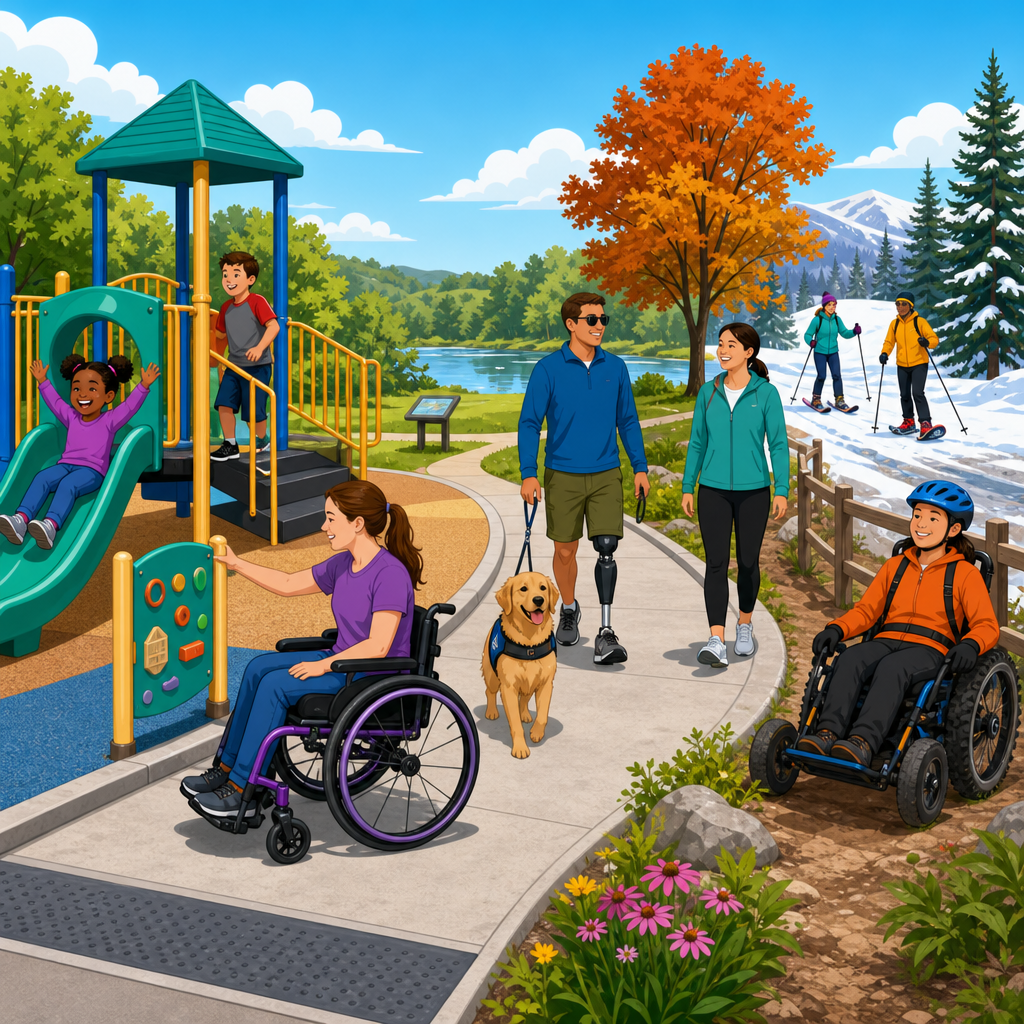
ADA rules for playgrounds, trails, and seasonal recreation shape how parks, camps, schools, and municipalities design spaces that people with disabilities can actually use, not just approach. In sports and recreation settings, accessibility means more than adding a ramp at the entrance. It includes accessible routes, transfer systems, surface firmness, reach ranges, parking, restrooms, spectator seating, fishing access, beach routes, and policies that support equal participation. The Americans with Disabilities Act establishes the civil rights baseline, while the 2010 ADA Standards for Accessible Design and the U.S. Access Board’s recreation guidelines provide the technical framework many operators rely on. I have worked with park departments and private operators reviewing plans, surfacing choices, and transition points, and the same issue appears repeatedly: a site can look inclusive on paper yet fail in the details visitors experience first.
This matters because recreation is not optional public life. Playgrounds support childhood development, trails connect people to nature and exercise, and seasonal amenities such as pools, beaches, ski areas, temporary ice rinks, and camp programs are often the heart of a community. When those places exclude users with mobility, sensory, cognitive, or dexterity-related disabilities, the result is not a minor inconvenience. It is unequal access to health, education, social connection, and family participation. Operators also face practical consequences. Poor accessibility planning causes expensive retrofits, delayed permits, complaints, and legal exposure. Good planning, by contrast, improves circulation, wayfinding, maintenance, and user satisfaction for everyone, including parents with strollers, older adults, and injured athletes.
For sports and recreation organizations, this page serves as the central guide to ADA rules across playgrounds, trails, and seasonal recreation areas. It explains the core standards, where technical requirements differ by facility type, and how to evaluate common trouble spots before construction or renovation. Use it as the hub for deeper planning on site design, program access, maintenance, and procurement.
Understanding the ADA framework for recreation sites
The ADA applies broadly to public entities under Title II and to private places of public accommodation under Title III. In recreation, that usually includes city parks, school playgrounds open to the public, YMCAs, camps, amusement providers, golf facilities, sports complexes, and private parks. The legal duty is to provide equal access, but the method depends on whether you are building new facilities, altering existing ones, or removing barriers where readily achievable. New construction must fully comply with applicable accessibility standards. Alterations must make the altered area accessible to the maximum extent feasible. Existing facilities that are not being altered may still require barrier removal or program access solutions.
The technical rules most operators use come from the 2010 ADA Standards for Accessible Design, which incorporate scoping and dimensional requirements for routes, parking, toilet rooms, doors, drinking fountains, pools, and many other elements. Recreation-specific guidance also draws on U.S. Access Board criteria for play areas, boating, fishing piers, golf, miniature golf, exercise equipment, swimming pools, and outdoor developed areas such as trails and beach access routes. In practice, designers should verify which provisions have been formally adopted for the project type and funding source, especially when federal land management standards or state codes also apply.
A common question is whether outdoor environments get more flexibility because they are natural or seasonal. The answer is only partly. Natural terrain can affect slopes, cross slopes, and construction methods, and some outdoor standards recognize conditions such as prevailing construction practices, terrain, and environmental constraints. That does not excuse inaccessible planning. The route from parking to key amenities must still work. Surfaces must still be stable where required. Amenities such as picnic tables, grills, benches, viewing areas, and restrooms must still be considered systematically.
ADA rules for playgrounds: routes, surfacing, and play components
Accessible playground design begins with the path of travel. At minimum, children and caregivers need an accessible route from arrival points, including parking or passenger loading zones, to the play area entrance and to the required range of play components inside the site. The route must connect the accessible entry, ground-level play opportunities, and elevated elements reached by ramps or transfer systems when required. In real projects, the route often fails at the transition between sidewalk and loose-fill surfacing, where a lip, rut, or soft edge turns a compliant approach into a mobility barrier.
Surfacing is the make-or-break issue on most playgrounds. Engineered wood fiber can perform well when installed correctly, compacted, and maintained to ASTM standards, but many sites underbudget maintenance and the surface degrades around swings, spinners, and slide exits. Poured-in-place rubber offers strong accessibility performance and easier wheeled mobility, though it has higher upfront cost and can fail if drainage, base preparation, or curing are mishandled. Bonded rubber and interlocking tiles can work, but seams, edge curl, and wear patterns need inspection. The best choice is rarely the cheapest initial bid; it is the system the owner can maintain to preserve firmness and stability over time.
Play component access is not satisfied by one token element. The standards require a minimum number of ground-level and elevated play components on accessible routes, based on the total provided. Different play experiences also matter. A compliant layout should include varied activities such as climbing, sliding, spinning, sensory panels, and social spaces, not only easy-to-reach items grouped in one corner. Transfer platforms and transfer steps can provide access to elevated structures where ramps are not required, but they must be dimensioned correctly and placed where children can actually use them without crowding or abrupt level changes.
Operators should also think beyond the measured play zone. Accessible seating for caregivers, shade, drinking fountains, restrooms, and fencing gates influence whether a family can comfortably stay and participate. I have seen technically compliant play structures undermined by inaccessible picnic pads, heavy self-closing gates, and benches placed in mulch without companion space. Inclusive playground planning works when the entire visit is mapped from vehicle door to play experience to restroom break to departure.
ADA rules for trails and outdoor developed areas
Accessible trails are one of the most misunderstood subjects in parks and recreation. A trail does not need to become a paved urban sidewalk to be accessible, but it does need to meet technical expectations appropriate to outdoor conditions. Key concepts include running slope, cross slope, width, passing spaces, tread obstacles, openings, protruding objects, and surface characteristics. The central question is whether a person using a wheelchair, walker, cane, or other mobility aid can travel the route with reasonable independence and safety.
For many shared-use paths near developed areas, asphalt or concrete may be the right answer because it offers durability, predictable maintenance, and broad usability. For natural-surface trails, crushed stone systems can work if the aggregate is well graded, compacted, and drained. Problems arise when designers specify a surface that is technically stable when newly installed but quickly loosens, erodes, or washes out. Trail accessibility is therefore both a design issue and a maintenance issue. Water management, edge restraint, and vegetation control directly affect compliance.
Grades are another critical point. Outdoor standards may allow steeper running slopes in limited segments than an accessible route in a building would allow, but the exception is not a design target. Whenever possible, trails should follow contours and use switchbacks, landings, and rest intervals strategically. Steep sections without resting opportunities may technically fit a terrain-based exception yet still exclude many users. Signage can help by listing length, average and maximum grade, cross slope, and surface type, allowing visitors to choose routes suited to their abilities. That information supports independent decision-making, which is a core accessibility outcome.
Trailheads deserve special attention. Accessible parking, route connections, maps, registration kiosks, gates, and toilet facilities determine whether people can begin the trail at all. Common barriers include kiosk controls mounted too high, inaccessible gate hardware, and route pinch points created by bollards intended to block vehicles. The most effective trailheads are simple, legible, and forgiving, with enough clear space for turning, side-by-side travel, and device maneuvering.
Seasonal recreation: beaches, pools, camps, ski areas, and temporary amenities
Seasonal recreation creates recurring accessibility challenges because operators often treat the facility as temporary, even when the program returns every year. The ADA does not disappear because an amenity is seasonal. Beach access routes, pool lifts, accessible camping features, temporary skating facilities, holiday attractions, and ski lodge services all need deliberate planning. The recurring nature of these programs actually makes accessibility easier to budget and standardize if operators document procedures and procurement requirements.
Pools are one of the clearest examples. The 2010 standards require accessible means of entry and exit, with sloped entries and pool lifts among the recognized options depending on pool size and type. A lift stored in a back room for convenience is not compliant when one is required to be in position and ready for use. Staff must know charging, deployment, and transfer-clearance requirements. Aquatic accessibility also extends to routes, locker rooms, showers, toilet rooms, and spectator areas. Families judge access by the entire aquatic experience, not only by whether someone can enter the water.
Beach and waterfront access routes need stable surfaces and practical transition planning. Many operators now use rollout mats to connect parking or boardwalks to a firm access point near the waterline, but mat selection matters. Products vary in width, heat retention, anchoring performance, and wheelchair maneuverability. Fishing piers and boat launches require guardrail design, edge protection, and accessible boarding features considered early, not added after engineering is complete.
Camps and ski areas raise additional issues because programs are often dispersed. Cabins, dining halls, activity fields, archery ranges, restrooms, and assembly areas must connect through accessible routes or equivalent program access planning. In ski settings, lodge entries, rental counters, lift ticket windows, restrooms, parking shuttles, and adaptive equipment storage often matter more on day one than the slope itself. Temporary facilities such as tents, portable toilets, bleachers, and event queues also need accessible routes, clear ground space, and communication access.
Common compliance mistakes and practical fixes
Most accessibility failures in recreation are predictable. They happen where disciplines stop coordinating: civil drawings end at the pad, playground vendors assume others handled the route, or seasonal staff inherit equipment without training. The table below highlights frequent problems and the fixes that work in the field.
| Issue | Why it fails | Practical fix |
|---|---|---|
| Loose-fill surface at entry | Wheelchairs and strollers sink or catch at transition | Provide flush edge, accessible route, and routine compaction checks |
| Pool lift not installed | Required entry is unavailable when patrons arrive | Keep lift in place, charged, inspected, and staff-ready |
| Trail bollards too close | Mobility devices cannot pass safely | Set clear width based on accessible route needs and maintenance access |
| Inaccessible picnic pads | Families cannot use amenities near play or fields | Add stable pads, table knee clearance, and connected routes |
| Seasonal mats poorly anchored | Edges curl, shift, or create trip hazards | Use suitable anchoring, inspect daily, and replace worn sections |
Another frequent mistake is assuming procurement language solves everything. Specifications that merely say “ADA compliant” are too vague. Owners should require submittals naming applicable standards, dimensional drawings, installation instructions, and maintenance expectations. For surfacing, ask for test data, warranty terms, and field performance references in climates similar to yours. For trails, require grading and drainage details that preserve long-term accessibility rather than first-day appearance.
Maintenance is equally important. Accessibility is not a one-time construction milestone. Settlement, frost heave, root growth, erosion, corrosion, and repeated seasonal installation can all create new barriers. A strong compliance program includes inspection checklists, work-order priorities, and staff training tied to specific assets such as lifts, gates, route surfaces, and playground transfer points. When operators measure and document these issues routinely, they reduce both user frustration and legal risk.
How sports and recreation organizations should plan this subtopic
Because this article is the hub for sports and recreation accessibility, the smartest next step is to organize the subject by facility type and user journey. Start with arrival: parking, drop-off, ticketing, registration, and wayfinding. Then evaluate circulation to primary experiences, support amenities, emergency procedures, and staff assistance policies. Finally, assess specialized elements such as play components, aquatic entries, outdoor routes, athlete spaces, and seasonal setups. This structure helps organizations create focused follow-on guides for playground design, trail technical criteria, aquatic facilities, camp operations, sports venues, and temporary events.
The biggest benefit of taking ADA rules seriously in playgrounds, trails, and seasonal recreation is simple: more people can participate fully, safely, and with dignity. Compliance is not just a legal checklist. It is operational quality. Accessible recreation sites are easier to navigate, easier to maintain intentionally, and better aligned with community expectations. Review your current facilities, document barriers by priority, and build accessibility into every future project from concept through maintenance.
Frequently Asked Questions
What do ADA rules actually require for playgrounds, trails, and seasonal recreation areas?
ADA rules require recreation spaces to be usable by people with disabilities in a meaningful way, not just technically reachable. In practice, that means a park, school, camp, or municipality must look beyond the front entrance and consider the full user experience. Accessible parking, clear routes from parking or public sidewalks, stable and navigable surfaces, compliant restrooms, drinking fountains, seating areas, and accessible connections between activity zones all matter. For playgrounds, accessibility includes getting into the play area, moving through it, and reaching a variety of play components. For trails and outdoor recreation features, the standards focus on whether routes are usable, how steep they are, how wide they are, what the surface is like, and whether key amenities such as overlooks, picnic areas, beaches, fishing platforms, or camping elements can be accessed.
The ADA also applies to policies and programming, not only construction details. A facility may have a compliant route, but if staff practices, reservation systems, event layouts, or maintenance conditions prevent equal use, accessibility problems still exist. For example, loose fill surfacing that is never maintained, a beach mat that is installed only occasionally, or an adaptive transfer system blocked by stored equipment can undermine compliance. The central principle is equal opportunity: people with disabilities should be able to participate in recreation programs and use recreation spaces with as much independence, dignity, and integration as reasonably possible.
How is an ADA-compliant playground different from a playground that simply has a ramp?
An ADA-compliant playground is designed for access to the play experience as a whole, not just entry to one point. A ramp can be important, but it is only one piece of a much larger accessibility framework. A compliant playground typically includes an accessible route from arrival points into the play area, surfacing that meets firmness and stability expectations, and access to a sufficient range of elevated and ground-level play components. It should allow children with different mobility, sensory, and developmental needs to engage in play rather than remain on the sidelines. Transfer systems, ramps to elevated structures where required, maneuvering space, and thoughtful placement of components all contribute to whether the playground is actually usable.
Play value is also a major issue. A playground is not truly accessible if a child can enter the perimeter but cannot reach interactive equipment, social play zones, or age-appropriate activities. Designers should think about circulation patterns, the relationship between elevated and ground-level play, inclusive swing options where appropriate, and seating or waiting spaces for caregivers with disabilities. Maintenance is equally important. Even a well-designed playground can become inaccessible if poured-in-place surfaces deteriorate, engineered wood fiber is not replenished and leveled, or routes become obstructed. In short, ADA playground compliance is about creating real participation, not checking off a single ramp-related box.
Do ADA standards apply to trails, beaches, campsites, and other seasonal or outdoor recreation features?
Yes. ADA accessibility requirements extend to many outdoor and seasonal recreation settings, although the way the standards are applied depends on the type of feature, whether it is newly constructed or altered, and what technical constraints exist. Outdoor recreation environments are recognized as unique, so accessibility is not judged by the exact same expectations used for indoor corridors or urban sidewalks. Even so, agencies and operators are still expected to provide accessible routes and accessible elements where required. That can include beach access routes, accessible campsites, picnic tables, fire rings, tent pads, fishing piers or platforms, viewing areas, and trail connections to common-use amenities.
Seasonal recreation does not get a free pass simply because it is temporary, rustic, or weather-dependent. If a municipality installs a seasonal beach route, runs a summer camp, sets up spectator areas for outdoor sports, or builds temporary event infrastructure, it still needs to consider accessibility. Operators should also pay attention to the practical realities of maintenance and seasonal deployment. Mats, transfer systems, portable toilets, and accessible seating areas must be installed, maintained, and located so they function when the public is using them. In many outdoor settings, the right compliance strategy involves a combination of design, operational planning, and regular inspection to make sure accessibility remains in place throughout the season.
What are the most common ADA mistakes parks, schools, and municipalities make in recreation spaces?
One of the most common mistakes is focusing on one visible feature, such as a ramp or an accessible parking sign, while overlooking the rest of the route and user experience. A site may have designated accessible parking but no compliant path to the field, playground, trailhead, or restroom. Another frequent problem is inaccessible surfacing. In recreation settings, loose gravel, deep mulch, soft sand, or poorly maintained engineered wood fiber can make movement difficult or impossible for wheelchair users and others with mobility limitations. Similarly, transfer stations may be installed but placed in ways that are awkward, blocked, or disconnected from the activities they are supposed to serve.
Other recurring problems include inaccessible picnic or spectator seating layouts, restrooms with inadequate clearances, routes interrupted by curbs or abrupt level changes, and seasonal equipment that is technically available but not reliably deployed. Policy failures are also common. A camp may advertise inclusion but lack a process for reasonable modifications. A sports complex may provide accessible seating but separate it from family or companion seating. A beach may have an access mat, but staff may remove it during key hours or fail to tell visitors where it is located. These issues matter because ADA compliance is measured by actual usability. The most effective way to avoid mistakes is to review recreation sites as complete systems, combining technical standards, maintenance planning, and staff procedures.
How can organizations improve accessibility in existing playgrounds, trails, and recreation facilities without starting from scratch?
Improving an existing recreation site usually starts with an accessibility audit that follows the path a visitor would actually take. Review parking, arrival routes, drop-off zones, entrances, restrooms, seating, circulation, surfacing, recreation equipment, and program access together. In many cases, meaningful improvements can be made without a full rebuild. Examples include correcting route transitions, adding or regrading accessible connections, replacing inaccessible site furnishings, improving surfacing maintenance practices, adding companion seating, reconfiguring picnic areas, installing beach access mats, upgrading signage, and making sure accessible features are on the same or a comparable route as the primary recreation experience.
Organizations should also address operations and policies alongside physical improvements. Staff should know how to maintain accessible surfaces, keep routes clear, respond to accommodation requests, and communicate available features to the public. If budget limits prevent immediate full upgrades, a phased transition plan can still produce measurable progress. Prioritize high-impact barriers that prevent basic participation, such as inaccessible restrooms, missing accessible routes, or unusable play and viewing areas. For older facilities, alterations may trigger specific compliance obligations, so it is wise to coordinate with qualified design professionals and legal or compliance advisors when planning upgrades. The goal is practical and sustained accessibility: a site where people with disabilities can arrive, move through the space, and take part in recreation with confidence and as much independence as possible.