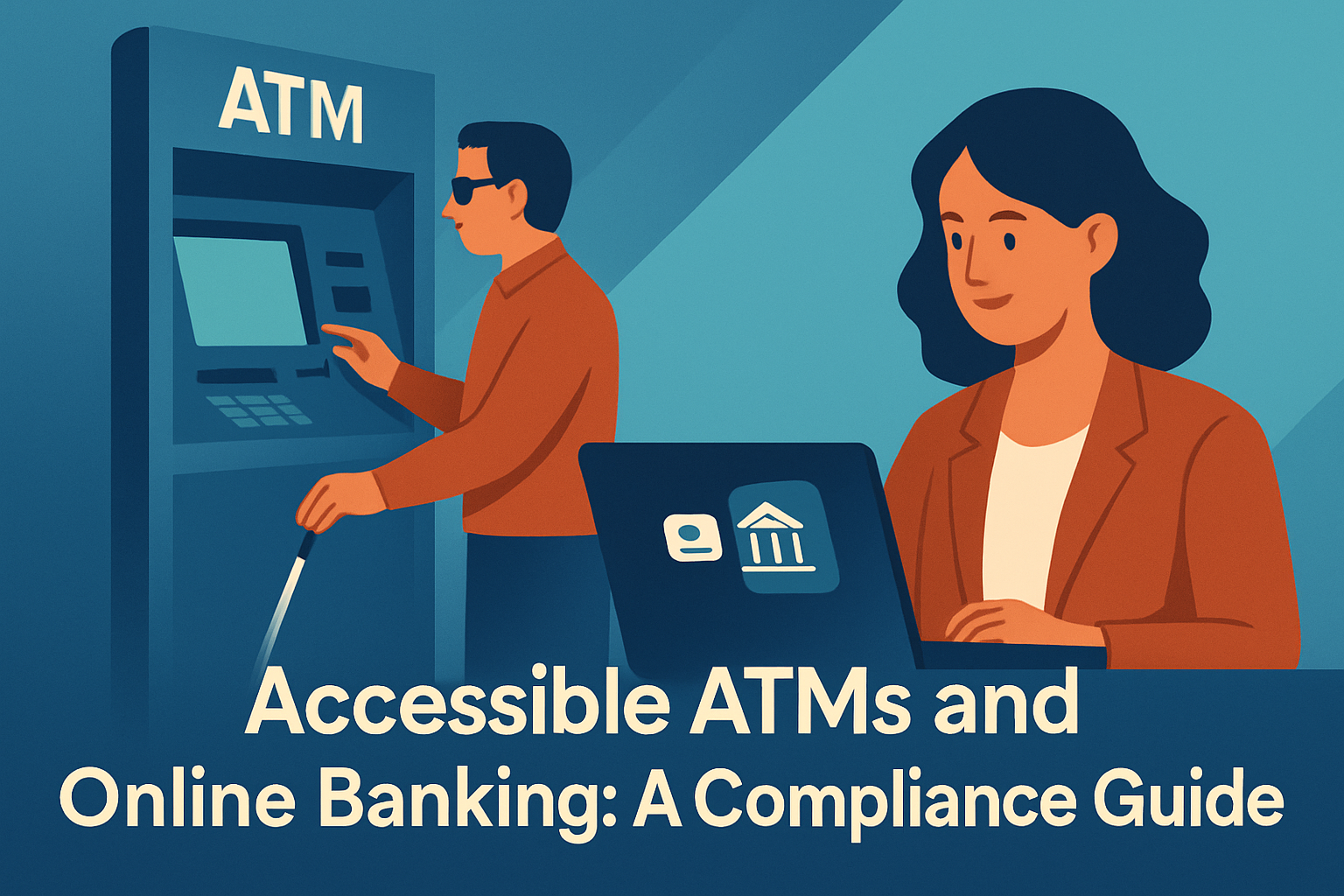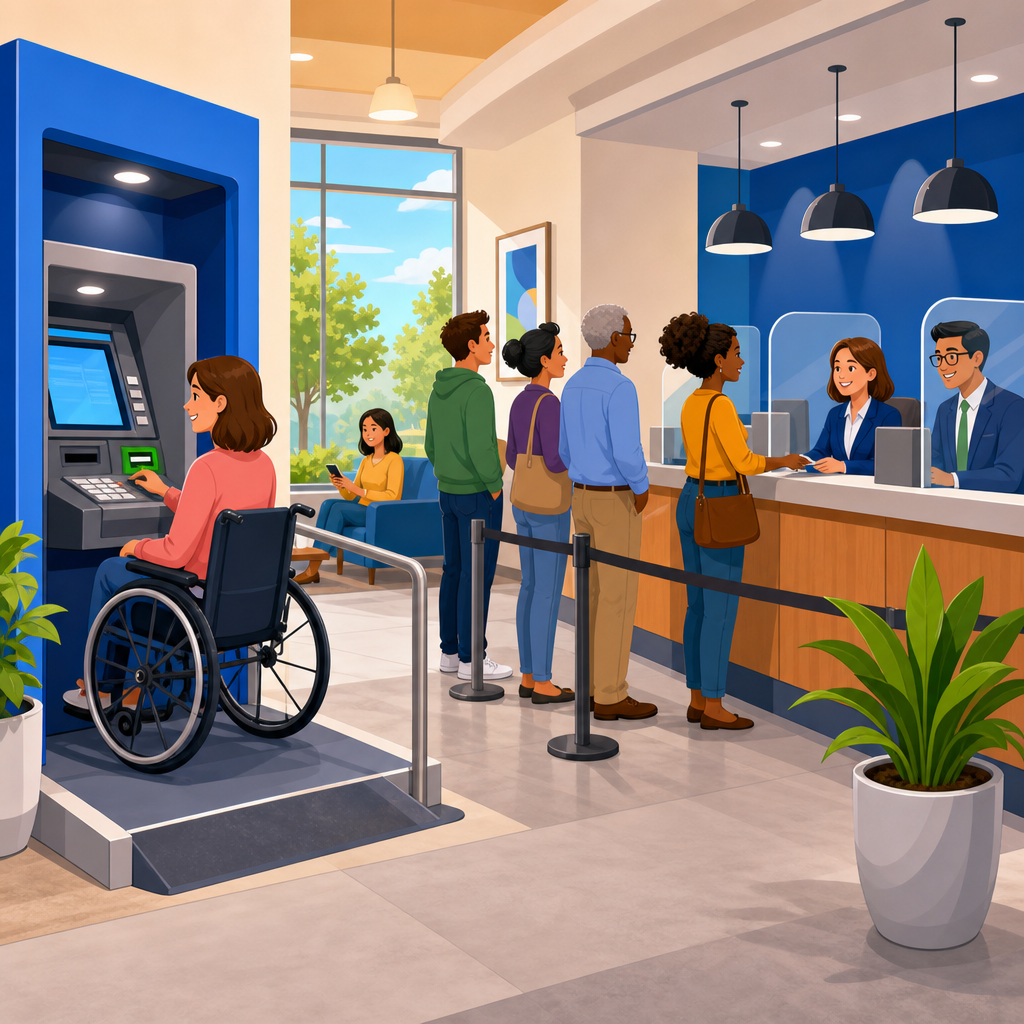
Accessible ATMs, teller lines, and branch service counters are core parts of financial services, and when they are designed well, they let people with disabilities bank independently, privately, and safely. In this context, accessibility means more than a ramp at the front door. It includes reach ranges, clear floor space, speech output, tactile controls, readable screens, queue design, counter height, staff interaction, and policies that support equal service. Financial institutions also need to think about older adults, customers with temporary injuries, people with limited English proficiency, and anyone navigating a stressful financial task. Because branches remain essential for cash access, identity verification, notarization, safe deposit services, and problem resolution, physical accessibility still matters even as digital banking grows.
I have worked on branch accessibility reviews where the biggest barriers were not dramatic construction flaws but ordinary details: a card reader mounted too high, a teller writing shelf blocking wheelchair approach, a queue stanchion narrowing the route, or staff who did not know how to offer private assistance without patronizing the customer. Those details affect compliance, customer retention, and brand trust. In the United States, the Americans with Disabilities Act sets the baseline for public accommodations, while the 2010 ADA Standards for Accessible Design provide the technical criteria many branch elements must meet. For ATMs, the Department of Justice has also emphasized features such as speech output, tactilely discernible controls, and privacy for input. Financial services providers that ignore these requirements face complaints, remediation costs, and reputational damage.
This hub article explains what accessible branch service looks like across self-service machines, teller lines, counters, circulation paths, and operating procedures. It also frames the financial services sector as a connected experience rather than a series of isolated fixtures. A customer may arrive by accessible parking, pass through the entrance, queue for a teller, use a writing surface, access an ATM, speak with a banker in an office, and review printed disclosures before leaving. If one link breaks, the whole visit becomes harder. The goal is straightforward: branches should enable equitable service with the same convenience, dignity, and security offered to other customers.
Why accessibility in financial services branches matters
Accessible branch design directly affects independence, privacy, and risk. A customer who cannot reach an ATM keypad may have to disclose a PIN to a stranger. A deaf customer at a teller window without an effective communication process may miss fraud instructions or overdraft terms. A blind customer using an unlabeled coin counter or signature pad may complete a transaction without understanding what was presented. These are not minor inconveniences. They affect legal rights, financial control, and fraud exposure. In practical terms, accessible service reduces abandoned transactions, lowers complaint volume, improves staff efficiency, and broadens the customer base.
Branch accessibility also intersects with demographic reality. The Federal Deposit Insurance Corporation has long reported that branches remain especially important for cash users and customers handling complex transactions. At the same time, the U.S. population is aging, and disability prevalence rises with age. Arthritis affects grip and dexterity, low vision affects contrast sensitivity, hearing loss changes communication needs, and mobility limitations alter turning space and reach. Designing only for a narrow image of the average customer is poor operations strategy. Banks and credit unions that treat accessibility as mainstream service planning usually perform better during renovations, mergers, and technology rollouts because they are already measuring real customer use conditions.
Accessible ATMs: technical requirements and customer experience
An accessible ATM must work for customers who are blind, have low vision, are deaf or hard of hearing, use wheelchairs, have limited reach, or have reduced dexterity. In U.S. practice, that usually means an unobstructed approach, compliant operable parts, speech output through a standard headphone jack, tactilely discernible function keys, visible display content, and privacy features that allow secure entry of personal information. The machine location matters as much as the machine itself. I frequently see compliant hardware installed in noncompliant alcoves, with trash cans, brochure racks, or bollards reducing clear floor space.
Speech output is one of the most important ATM features because it allows blind and low-vision users to navigate menus, confirm amounts, and complete transactions independently. But not all audio guidance is equally usable. Good systems announce card orientation, explain timeouts, confirm transaction type, and provide clear error recovery steps. They also avoid jargon. Tactile controls should be consistently arranged, and screens should maintain strong contrast without glare from adjacent windows. If a branch upgrades software, teams should retest audio prompts and screen flows because accessibility failures often appear during interface changes rather than during hardware installation.
For mobility access, the key questions are simple: can a customer approach the machine, align with the controls, and reach every required input without strain? Knee and toe clearance, side or forward approach conditions, and maximum reach heights all matter. Exterior ATM sites add weather, lighting, slope, and security concerns. A machine may technically be accessible but operationally difficult if rain noise blocks speech output, sun glare obscures the display, or the route from parking crosses cracked pavement. In practice, the best ATM accessibility programs combine technical standards, field testing, and preventive maintenance.
Teller lines and queue design
Teller lines are often overlooked because institutions focus on the transaction point instead of the path to it. Yet many branch barriers occur in the queue itself. Stanchions, merchandising displays, floor safes, and freestanding sign holders can reduce route width, create cane-detection hazards, or block turning space. A well-designed teller line keeps the accessible route obvious from the entrance, preserves maneuvering space near each station, and allows customers using mobility devices to wait without being squeezed between rails or adjacent patrons.
Acoustics also shape accessibility. Hard flooring, high ceilings, and open lobbies create reverberation that makes speech difficult to understand, especially for customers with hearing loss or auditory processing challenges. In several branch retrofits, modest changes such as acoustic ceiling panels, strategic carpeting, and sound-absorbing wall finishes improved speech intelligibility more than expensive technology alone. Where privacy is required, branches should think beyond the traditional raised voice through security glass. Hearing loop systems, written backup communication, and staff training on face-to-face positioning can make teller interactions much more effective.
Queue management should support dignity. Customers who need extra time should not feel they are disrupting line speed. Universal service counters, appointment check-in options, and a clear process for moving to a private office help. Branch managers often worry that accessibility will slow operations. My experience is the opposite. When routes are clear, signage is plain, and staff know how to triage needs, transactions move faster because fewer customers become confused or require repeated explanations.
Service counters, writing surfaces, and consultation areas
Accessible branch service counters need at least one portion low enough for a seated customer to use comfortably, with proper knee clearance and an unobstructed approach. This matters at teller windows, reception desks, account-opening stations, and any place where a customer signs documents or exchanges materials. A common mistake is adding a decorative shelf or brochure holder beneath the lowered section, which eliminates usable knee space. Another is treating a side desk across the lobby as the accessible option. Equal service works best when the accessible position is integrated into the main service area, not separated from it.
Writing surfaces deserve more attention than they usually get. Customers still complete withdrawal slips, cashier’s check requests, safe deposit forms, medallion signature paperwork, and dispute statements by hand. A standing-height ledge alone does not serve everyone. Branches should provide at least one seated writing surface with nearby pens that are easy to grip, strong lighting, and enough contrast to read paper forms. If signature pads are used, staff should know how to reposition them, increase text size when possible, and explain the purpose of each authorization clearly before asking for consent.
Consultation spaces are critical for mortgages, business banking, estate accounts, and fraud cases, where privacy and comprehension matter more than speed. These offices should have accessible doors, adequate turning space, seating options with and without arms, clear paths around furniture, and communication supports. For customers with low vision, printed disclosures may need large print versions. For deaf customers, effective communication may require real-time captioning, a qualified interpreter, or a documented auxiliary aid process depending on the complexity of the conversation. The accessible branch is not just a lobby; it includes every room where financial decisions are made.
Common branch elements and what to check
| Element | What accessible service requires | Common failure | Practical fix |
|---|---|---|---|
| ATM | Clear floor space, reachable controls, speech output, tactile keys, glare control | Machine is compliant but approach is blocked by fixtures | Maintain clear zone and audit after merchandising changes |
| Teller line | Wide route, turning space, understandable acoustics, visible signage | Stanchions narrow path and create confusion | Redesign queue footprint and simplify wayfinding |
| Service counter | Lowered section with knee clearance and integrated location | Accessible counter used as storage area | Keep area clear and train staff on setup checks |
| Forms area | Seated writing surface, readable forms, easy-grip pens, lighting | Only standing ledges are provided | Add accessible table and alternative formats |
| Consultation office | Accessible entry, maneuvering room, communication aids, privacy | Furniture blocks wheelchair turning space | Reconfigure layout and standardize room setup |
Policies, staff training, and operational controls
Physical design alone does not produce accessible financial services. Staff behavior and branch procedures determine whether the built environment actually works. Every frontline employee should know how to greet a customer with a disability, describe available options, and provide assistance without taking control away from the customer. Training should cover sighted-guide technique basics, communication with deaf and hard-of-hearing customers, handling service animals, reading forms aloud when requested, and protecting confidentiality during assisted transactions. It should also address what not to do, such as speaking only to a companion, moving a mobility device without permission, or assuming a customer cannot complete a transaction independently.
Operational controls matter because accessible features fail when routine branch practices override them. I often find lowered counters stacked with marketing displays, accessible routes reduced by seasonal décor, and ATM audio jacks disabled by dirt or wear. Strong programs assign ownership: facilities handles physical barriers, operations handles line configuration, IT validates ATM software updates, and branch managers complete periodic checklists. Institutions with multiple locations benefit from a standard branch accessibility audit tied to remodel cycles, complaint logs, and preventive maintenance tickets.
Policies should also define how customers request accommodations for complex transactions. For example, a branch handling trust administration or loan closings may need a process for scheduling auxiliary aids in advance. A fraud investigation may require private communication methods and accessible document review. The best institutions document these workflows, test them, and revise them after real customer feedback. Accessibility succeeds when it is embedded in service design, not treated as a rare exception.
Building a strong financial services accessibility program
As a hub for financial services guidance, this topic connects branch planning, ATM procurement, retail operations, compliance reviews, customer communications, and vendor management. A mature program starts with an inventory: entrances, parking, routes, ATMs, teller stations, counters, offices, restrooms, signage, alarms, and document workflows. Then it prioritizes fixes by risk and customer impact. High-priority issues usually include inaccessible transaction points, blocked routes, communication barriers, and any condition that forces customers to disclose private banking information to complete basic tasks.
Procurement is another leverage point. ATM vendors, millwork suppliers, queue-system providers, and branch design firms should receive accessibility specifications before purchase orders are issued. Standard details for counter heights, clearances, and device placement prevent avoidable retrofits. Post-installation verification is essential because field conditions differ from shop drawings. Institutions should also connect this hub topic to adjacent areas such as accessible websites, mobile banking apps, PDF disclosures, call center procedures, and fraud alerts. Customers do not separate these channels, and neither should the bank.
The central benefit is straightforward: accessible branches make financial services usable for more people with less friction and less risk. When ATMs speak clearly, teller lines are navigable, counters are reachable, and staff know how to respond, customers can bank with confidence and independence. Review your branch standards, audit high-traffic locations, and fix the small barriers first. Those practical improvements usually deliver the fastest gains in compliance, service quality, and trust.
Frequently Asked Questions
What makes an ATM accessible for people with disabilities?
An accessible ATM is designed so customers with a wide range of disabilities can use it independently, privately, and safely. That starts with the physical setup. The machine should be placed on an accessible route with enough clear floor space for a wheelchair or other mobility device to approach and maneuver. Controls, card slots, cash dispensers, receipt trays, and headphone jacks should all be within usable reach ranges, and the area around the ATM should avoid obstacles, steep slopes, or tight turning spaces.
Accessibility also depends heavily on the user interface. A well-designed ATM typically includes speech output that works through a standard headphone jack, tactilely discernible controls, and a keypad layout that customers can identify by touch. Screen content should be readable, with strong contrast, legible text, and navigation that does not rely only on color or visual cues. People with low vision may benefit from larger text and simpler screen organization, while blind users need spoken prompts that clearly explain each step of the transaction.
Privacy and security are also essential. Customers should be able to complete transactions without needing to share their PIN or account information with another person. That means audio guidance should be clear and complete, and the interface should allow enough time for users who need a slower pace. In practice, an accessible ATM is not just a compliant machine; it is one that supports equal access from start to finish, allowing customers to withdraw cash, check balances, make deposits, and complete routine banking tasks with confidence.
Why are teller lines and queue areas important to accessibility?
Teller lines are a major part of the customer experience, and if they are poorly designed, they can create barriers before a customer even reaches a bank employee. An accessible queue should provide enough width for wheelchair users, walkers, scooters, and other mobility devices to move through comfortably. The path should be level, stable, and free of unnecessary turns or crowded obstacles such as sign stands, rope barriers, or promotional displays. Clear floor space matters not only at the service point, but throughout the waiting area.
Accessibility in teller lines also includes usability for customers with vision, hearing, cognitive, and sensory disabilities. Queue systems should be easy to understand, with clear signage and straightforward circulation patterns. If the branch uses a take-a-number system or digital queue management, the system should provide information in more than one format, such as visual displays plus audible announcements or staff assistance. Relying on a single method can exclude customers who cannot see a screen or hear a spoken callout.
The waiting experience also affects dignity and independence. Customers should not be forced to leave an accessible path in order to ask for help, and they should not have to navigate a confusing or cramped area to reach service. A well-planned teller line supports equal access by reducing physical strain, improving wayfinding, and making it easier for all customers to understand where to go and what to expect. In a financial setting, that kind of accessibility directly supports safe, respectful, and effective service.
How should branch service counters be designed to support accessibility?
Accessible branch service counters should allow customers to conduct business face to face without unnecessary physical barriers. One of the key features is counter height. If all service surfaces are too high, customers who use wheelchairs or have shorter reach ranges may not be able to sign documents, exchange materials, or communicate comfortably with staff. At least part of the service counter should be at an accessible height and positioned so a customer can approach it directly with adequate knee and toe clearance where appropriate.
Counter design should also account for communication needs. Good lighting, reduced glare, and minimal background noise make it easier for customers to read forms, view identification, and communicate with employees. For customers who are deaf or hard of hearing, features such as assistive listening systems, speech-to-text support, or a quieter service area can improve access significantly. For customers with low vision, high-contrast materials and clearly organized documents are often just as important as the physical dimensions of the counter itself.
Privacy is another major factor. Financial conversations often involve sensitive personal and account information, so accessibility must work together with confidentiality. A branch should have policies and spaces that allow a customer to receive help without being singled out or moved into an inferior service process. When counters are thoughtfully designed and staff are trained to use them effectively, customers with disabilities can handle transactions, ask questions, review paperwork, and resolve account issues with the same level of convenience and respect as any other customer.
What role do staff interaction and bank policies play in accessibility?
Physical design is only part of the picture. Staff interaction and institutional policies often determine whether a customer with a disability actually receives equal service. Employees should understand how to communicate respectfully, offer assistance without being patronizing, and adapt standard procedures when needed. For example, a staff member should know how to guide a customer to an accessible ATM, describe available service options clearly, or communicate effectively with someone who is blind, deaf, has limited speech, or processes information differently.
Policies are equally important because accessibility should not depend on whether a single employee happens to be helpful. Financial institutions need consistent procedures for providing auxiliary aids and services, maintaining accessible equipment, handling service interruptions, and offering equivalent alternatives when a feature is temporarily unavailable. If an accessible ATM is out of service, for instance, the bank should have a clear response that still protects the customer’s privacy, independence, and timely access to funds.
Training should also cover legal and operational expectations, including how to avoid unnecessary eligibility requirements, delays, or extra burdens for customers with disabilities. Staff should know that accessibility is part of core customer service, not a special favor. When branches combine accessible facilities with strong policies and well-trained employees, they create a banking environment where customers can rely on consistent, respectful access across routine transactions and more complex financial interactions.
How can financial institutions improve accessibility beyond minimum compliance?
Going beyond minimum compliance means focusing on real-world usability instead of treating accessibility as a checklist. A bank can meet basic technical requirements and still create a frustrating experience if features are hard to find, inconsistently maintained, or poorly explained. The best institutions evaluate the full customer journey: arriving at the site, entering the branch, finding the ATM, navigating the teller line, using the service counter, receiving assistance, and completing transactions securely. That broader view helps identify barriers that may not be obvious in a narrow compliance review.
One of the most effective ways to improve accessibility is to involve people with disabilities in planning, testing, and feedback. User experience input can reveal issues with speech output clarity, queue confusion, counter usability, signage placement, or staff practices that formal standards alone may not capture. Regular maintenance is also critical. An ATM with a broken headphone jack or a blocked clear floor space is not meaningfully accessible, even if it was installed correctly. Accessibility features must remain operational and available in practice.
Financial institutions can also strengthen access by improving communication and service flexibility. Clear website and in-branch information about accessible features, appointment options, alternative formats, and assistance procedures can reduce uncertainty for customers before they arrive. Periodic audits, staff refresher training, and prompt correction of barriers help build long-term reliability. In the banking context, going beyond compliance means designing for independence, privacy, and equal participation, so customers with disabilities can manage their finances with the same confidence, security, and convenience as everyone else.