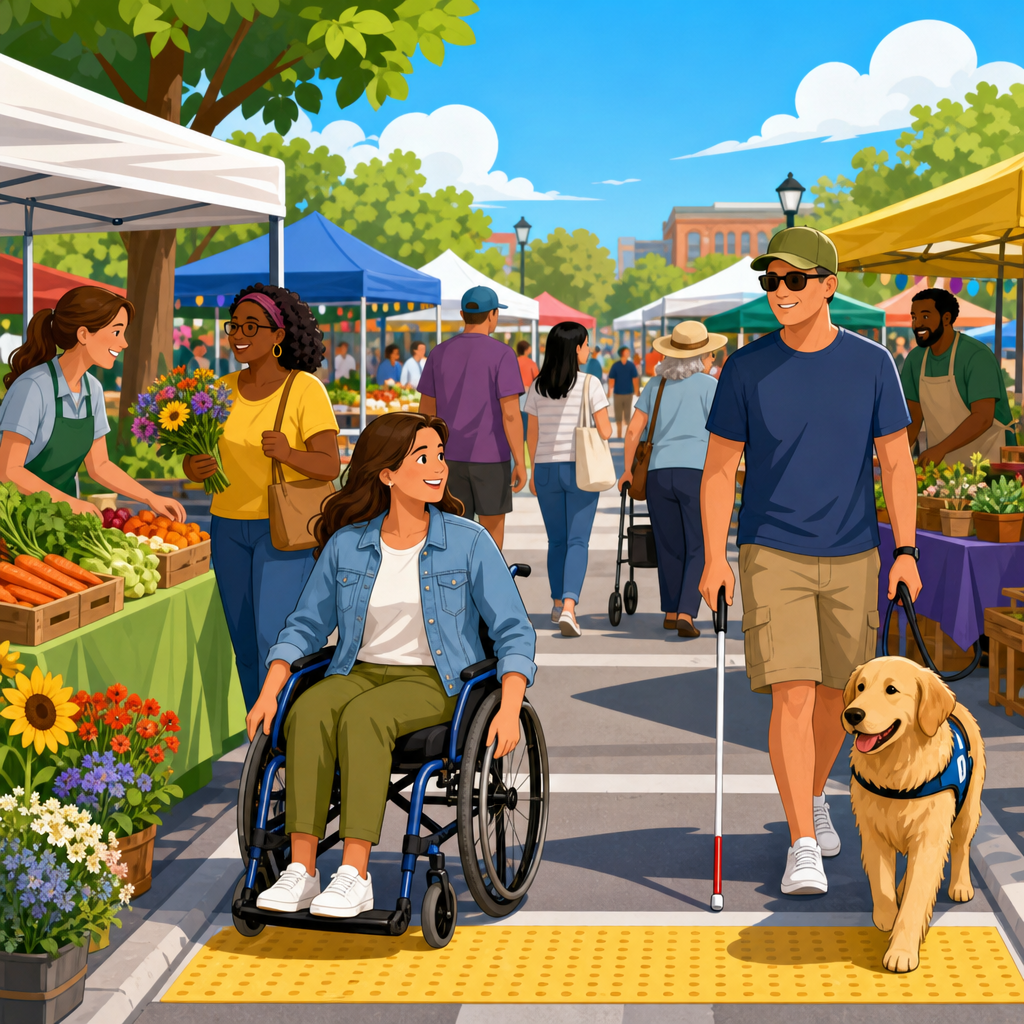
ADA compliance for farmers markets, street fairs, and pop-ups is the practical work of making temporary public events accessible to people with disabilities in ways the law requires and good operations demand. In this context, ADA refers to the Americans with Disabilities Act, the federal civil rights law that prohibits disability-based discrimination in public accommodations, government services, transportation, and employment. For event organizers, market managers, municipalities, and vendors, compliance means more than adding a ramp or reserving one parking space. It requires accessible routes, equitable communication, usable restrooms, clear policies for service animals, and purchasing systems that do not exclude shoppers, attendees, volunteers, or sellers.
I have worked with temporary event operators long enough to know that accessibility problems usually start in planning, not on opening day. A market can have strong vendor demand, a prime downtown location, and excellent community support, yet still fail disabled visitors because curb cuts are blocked, booth aisles narrow unpredictably, or announcements are only made over a loudspeaker. Temporary events are especially vulnerable because they are assembled quickly, operate in borrowed or multi-use spaces, and rely on short-term staff who may never have been trained on disability access. The result is inconsistency, and inconsistency is where legal exposure and poor visitor experience meet.
This matters because farmers markets, street fairs, and retail pop-ups are often central community spaces. They connect local agriculture, small business, tourism, and neighborhood identity. When accessibility is weak, exclusion happens at the exact places that claim to welcome everyone. The stakes are legal, operational, and reputational. The Department of Justice enforces ADA obligations, state and local accessibility laws may add stricter requirements, and private lawsuits often focus on barriers that operators could have anticipated. Just as important, inaccessible events lose customers, reduce vendor sales, and damage trust with residents who expect public-facing events to be usable by all.
Sector-specific ADA compliance means applying broad legal standards to the realities of temporary events. A permanent grocery store and a once-a-week open-air market are not identical, but both must provide accessible participation. This hub article explains the core rules, the recurring trouble spots, and the practical systems that make compliance durable across locations and event types.
Which ADA rules apply to temporary markets and events
The first question organizers ask is simple: which part of the ADA applies? The answer depends on who runs the event and how the space is used. City-run street fairs, parks department markets, and events hosted by public universities usually fall under Title II, which covers state and local government programs and services. Privately operated farmers markets, craft fairs, ticketed pop-ups, and vendor festivals usually fall under Title III, which covers places of public accommodation. In practice, both frameworks require meaningful access and prohibit policies that screen out disabled people unless a narrow legal exception applies.
Temporary does not mean exempt. That misconception causes many preventable failures. If an organizer installs check-in tents, portable toilets, payment stations, seating areas, or stages, those elements must be selected and placed with access in mind. If the event uses an existing site, the organizer and site owner may share responsibilities depending on contracts and control over the premises. I advise clients to treat accessibility allocation the same way they treat insurance and cleanup: write it down, assign tasks, and verify performance before the event opens.
Another key point is that ADA compliance is not limited to wheelchair access. The law protects people with mobility, vision, hearing, speech, cognitive, and psychiatric disabilities, among others. That means event communications, queue management, website information, emergency procedures, and staff interactions all matter. An accessible route from parking to booths is essential, but so is a policy for effective communication when a deaf customer needs information from a vendor or when a blind visitor relies on a support person and tactile orientation cues to navigate a crowded site.
Site selection, routes, and layout decisions that determine access
The best accessibility fix is choosing the right site before permits are issued. When I assess event locations, I start with arrival, circulation, and departure. Can a disabled visitor arrive by car, paratransit, bus, or sidewalk? Are there accessible parking spaces on a firm, stable surface with access aisles that are not blocked by cones or merchandise? Is there a continuous path from drop-off and parking to entrances, restrooms, information points, and vendor rows? Gravel lots, uneven turf, broken pavement, and steep gutter crossings regularly defeat otherwise well-run events.
For outdoor events, route conditions change hour by hour. Rain softens grass. Extension cords shift. Vendors push displays into aisles. Sandwich boards migrate. Crowds compress circulation near music stages and food lines. The practical response is to define minimum clear widths, mark them on the site plan, and enforce them during setup and trading hours. Temporary flooring, cable covers, weighted mats, and edge protection can convert a marginal site into a usable one, but only if they are installed correctly and inspected throughout the day.
Layout also affects dignity and independence. If the only accessible entrance is through a vendor unloading area or behind waste bins, the event may technically function yet still provide an inferior experience. The better standard is integrated access: disabled attendees should enter where others enter, move through the same primary routes, and reach popular features without detours that are exhausting or confusing. This is particularly important for street fairs stretched across multiple blocks, where one inaccessible intersection can effectively cut the event in half for wheelchair users and people with limited stamina.
| Event element | Common failure | Practical correction |
|---|---|---|
| Arrival | Accessible parking used for vendor storage | Reserve, sign, and monitor spaces before setup begins |
| Routes | Cords, tent weights, and displays narrow aisles | Set minimum clear width and inspect every row hourly |
| Check-in | High counters and cash-only systems | Provide lowered service point and accessible card reader |
| Restrooms | Standard portable toilets only | Order accessible units on level ground with clear approach |
| Communication | Announcements only over speakers | Add visual signage, text updates, and staffed information point |
Vendor operations, sales methods, and customer service obligations
Many access barriers arise at the booth level, which is why a hub page on sector-specific ADA compliance must address vendor management directly. Organizers cannot assume each seller understands disability law. Vendor packets should specify aisle clearance, table height considerations, queue placement, service animal rules, and expectations for communicating with disabled customers. If the market accepts nutrition benefits through a central token booth, that booth must be accessible in both physical design and transaction process. I have seen excellent food access programs undercut by token stations placed on grass berms with no stable approach.
Point-of-sale systems deserve special attention. Touchscreen readers, handheld card devices, QR code menus, and app-based ordering can speed transactions, but they can also create barriers for blind users, people with limited dexterity, and customers who do not use smartphones. Accessible practice means offering an alternative method that is equally effective in real time, not telling the customer to wait for a manager or come back later. For pop-up retail, fitting rooms, pickup counters, and merchandise reach ranges should also be reviewed, especially when brands are using modular displays that were designed for aesthetics rather than usability.
Customer service policies matter as much as physical setup. Staff and vendors should know that service animals are generally permitted, that they should speak to the disabled person rather than only to a companion, and that they may need to read pricing, ingredient, or directional information aloud when asked. Food vendors should be prepared to answer questions about ingredients and packaging access. Makers selling cosmetics or crafts should understand that product demonstrations may need adaptation for people with low vision or limited hand strength. These are not extraordinary accommodations. They are ordinary parts of serving the public fairly.
Communication access, digital information, and event-day wayfinding
People often think of ADA compliance for markets and fairs as a built-environment issue, but communication access is just as important. Before anyone arrives, they need accurate information online: parking locations, route surfaces, restroom availability, seating, quiet areas, ticketing rules, and contact methods for accommodation requests. Event websites, registration pages, and digital maps should be usable with screen readers, keyboard navigation, and sufficient color contrast. If a pop-up event uses timed entry or mobile tickets, those systems must be accessible too.
On site, clear signage reduces dependence on staff and helps everyone move efficiently. Directional signs should use plain language, high contrast, and predictable placement. Information booths should be easy to find and trained to respond to accommodation requests without confusion or delay. For stages, demonstrations, and public announcements, organizers should consider how deaf and hard-of-hearing attendees will receive the same information. Depending on the event, that may include captioning on screens, qualified interpreters for key programming, or text-based alert systems for schedule changes and emergencies.
Wayfinding is especially important at large street fairs and multi-building pop-ups. Printed maps in large type, consistent icon systems, and landmarks identified in verbal directions can make a significant difference. In my experience, the best event teams conduct a walk-through from the perspective of several users: a wheelchair user, a blind visitor, a parent pushing a stroller, and an older adult who needs frequent seating. That exercise quickly reveals missing signs, dead-end routes, and decision points where staff support is needed.
Restrooms, seating, emergency planning, and ongoing compliance management
Restrooms are one of the fastest ways to judge whether an event took access seriously. If portable toilets are used, at least some must be accessible, placed on firm and level ground, and connected by an accessible route that remains usable all day. Too often, accessible units are ordered but then positioned on a slope, behind barricades, or in mud. Handwashing stations, lighting, and nearby turning space matter as well. For longer events, seating areas should include dispersed options, not one isolated section. People with mobility limitations, chronic pain, heat sensitivity, or fatigue may need frequent rest even if they do not use a wheelchair.
Emergency planning must include disabled attendees, vendors, and staff. Evacuation routes, shelter procedures, severe weather messaging, and medical response protocols should be reviewed through an accessibility lens. If a market uses temporary fencing or controlled exits, staff must know how to assist people who move slowly, rely on mobility devices, or need communication support. Temporary events are dynamic environments, so accessibility cannot be a one-time checklist completed at permit stage. It requires active management from load-in through breakdown.
That is why documentation and training are the backbone of sustainable compliance and implementation. Create an accessibility plan, embed requirements in vendor agreements, assign an access lead, train frontline staff, inspect the site before opening, and log issues with corrective actions. Photographs, route measurements, procurement records for accessible equipment, and complaint-response notes all help show diligence if a problem arises. More importantly, they help the next event run better. ADA compliance for farmers markets, street fairs, and pop-ups is not about perfection. It is about building repeatable systems that let every visitor and vendor participate with greater safety, independence, and respect. If you manage temporary public events, audit your next site plan, vendor packet, and event-day procedures now, then close the gaps before the crowd arrives.
Frequently Asked Questions
What does ADA compliance actually mean for farmers markets, street fairs, and pop-up events?
For farmers markets, street fairs, and pop-ups, ADA compliance means making sure people with disabilities can access and participate in the event in a way that is as full and equal as possible. The Americans with Disabilities Act is a federal civil rights law, not just a design suggestion, and it applies even when an event is temporary. In practice, that means organizers, municipalities, market managers, and vendors should think beyond permanent buildings and focus on how real people move through, use, and enjoy the event space. Accessible parking or drop-off areas, clear and stable routes, usable entrances, seating options, accessible restrooms, readable signage, and effective communication all matter. So do policies and staff practices, such as allowing service animals, responding appropriately to accommodation requests, and knowing how to assist attendees without creating barriers.
Temporary events often create unique accessibility issues because they are built quickly, operate outdoors, and rely on tents, portable fixtures, uneven terrain, and changing crowd conditions. That does not remove ADA responsibilities. Instead, it means accessibility needs to be part of event planning from the start. Organizers should assess the site, identify barriers, choose accessible layouts, and coordinate with vendors and contractors so accessibility is built into the setup rather than treated as an afterthought. The most effective approach is practical and operational: think about arrival, entry, movement, transactions, seating, restrooms, communication, emergency procedures, and departure. If a person with a mobility, vision, hearing, cognitive, or sensory disability would struggle to use the event in the way others can, that is usually a sign that something needs to be improved.
Who is responsible for accessibility at a temporary public event: the organizer, the venue, the city, or individual vendors?
In many cases, responsibility is shared. The event organizer or market manager typically has primary control over the event layout, admissions process, common areas, restroom placement, route planning, communication methods, and overall operations. A municipality may control the sidewalks, streets, parking areas, permits, and public infrastructure involved. A private property owner may be responsible for features of the host site. Individual vendors may be responsible for making their own booths, tables, service methods, and customer interactions accessible. Because multiple parties can influence accessibility, it is common for more than one entity to have ADA obligations at the same event.
That is why clear planning and documented expectations are so important. Organizers should include accessibility requirements in vendor rules, site plans, contractor instructions, permit documents, and operations manuals. For example, a market manager might require vendors to keep merchandise and signs out of pedestrian routes, position payment devices where wheelchair users can reach them, and provide verbal assistance when needed. The organizer may also need to coordinate accessible portable restrooms, seating, and wayfinding, while the local government ensures that public access points and curb ramps are usable. From a risk-management standpoint, it is a mistake for each party to assume someone else is handling compliance. The best practice is to assign duties clearly, inspect conditions before opening, and have a process for fixing issues during the event.
What are the most important accessibility features to plan for at farmers markets, street fairs, and pop-ups?
The most important features usually start with the attendee journey. People need a way to get to the event, enter it, move through it, use its services, and leave without unnecessary barriers. That often includes accessible parking or drop-off access nearby, a clear route from arrival points into the event, and pathways that are wide enough and stable enough for wheelchair users, people using walkers, parents with strollers, and others who need extra room or smoother surfaces. For outdoor events, surface conditions are especially important. Grass, gravel, mud, steep slopes, loose cables, and crowded aisles can quickly become access barriers. Organizers should plan for route width, turning space, ramp needs, edge transitions, and weather-related changes to the ground surface.
Beyond circulation, attendees need access to core event functions. That includes ticketing or check-in if used, vendor transactions, food service, seating, stages or presentation areas, water access, handwashing stations, and restrooms. Portable restrooms should include accessible units placed on an accessible route, and seating areas should allow people with mobility devices to sit with companions rather than being isolated. Signage should be easy to read and placed where it helps people find entrances, restrooms, information booths, and accessible features. Communication access also matters. If announcements are made over loudspeakers, there should be alternative ways to share important information, especially safety updates. If the event includes performances, workshops, or public speaking, organizers should consider whether interpreters, captioning, assistive listening support, or other aids are appropriate. The goal is not just physical entry, but meaningful participation throughout the event.
How can vendors and event staff make temporary booths and customer service more accessible?
Vendors and staff play a major role because accessibility is not only about site layout; it is also about how people are served. A booth may technically be reachable, but still be difficult to use if products are displayed too high, the checkout area is blocked, menus are hard to read, or staff are not prepared to communicate effectively. Vendors should keep the front of the booth clear, avoid extending merchandise into walkways, and make sure at least part of the transaction area can be used by someone seated in a wheelchair or scooter. If a customer cannot easily reach a card reader, sample table, or sign-up sheet, staff should be ready to bring the item to them or offer another equally effective way to complete the interaction.
Good customer service practices matter just as much. Staff should know basic etiquette, such as speaking directly to the person with a disability rather than only to a companion, being willing to read signage or menu items aloud, and understanding that service animals are generally permitted to accompany their handlers. They should also know how to respond when someone requests a reasonable accommodation, such as help carrying purchases, directions to an accessible restroom, or a quieter place to sit. Training does not need to be complicated, but it should be intentional. A short pre-event briefing can cover clear pathways, communication tips, emergency procedures, and who to contact if an accessibility issue arises. When staff are calm, informed, and solution-oriented, they can prevent minor barriers from becoming major problems.
What should organizers do if an event site is older, uneven, or otherwise difficult to make fully accessible?
Older downtown districts, parks, parking lots, and temporary street closures often come with real constraints, but difficult conditions do not eliminate the need to provide access. Organizers should start by identifying which barriers can be removed or reduced through practical measures. Sometimes that means changing the layout, relocating key features, adding temporary ramps or mats, widening aisles, moving a stage, improving signage, or creating a better accessible entrance and route. It may also mean placing the most important services, such as information, food, restrooms, and popular vendors, where they are easiest to reach. Accessibility planning should focus on usability in real conditions, not just whether the event technically fits into the site.
When full access is genuinely hard to achieve in one area, organizers should look for alternative methods that still offer people with disabilities an equivalent opportunity to participate. For example, if one entrance is inaccessible because of terrain, there should be a clearly identified accessible entrance with staff support and signs directing people to it. If a vendor row is difficult to navigate due to a slope, organizers may need to reconfigure placement or provide assisted purchasing options. The key is to avoid passive barriers and to communicate clearly before and during the event. Publish accessibility information on the event website, in social media posts, and on-site signs so attendees know what to expect and how to request assistance. Just as important, document the barriers you identified, the solutions you implemented, and the complaints or feedback you received. That record helps improve future events and shows that accessibility was approached seriously and proactively.