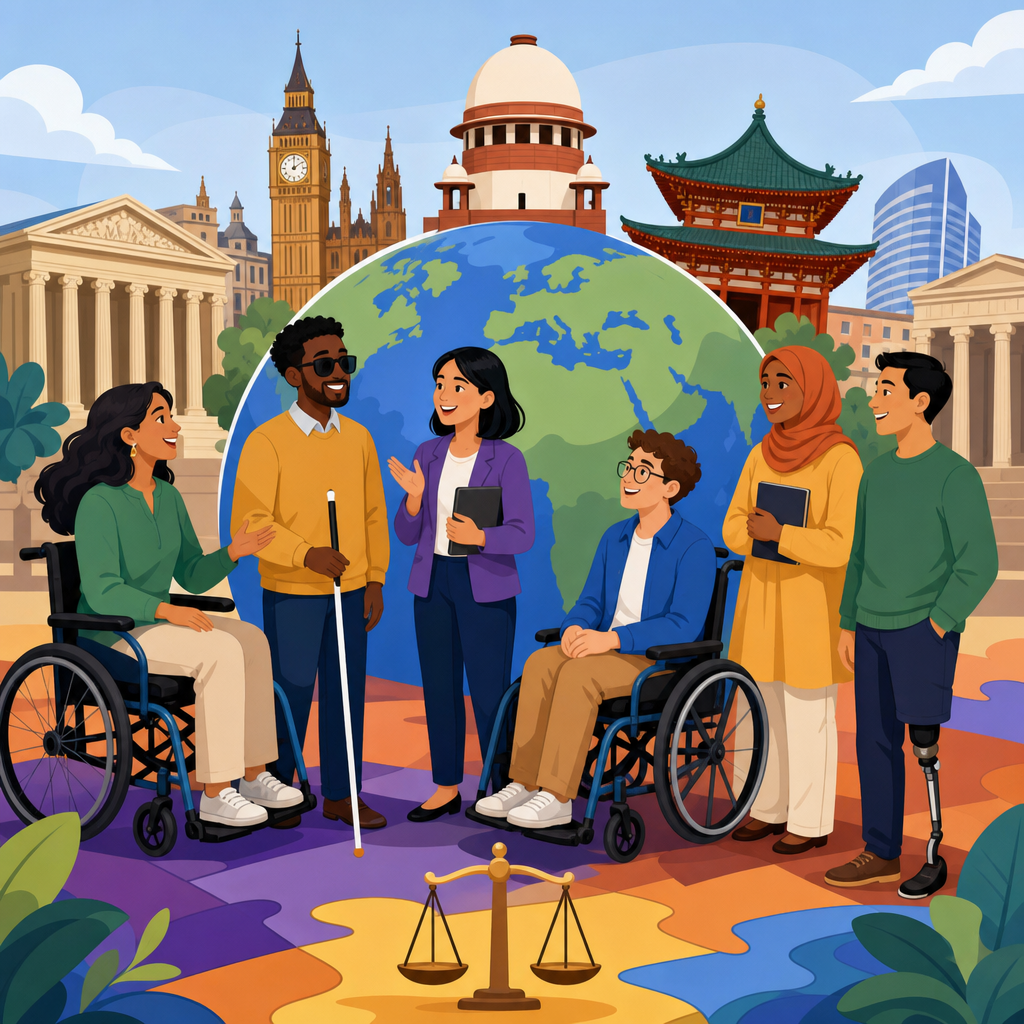
Why disability rights language varies across legal systems is a practical question with legal, cultural, and political consequences. The words used in statutes, treaties, court opinions, and agency guidance shape who qualifies for protection, what duties governments and employers must meet, and how disabled people are understood in public life. In my work reviewing accessibility policies and comparing equality laws across jurisdictions, I have seen the same underlying goal expressed through sharply different terms: disability, impairment, incapacity, invalidity, functional limitation, special needs, and persons with disabilities. Those differences are not cosmetic. They affect enforcement, budgeting, education policy, workplace accommodation, and access to justice.
At the center of this issue is the relationship between language and legal design. A legal system may define disability through a medical model, focusing on diagnosis or impairment, or through a social and human rights model, focusing on barriers created by society. Some systems blend both. The United Nations Convention on the Rights of Persons with Disabilities, adopted in 2006, pushed many countries toward rights-based terminology, yet domestic laws still reflect older welfare frameworks, civil law traditions, constitutional wording, religious norms, labor market structures, and administrative habits. As a result, two countries may both prohibit discrimination while using very different definitions and remedies.
This matters for anyone studying global views on disability rights. Advocates need language that secures broad protection without becoming too vague to enforce. Policymakers need terms that fit existing institutions such as social insurance, education systems, and employment law. Courts need definitions that can be applied consistently across cases involving reasonable accommodation, guardianship, voting, transport, digital accessibility, and supported decision-making. For readers exploring the international perspective, this hub explains why terminology differs, what those differences mean, and how to evaluate disability rights language across regions with precision rather than assumption.
Historical models shape modern disability rights language
The clearest reason disability rights language varies across legal systems is historical inheritance. Many countries built their earliest disability laws inside veterans’ compensation schemes, poor relief systems, mental health codes, or pension laws. Those origins produced terminology centered on incapacity, defect, invalidity, or fitness for work. Even after anti-discrimination law emerged, older labels often remained in benefit statutes and administrative rules. In civil law countries, codified definitions may stay in force for decades, while common law systems adapt faster through case law and agency interpretation.
One useful example is the contrast between older welfare language and newer equality language. In the United Kingdom, disability discrimination law evolved from the Disability Discrimination Act 1995 into the Equality Act 2010, using a functional definition tied to substantial and long-term adverse effects on normal day-to-day activities. In the United States, the Americans with Disabilities Act of 1990 and the ADA Amendments Act of 2008 frame disability broadly around physical or mental impairment, records of impairment, and being regarded as having an impairment. Both systems protect rights, but they express the threshold differently because their legal histories differ.
In parts of Latin America, constitutional reforms and regional human rights jurisprudence accelerated rights-based language, yet older terms still appear in social security and guardianship frameworks. Across parts of Asia, legal vocabulary may combine international rights terminology with domestic categories linked to registration systems or percentage-based impairment ratings. In several post-Soviet systems, administrative practice historically emphasized medical commissions and work capacity assessments. That legacy still influences how people are classified, even when constitutions or disability acts now speak in more inclusive terms.
International law creates convergence, but not uniformity
The Convention on the Rights of Persons with Disabilities created a common reference point, but it did not erase national variation. The convention deliberately avoids a rigid closed definition. Instead, it states that persons with disabilities include those with long-term physical, mental, intellectual, or sensory impairments which, in interaction with various barriers, may hinder full and effective participation in society on an equal basis with others. That wording is influential because it shifts attention from impairment alone to the interaction between impairment and barriers.
Still, treaty implementation depends on domestic drafting choices. Some legislatures copy convention language almost directly. Others adapt it to constitutional limits, preexisting anti-discrimination doctrines, or social protection systems. Federal states add another layer, because provinces, states, or Länder may control education, health, housing, or transport. In practice, this means a country can ratify the same treaty as another country yet retain narrower eligibility rules for benefits, broader accommodation duties in employment, or different standards for legal capacity.
The following comparison shows how legal purpose influences terminology more than translation alone.
| Legal context | Common language pattern | Why it appears | Typical effect |
|---|---|---|---|
| Anti-discrimination law | Disability, impairment, reasonable accommodation | Focus on equal treatment and barriers | Broader protection in work, education, services |
| Social insurance | Invalidity, incapacity, loss of earning capacity | Focus on income replacement and assessment | Medical evaluation often plays a larger role |
| Education law | Special educational needs, support needs | Focus on services and individualized plans | Access may depend on school-based identification |
| Civil status and guardianship | Mental incapacity, legal capacity, supported decision-making | Focus on autonomy and substitute decisions | Strong impact on voting, contracts, family life |
This is why global views on disability rights require close reading. The same person may be recognized under one branch of law and excluded under another. A blind student might qualify for educational support, yet still face inaccessible licensing rules. A worker with depression may receive anti-discrimination protection without meeting the threshold for income support. International law encourages harmonization, but legal systems continue to differentiate according to institutional purpose.
Translation, culture, and politics change legal meaning
Language varies not only because laws differ, but because words carry cultural weight. Translating disability rights terms across languages is difficult. Some languages lack a direct equivalent for reasonable accommodation, and others use expressions that imply charity, dependence, or tragedy. Even the widely preferred phrase persons with disabilities reflects one political tradition. In other settings, disabled people is the favored term because it emphasizes that society disables through barriers. Legislators often choose between these forms based on local advocacy history, constitutional drafting style, and public acceptability.
I have repeatedly seen translation create hidden legal risk. When a ministry borrows a term from a treaty and inserts it into domestic law without clarifying local administrative usage, frontline officials may apply the old standard anyway. For example, a rights statute may use broad participation-based language, while medical boards continue to rely on impairment percentages developed for pensions. The result is formal modernization with little operational change. This is common where legal reform is fast but bureaucratic training is slow.
Politics also matters. Governments may prefer narrower language when they fear cost expansion in education, health care, or workplace accommodation. Broader terms are more likely where constitutional courts strongly protect equality, disability movements are organized, and civil society participates in drafting. Stigma around psychosocial or intellectual disabilities can also shape wording. Some systems explicitly include mental health conditions; others speak generally enough to include them but leave uncertainty until litigation clarifies scope.
Religion, family structure, and social expectations influence legal language as well. In some jurisdictions, family care obligations are assumed in policy design, which can reduce attention to independent living terminology. In others, deinstitutionalization and community inclusion are central legal concepts. These differences help explain why global views on disability rights cannot be reduced to a single universal vocabulary, even when shared principles are widely endorsed.
Different legal systems prioritize different rights and remedies
Another reason terminology varies is that legal systems organize disability rights around different core problems. In one country, employment discrimination may be the primary focus. In another, education access, voting rights, community living, transport, or social protection may dominate. The terms chosen in law often reveal the problem lawmakers are trying to solve. Where labor participation is central, definitions frequently turn on ability to work, essential job functions, or accommodations. Where constitutional dignity and equality are central, definitions tend to be broader and more rights oriented.
Remedies shape language too. A system built around individual litigation often needs terms judges can test case by case. A system built around administrative compliance may rely more on technical standards, certification procedures, or public sector duties. Consider accessibility law. The United States uses detailed standards under the ADA and Section 504 enforcement traditions, while the European Union increasingly combines equality obligations with product, service, and web accessibility rules such as the Web Accessibility Directive and the European Accessibility Act. Both approaches advance access, but they generate different legal vocabularies.
Legal capacity offers another vivid contrast. Article 12 of the disability convention has driven reform away from plenary guardianship toward supported decision-making, yet implementation remains uneven. Some countries have replaced incapacitation language in civil codes. Others still allow broad substitute decision-making while promising narrower review standards. The wording matters because it determines whether disabled adults can sign contracts, choose where to live, marry, manage money, or refuse medical treatment.
For a hub on global views on disability rights, the practical lesson is simple: never treat one statute as representing an entire national approach. Review constitutional clauses, anti-discrimination laws, benefit rules, education frameworks, accessibility regulations, and court decisions together. Only then does the language make sense.
How to read disability rights language across borders
When comparing legal systems, start with four questions. First, what definition is being used, and in which branch of law? Second, does the law focus on diagnosis, functional limitation, social barriers, or a combination? Third, what duty follows from recognition: non-discrimination, accommodation, benefit entitlement, accessibility, support services, or substituted decision-making? Fourth, who interprets the term in practice: courts, medical boards, employers, schools, or local administrators?
Next, look for inclusion and exclusion patterns. Does the law explicitly cover psychosocial, intellectual, neurodevelopmental, and chronic health conditions? Does it protect temporary impairments, perceived impairments, or association discrimination against family caregivers? Does it require individualized accommodation, or only general accessibility planning? These details determine whether rights are real. In my experience, the strongest systems combine broad threshold language with specific enforceable duties and clear remedies.
It is also important to track institutional signals. Terminology in official guidance, school forms, disability ID cards, and court training materials often matters as much as statute text. A country may adopt progressive wording at the top while retaining restrictive categories below. Comparative analysis should therefore include implementing regulations, case law, ombuds decisions, and budget mechanisms, not just headline acts.
As this international perspective hub expands, readers should use it as a map. The major themes recur everywhere: history, treaty influence, translation, political compromise, administrative practice, and rights prioritization. Understanding those themes makes country-specific articles easier to interpret and prevents false comparisons. Disability rights language varies across legal systems because law is built from local institutions and values, yet the direction of travel is clear. The most effective frameworks move away from paternalistic labeling and toward equality, accessibility, autonomy, and participation. If you are assessing reforms, drafting policy, or comparing jurisdictions, begin with language. It tells you what a legal system believes disability is, whom it recognizes, and what justice requires next.
Frequently Asked Questions
Why does disability rights language differ so much from one legal system to another?
Disability rights language varies because legal systems are built on different histories, constitutional structures, policy goals, and cultural understandings of disability. One country may frame disability primarily through anti-discrimination law, while another may emphasize social welfare, human dignity, labor protections, or administrative eligibility rules. As a result, terms that appear similar on the surface can carry very different legal meanings. For example, one jurisdiction may define disability broadly to capture barriers created by society, while another may focus more narrowly on medical diagnosis, severity, or proof of impairment.
Differences also emerge from the sources of law that dominate a system. In some places, disability rights language develops through detailed statutes and regulations. In others, courts play a larger role by interpreting broad equality guarantees case by case. International treaties, especially the U.N. Convention on the Rights of Persons with Disabilities, have also influenced terminology, but countries often translate treaty concepts into domestic language in different ways. That means the same policy objective—equal access, reasonable accommodation, non-exclusion, or independent living—may be expressed through distinct legal vocabulary.
Politics matters too. Legislatures respond to advocacy movements, public attitudes, economic concerns, and institutional traditions. Terms such as “reasonable accommodation,” “accessibility,” “special measures,” “incapacity,” or “functional limitation” are not just descriptive labels; they reflect choices about responsibility, entitlement, and social inclusion. In practice, variation in language is not merely semantic. It can determine who is protected, what evidence is required, and how easily individuals can enforce their rights.
How do different definitions of disability affect legal protection?
The definition of disability is often the gateway to legal protection, so small differences in wording can have major consequences. A broad definition may include physical, sensory, intellectual, psychosocial, and chronic conditions, as well as past, perceived, or episodic impairments. That kind of language can extend protection to people who face discrimination even when their condition is not constant or visibly apparent. By contrast, a narrower definition may require a substantial limitation, long-term duration, or recognized medical status, which can exclude many people from coverage before their claim is even considered on the merits.
These definitional choices affect more than anti-discrimination claims. They influence access to workplace accommodations, public services, education supports, transportation rights, housing protections, and social benefits. In employment law, for instance, a person may qualify for an accommodation duty in one jurisdiction but fail to meet the threshold definition in another. In education, the legal language may determine whether schools must provide individualized support or whether a student is routed into a more limited eligibility framework. In benefits systems, highly technical definitions can shape who receives assistance, how disability is assessed, and whether fluctuating conditions are recognized at all.
Definitions also reflect deeper models of disability. A medical model tends to focus on diagnosis and impairment within the individual. A social or human rights model emphasizes the interaction between impairments and environmental barriers. Most legal systems use some blend of these approaches, but the balance matters. When the law centers barriers and participation, it often expands the conversation from “What is wrong with the person?” to “What changes are required to ensure equal access?” That shift can significantly strengthen practical protection.
Why do terms like “reasonable accommodation,” “accessibility,” and “equal treatment” mean different things across jurisdictions?
These terms often sound universal, but they operate inside specific legal frameworks, and that is why their meaning can vary. “Reasonable accommodation” may refer to an individualized adjustment in one system, such as modified schedules, assistive technology, or alternative communication methods. In another system, the same concept may be embedded within a broader duty to remove barriers proactively. Some laws treat failure to accommodate as a form of discrimination in itself, while others see it as part of a more general equality obligation. The result is that the same phrase can trigger very different duties for employers, schools, landlords, and public agencies.
“Accessibility” can also differ depending on whether the legal system emphasizes technical compliance, universal design, or enforceable civil rights. In one jurisdiction, accessibility may be tied to building standards, web requirements, transport regulations, and procurement rules. In another, it may be framed more aspirationally, with weaker enforcement and broader discretion for public authorities. Similarly, “equal treatment” can mean formal equality—treating everyone the same—or substantive equality—taking different steps to achieve genuinely equal participation. That distinction is crucial because identical treatment can still produce exclusion when systems are built around non-disabled norms.
Translation across languages and legal traditions adds another layer. A term borrowed from international law may not map neatly onto domestic doctrine. Civil law systems, common law systems, and mixed systems may classify rights and obligations differently, even when they are pursuing comparable goals. For readers, advocates, and policymakers, the key point is that legal terminology cannot be understood in isolation. The surrounding statute, case law, administrative guidance, and enforcement mechanisms determine what the words actually require in practice.
How do culture and politics influence the language used in disability rights law?
Cultural beliefs and political priorities strongly shape the way disability is described in law. Language reflects what a society thinks disability is, who bears responsibility for inclusion, and whether disabled people are viewed primarily as rights-holders, service recipients, workers, patients, or dependents. In some legal systems, rights-based language developed through disability activism that pushed for autonomy, participation, and barrier removal. In others, older paternalistic or welfare-oriented terms remain influential, even when modern reforms have expanded formal protections.
Political structure matters as well. Federal systems may develop different terminology across national, state, or provincial levels. Post-conflict states, welfare states, and market-oriented systems may each emphasize different values in their legislation. Governments may also choose softer or harder language depending on budget pressures, regulatory philosophy, and the strength of enforcement institutions. For example, lawmakers may prefer flexible wording that gives employers or agencies discretion, while advocates may push for more explicit duties and clearer remedies.
The language debate is also shaped by public discourse. Terms that were once common can become outdated or contested as disabled communities assert preferred language and challenge stigmatizing assumptions. Person-first language, identity-first language, and jurisdiction-specific terminology may each have political significance. Importantly, legal systems do not always change vocabulary at the same pace as social movements. That lag can create tension between the language used in legislation and the language preferred by affected communities. Understanding these political and cultural influences helps explain why reform often involves not only new rights, but also a rethinking of the words used to define them.
Why is it important for lawyers, employers, and policymakers to pay close attention to disability rights language?
Paying close attention to disability rights language is essential because wording determines legal scope, compliance obligations, and real-world outcomes. For lawyers, the exact phrasing of a statute, regulation, or treaty can decide whether a client qualifies for protection, what standard of proof applies, and what remedies are available. A seemingly modest difference—such as whether the law covers perceived disability, temporary conditions, or associative discrimination—can completely change how a case is argued and resolved. Precision matters because disability law often turns on definitions, thresholds, and interpretive nuance.
For employers and service providers, language shapes operational duties. Terms like “reasonable,” “undue hardship,” “effective communication,” or “accessible format” are not abstract concepts; they affect workplace policies, hiring practices, technology procurement, customer service, and complaint handling. Organizations that assume these terms mean the same thing everywhere can make serious compliance mistakes, especially when operating across borders. Careful attention to local legal language helps avoid under-compliance, overreliance on outdated assumptions, and inconsistent treatment of disabled employees, applicants, students, or customers.
For policymakers, terminology influences both the design and legitimacy of the law. Clear, rights-centered language can improve enforcement, reduce ambiguity, and better align domestic law with international standards. Poorly drafted or outdated language can narrow protection, reinforce stigma, and create confusion for courts and agencies. In a field where legal wording affects access to work, education, transport, civic participation, and independent living, language is not a cosmetic issue. It is one of the main tools through which a legal system decides whose equality counts and how that equality will be made real.