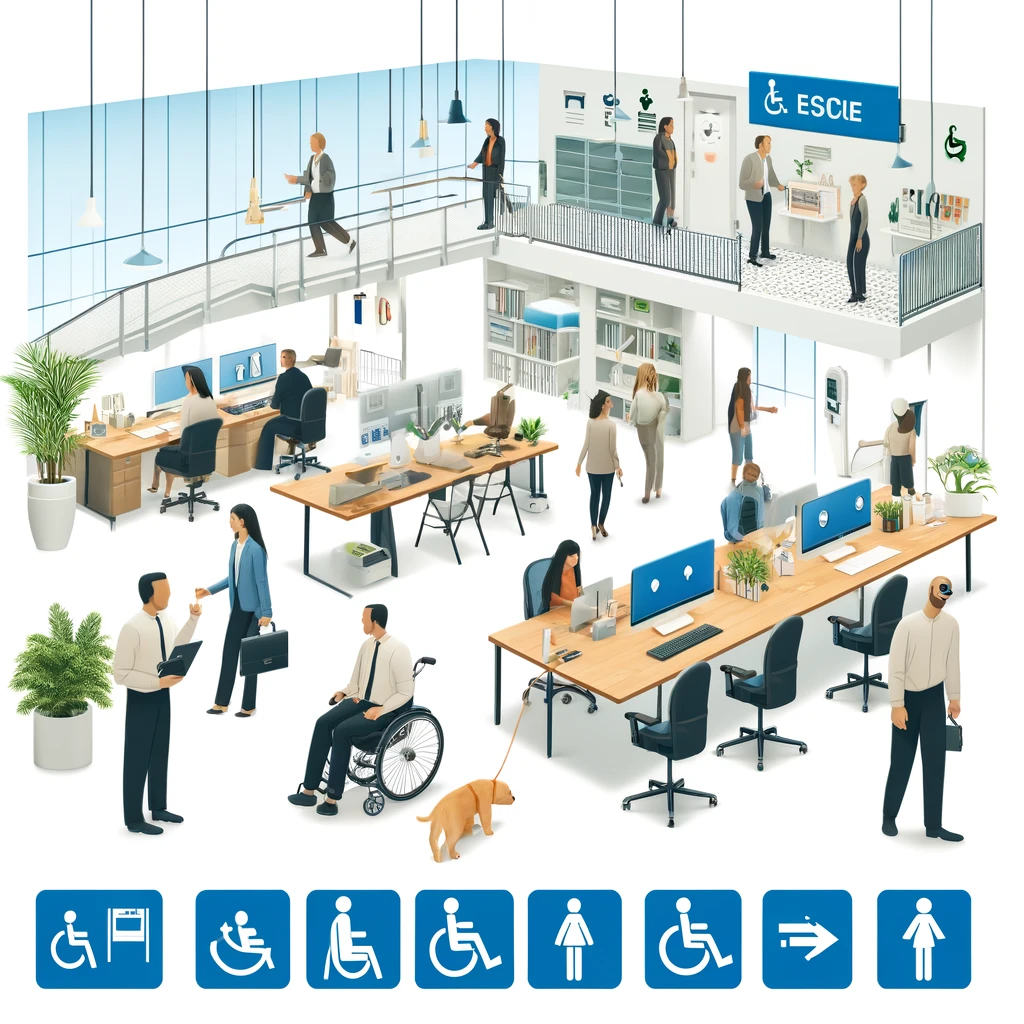
When contractors and vendors trigger ADA liability, the legal problem rarely starts with bad intent; it starts when a business assumes accessibility duties end at its own payroll. Under the Americans with Disabilities Act, organizations can be held responsible for barriers created by third parties they hire, license, or rely on to deliver customer-facing services. That includes web developers who launch inaccessible checkout flows, kiosk vendors that deploy touchscreens without speech output, architects who specify noncompliant door clearances, call-center contractors who cannot communicate effectively with deaf users, and event operators who omit captioning or wheelchair seating. Advanced ADA compliance topics sit at this intersection of law, procurement, operations, and oversight. They matter because modern organizations outsource critical functions, and each outsourced function can create the same exclusion that the ADA was designed to prevent.
In practice, I have seen accessibility failures emerge most often during implementation, not policy drafting. A company may publish a strong accessibility statement, then sign a software agreement that lacks any conformance warranty, buy hardware never tested by disabled users, or hand renovation work to a general contractor without clear accessibility specifications. The result is predictable: the business faces complaints, demand letters, remediation costs, project delays, and reputational damage even though the immediate mistake was made by someone else. For compliance teams, this is why advanced ADA compliance topics require more than knowing the statute. You need controls for vendor selection, contract language, testing, acceptance, maintenance, indemnity, and incident response. If this article serves as a hub, its central point is simple: outsourced work does not outsource ADA responsibility.
Key terms should be clear from the start. A contractor usually performs services under a defined scope, such as construction, digital development, customer support, transportation, or event production. A vendor typically supplies products, platforms, software, equipment, or managed services. ADA liability means exposure under Title I, II, or III depending on the entity and context, though most private businesses are concerned with Title III obligations around equal access to goods and services, plus employment issues under Title I. Accessibility means disabled people can obtain substantially equivalent use, participation, communication, and benefit. In digital settings, organizations commonly use the Web Content Accessibility Guidelines, currently WCAG 2.1 or 2.2 Level AA, as the operational benchmark, even though the ADA itself is technology-neutral. In the built environment, the 2010 ADA Standards for Accessible Design remain the baseline reference for measurements, routes, fixtures, and spatial requirements.
This hub article covers the advanced issues compliance leaders need to manage across the full vendor lifecycle. It explains why businesses remain liable for third-party failures, which contractor relationships create the most risk, how to write procurement requirements that are enforceable, what technical review should happen before launch, and where recurring disputes arise in digital products, physical facilities, communications, events, and franchise or multi-operator environments. It also addresses limits and tradeoffs. Not every accessibility defect produces the same legal exposure, and not every vendor can meet the same standard on the same timeline. Still, organizations that document expectations, test early, and hold suppliers to measurable requirements consistently reduce both exclusion and legal risk.
Why third-party work still creates ADA exposure
The shortest answer is that the ADA focuses on access to the covered entity’s goods, services, programs, facilities, privileges, and accommodations. If a customer cannot book a room, enter a store, complete a purchase, hear essential announcements, or use a self-service device, the customer experiences exclusion from the business, not from an abstract subcontractor. Courts and regulators generally look at who offers the service to the public, who controls the environment, and who can correct the barrier. A vendor’s role may be relevant for indemnity or contribution, but it does not erase the primary organization’s duty to provide accessible access.
This principle appears across common scenarios. A retailer using a third-party ecommerce platform can face claims if keyboard users cannot navigate product filters or if screen-reader users cannot complete payment. A medical practice relying on an outside scheduling vendor can face complaints if online forms are unlabeled or inaccessible on mobile devices. A hotel may be responsible when its booking engine fails to display accessible room features accurately, a problem that has generated enforcement attention for years. In physical spaces, a landlord, tenant, architect, and contractor may all play roles, but the public-facing operator still bears serious risk when ramps are too steep, counters too high, or accessible routes blocked by design errors.
Control matters, but so does benefit. If your organization profits from the service, brands the experience, or directs customers into the channel, you should assume accessibility obligations attach. That is why sophisticated compliance programs map every customer journey and identify where third parties touch it. The map usually includes websites, mobile apps, payment devices, kiosks, PDFs, call centers, chat tools, video content, appointment systems, transportation partners, pop-up events, leased spaces, and construction projects. Once mapped, each touchpoint can be assigned standards, owners, and evidence requirements.
High-risk vendor relationships in advanced ADA compliance topics
Not every supplier creates equal risk. The most dangerous relationships are those that affect core access points or are expensive to fix after deployment. Digital vendors are first on the list because inaccessible code scales quickly. A single inaccessible component library can contaminate dozens of templates. A marketing agency might publish image-heavy campaigns without alt text, while a SaaS provider may force inaccessible authentication into your customer portal. I have seen organizations discover only after launch that a third-party widget trapped keyboard focus or that CAPTCHA tools lacked an accessible alternative, blocking thousands of users from account creation.
Construction and design contractors create another major category. Errors in slopes, turning radius, reach ranges, restroom layouts, parking signage, and protruding objects can require costly demolition and rework. The safest time to catch these issues is before permits are finalized and again before substantial completion. Event vendors also deserve attention. Registration platforms, livestream providers, staging companies, temporary structure installers, and AV teams can all create ADA barriers if they omit captioning, accessible seating sightlines, assistive listening systems, tactile signage, or clear accessible routes.
Communications vendors are often overlooked. Call centers, interpreting services, relay integrations, chatbot providers, and document production firms can undermine effective communication obligations. A debt collector’s outsourced phone system that does not work well with relay calls, or a benefits administrator sending inaccessible PDFs to plan participants, can trigger complaints even where the core service itself is lawful. Transportation partners, franchise operators, janitorial contractors, and security vendors also matter because accessibility is not only design; it is ongoing operation. An accessible route blocked daily by cleaning carts is still an access barrier.
| Vendor type | Typical ADA risk | Best control |
|---|---|---|
| Web or app developer | Inaccessible navigation, forms, media, checkout | WCAG-based specifications, manual testing, launch gate |
| Architect or general contractor | Noncompliant routes, restrooms, parking, counters | Plan review, field inspections, punch-list verification |
| Kiosk or hardware supplier | No tactile controls, speech output, height access | Prototype testing with disabled users, acceptance criteria |
| Call-center vendor | Failed relay handling, poor communication access | Script training, QA monitoring, escalation procedures |
| Event platform or AV provider | Missing captioning, inaccessible registration, seating issues | Accessibility rider, rehearsal checks, backup accommodations |
Procurement, contracting, and due diligence controls
The most effective ADA risk reduction happens before signature. Procurement teams should require accessibility information at the request-for-proposal stage, not after selection. For digital products, ask for a current Accessibility Conformance Report using the VPAT format, but do not treat the document as proof. A VPAT is a vendor self-disclosure, useful for screening but not a substitute for testing. Require the vendor to identify known exceptions, planned remediation dates, supported assistive technologies, and the specific WCAG version and level used for evaluation. For built-environment work, require familiarity with the 2010 ADA Standards and any applicable state accessibility code, because state rules can be stricter than federal rules.
Contracts should define accessibility as a measurable deliverable. In digital agreements, that means naming WCAG 2.1 or 2.2 Level AA, prohibiting regressions in updates, requiring prompt remediation of confirmed defects, preserving audit rights, and linking payment milestones to conformance. In construction agreements, the scope should reference applicable drawings, standards, field tolerances, and correction obligations. Strong agreements also address training, subcontractor flow-down, change-order review, and cooperation in investigations. Indemnity provisions help, but they are not enough. If a vendor lacks insurance, assets, or urgency, indemnity may be practically worthless during a live complaint.
Due diligence should examine maturity, not just promises. Ask who owns accessibility inside the vendor organization, what testing tools and manual methods they use, whether disabled testers are included, how defects are tracked, and how quickly issues are fixed. Reputable digital vendors often use axe DevTools, WAVE, JAWS, NVDA, VoiceOver, TalkBack, and keyboard-only testing as part of routine QA. Reputable construction partners can explain plan review processes, mock-up inspections, and closeout verification. If a vendor cannot discuss accessibility in concrete terms, that itself is a warning sign.
Implementation failures that commonly trigger claims
Most ADA disputes involving contractors and vendors arise from a familiar pattern: requirements were vague, no one tested independently, and the defect was discovered by a disabled user after launch. In digital environments, the top triggers include inaccessible forms, missing labels, insufficient color contrast, noncaptioned video, broken focus order, unusable date pickers, inaccessible PDFs, and third-party payment flows. These are not edge cases. They affect ordinary business functions like applying for jobs, paying bills, booking services, and reviewing benefits.
In facilities, claims often follow renovations that improved aesthetics but ignored accessible details. Examples include a new service counter that exceeds permissible height, restroom accessories installed outside reach ranges, dining tables with inadequate knee clearance, inaccessible patio routes, and parking spaces restriped incorrectly during resurfacing. Temporary changes also matter. Retail displays narrowing aisles, construction detours without accessible alternatives, or event staging blocking wheelchair locations can create actionable barriers. I have seen organizations spend heavily on compliant design only to lose the benefit through poor operational discipline after opening.
Communication failures are especially expensive because they often surface during high-stakes interactions. Hospitals and clinics face recurring issues when outside interpreting vendors are unavailable, delayed, or limited to methods unsuitable for the patient’s needs. Universities and training providers run into trouble when lecture capture vendors omit captions or post inaccurate automated transcripts without correction. Financial services companies may send critical disclosures in formats unreadable by screen-reader users. The lesson is consistent across sectors: implementation must include accessibility checkpoints at design, build, content entry, user acceptance, and post-launch monitoring.
Monitoring, remediation, and shared accountability
Once a vendor solution is live, accessibility has to be managed like security or privacy: continuously. Good programs assign an internal owner for each third-party service, maintain an inventory of applicable standards, and schedule periodic reviews. For software, that means scanning key templates, manually testing critical user journeys, reviewing release notes, and retesting after material changes. For facilities, it means routine inspections of accessible routes, signage, seating, restroom functionality, parking conditions, and maintenance practices. For service vendors, it means sampling calls, reviewing accommodation logs, and tracking fulfillment times.
Remediation should be documented with severity levels and deadlines. Critical barriers affecting purchase, registration, login, emergency information, or core service access should move first. Temporary alternatives may reduce harm, but they do not replace permanent fixes. If an online form is inaccessible, a staffed phone line might help some users, yet it is not equivalent if hours are limited or wait times are excessive. That is a common mistake in vendor disputes: organizations assume a workaround neutralizes the issue when the workaround is slower, narrower, or less private than the primary channel.
Shared accountability works best when the organization keeps final decision-making authority. Vendors should fix their defects, but the business should control prioritization, acceptance, customer messaging, and escalation. Build an incident path that includes legal, compliance, procurement, operations, and technical leads. Preserve evidence of testing, issue reports, and corrective action. If challenged, your ability to show structured oversight, prompt response, and measurable improvement often shapes both litigation posture and regulator perception.
Special scenarios: franchises, marketplaces, and multi-party delivery
Advanced ADA compliance topics become harder when no single party controls the full experience. Franchises are a prime example. Brand standards may be centralized while day-to-day operations are local. If the corporate brand mandates a reservation platform, menu system, kiosk, or design package, accessibility duties cannot be pushed entirely onto franchisees. Marketplaces create similar complexity. An ecommerce operator may not manufacture every product or write every seller listing, but if the platform controls checkout, search, account access, and major interface elements, those layers must be accessible.
Multi-party delivery chains add another challenge. A theater may use one vendor for tickets, another for seat maps, another for captions, and another for on-site staffing. A breakdown anywhere can prevent equal access. The practical solution is governance: one owner for the end-to-end journey, one standard for accessibility requirements, and one process for complaints and corrections. Without that structure, gaps appear between contracts, and customers experience those gaps as discrimination.
The strongest compliance programs treat accessibility as a procurement issue, a technical issue, and an operational issue at the same time. Review your vendor inventory, identify every public-facing touchpoint, update contracts with measurable accessibility obligations, and verify performance before and after launch. When contractors and vendors trigger ADA liability, the costliest mistake is assuming someone else owns the problem. Your organization owns the customer relationship, the public promise, and the risk. Start with the highest-impact vendors, close the contract gaps, and build oversight that catches barriers before users do.
Frequently Asked Questions
Can a business be liable under the ADA for accessibility barriers created by contractors, vendors, or other third parties?
Yes. In many situations, a business can face ADA exposure even when the accessibility problem was introduced by an outside contractor, software provider, kiosk manufacturer, maintenance company, or other third party. The key issue is not simply who caused the barrier, but whether the business offers a customer-facing service, space, technology, or process that is inaccessible to people with disabilities. If a company hires a web developer who launches an online checkout flow that cannot be used with a screen reader, or contracts with a kiosk vendor that installs touchscreens without speech output or tactile controls, the customer typically experiences that failure as the business’s barrier, not the vendor’s.
That is why organizations should avoid assuming their ADA duties stop at the edge of their payroll. Courts and regulators often look at who owns, operates, controls, or presents the service to the public. If a third party is acting as part of the company’s customer experience, the business may still be expected to ensure that experience is accessible. Contracting out the work does not automatically contract out the legal risk. In practice, that means businesses need to evaluate third-party accessibility before purchase, during implementation, and throughout the relationship, especially when the vendor’s tools are central to sales, communication, scheduling, payment, wayfinding, or customer support.
What types of third-party products or services most often create ADA risk for businesses?
ADA risk most commonly arises where outside providers touch the customer journey in a direct and practical way. Websites, mobile apps, online booking tools, digital forms, payment portals, self-service kiosks, check-in systems, point-of-sale devices, customer support chat tools, video content platforms, and facility management services are all frequent problem areas. Accessibility failures in these systems can prevent customers with disabilities from browsing products, completing transactions, accessing information, entering physical spaces, or using essential services independently.
Physical environments can create the same problem. A landlord’s renovation contractor may install counters at inaccessible heights. A signage vendor may omit Braille or fail to meet placement requirements. A maintenance company may repeatedly block accessible routes with equipment or displays. A transportation or event services provider may fail to deliver auxiliary aids, accessible seating, or effective communication. Even where the barrier originated outside the business, the organization using that service may still be the party that hears from customers, receives demand letters, or becomes the named defendant in a lawsuit.
The common thread is reliance. If the business relies on the third party to deliver part of the public-facing experience, accessibility must be treated as a core performance requirement, not an optional technical preference. That is especially true for systems that customers must use rather than simply encounter. The more essential the tool is to access, payment, communication, or participation, the more serious the legal and operational risk when it is not accessible.
Does a contract with an indemnity clause or vendor warranty eliminate the business’s ADA liability?
No. Strong contract language is important, but it does not erase the business’s underlying ADA responsibilities. Indemnity, warranty, and compliance clauses can help allocate financial risk between the business and the vendor. They may allow the company to seek reimbursement, require corrective action, or terminate the relationship if accessibility obligations are not met. But those provisions usually do not prevent a regulator, plaintiff, or customer from asserting that the business itself offered an inaccessible service.
Think of the contract as a risk-management tool, not a shield against claims. If a customer cannot use a website, kiosk, or entry system, the existence of a vendor promise in the background does not restore access in the moment. That is why businesses should combine contract protections with real operational controls. Those controls often include accessibility requirements in procurement documents, documented technical standards, testing obligations before launch, remediation timelines, audit rights, incident reporting requirements, training expectations, and clear responsibilities for ongoing updates and maintenance.
In other words, a business should not stop at asking whether the vendor signed an accessibility clause. It should also ask whether the vendor can actually meet that requirement, whether the business has verified compliance, and whether there is a practical plan if something goes wrong. Well-drafted contracts matter, but active oversight matters just as much.
How can a business reduce the risk that a contractor or vendor will trigger ADA problems?
The best approach is to treat accessibility as a procurement, design, and governance issue from the start rather than trying to fix problems after launch. Before selecting a vendor, businesses should ask detailed questions about accessibility capabilities, standards used, prior testing, complaint history, and remediation procedures. For digital tools, that often means requesting conformance documentation, technical test results, and live demonstrations using assistive technology. For physical equipment and built-environment work, it means reviewing measurements, design specifications, user controls, communication features, and installation practices against applicable ADA requirements.
After selection, the business should build accessibility into statements of work, project plans, acceptance criteria, and change-management procedures. A website should not go live until key user flows have been tested for keyboard access, screen-reader compatibility, color contrast, form labeling, error identification, and other core issues. A kiosk should not be deployed based solely on sleek design or vendor assurances if users who are blind, deaf, have low vision, or have limited dexterity cannot operate it independently. The same principle applies to third-party call centers, delivery platforms, reservation systems, and event services: accessibility must be reviewed in the actual context customers will experience.
Ongoing monitoring is equally important. A compliant launch can become a noncompliant update if no one is checking later versions, replacement hardware, new content, or maintenance practices. Businesses should designate internal ownership, require prompt remediation of identified barriers, maintain records of testing and corrections, and provide a clear channel for accessibility feedback. The organizations that manage this risk best are the ones that understand accessibility is not a one-time certification; it is a continuing performance obligation across every vendor relationship that affects the public.
What should a business do if it discovers that a contractor or vendor has already created an accessibility barrier?
The first priority is speed. Once a barrier is identified, the business should move quickly to understand the scope of the issue, preserve relevant records, and put interim access measures in place where possible. If an online checkout is inaccessible, for example, the company may need to provide an equally effective alternative path for completing purchases while remediation is underway. If a self-service kiosk cannot be used by customers with visual impairments, trained staff assistance and alternative service methods may be necessary immediately. Delay is often what turns a manageable compliance issue into a larger legal and reputational problem.
The next step is coordination. The business should notify the responsible vendor or contractor, invoke any contractual obligations, set deadlines for correction, and require a concrete remediation plan. At the same time, internal teams such as legal, compliance, operations, IT, facilities, and customer service should be aligned on messaging, temporary accommodations, and documentation. If the issue affects customers broadly, it may also be necessary to review whether similar barriers exist in other locations, platforms, or vendor deployments rather than treating the problem as an isolated defect.
Finally, the company should use the incident as a governance test. It should ask why the barrier was not prevented earlier, whether procurement controls were strong enough, whether acceptance testing was meaningful, and whether the vendor relationship should continue. In many cases, the most valuable response is not only fixing the immediate issue but improving the organization’s system for preventing recurrence. That includes updating contract templates, tightening review procedures, training staff who manage vendors, and documenting lessons learned. The ADA risk created by third parties is often a sign that accessibility has not yet been integrated deeply enough into vendor oversight and operational decision-making.