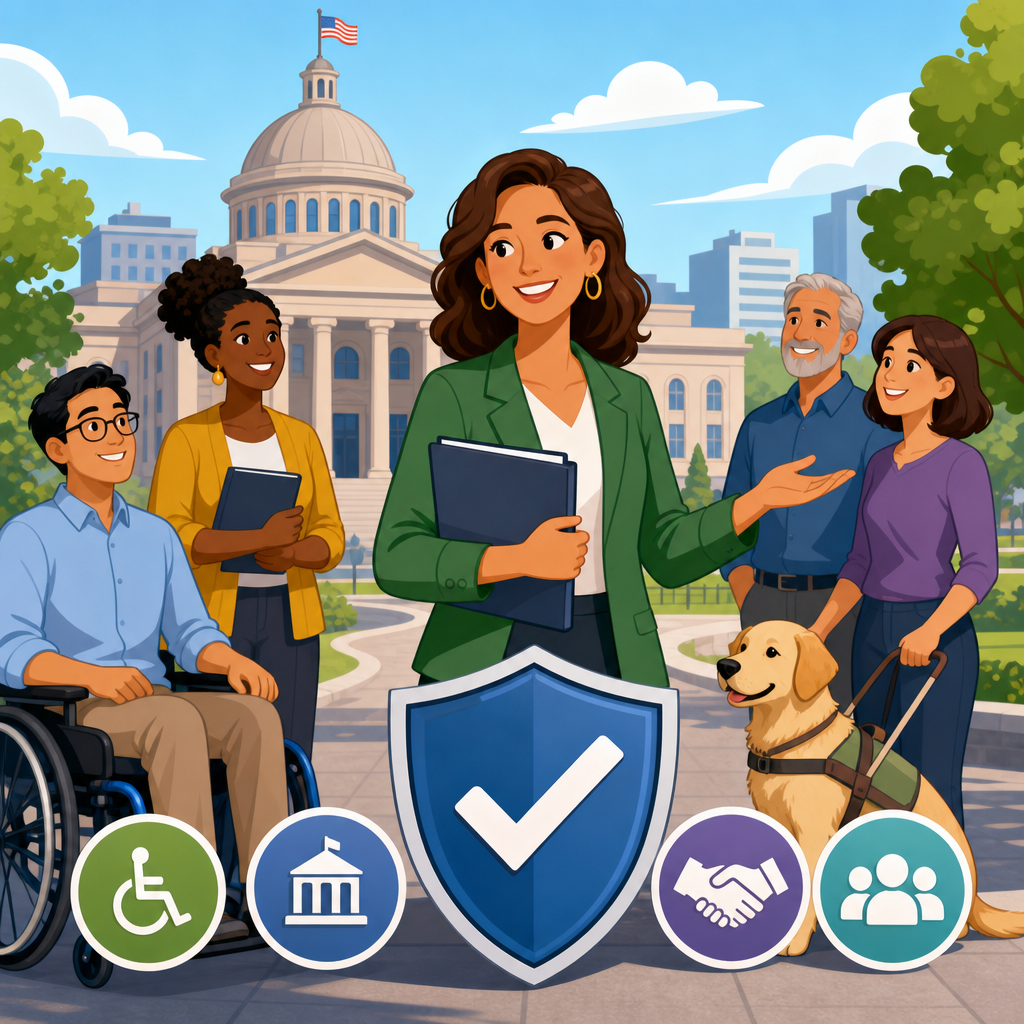
How ADA coordinators reduce risk in state and local government becomes clear the moment a complaint, inaccessible program, or missed accommodation request exposes gaps that should have been addressed long before legal scrutiny began. In public agencies, an ADA coordinator is the designated official responsible for overseeing compliance with the Americans with Disabilities Act, especially Title II, which governs state and local government services, programs, and activities. Advanced ADA compliance topics go far beyond installing ramps or posting a nondiscrimination notice. They include policy governance, effective communication, digital accessibility, grievance procedures, program access, reasonable modification analysis, self-evaluation, transition planning, procurement controls, and staff training systems that work under operational pressure. I have seen agencies treat accessibility as a facilities issue alone, only to discover that the biggest risks were hidden in online forms, emergency communications, public meetings, and decentralized decision-making. That is why the coordinator role matters. A strong ADA coordinator reduces legal exposure, improves service delivery, supports consistent implementation, and creates a repeatable compliance process across departments. For state and local governments, where public trust, federal funding, and equal access obligations intersect, the coordinator is not a symbolic contact point. The role is a risk management function that turns broad civil rights mandates into daily operational controls.
Risk in this context means more than lawsuits. It includes Department of Justice investigations, Office for Civil Rights complaints, missed deadlines, inconsistent accommodations, inaccessible technology purchases, ineffective emergency notices, reputational damage, and barriers that keep residents from participating in civic life. Advanced ADA compliance topics are the higher-order issues that emerge after an agency understands the basic law but struggles with implementation at scale. Questions usually sound practical: Who reviews inaccessible PDFs before publication? How are captioning vendors selected? What happens when a legacy facility cannot be altered quickly? How should police, courts, libraries, parks, elections offices, and public health departments apply one standard consistently while preserving program-specific needs? A capable ADA coordinator answers those questions with structure, documentation, and cross-functional authority. This hub article explains how that happens. It covers the coordinator’s role in governance, program access, communications, digital systems, procurement, training, complaint response, and continuous improvement. It also frames the subtopics that every serious compliance and implementation program should explore in depth, because effective accessibility in government is never achieved through isolated fixes. It is achieved through disciplined coordination.
The ADA Coordinator as the Operational Owner of Compliance
An ADA coordinator reduces risk by giving the government a clear operational owner for accessibility obligations. Under Title II regulations, public entities with fifty or more employees must designate at least one employee to coordinate compliance and investigate complaints. Agencies that simply assign the title without authority, budget visibility, or process ownership usually experience fragmented implementation. In contrast, effective coordinators maintain a central inventory of obligations, define review pathways, and standardize responses across departments. In my work with public entities, the difference between low-risk and high-risk organizations is rarely awareness of the law. It is whether someone has the mandate to move issues from identification to resolution.
This role works best when positioned as a governance function, not only a customer service function. The coordinator should know which departments run public meetings, issue permits, deliver social services, manage digital content, administer elections, procure software, operate transportation, and maintain facilities. Accessibility failures often happen at the seams between those functions. For example, a parks department may choose an event registration platform without accessibility testing, while communications staff post image-only flyers and a facilities team books a venue with inaccessible seating routes. The public experiences that failure as one barrier, but internally it reflects a coordination gap. The coordinator closes that gap by setting standards, routing decisions, and escalating unresolved risks to leadership.
Program Access, Reasonable Modifications, and Policy Control
One of the most misunderstood advanced ADA compliance topics is program access. Title II does not require every existing facility to be fully accessible in every respect, but it does require that each program, service, or activity be readily accessible to and usable by individuals with disabilities when viewed in its entirety. That standard demands analysis, not assumptions. An ADA coordinator reduces risk by helping departments evaluate whether residents can actually participate, even when services are delivered across multiple buildings, websites, phone systems, and contractors.
Program access is tightly linked to reasonable modifications in policies, practices, and procedures. Many government barriers are procedural rather than architectural. A no-animals rule that ignores service animal requirements, a rigid in-person signature process, a first-come meeting format without interpreter planning, or an inflexible documentation rule for auxiliary aids can all trigger violations. Coordinators reduce risk by reviewing these policies systematically and identifying where disability-related exceptions must be available. The strongest programs do not wait for complaints. They map high-volume resident interactions and test whether people with mobility, sensory, cognitive, speech, and mental health disabilities can participate equitably.
Self-evaluation and transition planning remain foundational tools here. Although these concepts have existed since early ADA implementation, many agencies have outdated documents that do not reflect digital services, modern procurement, or post-pandemic service models. A current self-evaluation identifies barriers across programs and policies. A transition plan addresses structural changes, prioritization, methods, and timelines. Coordinators reduce risk by keeping both documents alive rather than archival. When a complaint arises, current documentation demonstrates diligence, informs response strategy, and shows that the agency has a reasoned path toward compliance.
Effective Communication and Digital Accessibility
Effective communication is one of the highest-risk areas in state and local government because it reaches every department and every resident touchpoint. The legal requirement is that communications with people with disabilities must be as effective as communications with others. That includes auxiliary aids and services such as qualified sign language interpreters, real-time captioning, large print, Braille, accessible electronic documents, assistive listening systems, and plain-language adjustments where appropriate. ADA coordinators reduce risk by establishing decision trees for aid selection, response timelines, budgeting protocols, and after-hours procedures for urgent matters.
Digital accessibility now sits at the center of advanced compliance. Government services increasingly depend on websites, mobile apps, online forms, video platforms, kiosks, and document repositories. If residents cannot renew licenses, pay fees, request records, apply for benefits, or join meetings because those systems are inaccessible, program access fails regardless of physical improvements elsewhere. Coordinators reduce risk by aligning digital standards to recognized benchmarks such as WCAG, building accessibility checks into content workflows, and partnering with IT, procurement, and communications teams. Automated tools like axe, WAVE, and Siteimprove are useful for identifying common errors, but they do not replace manual testing with keyboard navigation, screen readers, caption review, focus order analysis, and form validation checks.
A common failure pattern is inaccessible PDF publishing. Staff export scanned documents, upload agendas without tags, or post forms that cannot be completed by keyboard users. Another is video content without captions or transcripts. Another is livestreamed public meetings without interpreter visibility or real-time caption quality controls. These are not minor technical defects. They can block civic participation, due process, and access to time-sensitive benefits. A coordinator lowers risk by setting document standards, training content creators, requiring accessible templates, and auditing high-traffic service paths first.
Procurement, Contracts, Training, and Complaint Response
Procurement is where many agencies either prevent future barriers or purchase them at scale. Software, self-service kiosks, voting tools, records systems, learning platforms, and emergency notification products often arrive with accessibility promises that collapse under real use. ADA coordinators reduce risk by requiring accessibility criteria before purchase, not after deployment. That means embedding standards in solicitations, requesting a current VPAT based on the Voluntary Product Accessibility Template, testing critical workflows, and writing contract language that includes remediation obligations, timelines, and acceptance conditions. If accessibility is not part of procurement governance, public entities end up paying twice: first for the product, then for retrofits, workarounds, or legal defense.
Training is equally important because decentralized agencies make thousands of small accessibility decisions every year. Frontline staff need practical instruction on accommodation intake, service animals, effective communication basics, and respectful interaction. Managers need to understand modification standards, direct threat analysis, and documentation limits. Content editors need to know heading structure, alt text, color contrast, and accessible table formatting. Procurement teams need to know how to evaluate claims from vendors. Emergency managers need to know how to issue accessible alerts and shelter information. Coordinators reduce risk by tiering this training instead of delivering one generic annual session that staff quickly forget.
| Risk Area | Common Failure | Coordinator Control | Practical Example |
|---|---|---|---|
| Digital services | Online forms unusable by keyboard or screen reader | WCAG-based review, user testing, accessible template standards | Benefits application redesigned so required fields, error messages, and submit buttons work with JAWS and NVDA |
| Public meetings | No captioning or interpreter process | Advance request workflow and day-of backup procedures | City council meetings include CART captions, visible interpreter placement, and accessible agendas |
| Procurement | Agency buys inaccessible software based only on vendor assurances | VPAT review, contract clauses, acceptance testing | County rejects a permit system until keyboard traps and unlabeled form fields are fixed |
| Facilities and programs | Accessible entrance exists but service is delivered elsewhere | Program access review and relocation options | Public hearing moved from second floor room to accessible chamber without reducing participation |
| Complaint handling | Departments respond inconsistently and miss deadlines | Central grievance procedure and tracking log | ADA complaints routed through one system with response milestones and corrective action assignments |
Complaint response is another area where strong coordinators materially reduce exposure. A formal grievance procedure is required for larger public entities, but the value extends beyond meeting a regulatory checkbox. It creates intake consistency, investigation standards, corrective action pathways, and documentation that can withstand external review. When a resident alleges that a courthouse video was not captioned, a paratransit appeal hearing lacked effective communication, or a parks registration portal was inaccessible, the coordinator should be able to identify the issue owner, preserve records, assess interim access options, and produce a reasoned response quickly. Delays and ad hoc handling often escalate matters unnecessarily.
Good complaint systems also reveal patterns. If multiple residents report inaccessible election information, the problem is probably not one page but a broken publishing process. If accommodation requests are repeatedly denied for “lack of budget,” leadership likely needs policy correction because cost is not handled that simply under Title II. Coordinators reduce risk by translating complaints into systemic fixes and by reporting trends to executives, attorneys, and department heads. This is where compliance becomes implementation rather than reaction.
Emergency Planning, Cross-Department Coordination, and Continuous Improvement
Emergency planning is a critical advanced topic because failures during disasters, public health events, and urgent service changes can have immediate consequences. Accessible alerts, evacuation information, shelter operations, medication access, transportation continuity, and interpreter availability cannot be improvised successfully during a crisis. ADA coordinators reduce risk by integrating disability access into continuity planning, tabletop exercises, and mutual aid discussions. For example, emergency notices should be accessible across channels, including captioned video, text alternatives, plain-language summaries, and compatible mobile alerts. Shelters should be reviewed for physical access, durable medical equipment charging needs, cot spacing, and communication supports. Agencies that do this planning before an incident protect residents and substantially reduce liability.
Cross-department coordination is what turns all of these obligations into a sustainable system. In mature programs, the ADA coordinator chairs or supports an accessibility governance group that includes facilities, IT, procurement, communications, legal, human resources, emergency management, and high-impact service departments. The group reviews metrics, unresolved barriers, major projects, and policy updates. It can also align ADA obligations with Section 504 requirements, state accessibility mandates, language access programs, and records retention rules. This matters because accessibility questions rarely fit neatly inside one department. Election websites, virtual hearings, police body-camera footage requests, and telehealth tools all require shared ownership.
Continuous improvement is the final risk-reduction mechanism. Accessibility is not a one-time audit; it is an operating discipline. Standards evolve, technologies change, case law develops, and new services launch constantly. Coordinators reduce risk by maintaining dashboards, prioritizing high-impact remediations, conducting periodic audits, reviewing vendor performance, and tracking training completion. They also listen to disability community feedback before issues become formal disputes. In practice, the most effective coordinators are visible, systematic, and empowered to say no when a project introduces avoidable barriers. That is how public entities move from reactive compliance to resilient access.
For agencies building out this compliance and implementation hub, the key advanced ADA compliance topics are clear: coordinator authority, self-evaluation, transition planning, program access analysis, reasonable modification standards, effective communication procedures, digital accessibility governance, accessible procurement, grievance management, emergency preparedness, and performance measurement. Each area deserves its own deeper guidance, but together they answer the core question: how do ADA coordinators reduce risk in state and local government? They reduce it by creating accountability, consistency, documentation, and practical pathways to access across every service channel. If your agency wants fewer complaints, stronger public trust, and better operational control, start by strengthening the coordinator function and connecting it to every major decision that affects residents with disabilities.
Frequently Asked Questions
What does an ADA coordinator do in state and local government?
An ADA coordinator is the central point of accountability for disability access and nondiscrimination within a public agency. In state and local government, that role typically includes overseeing compliance with Title II of the Americans with Disabilities Act, coordinating accommodation requests, reviewing policies and procedures, monitoring program accessibility, addressing complaints, and helping departments understand their obligations before problems become liabilities. Rather than reacting only when a legal issue appears, an effective ADA coordinator builds a compliance structure that reduces the chance of exclusion, service disruption, investigations, and costly corrective action.
In practice, ADA coordinators often work across departments such as human services, courts, parks and recreation, transportation, public meetings, emergency management, and digital services. They may evaluate whether programs are accessible, ensure auxiliary aids and services are available, maintain grievance procedures, support staff training, and track barriers that need correction. Because risk in government settings usually comes from inconsistency, poor documentation, and delayed response, the coordinator’s ability to standardize processes is critical. The role is not just administrative; it is strategic. A strong ADA coordinator helps public entities identify patterns, close compliance gaps, and demonstrate good-faith efforts that can significantly reduce legal and operational exposure.
How does an ADA coordinator reduce legal and operational risk for public agencies?
ADA coordinators reduce risk by turning broad legal obligations into repeatable internal processes. Many Title II problems do not begin with intentional discrimination. They start with everyday breakdowns: an inaccessible public meeting, a website form that cannot be used by screen-reader users, a denied sign language interpreter request, or staff who do not know how to respond when a resident asks for an accommodation. When no one owns the process, agencies become vulnerable to complaints, Department of Justice scrutiny, litigation, negative publicity, and avoidable disruption to public services. An ADA coordinator helps prevent those failures by creating systems for review, response, training, and oversight.
Risk reduction also depends heavily on timing and documentation. A public entity that can show it has a designated coordinator, clear grievance procedures, a process for handling accommodation requests, ongoing training, and a plan for removing barriers is in a far stronger position than one that responds informally or only after a complaint is filed. ADA coordinators help agencies document decisions, track requests, identify recurring issues, and escalate unresolved concerns before they become more serious. That kind of consistency supports compliance and strengthens credibility. It shows that accessibility is being managed as an operational responsibility, not treated as an afterthought.
Why is having a designated ADA coordinator so important under Title II?
Under Title II, many state and local government entities are required to designate at least one employee to coordinate ADA compliance. That requirement matters because public agencies deliver essential services to broad and diverse populations, and accessibility issues can arise in nearly every function of government. Without a designated coordinator, responsibility tends to become fragmented. Departments make inconsistent decisions, accommodation requests may be delayed or mishandled, and complaints may never reach someone with the authority to fix the root problem. A designated coordinator creates a clear line of responsibility, which is fundamental to both compliance and risk management.
Just as important, the designation signals that the agency takes accessibility seriously. It gives residents, employees, contractors, and community members a known point of contact for questions, complaints, and requests for modification or effective communication. That clarity improves response times and helps prevent frustration from escalating into formal disputes. It also allows agencies to centralize expertise. ADA rules affecting programs, facilities, communications, websites, meetings, and policy modifications can be complex. A knowledgeable coordinator helps ensure those issues are evaluated consistently across the organization, which reduces errors and supports a more defensible compliance posture.
What types of issues should an ADA coordinator monitor to prevent complaints and enforcement actions?
An ADA coordinator should monitor both visible and less obvious barriers. Physical access remains important, including routes, entrances, parking, counters, restrooms, service areas, and meeting spaces. But Title II compliance goes well beyond buildings. Coordinators should also watch for barriers in digital accessibility, online forms, public notices, emergency alerts, public hearings, procurement practices, communication access, eligibility criteria, and program rules that may unintentionally screen out people with disabilities. In many public agencies, the highest risk areas are the ones spread across multiple departments, where no single team sees the whole picture without centralized oversight.
Complaint prevention also depends on how the agency handles process failures. ADA coordinators should track accommodation requests, interpreter requests, captioning needs, service animal issues, modification requests, grievance trends, and response timelines. They should identify patterns, such as a department that repeatedly misses deadlines or a public-facing platform that creates recurring access barriers. Monitoring training gaps is equally important, because many complaints arise from frontline staff giving incorrect information or improvising responses. By reviewing these issues regularly and using data to guide corrective action, the ADA coordinator helps the agency address risks early, before they become formal investigations, settlement demands, or systemic compliance failures.
What makes an ADA coordinator effective in reducing long-term compliance risk?
An effective ADA coordinator combines legal awareness, operational discipline, and the ability to work across silos. The role is most valuable when it is supported by leadership, given enough authority to coordinate change, and integrated into the agency’s broader governance structure. That means the coordinator is not merely reacting to complaints but participating in policy review, project planning, digital initiatives, capital improvements, public engagement planning, and staff education. Long-term risk goes down when accessibility is built into decisions early instead of retrofitted under pressure after a problem is exposed.
Effectiveness also depends on practical systems. Strong ADA coordinators maintain clear procedures for requests and grievances, keep accurate records, provide regular training, update notice materials, review communication methods, and help departments understand how to apply ADA requirements in real situations. They know where the recurring pressure points are and create accountability around them. Most importantly, they help move the agency from ad hoc compliance to sustainable compliance. That shift matters because regulators, courts, and the public often look at whether an agency had a functioning process in place, not just whether a single issue occurred. A capable ADA coordinator reduces long-term risk by making accessibility measurable, manageable, and embedded in everyday government operations.