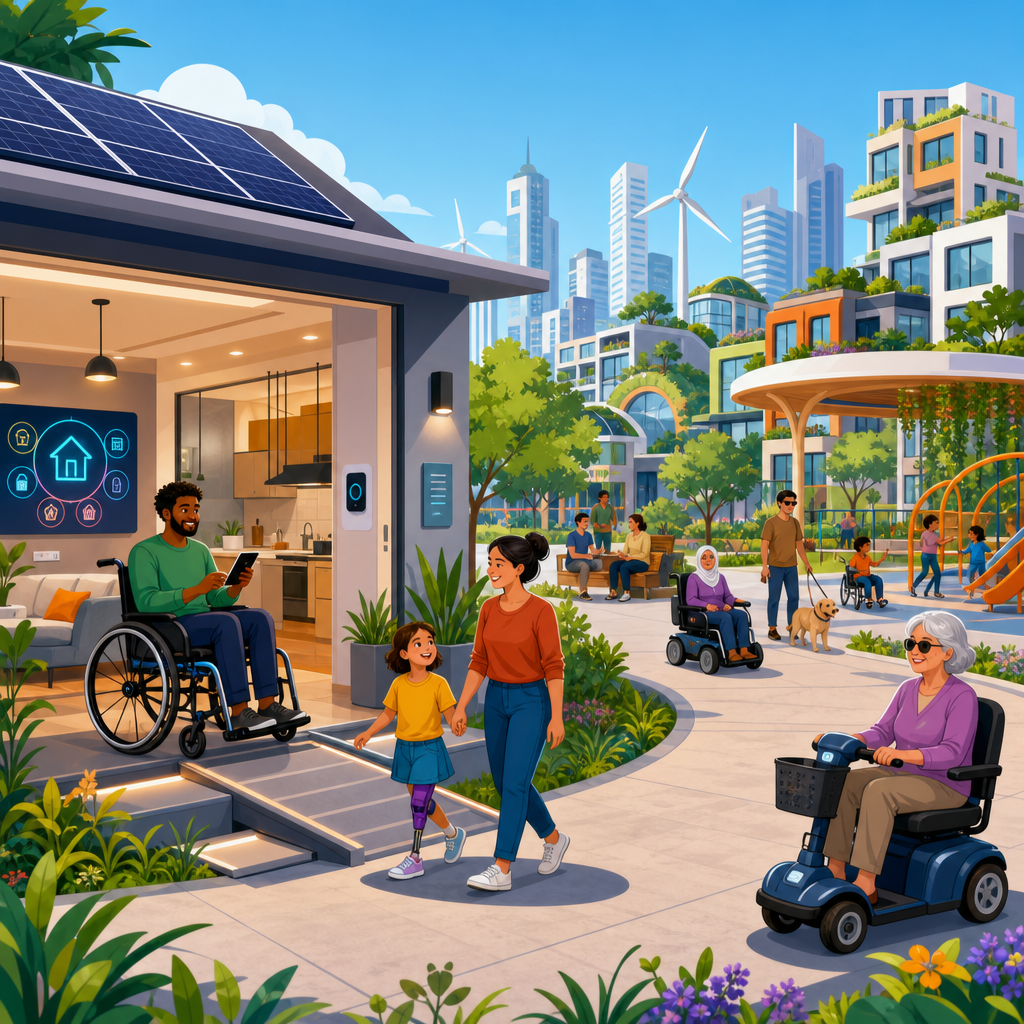
The future of accessible smart homes and community design worldwide sits at the intersection of disability rights, digital technology, urban planning, and public policy. In practical terms, this topic asks a simple question: how do we design homes, neighborhoods, and public systems so disabled people can live independently, safely, and with dignity in every region of the world? An accessible smart home combines universal design features, assistive technology, connected devices, and adaptable layouts. Accessible community design extends those principles into streets, transit, parks, schools, health systems, workplaces, and emergency planning. Together, they shape the future of global accessibility and disability rights.
I have worked on accessibility projects where a single design choice, such as lowering a thermostat interface or adding voice control to apartment entry systems, changed whether a resident could manage daily life without constant assistance. Those lessons scale. According to the World Health Organization, more than 1.3 billion people live with significant disability, making accessibility a mainstream infrastructure issue, not a niche concern. Population aging, urbanization, climate pressures, and rapid digitization all increase the urgency. If housing, transportation, and civic technology remain inaccessible, inequality deepens. If they are designed accessibly from the start, communities become more resilient for everyone.
Key terms matter here. Universal design means creating environments usable by the widest range of people without needing specialized adaptation. Visitability refers to basic residential access, such as a zero-step entrance, wider doorways, and an accessible toilet on the main floor. Smart home technology includes connected lighting, locks, sensors, appliances, and environmental controls that can be operated through apps, switches, automation, or voice. Assistive technology includes screen readers, hearing devices, alternative input systems, powered mobility equipment, and communication aids. Rights-based accessibility means access is not treated as a favor or premium feature; it is a legal, social, and design obligation grounded in equal participation.
This hub article maps the major forces shaping accessible smart homes and communities internationally. It covers standards, design principles, technology trends, inclusive urbanism, affordability, regulation, and the policy shifts driving disability rights worldwide. It also serves as a foundation for related articles on inclusive housing, accessible transportation, digital accessibility, education, health care, and emergency preparedness. The main point is clear: the future will not be defined by smarter gadgets alone. It will be defined by whether innovation is interoperable, affordable, privacy conscious, and built around disabled people’s real experiences.
Why disability rights now drive global design decisions
Disability rights are increasingly influencing how countries approach architecture, consumer technology, and public investment. The most important legal reference point is the United Nations Convention on the Rights of Persons with Disabilities, which frames accessibility, independent living, mobility, and participation as enforceable rights. That convention has shaped national laws, procurement rules, education policy, and urban development plans across Europe, Latin America, Africa, Asia, and Oceania. In the United States, the Americans with Disabilities Act remains influential, while the European Accessibility Act is pushing product and service design toward more consistent accessibility requirements across member states.
In practice, rights-based design changes priorities. Instead of asking whether a building can add an accessible unit later, planners ask whether the entire housing stock should support aging in place and diverse mobility needs. Instead of treating captions, tactile signage, and step-free routes as optional upgrades, cities are beginning to treat them as baseline infrastructure. This shift matters because inaccessible homes often force unnecessary institutionalization, family dependence, or relocation. Accessible communities reduce those pressures and expand employment, education, and social participation. The economic case is strong, but the rights case is stronger: equal access is a condition of citizenship.
What makes a smart home accessible in real life
An accessible smart home is not simply a house filled with connected devices. It is a home where digital controls, physical layout, and assistive features work together reliably. In successful projects I have reviewed, the most effective features are often mundane: lever handles, no-step entries, adjustable counters, roll-in showers, anti-slip flooring, clear circulation space, visual and audible alerts, and reachable outlets. Smart layers add convenience and autonomy when they respect varied disabilities. Voice assistants can help users control lights or thermostats, but they cannot be the only interface because some residents have speech impairments, privacy concerns, or unreliable internet service.
Good accessible smart homes always provide redundant methods of control. A resident may use large-button wall switches, an app compatible with screen readers, voice commands, scheduled automations, or switch access devices. Doorbell cameras should offer visual feeds and strong captioning support, while fire alarms should combine sound, strobe alerts, and mobile notifications. Smart medication dispensers, bed occupancy sensors, leak detectors, induction cooktops with auto shutoff, and fall detection systems can support independent living, but only when installation, maintenance, and data handling are well managed. Accessibility failure often comes from ecosystems that do not integrate, firmware updates that break compatibility, or interfaces designed without disabled user testing.
Core design principles shaping the next generation of accessible housing
The next generation of accessible housing is being built around flexibility, interoperability, and low-friction usability. Flexibility means rooms and controls can adapt as needs change. A family apartment may work for a wheelchair user today, an aging parent tomorrow, and a child with sensory processing differences later. Interoperability means devices from different manufacturers can communicate through stable standards instead of forcing residents into one closed platform. Low-friction usability means people can perform essential tasks quickly, even under stress, low vision, fatigue, or cognitive overload. In housing, the simplest accessible solution is usually the best one.
Several standards and frameworks already point the way. Universal design principles remain foundational. In digital environments, the Web Content Accessibility Guidelines influence how apps and dashboards should behave. In the built environment, countries use varying technical standards for ramps, turning radii, signage, bathroom layouts, and alarm systems, but the common direction is toward inclusive baseline design rather than retrofit-only compliance. The best housing programs combine physical access, digital accessibility, and service coordination. That means accessible lease processes, maintenance request systems that work with assistive technology, and building management platforms residents can actually use without help.
| Design area | Best practice | Why it matters |
|---|---|---|
| Entry and circulation | Zero-step entrances, 36-inch doorways, wide turning space | Supports wheelchair access, strollers, deliveries, and aging in place |
| Controls and interfaces | Multiple input methods, tactile markers, screen-reader compatible apps | Prevents exclusion when voice, touch, or vision-based systems fail |
| Safety systems | Audio, visual, and mobile alerts with backup power | Improves emergency response for deaf, blind, and mobility-impaired residents |
| Kitchens and bathrooms | Adjustable work surfaces, roll-in showers, anti-scald fixtures | Reduces injury risk and preserves daily independence |
| Connectivity and support | Reliable broadband, local controls, maintenance training | Smart features are useless if internet, power, or support fails |
How accessible community design expands beyond the front door
Homes do not function in isolation. A perfectly designed apartment still limits independence if sidewalks are broken, buses are inaccessible, health clinics lack interpreters, or public websites cannot be navigated. Accessible community design therefore includes transportation networks, public buildings, streetscapes, civic technology, retail access, recreation, and social infrastructure. The strongest global examples treat accessibility as a continuous journey. Singapore has invested in barrier-free transport and housing upgrades. Barcelona has advanced superblock models and inclusive public space design. Scandinavian municipalities have linked independent living policy with home adaptation, digital services, and community care systems.
Community design also has to account for sensory, cognitive, and psychosocial accessibility. Clear wayfinding, quiet rooms, plain-language communication, predictable service layouts, and lighting that avoids glare can make schools, libraries, stations, and health centers far more usable. Inclusive public realm design benefits many people at once: older adults, parents with strollers, tourists carrying luggage, people recovering from injury, and workers moving goods. When planners use disabled residents as lead stakeholders rather than afterthought consultants, the result is usually better public space for the whole population. Accessibility is not separate from placemaking; it is one of its defining measures.
Technology trends that will define the future worldwide
Several technology trends are likely to shape the future of global accessibility over the next decade. First, ambient computing will make controls less dependent on a single device. Occupancy sensors, adaptive lighting, geofencing, and routine-based automation can reduce physical effort when designed transparently. Second, artificial intelligence will improve speech recognition, image description, predictive maintenance, and personalized interfaces, though current systems still struggle with accent bias, disability-related speech patterns, and context errors. Third, interoperability initiatives such as Matter are beginning to reduce setup complexity across smart home devices, which is essential for accessible deployment at scale.
Robotics and remote support will also grow, especially in countries facing caregiver shortages. We are already seeing robot-assisted mobility research, smart lifts, autonomous delivery within campuses, and telepresence tools that help residents communicate with clinicians or support staff. Wearables can monitor heart rate variability, seizure risk patterns, gait instability, or sleep quality, but these tools raise serious consent and surveillance questions. The future should not be a monitored cage. The right model is controlled autonomy: residents choose what data is collected, who sees it, how long it is stored, and how to override automated decisions at any time.
Affordability, policy, and the global equity challenge
The biggest barrier to accessible smart homes worldwide is not lack of ideas. It is unequal access to capital, enforcement, skilled labor, and political priority. In high-income markets, accessibility is often undermined by expensive retrofits, fragmented insurance coverage, and luxury branding that prices out the people who need inclusive housing most. In low- and middle-income countries, the challenge can be more basic: informal settlements, weak building enforcement, limited assistive technology supply chains, and underfunded public services. Yet innovation is happening everywhere, including low-cost ramp programs, community-based rehabilitation models, and mobile-first service delivery.
Policy determines whether accessibility scales. Effective tools include mandatory inclusive design standards for new housing, tax incentives for retrofits, public procurement rules, accessibility requirements in housing finance, and grants for assistive technology. Social housing can become a major driver when governments require adaptable layouts and digital accessibility in publicly funded developments. Local authorities also need inspection capacity and resident feedback systems. Without enforcement, standards become symbolic. Without affordability, accessible smart homes remain showroom products. The global goal should be simple: make inclusive design ordinary, financeable, and available across the housing market, not confined to flagship projects.
What organizations should do next
Developers, architects, technology firms, municipalities, and disability advocates all have clear next steps. Start with co-design. Disabled users must be involved from concept through testing, procurement, occupancy, and post-occupancy review. Use mixed methods: walkthroughs, device trials, accessibility audits, and service blueprints. Specify open standards where possible, require accessible documentation, and test updates before deployment. Train maintenance teams because a smart accessible feature that stops working for three weeks is not accessible. Measure success with real outcomes: time saved, incidents prevented, tenant retention, service access, and resident control over daily routines.
This international perspective matters because accessibility failures travel across borders through copied design patterns, and so do good solutions. The future of global accessibility and disability rights will be shaped by whether homes and communities are built for human variation from the start. Smart systems can strengthen independence, safety, and participation, but only when paired with universal design, legal accountability, and affordable implementation. For planners, policymakers, and organizations building the next generation of housing and public space, the mandate is straightforward: design with disabled people, invest in inclusive infrastructure, and make accessibility the default standard worldwide.
Frequently Asked Questions
1. What is an accessible smart home, and how is it different from a traditional smart home?
An accessible smart home is a living environment designed from the start to support independence, safety, comfort, and dignity for people with a wide range of disabilities, ages, and changing mobility or sensory needs. Unlike a traditional smart home, which often focuses on convenience features such as app-controlled lighting, entertainment systems, or energy savings, an accessible smart home prioritizes usability and inclusion. It combines universal design principles with assistive technology and connected devices so the home works well for more people without requiring extensive modifications later.
In practice, this means features such as step-free entrances, wide doorways, lever-style handles, accessible bathrooms, adjustable counters, non-slip flooring, strong lighting contrast, visual and auditory alerts, voice and switch controls, and systems that can be customized as a resident’s needs change. Smart components may include automated doors, medication reminders, fall detection, remote health monitoring, smart thermostats, caption-enabled communication devices, and sensors that detect smoke, gas, water leaks, or unusual movement patterns.
The key difference is intent. A traditional smart home may be “connected,” but still impossible to navigate for someone using a wheelchair, someone with low vision, or someone who cannot rely on touchscreens or voice commands alone. An accessible smart home is built around multiple ways to interact with the environment. It recognizes that accessibility is not a luxury upgrade. It is a design standard that makes housing more resilient, inclusive, and future-ready for everyone.
2. Why is accessible smart home design becoming so important worldwide?
Accessible smart home design is becoming more important because the global population is aging, urbanizing, and relying more heavily on digital systems in everyday life. At the same time, disability rights movements around the world have pushed governments, planners, and housing providers to move beyond minimum compliance and toward environments that truly support independent living. For millions of disabled people, inaccessible housing remains one of the biggest barriers to education, employment, healthcare access, and community participation. Smart and accessible design offers a practical way to reduce those barriers.
This issue also matters because housing is directly connected to broader public systems. If a person cannot open their front door independently, safely use their bathroom, receive alerts in an accessible format, or connect with transportation and emergency services, then technology has failed to serve them. When homes are designed accessibly and linked to inclusive neighborhood infrastructure, people are better able to remain in their communities, avoid unnecessary institutional care, and maintain greater control over daily life.
Worldwide, climate resilience, public health, and affordability are adding urgency to the conversation. Communities are being asked to design housing that is adaptable, efficient, and safe during emergencies. Accessible smart homes can support evacuation alerts, backup communication systems, indoor air quality monitoring, temperature regulation, and remote support services. In both high-income and developing regions, the future of housing is increasingly about adaptability. The homes and communities that perform best will be the ones that can respond to diverse human needs rather than assuming one standard type of resident.
3. What technologies are likely to shape the future of accessible smart homes and inclusive communities?
Several technologies are expected to play a major role, but the most important trend is not any single device. It is the movement toward interoperable, flexible systems that allow residents to choose the tools that match their abilities and preferences. Voice assistants, touchless controls, smart sensors, AI-supported automation, wearable devices, and remote support platforms will all continue to evolve. However, their value depends on whether they are designed with accessibility in mind from the beginning.
Inside the home, future systems may include intelligent lighting that adjusts for visual comfort and safety, appliances with multimodal controls, robotic supports for mobility or household tasks, and AI systems that learn routines to reduce effort without removing user control. Communication tools may provide real-time captioning, sign language support, screen-reader compatibility, and emergency alerts in visual, auditory, and haptic formats. Bathrooms and kitchens may become more adaptive through height-adjustable fixtures, safer transfer supports, and sensors that help prevent burns, flooding, or falls.
At the community level, accessible design will increasingly connect homes to transportation, telehealth, education, local services, and public infrastructure. This may include accessible wayfinding systems, smart crosswalks, digitally connected paratransit, curb design informed by wheelchair users and blind pedestrians, and emergency networks that are usable for people with hearing, speech, cognitive, or mobility disabilities. The future is not just a smarter house. It is a smarter ecosystem in which homes, streets, services, and public policy work together to reduce exclusion and expand participation.
4. What are the biggest challenges to making accessible smart homes available to more people?
The biggest challenges are cost, policy gaps, inconsistent standards, poor design practices, and unequal access to digital infrastructure. Many accessible features are still treated as specialized add-ons rather than standard elements of quality housing. That raises costs and limits availability. In some regions, building codes may address basic physical access but fail to keep pace with digital accessibility, interoperability, or the real-world needs of people with sensory, cognitive, and multiple disabilities. In other places, there may be no strong accessibility enforcement at all.
Affordability is another major barrier. Smart home systems can improve independence, but they may require reliable internet, compatible devices, ongoing software updates, and technical support. For low-income households, rural communities, and underserved populations, those requirements can create a new layer of exclusion. Privacy and security concerns are also significant. Residents need assurance that monitoring tools, health data, and automated systems will not compromise their autonomy or expose them to surveillance, hacking, or loss of control over their own home environment.
There is also a design challenge. Too many products are developed without meaningful input from disabled people. As a result, systems may look innovative but be difficult to use, impossible to maintain, or incompatible with real daily routines. The most successful solutions come from co-design, where disabled residents, caregivers, architects, technologists, and policymakers collaborate from the earliest stages. Expanding accessible smart housing worldwide will require stronger regulation, better financing models, inclusive product development, workforce training, and a commitment to treating accessibility as essential infrastructure rather than a niche concern.
5. How can cities, developers, and policymakers create more inclusive smart homes and communities in the future?
They can start by embedding accessibility into every stage of planning instead of treating it as a final checklist item. That means adopting universal design principles in housing policy, updating building codes to reflect both physical and digital accessibility, and requiring inclusive design outcomes in public and private development. Homes should be designed to remain usable across the life course, and communities should be planned so people can access transportation, parks, healthcare, schools, shops, and civic spaces without unnecessary barriers.
Policymakers can support this shift through incentives, grants, procurement standards, and housing programs that reward accessibility and adaptability. Developers can invest in flexible layouts, accessible smart infrastructure, and product ecosystems that work across platforms and disability types. Local governments can improve streetscapes, transit stops, emergency systems, and public digital services so residents are not isolated once they leave their homes. Importantly, accessibility must be measured not only by legal compliance, but by actual user experience.
The most effective strategy is to involve disabled people as decision-makers, not just end users. Community consultations, pilot projects, usability testing, and disability-led design review can reveal barriers that technical teams might otherwise miss. When inclusion is built into housing, technology, and neighborhood planning together, the result is better for everyone: safer homes, more adaptable communities, stronger social participation, and a built environment that reflects human diversity. That is the real future of accessible smart homes and community design worldwide.