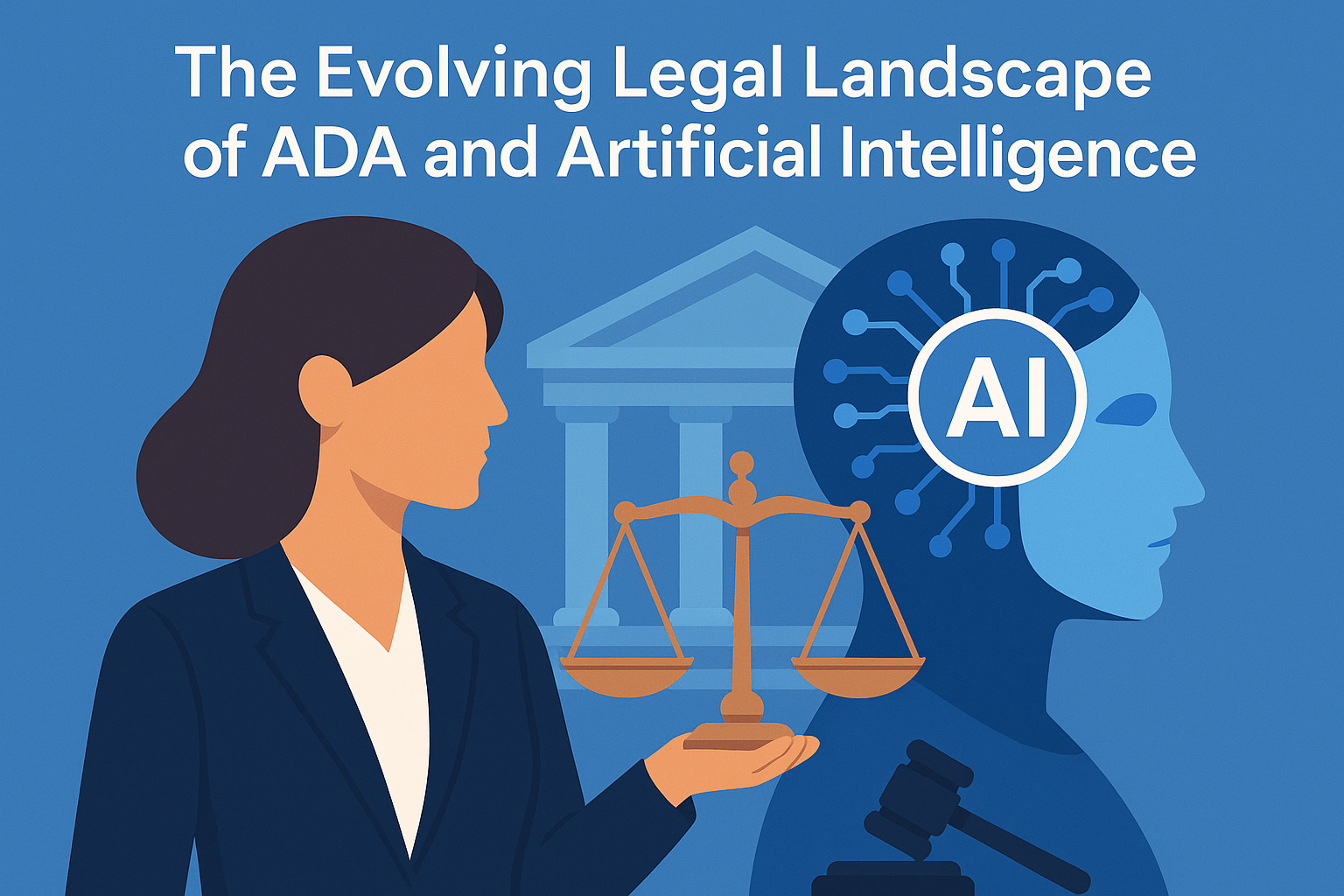
In recent years, rapid advancements in technology have profoundly influenced various facets of our daily lives. Among these, the integration of artificial intelligence (AI) in numerous sectors stands out as a revolutionary change. However, as AI technologies proliferate, they intersect increasingly with existing laws and regulations, one of the most vital being the Americans with Disabilities Act (ADA). Established in 1990, the ADA prohibits discrimination based on disability and mandates accessible environments for all. As AI becomes more prevalent, questions about compliance with the ADA have arisen, demanding an examination of both the legal and ethical implications. This topic holds paramount importance because it impacts millions of disabled individuals who rely on these laws to ensure equal opportunities in an AI-driven world.
The Intersection of AI and Accessibility
One of the primary intersections between AI and the ADA is in accessibility. AI has the power to break down barriers for individuals with disabilities. For example, voice recognition applications, such as Apple’s Siri or Google Assistant, enable those with visual impairments to navigate their devices with ease. Furthermore, AI systems equipped with sophisticated algorithms can convert speech to text, benefiting those with hearing impairments.
Despite these advancements, there are cases where AI can inadvertently discriminate. Consider a scenario where an AI-powered hiring system filters out candidates due to the non-normative speech patterns or grammar typically associated with certain disabilities. This sort of bias presents a significant legal challenge under the ADA, which aims to promote inclusivity and prevent discrimination.
Algorithmic Bias and Legal Implications
Algorithmic bias is a pervasive issue within AI systems. AI algorithms are often trained on data that may not adequately represent individuals with disabilities, leading to biased outcomes that violate ADA standards. Such biases can manifest in various forms, from misinterpreting spoken commands to failing to provide necessary accommodations in digital interfaces.
Addressing these biases not only serves as a legal requirement under the ADA but also represents an ethical responsibility for developers. For example, AI technologies developed for educational platforms must cater to students with learning disabilities. Failure to do so could result in exclusionary practices that contradict ADA mandates.
Regulatory Challenges and Frameworks
The progression of AI technology presents regulatory challenges that lawmakers must address to uphold ADA compliance standards. Currently, AI operates within a legal framework that was not designed to accommodate such innovations. Regulators face the daunting task of revising or expanding existing legislation to include AI’s impacts on disability rights.
A practical example is the recent enhancements in online retail systems. These platforms utilize AI to customize user experiences. To align with the ADA, online businesses need to ensure their systems are accessible to individuals with disabilities, including the adaptation of AI models to recognize screen readers or provide text descriptions for images.
Case Study: AI in Employment and ADA Compliance
Employment represents a critical area where AI intersects with ADA requirements. AI-driven recruitment tools that analyze resumes and conduct preliminary interviews can categorize applicants based on biased metrics, potentially leading to ADA violations if they unfairly disadvantage disabled candidates. A tangible instance includes a retail chain that employed a particular AI system to streamline recruitment. The system inadvertently penalized candidates with atypical speech patterns, disadvantaging those with speech-related disabilities.
This example underscores the importance of integrating robust auditing processes and inclusive training data to mitigate bias and ensure AI solutions comply with the ADA. Employers must work alongside legal experts to navigate these challenges, ensuring fair employment practices for all.
Potential for AI to Enhance ADA Compliance
While AI poses certain challenges, its potential to enhance ADA compliance is noteworthy. Intelligent systems can automate and streamline the creation of accessible content. For instance, AI can be employed in web development to automatically check websites for ADA compliance and suggest necessary adjustments, such as ensuring text contrast ratios are sufficient for users with visual impairments.
A promising development is the automation of routine tasks for individuals with physical disabilities. Advances in AI-driven robotics have started to offer personal assistance in daily activities. These applications not only comply with ADA standards by ensuring accessibility but also improve the quality of life for those affected.
- AI in Voice Recognition – Provides access to tech interfaces for visually impaired users.
- Bias in Hiring Algorithms – Legal pitfalls when systems misinterpret disabilities as weaknesses.
- AI-driven Websites – Ensures ADA compliance through automated accessibility checks.
- AI-powered Robotics – Assists individuals with physical disabilities with daily tasks.
Legal Precedents and Future Directions
As the integration of AI grows more sophisticated, legal systems worldwide are beginning to address the nuances of these interactions. Recently, there has been an increase in litigation directly involving the ADA and AI-related cases. Courts have had to decide whether digital platforms and AI tools fully align with the ADA’s requirements for accessibility. A landmark case in which an individual sued a major tech company for failing to provide an accessible online learning environment resulted in a ruling that emphasized the need for digital compliance under the ADA.
The future direction of ADA compliance with AI will likely involve the development of new legal standards that better accommodate emerging technologies. The creation of these standards will require collaborations between policymakers, disability advocates, technologists, and legal experts to ensure that advancements in AI do not regress the achievements of the ADA but rather enhance the accessibility landscape for all.
The Role of Stakeholders
To successfully navigate the evolving legal landscape of ADA and AI, a diverse range of stakeholders must engage in proactive measures. This includes technology developers, who must prioritize inclusive design and testing processes; legal professionals, tasked with interpreting and applying the ADA to new technological contexts; and policy makers, responsible for updating legislation to reflect technological advancements.
Stakeholders must also focus on community engagement, involving individuals with disabilities in the design and implementation phases of new technologies. Collaboration and feedback loops with these communities ensure that AI designs meet their needs and maintain compliance with ADA standards.
Conclusion: Fostering an Accessible Future with AI
In conclusion, the intersection of the ADA and AI presents both challenges and opportunities that require balancing innovation with accessibility rights. It is evident that while AI can significantly enhance accessibility for individuals with disabilities, it can also pose risks if not carefully controlled and regulated. Thus, continuous efforts from all stakeholders are imperative to adapt and refine the legal frameworks governing AI’s role under the ADA.
The primary takeaway is the potential for AI to foster an inclusive society when aligned with ADA principles. Policymakers, developers, and legal professionals must collaborate to drive forward initiatives that uphold these values. As we advance, those engaged in creating AI technologies need to remain vigilant and proactive in ensuring ADA compliance, thereby promoting equal opportunities for all. For readers, the call to action is to champion these developments, advocate for inclusive designs, and remain informed about ongoing legal and technological changes. Together, we can ensure a future where accessibility is a standard practice, not an afterthought.
Frequently Asked Questions
1. What is the relationship between the Americans with Disabilities Act (ADA) and artificial intelligence (AI)?
The Americans with Disabilities Act (ADA), established in 1990, is a landmark civil rights law that prohibits discrimination against individuals with disabilities in all areas of public life, including jobs, schools, transportation, and all places open to the general public. As technology has evolved, particularly with the advent of artificial intelligence (AI), the ADA’s scope has been tested in new ways. AI technologies are being integrated into numerous sectors, from healthcare to education to employment, and they offer significant potential to improve accessibility for individuals with disabilities. However, these technologies can also inadvertently create new barriers if not designed with accessibility in mind.
AI can enhance accessibility through voice recognition, predictive text, automated captioning, and other assistive tools. These technologies allow for greater inclusion and participation by people with disabilities. However, if AI systems are not properly calibrated or if they rely on datasets that do not represent the diversity of individuals with disabilities, they can lead to discriminatory practices. For example, hiring algorithms might overlook qualified candidates with disabilities if not carefully designed to account for diverse experiences and needs.
Therefore, there is a growing imperative to ensure that AI developments align with ADA principles, promoting inclusivity and accessibility rather than perpetuating discrimination. This relationship between the ADA and AI underscores the necessity for developers, policymakers, and businesses to remain vigilant and proactive in crafting technologies and policies that accommodate all individuals, regardless of their physical or cognitive abilities.
2. How can AI systems be designed to comply with the ADA?
Designing AI systems that comply with the ADA involves a multifaceted approach aimed at ensuring inclusivity and accessibility for users with disabilities. First and foremost, developers should prioritize the inclusion of diverse data sets that accurately reflect the experiences of people with disabilities. This diversity is crucial to create AI systems that do not inadvertently perpetuate existing biases and can function effectively for all users.
Next, robust testing and evaluations should be conducted to identify and address any potential accessibility challenges within AI systems. These evaluations should involve direct input and feedback from individuals with disabilities to ensure that their needs and perspectives are thoroughly considered. Accessibility should be incorporated into every stage of the AI system development process, from design and testing to implementation and deployment.
Additionally, AI systems should be adaptable, with customizable interfaces that accommodate a wide range of abilities and user preferences. Providing alternative input methods, such as voice commands or eye-tracking, can significantly enhance accessibility for individuals with motor or visual impairments.
The involvement of legal experts in ADA compliance throughout the design and implementation process is critical to ensure that any potential legal implications are addressed proactively. By fostering collaboration between technologists, accessibility advocates, and legal professionals, AI systems can be more closely aligned with ADA requirements and effectively serve all users.
3. What are some potential legal challenges associated with AI and the ADA?
As AI technologies increasingly intersect with the ADA, several legal challenges may arise. One primary concern is ensuring that AI systems do not inadvertently perpetuate discrimination against individuals with disabilities. If an AI system discriminates or fails to provide equal access to services, it can lead to claims of ADA violations, resulting in legal action.
Another potential legal challenge stems from the need to interpret and apply existing ADA regulations to new technologies. The ADA was enacted before the widespread adoption of AI, and its provisions may not specifically address the complexities of modern AI systems. This gap can pose challenges for businesses and developers in determining compliance requirements.
Furthermore, AI systems reliant on data that fail to represent diverse user experiences may inadvertently reinforce bias. For example, AI algorithms used in hiring processes may exclude qualified candidates with disabilities if the system is not designed to account for diverse backgrounds and needs.
To mitigate these legal challenges, it is essential for policymakers, regulatory bodies, and technology developers to engage collaboratively to create updates and amendments to existing ADA regulations, ensuring they are relevant to AI technologies. Establishing clear guidelines and standards for AI accessibility can provide clarity and guidance to developers and organizations, ultimately leading to more equitable and inclusive AI systems.
4. How can businesses ensure their AI technologies align with ADA requirements?
Businesses looking to align their AI technologies with ADA requirements must adopt a proactive and comprehensive approach. The first step is to conduct thorough accessibility audits of existing AI systems to identify potential areas of non-compliance and address them promptly. These audits should assess the AI system’s design, data sources, algorithms, and user interfaces to ensure accessibility and inclusion.
Engaging with accessibility experts and disability advocates during the development and implementation phases of AI systems is paramount. These stakeholders can provide invaluable insights, ensuring that the technologies being developed adequately address and accommodate the needs of individuals with disabilities.
Additionally, businesses should strive to educate and train their developers and technical teams about ADA compliance and principles of universal design. This knowledge can empower developers to embed accessibility features into AI systems from the ground up, fostering an inclusive design culture.
Transparency with users is also key; businesses should clearly communicate how their AI systems operate and provide channels for users to report accessibility issues. By fostering an open dialogue with users, businesses can continuously improve their AI systems and uphold their commitment to ADA compliance. Ultimately, ongoing monitoring and adaptation of AI solutions to evolving legal landscapes will ensure not only compliance but also enhance the user experience for all individuals.
5. What role do policymakers play in regulating AI to comply with the ADA?
Policymakers have a crucial role in shaping the regulations and standards that govern AI use in compliance with the ADA. Given that existing ADA provisions may not fully address the intricacies of AI technologies, policymakers are tasked with revising and updating legislation to encompass these emerging innovations.
The development of comprehensive guidelines and frameworks for AI accessibility is essential to ensure that technology developers have a clear understanding of compliance requirements. Policymakers should work collaboratively with tech industry leaders, accessibility advocates, and individuals with disabilities to craft regulations that are informed, balanced, and inclusive.
Policymakers also have a responsibility to encourage transparency and accountability in AI development and deployment. Establishing reporting mechanisms or requiring regular assessments can help ensure that AI systems do not unintentionally create barriers for people with disabilities.
Additionally, policymakers can foster innovation by promoting research and development of accessible AI technologies. Funding initiatives that support the creation and dissemination of inclusive AI solutions can drive the tech industry towards greater accessibility, benefiting society as a whole. By actively engaging in these roles, policymakers can significantly contribute to a legal landscape that upholds the principles of the ADA while embracing the potential of artificial intelligence.