The Americans with Disabilities Act (ADA) was enacted in 1990 with the goal of ensuring equal access and opportunities for individuals with disabilities. This landmark legislation covers a wide range of areas such as employment, public accommodations, transportation, and communication. An essential aspect of ADA compliance is ensuring that public and private facilities have accessible parking spaces for persons with disabilities. Properly implementing ADA guidelines for parking spaces is crucial because it directly influences the daily experiences and mobility of individuals with disabilities.
Accessible parking spaces are not just a legal requirement; they are a commitment to inclusivity and equal opportunity. When businesses and property owners adhere to ADA parking guidelines, they not only comply with the law but also demonstrate respect and consideration for all patrons, including those with mobility challenges. These guidelines are designed to make residential, commercial, and public spaces navigable and to remove barriers that could restrict the independence of people with disabilities.
In this article, we will delve into the specifics of ADA guidelines for parking spaces. We will cover the basic requirements, including the number and dimensions of accessible spaces, the proper marking and signage, and considerations for location and accessibility. This comprehensive guide aims to provide property owners, managers, and businesses with a clear understanding of how to create parking solutions that are compliant and user-friendly for everyone.
Basic Requirements for Accessible Parking
The ADA sets out detailed requirements for accessible parking that every property owner must follow. One of the primary stipulations is ensuring a sufficient number of accessible spaces relative to the total number of parking spaces available. For instance, a parking lot with up to 25 spaces must have at least one accessible parking space. Moreover, one out of every six accessible spaces must be van-accessible to accommodate larger vehicles equipped to transport individuals using wheelchairs.
Dimensions are another crucial factor in ADA compliance. Standard accessible parking spaces must be at least 8 feet wide, with an adjacent access aisle that is at least 5 feet wide. Van-accessible spaces require even more room, typically at least 11 feet wide with an access aisle that is 5 feet wide, although another configuration could be 8 feet wide space with an 8 feet wide access aisle. These dimensions ensure sufficient room for wheelchair users to transfer in and out of their vehicles safely.
Additionally, accessible parking spaces must be located on the shortest accessible route to the accessible entrance of the building or facility. This ensures that individuals with disabilities do not have to navigate unnecessarily long distances or encounter obstacles that could impede their access. The accessible route must be firm, stable, and slip-resistant, with a slope that does not exceed 1:12.
Proper Marking and Signage
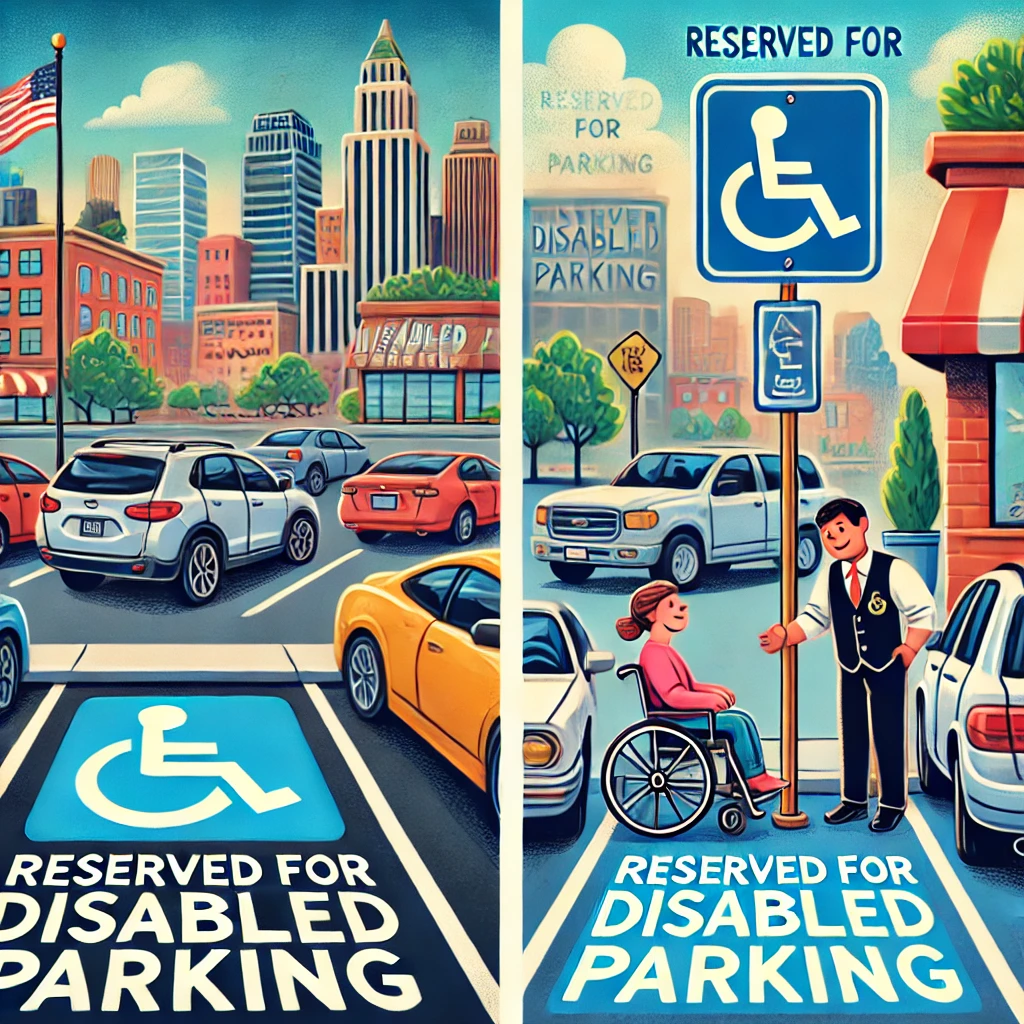
Marking and signage play a pivotal role in ADA compliance for parking spaces. Clear and visible signs help ensure that accessible parking spaces are recognized and appropriately used by those who need them. Each accessible parking space must be visibly marked with the International Symbol of Accessibility (ISA), commonly known as the wheelchair symbol. The sign must be mounted at least 60 inches (5 feet) above the ground to ensure it is easily visible.
For van-accessible spaces, additional signs are required to indicate that the space is reservable for vans only. These signs must include the phrase “Van Accessible.” The placement and visibility of these signs are crucial; they should not be obstructed by parked vehicles or other objects.
The surface parking space itself should be painted with the ISA symbol and hatched lines to define the boundaries of the space and access aisles. This visual cue helps to prevent vehicles from encroaching into the access aisles, which are necessary for wheelchair maneuvers. Regular maintenance of these markings ensures that they remain visible and effective over time.
Location and Path of Travel
The location of accessible parking spaces is a critical aspect of ADA compliance. As mentioned earlier, these spaces must be located on the shortest accessible route to the accessible entrance of the building or facility. This is to minimize travel distance for individuals with disabilities and ensure that they do not encounter any barriers along the way.
The path of travel from the parking spaces to the entrance must be smooth, firm, and slip-resistant. It should not have steep slopes or uneven surfaces that could pose a hazard. In areas where the pathway crosses vehicular traffic lanes, clearly marked pedestrian crossings and curb cuts are necessary to provide safe passage.
Additionally, the route must be wide enough to accommodate wheelchairs, walkers, and other mobility devices. A minimum width of 3 feet is required, although wider pathways are preferable to accommodate traffic in both directions. Any doorways along the route must also be accessible, with features such as automatic openers or lever handles that are easy to operate.
Enforcement and Penalties
Ensuring compliance with ADA guidelines is not only about following best practices; it is also a legal obligation. Non-compliance can result in significant penalties, including fines and potential legal action. The Department of Justice (DOJ) enforces ADA regulations and has the authority to investigate complaints and conduct compliance reviews.
Penalties for non-compliance can vary depending on the severity and frequency of the violations. For first-time offenses, fines can reach up to $75,000. For subsequent violations, the penalties can increase to as much as $150,000. Additionally, businesses may be required to make immediate modifications to correct non-compliant features.
To avoid such penalties, businesses and property owners should conduct regular inspections of their parking facilities to ensure ongoing compliance with ADA standards. Engaging with accessibility consultants or experts can also help identify potential issues and implement necessary improvements proactively.
Benefits of ADA Compliance
While ensuring ADA compliance might seem like a significant undertaking, the benefits far outweigh the challenges. Providing accessible parking spaces not only helps avoid legal issues but also fosters a welcoming and inclusive environment for all patrons, including those with disabilities.
Accessible parking spaces can enhance customer satisfaction and loyalty. When individuals with disabilities know that a business has made concerted efforts to accommodate their needs, they are more likely to return and recommend the establishment to others. This can lead to increased foot traffic and, ultimately, higher revenue.
Furthermore, ADA compliance can improve the overall image and reputation of a business. It demonstrates a commitment to social responsibility and inclusivity, which can resonate positively with the broader community. By prioritizing accessibility, businesses can contribute to creating a more equitable society.
Steps to Ensure ADA Compliant Parking
Achieving and maintaining ADA compliant parking requires a proactive approach. Here are some steps businesses and property owners can take to ensure they meet ADA guidelines:
- Conduct an Initial Audit: Assess the current state of your parking facilities to identify any deficiencies or areas that need improvement.
- Engage Experts: Work with accessibility consultants or professionals who can provide guidance on ADA compliance and recommend necessary modifications.
- Implement Markings and Signage: Ensure all accessible spaces are properly marked with the International Symbol of Accessibility and appropriate signage.
- Regular Maintenance: Conduct periodic inspections to ensure that markings, signage, and pathways remain in good condition and free from obstructions.
- Provide Training: Educate staff and employees about the importance of ADA compliance and how to assist individuals with disabilities.
- Stay Informed: Keep up-to-date with any changes or updates to ADA regulations to ensure ongoing compliance.
By following these steps, businesses and property owners can create accessible, compliant parking facilities that serve the needs of all individuals.
Conclusion: Embracing Accessibility
Achieving ADA compliance in parking facilities is more than a regulatory requirement; it is a commitment to inclusivity and equal opportunity. By adhering to ADA guidelines, businesses and property owners can ensure that their facilities are accessible to everyone, including individuals with disabilities.
Accessible parking spaces are a critical component of an inclusive environment. Properly marking, maintaining, and strategically placing these spaces can significantly enhance the experience of individuals with disabilities. It sends a clear message that businesses care about the needs of all their customers, fostering a sense of belonging and respect.
As we move towards a more inclusive society, prioritizing accessibility in all aspects of our built environment—including parking facilities—is essential. It is not only the right thing to do from a moral standpoint, but it is also good for business. By fostering an inclusive and accessible environment, businesses can attract a wider customer base, enhance their reputation, and contribute to a more equitable community.
In summary, ADA compliance in parking facilities is a vital aspect of ensuring access and independence for individuals with disabilities. Through understanding and implementing the guidelines, conducting regular inspections, and fostering a culture of inclusivity, we can create a world where everyone, regardless of ability, has the opportunity to thrive.
Frequently Asked Questions
1. What are the basic ADA requirements for parking spaces in public facilities?
The ADA guidelines for parking spaces ensure that people with disabilities have equal opportunities for access to facilities and services. For public facilities, ADA requires a particular number of accessible parking spaces based on the total number of spaces in the parking lot. For instance, a parking lot with 1 to 25 spaces must have at least one accessible spot, while a lot with 501 to 1000 spaces must provide 2% of the total as accessible. In addition to quantity, the placement of these spaces is crucial: they need to be located on the shortest accessible route to the accessible building entrance or facility they serve.
Each accessible parking space must include a designated access aisle, which is a specific area next to the space that allows room for a wheelchair or other mobility device to enter or exit a vehicle. These access aisles need to be at least 60 inches wide for standard accessible spaces, while van-accessible spaces require a wider aisle of 96 inches. Signage is equally important for visibility and must be at least 60 inches above the ground to ensure it can be seen over parked vehicles.
2. Why are both standard and van-accessible parking spaces required?
Both standard and van-accessible parking spaces are required under ADA guidelines to accommodate different types of vehicles used by people with disabilities. Standard accessible spaces are designed for cars, while van-accessible spaces are specifically intended for use by vans equipped with wheelchair lifts or ramps. Van-accessible spaces are larger, providing additional clearance that allows the side of the van to open and accommodate mobility devices. According to ADA standards, for every six accessible parking spaces required, at least one must be van-accessible. This ensures that people using larger vehicles can also efficiently access public facilities without hindrance.
3. How should accessible parking spaces be maintained?
Maintaining accessible parking spaces is essential to ensure continued compliance with ADA standards. Regular maintenance ensures that the spaces remain usable and visible throughout the facility’s operation. This involves keeping the parking space markings and access aisle lines visible and fresh. It means repainting markings as necessary and repairing any damage to the pavement that might hinder use by individuals with disabilities. Furthermore, the pathways from these spaces to the entrances of the facility should be kept free of obstructions like debris, snow, or ice, and they should be well-lit for safe access at night.
Signage should also be checked routinely to make sure it remains visible and legible. If signs become faded, damaged, or obstructed, they must be repaired or replaced promptly. Vigilant enforcement of accessibility rules is necessary to prevent misuse by unauthorized vehicles, thereby ensuring that these spaces are available to those who genuinely need them.
4. What should I do if I see a violation of ADA parking requirements?
If you encounter a violation of ADA parking requirements, such as a lack of accessible spaces, spaces not meeting dimensional requirements, or non-compliance with marked signage, there are several steps you can take. First, address your concerns with the facility’s management or the parking lot operator; they may be unaware of the issue and willing to rectify it. Provide clear details about the violation, including the location and nature of the problem. Often, management is receptive to feedback and will make necessary adjustments to comply with ADA standards.
If the issue persists or management is unresponsive, you may need to escalate the matter by filing a complaint with the local or state agencies responsible for ADA enforcement. These agencies have the authority to investigate violations and ensure compliance. In more severe cases, litigation may become necessary to ensure that corrective action is taken, but this is typically considered a last resort. Remember to document all correspondence and actions taken to resolve the issue as this information might be useful for future proceedings.
5. How are accessible parking spaces impacted by shared and multi-use parking areas?
Shared and multi-use parking lots present unique challenges and considerations when it comes to adhering to ADA guidelines. In facilities serving multiple buildings or uses, accessible spaces must be dispersed with care to ensure that all parts of the facility are equally accessible to people with disabilities. This means that accessible parking spaces may need to be allocated close to each entrance served by the parking area, rather than clustered in one section of the lot.
When managing shared or multi-use parking lots, it is essential to conduct a needs assessment to determine the amount and allocation of accessible parking spaces to ensure they adequately serve the varying demands of the facility. Coordination between different entities utilizing the parking area is also crucial to provide continuous compliance and appropriate access for all potential users. Additionally, continual monitoring and evaluation of the parking space usage can help identify if adjustments or additional spaces are needed to meet the evolving requirements of the facility’s patrons.