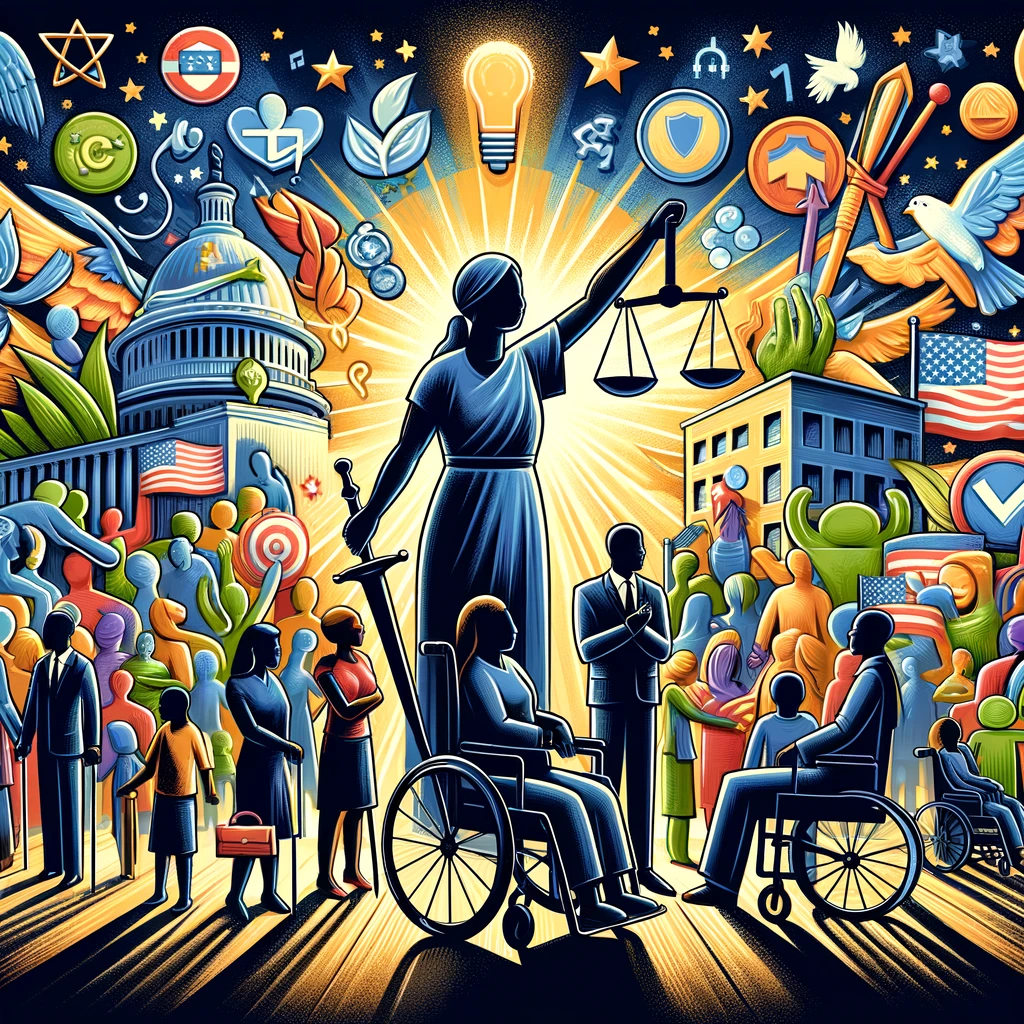
The Americans with Disabilities Act (ADA) has been instrumental in shaping an inclusive culture for public spaces, including art projects. Enacted in 1990, the ADA provides a powerful framework to ensure individuals with disabilities have equal opportunities and accessibility. As we look toward the future, the integration of ADA principles in the development and execution of public art projects is crucial. This article explores the relationship between the ADA and inclusive public art. It evaluates current challenges, notable achievements, and anticipates future developments. Through this analysis, we aim to highlight the potential of ADA-compliant, inclusive art to transform public spaces into areas of community engagement and connection for all people, irrespective of their physical abilities.
The Evolution of Public Art
Public art has long served as a reflection of societal values, trends, and aspirations. Traditionally, public art comprised sculptures, murals, and monuments, primarily accessible to persons without disabilities. However, as societies have grown more conscious of diversity and inclusion, there’s been a shift towards creating public art that is accessible for all. This evolution has been significantly influenced by the ADA, which mandates public spaces, including art installations, accommodate individuals with disabilities.
The enactment of the ADA was a pivotal moment in ensuring public art spaces are not merely visually appealing but also accessible. Prior to its enactment, individuals with disabilities often faced barriers in enjoying public installations, from inaccessible pathways to a lack of auditory or tactile elements for the visually or hearing impaired. Today, the ADA’s influence ensures these considerations are integral to the planning and development of public art. Efforts now focus on creating multisensory experiences that engage a broader spectrum of capabilities.
The Impact of the ADA on Public Art
The ADA’s impact on public art has been transformative, fostering innovation in the way art is conceptualized and executed. One significant area is the inclusion of tactile and auditory elements. These additions ensure that art is not restricted to visual interpretations alone but offers broader sensory engagement. Public sculptures now often include various materials that invite touch, permitting individuals with visual impairments to experience art through dimension and texture.
In addition, sound elements are increasingly being integrated into public art. These elements are vital not only for sensory expansion but also for accessibility for individuals who may be visually impaired. By embedding soundscapes in installations, artists can convey narratives, elicit specific emotions, or provide context that might otherwise be missed if relying purely on visual cues.
Furthermore, the layout and design of art spaces have seen notable changes. The ADA’s mandates require pathways to be navigable by everyone, including those using wheelchairs or other mobility aids. This extends beyond simple curb cuts or ramps and involves considering the surface type, gradient, and width of paths to ensure true inclusivity.
Challenges in Implementing Inclusive Art Projects
Despite the progress, challenges remain in fully realizing ADA-compliant public art. One primary challenge is funding and resource allocation. Inclusive designs often require additional resources, and securing funding can be complex, as fiscal constraints might limit the scope or quality of accessibility features employed.
Moreover, there’s often a lack of awareness or expertise among artists and planners regarding the specific needs of individuals with disabilities. This gap can result in designs that, despite the best intentions, fall short of truly inclusive experiences. Ensuring that those designing, curating, and commissioning such projects are educated about the requirements of the ADA is vital. Collaboration with disability advocates and experts in inclusive design can bridge these gaps, leading to more impactful and equitable art experiences.
Additionally, maintaining the balance between artistic expression and accessibility can pose a challenge. Artists may feel constrained by the need to adhere to accessibility standards, perceiving them as limitations rather than opportunities for creative expansion. Promoting an understanding that inclusivity can enhance artistic diversity and expression is key to overcoming this challenge.
Successful Models of Inclusive Public Art
Several public art projects have successfully embraced the ADA’s principles, setting benchmarks for future endeavors. For example, the “Blind Light” installation by Antony Gormley offers a multisensory experience that allows participants to engage with art through more than visual means. Similarly, the “Soundscape Park” in Miami integrates audio elements to create a space that is both immersive and accessible to those with visual impairments.
These projects exemplify how inclusivity can complement and even enhance artistic narratives. By engaging multiple senses, they broaden the potential audience and invite more profound interaction with the work. These models demonstrate that inclusivity is not an obstacle but a catalyst for innovative art that connects a diverse audience.
The Future of Inclusive Public Art
Looking forward, advances in technology promise to further enhance the inclusivity of public art projects. Digital technology, for instance, provides novel opportunities for engagement through augmented reality (AR) and virtual reality (VR). These technologies can provide layers of information and interaction, making art accessible in ways that transcend physical limitations.
Another emerging trend is the use of geolocation technology to provide personalized experiences within public art spaces. By utilizing apps accessible from mobile devices, individuals can receive tailored auditory or visual content as they explore an exhibit, further personalizing the interaction based on the visitor’s specific needs or preferences.
Furthermore, policies and guidelines will continue to evolve as societal understandings of disability and inclusion progress. As new challenges and technologies emerge, laws like the ADA will adapt to ensure they remain relevant and effective in promoting accessibility. Continuous dialogue between policymakers, artists, and community stakeholders will be essential in shaping these adaptive frameworks.
Conclusion
As the landscape of public art continues to evolve, the ADA remains a cornerstone in advocating for inclusive environments. Its principles do not merely provide guidelines but inspire a vision of art that is accessible to all, irrespective of physical ability. The path forward involves embracing these values while acknowledging the ongoing challenges in achieving true inclusivity. By fostering innovation and collaboration, the future of public art can be a rich, multilayered canvas that speaks to the diversity of human experiences and capabilities.
The collaboration among artists, architects, disability advocates, and technologists will be crucial in crafting experiences that are not only enriching but also equitable. By continuing to marry artistic ambition with the principles of accessibility, public art projects can stand as proud testaments to both creative expression and social inclusivity. As these endeavors progress, they carry the potential to not just reshape spaces but also enrich communities, ensuring that art remains a shared cultural experience accessible to everyone.