In the pursuit of inclusivity, the Americans with Disabilities Act (ADA) sets forth critical guidelines to make public spaces accessible to everyone, regardless of physical limitations. This article delves into the practical aspects of ADA compliance and how businesses, institutions, and organizations can effectively implement these standards in their physical environments.
The Basics of ADA Compliance
The ADA, enacted in 1990, is a civil rights law that prohibits discrimination against individuals with disabilities in all areas of public life. This includes jobs, schools, transportation, and all public and private places that are open to the general public. The purpose of the ADA is not only to protect people with disabilities from discrimination but also to ensure they enjoy the same opportunities as everyone else.
For physical spaces, ADA compliance primarily revolves around ensuring accessibility. This means that buildings and facilities must be designed and constructed in a way that allows individuals with a range of disabilities to access them without barriers.
Key Areas of Focus
- Parking and Pathways: Adequate disabled parking spaces, equipped with the necessary signage and located as close as possible to the building entrance, are a fundamental requirement. Pathways, sidewalks, and access routes must be wide enough to accommodate wheelchairs, and surfaces must be smooth and well-maintained to prevent mobility issues.
- Entrances and Doors: Accessible entrances must be at least as numerous as the main entrances used by the general public, and they should provide a seamless transition from outside to inside. Doors, on the other hand, need to have handles that are easy to use for those with limited hand strength, and they should require minimal force to open.
- Stairways and Elevators: In multi-story buildings, elevators are essential for accessibility. They must be adequately sized to accommodate wheelchairs and equipped with accessible buttons placed at a reachable height. Stairways should include handrails on both sides and have steps of uniform size and height to aid those with mobility and visual impairments.
- Restrooms: Accessible restrooms should provide enough space for a wheelchair to turn around, support rails around the toilet, and accessible sinks and dispensers. The doors should also be manageable, similar to entrance doors, requiring low force to open and close.
- Public Spaces and Facilities: Seating areas, counters, and service areas must be accessible. This includes lowering a section of counters and providing space for wheelchair users to approach and use the facilities independently.
Implementing ADA Guidelines
Implementing ADA guidelines goes beyond merely following building codes; it requires a commitment to ongoing assessment and adjustments based on the needs of individuals with disabilities. Here are some steps to ensure compliance:
- Assessment and Planning: Conduct a thorough assessment of existing facilities to identify barriers to accessibility. Develop a detailed plan addressing how these barriers will be removed or mitigated.
- Professional Consultation: It’s often beneficial to consult with professionals who specialize in ADA compliance. These experts can provide insights and guidance on complex issues that may not be immediately obvious.
- Training and Awareness: Regular training sessions for staff on ADA requirements and how to assist people with disabilities can make a significant difference in the practical implementation of ADA principles.
- Feedback Mechanisms: Implementing a system to gather feedback from users with disabilities can provide practical insights into how accessible a space truly is and what improvements are necessary.
Achieving ADA compliance in physical spaces is not just a legal requirement but also a moral and ethical one. It reflects a commitment to equality and inclusivity. By understanding and implementing the accessibility standards outlined by the ADA, businesses and organizations can ensure that their spaces are welcoming to all, thus fostering a more inclusive society.
By addressing these key areas and committing to continual improvement and adaptation, we can create environments that uphold the rights and dignity of all individuals, making our communities stronger and more diverse.
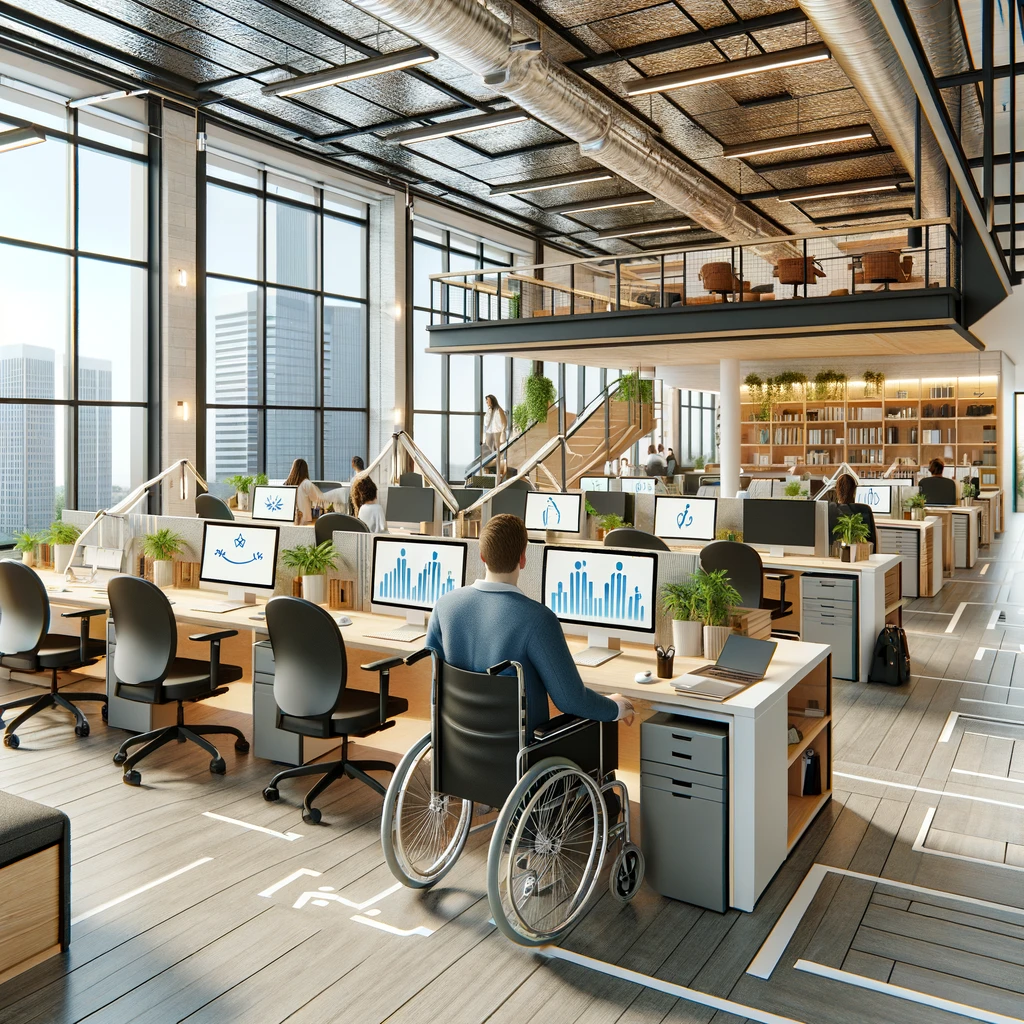
Maintaining Compliance and Anticipating Future Needs
Compliance with the ADA is not a one-time effort but an ongoing process. Physical spaces evolve, technologies advance, and the needs of individuals with disabilities change over time. Therefore, maintaining accessibility requires continuous attention and adaptation.
Regular Reviews and Updates
It is essential for organizations to regularly review their facilities and services to ensure they continue to meet ADA standards and address new accessibility challenges as they arise. This might involve periodic audits conducted by accessibility consultants or feedback sessions with community members who use the facilities.
Technology Integration
Advancements in technology offer new opportunities to enhance accessibility. For example, automated doors, voice-activated systems, and other assistive technologies can significantly improve the usability of a space for people with various disabilities. Staying abreast of technological developments and integrating these tools can help in maintaining and even exceeding ADA compliance.
Universal Design Principles
Beyond compliance, embracing universal design principles can lead to broader benefits. Universal design involves creating environments that are usable by all people, to the greatest extent possible, without the need for adaptation or specialized design. This approach not only benefits individuals with disabilities but also the elderly, children, and other populations with unique needs.
Community Engagement
Engaging with the community, especially individuals with disabilities, provides valuable insights that can drive improvements. Community feedback is crucial in identifying unseen barriers and testing the practicality of existing facilities. Organizations should foster strong relationships with local disability advocates and groups to enhance their understanding and response to accessibility needs.
Legal Implications of Non-Compliance
Non-compliance with the ADA can have serious legal consequences. Beyond the risk of fines and legal action, there is the reputational damage that can arise from failing to meet accessibility standards. Proactively addressing accessibility issues demonstrates a commitment to equity and can enhance an organization’s standing in the community.
Case Studies and Examples
Several organizations have set exemplary standards in ADA compliance. For instance, many universities have developed comprehensive accessibility maps that detail accessible routes, entrances, and facilities across their campuses. Retail giants have redesigned their stores to ensure aisle widths and checkout counters accommodate all customers, including those using wheelchairs.
Resources and Support
Various resources are available to assist organizations in understanding and implementing ADA standards. The ADA National Network offers training, publications, and technical assistance on ADA compliance. Local governments and non-profit organizations may also provide grants or technical support to help small businesses improve accessibility.
Conclusion
Understanding and implementing ADA compliance in physical spaces is vital for creating inclusive environments that respect and uphold the rights of individuals with disabilities. It is not merely about avoiding legal repercussions but about actively contributing to an equitable society. By embracing a proactive, informed approach to accessibility, organizations can ensure that their spaces are welcoming to everyone, thereby enriching the community as a whole.
ADA compliance is a dynamic process that benefits from foresight, regular updates, and community involvement. By committing to these principles, businesses and organizations can play a crucial role in building a more inclusive world.
Frequently Asked Questions
1. What is the Americans with Disabilities Act (ADA), and why is it significant for physical spaces?
The Americans with Disabilities Act (ADA), enacted into law in 1990, is an essential civil rights legislation that aims to eliminate discrimination against individuals with disabilities. It plays a crucial role in ensuring that public spaces are accessible and inclusive to everyone, regardless of their physical abilities. The ADA covers a wide range of areas, from employment to public services, but one of its key aspects is making sure that physical spaces — such as buildings, parks, and transportation — are user-friendly and accessible. This law is significant because it addresses the barriers that can prevent people with disabilities from participating fully in societal activities. By adhering to ADA standards, organizations highlight their commitment to inclusivity, equality, and respect for all individuals. Ensuring physical spaces are ADA-compliant is not just about legal obligation, but it also opens up environments to a broader audience and reflects positively on the values of an organization.
2. What are the key elements of ADA compliance for physical spaces?
The key elements of ADA compliance focus on making all areas of physical spaces accessible and navigable for people with disabilities. This includes several considerations: – **Accessible Entrances and Exits**: Entrances, exits, and all pathways of travel should be easy to access, providing features such as ramps, automatic doors, and minimal obstacles. – **Parking and Transportation Accessibility**: Designated parking spaces for individuals with disabilities, access aisles, and routes must be provided and clearly marked. These spaces should be the closest to accessible entrances. – **Signage and Wayfinding**: Signage should be easy to read and understand, incorporating Braille and raised characters where necessary. Wayfinding signs assist individuals in locating entrances, exits, and essential facilities. – **Interior Accessibility**: This involves ensuring that all service areas, restrooms, elevators, and public amenities are accessible. This can include wider doorways, grab bars in toilets, and accessible counters. – **Emergency Access and Egress**: All emergency exits, strobe lights, alarms, and evacuation plans should accommodate the needs of individuals with disabilities. Implementing these elements ensures that individuals of all abilities can navigate and use the facilities without physical barriers effectively.
3. What measures should businesses take to accurately assess and enhance their ADA compliance?
To accurately assess and enhance ADA compliance, businesses should conduct regular audits and evaluations of their physical spaces through the following measures: – **Accessibility Audit**: Engage professionals experienced in ADA compliance to perform detailed audits. They can identify barriers and offer recommendations for improvements. – **Staff Training**: Educate employees about ADA requirements and the importance of inclusivity. Staff should be knowledgeable about assisting individuals with disabilities. – **Community Engagement**: Engage with local disability organizations and individuals to gather feedback on existing accessibility features and areas needing improvement. – **Outlining a Compliance Plan**: Develop a specific plan to address any identified barriers, prioritizing necessary updates and allocating necessary resources to accomplish these changes. – **Monitor and Update**: ADA guidelines may evolve, and it is important for businesses to stay informed of any changes, modifying their facilities accordingly to remain in compliance. By integrating these measures, businesses ensure that they create a welcoming and inclusive environment for all patrons.
4. How does ADA compliance benefit organizations beyond just meeting legal requirements?
Beyond legal adherence, ADA compliance offers several benefits that greatly enhance an organization’s reputation and customer satisfaction. These include: – **Improved Customer Experience**: By making spaces more accessible, businesses can attract a broader clientele who will feel comfortable and welcomed, leading to increased customer loyalty and satisfaction. – **Broader Market Reach**: Catering to the needs of individuals with disabilities expands the potential market reach, tapping into a demographic that might otherwise be unable to access services. – **Enhanced Brand Reputation**: Organizations that prioritize accessibility are viewed more favorably by the public as they are seen as socially responsible and inclusive. – **Risk Reduction**: Proactively addressing accessibility issues and ensuring compliance mitigates the risk of potential lawsuits or legal challenges related to discrimination. – **Employee Inclusivity**: Providing an accessible workplace increases the pool of talent, enabling organizations to hire qualified individuals regardless of disability. By prioritizing ADA compliance, businesses not only fulfill legal obligations but also support a culture of inclusivity that can drive long-term benefits.
5. What challenges might organizations face in implementing ADA-compliant features, and how can these be overcome?
Organizations may encounter various challenges while implementing ADA-compliant features, including: – **Cost of Modifications**: Modifying existing structures and installing necessary features can be costly. It’s important to plan and budget appropriately, exploring possible grants or incentives that may be available to offset expenses. – **Design Constraints**: Some older buildings were not designed with accessibility in mind, which can make modifications complex. Engaging with architects or contractors who specialize in accessibility solutions can generate creative options for overcoming these constraints. – **Understanding Regulations**: ADA guidelines can be detailed and technical, which might be overwhelming for organizations to interpret. Hiring ADA consultants or attending training sessions can help clarify these requirements. – **Balancing Aesthetics and Accessibility**: There may be concerns about the impact of accessible features on the design of a space. However, many design solutions integrate accessibility seamlessly, maintaining aesthetic appeal while ensuring functionality. – **Resistance to Change**: Internal resistance can occur, where stakeholders may not recognize the importance of ADA compliance. Addressing this involves education and demonstrating the benefits of an inclusive environment for all. Overcoming these challenges often requires strategic planning, collaboration, and a commitment to fostering an inclusive and equitable environment for everyone.