Introduction to Accessibility in Public Housing
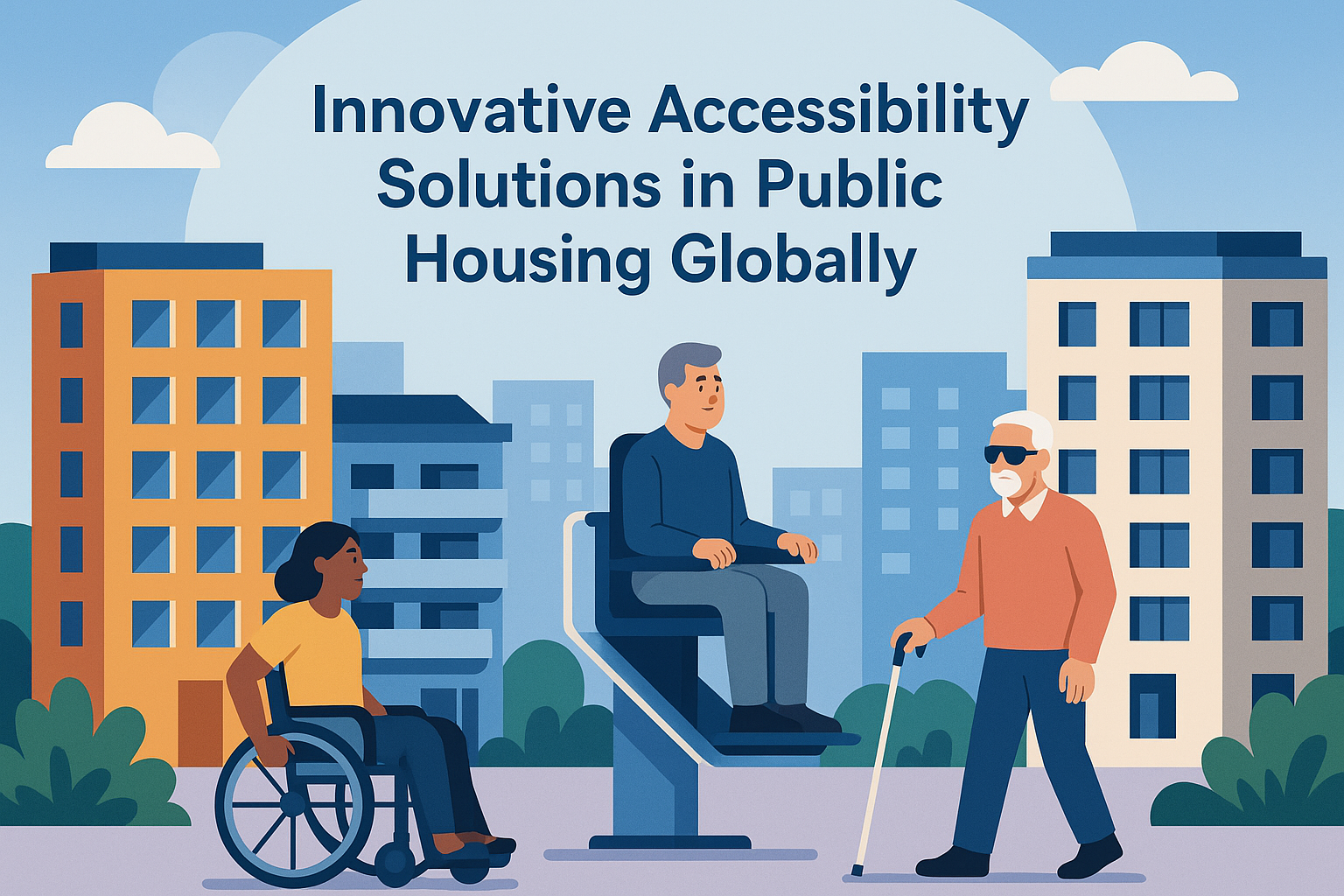
Public housing is a crucial component in the fabric of global society, providing essential shelter for millions. However, while public housing aims to offer safe and affordable homes for all, accessibility remains a significant challenge. Accessibility refers to the design features that allow individuals, regardless of their physical abilities, to engage with their environment comfortably and independently. In terms of public housing, this includes designing and adapting living spaces to accommodate individuals with disabilities. This topic is of paramount importance because accessibility in public housing can improve the quality of life for many residents, leading to a more inclusive society. Ensuring that housing is accessible is not just a legal obligation in many regions, but a moral imperative to ensure equity and dignity for all individuals.
Smart Home Technology in Public Housing
Smart home technology has emerged as a game-changer in enhancing accessibility in public housing. These technologies include a wide range of internet-connected devices designed to automate, control, and provide insights into living spaces. Voice-activated assistants like Amazon Alexa or Google Assistant allow residents to control lighting, thermostats, and even communicate through hands-free, voice-controlled interactions. In Rotterdam, the Netherlands, a pilot program integrated smart home technologies into public housing units. Residents with mobility impairments, for instance, benefited greatly from the ability to control their environments audibly. This real-world example demonstrates the potential of smart home technology to increase independence for residents, reduce reliance on caregivers, and enhance the quality of life for those with disabilities.
Universal Design Principles in Public Housing
Universal Design (UD) principles form the backbone of accessibility strategies by promoting environments usable by all people, without the need for adaptation or specialized design. Public housing projects worldwide are increasingly incorporating UD to ensure that their developments cater to individuals of all abilities. The concept of UD includes features like step-free entrances, wider doorways, and easily navigable layouts. For instance, in Toronto, Canada, public housing projects apply UD principles by integrating ramps, installing elevators in multi-story buildings, and designing layouts that facilitate easy movement. A Toronto housing complex rebuilt following a UD framework has been praised for improving accessibility for wheelchair users and elderly residents, without significant additional costs. By focusing on UD, public housing can preemptively address accessibility concerns, promoting inclusivity from the ground up.
Innovative Architectural Solutions
Architectural innovations are vital in enhancing the accessibility of public housing. Architects and designers are deploying creative solutions to overcome traditional barriers. In Helsinki, Finland, an innovative housing project, ‘Käpyla’, incorporates features that address both physical and cognitive disabilities. The buildings utilize contrasting colors to help visually impaired tenants navigate spaces more effectively. Additionally, tactile walkways guide residents with sensory impairments. These thoughtful design solutions exemplify how architectural innovations can cater to a broader spectrum of needs, promoting accessibility beyond conventional methods.
Community Engagement in Accessibility Planning
Effective accessibility solutions involve direct input from the communities they aim to serve. Engaging with residents in the design and implementation phases ensures that the solutions meet the actual needs of those residing in public housing. In Melbourne, Australia, a public housing redevelopment project emphasized community participation by involving residents in the planning stages. Feedback sessions highlighted the specific accessibility needs, such as improved communal spaces and accessible transportation options. The project evolved to include features like wheelchair-accessible community spaces and directly linked public transport facilities. Such community-led initiatives underline the significance of involving end-users in creating tailored solutions that enhance accessibility.
Assistive Technologies in Public Housing
Assistive technologies specifically designed for the disabled population play a crucial role in modernizing public housing and making it more inclusive. These technologies range from advanced mobility aids, such as stairlifts and automated doors, to communication devices for individuals with speech impairments. In Boston, USA, a public housing project aims to become the benchmark for accessibility by embedding assistive technologies into its redevelopment plan. The inclusion of advanced hearing loops for the hearing impaired, alongside user-friendly navigation apps, exemplifies how adding technological features can vastly improve residents’ everyday lives. These technologies allow individuals to live independently, fostering self-reliance and participation in daily activities without barriers.
Financial Accessibility Solutions
Financial initiatives are equally critical in ensuring that accessibility solutions in public housing are viable. Governments and organizations worldwide implement subsidy programs, grants, and investment partnerships specifically targeting accessibility improvements. In the United Kingdom, the Disabled Facilities Grant (DFG) provides funding for necessary adaptions to homes, ensuring that public housing residents with disabilities have access to financial aid for installing necessary accessibility features. This financial support model has enabled many public housing units to incorporate accessibility enhancements that they might not otherwise afford. By mitigating the financial burden of accessibility modifications, such grant programs are instrumental in accelerating the adoption of accessibility improvements across public housing portfolios.
Collaborative International Standards
Developing and adhering to international standards for accessibility in public housing ensures a unified approach to addressing these complex issues. International standards, such as those set by the International Organization for Standardization (ISO), offer a comprehensive framework to guide housing authorities globally in implementing accessibility measures. For instance, ISO 21542 provides guidelines on buildings’ accessibility, ensuring uniformity in accessibility features. Singapore’s Housing and Development Board (HDB) has adopted these standards to incorporate a consistent level of accessibility features across its vast array of public housing estates. Standardized guidelines facilitate the sharing of best practices globally, promoting a collective advancement in public housing accessibility that transcends borders.
| Country | Accessibility Solution | Outcome |
|---|---|---|
| Netherlands | Smart Home Integration | Enhanced independence for residents with mobility impairments. |
| Canada | Universal Design Principles | Improved accessibility for wheelchair users and elderly residents. |
| Finland | Architectural Innovations | Spaces adapted for visually impaired and cognitively disabled individuals. |
| Australia | Community Engagement | Customized accessibility solutions through resident feedback. |
| USA | Assistive Technologies | Independent living promoted via technological integration. |
| UK | Financial support (DFG) | Enabled accessibility adaptations in public housing units. |
Conclusion and Future Directions
In the quest to make public housing more accessible, various solutions are being employed globally, including smart home technology, universal design principles, architectural innovations, community engagement, assistive technologies, financial accessibility solutions, and adherence to international standards. These initiatives highlight the importance of adapting to the needs of all individuals, regardless of their abilities, fostering inclusivity and independence. The main benefit to society lies in creating environments where every individual can thrive, contributing to a more equitable and unified community. Policymakers, urban planners, and housing authorities must prioritize innovative accessibility solutions to ensure public housing is welcoming and usable for everyone. As we move forward, it is crucial to continue sharing knowledge, embracing new technologies, and committing to comprehensive implementation strategies. You, as an advocate, can contribute by participating in local housing discussions, supporting policy changes, and raising awareness about the importance of accessibility in public housing. Together, we can pave the way for a more inclusive future.
Frequently Asked Questions
1. What are some common accessibility challenges faced in public housing worldwide?
Accessibility in public housing can be incredibly challenging due to numerous factors ranging from architectural design to budget constraints. One of the primary issues is that many existing public housing structures were built before modern accessibility standards, such as those outlined in the Americans with Disabilities Act (ADA) in the US, or similar legislation globally. This often means narrow doorways, lack of ramps or elevators, inadequate bathroom facilities, and insufficient lighting.
Furthermore, societal attitudes and limited awareness about the needs of disabled individuals can result in designs that do not fully incorporate accessibility features. Financial constraints are another significant hurdle; public housing projects often operate with limited budgets, and retrofitting existing structures to be more accessible can be costly. Additionally, the varied accessibility needs depending on the type of disability (mobility, visual, auditory, etc.) also complicate standardization in public housing facilities.
2. How are innovative design solutions improving accessibility in public housing?
Innovative design solutions are increasingly being employed to tackle accessibility challenges in public housing. This includes the use of universal design principles, which ensure that environments are inherently accessible to all people, regardless of age or disability. Such principles advocate for features like wider doorways, zero-step entrances, user-friendly switch placements, and consistent design language throughout the housing units.
Technological advancements have also contributed significantly. Smart home technology such as voice-activated systems, automated lighting, and personalized environmental controls can empower residents to independently adjust their living spaces according to their needs. Additionally, the development of high-tech materials and construction methods allows for flexible spatial design and the incorporation of ramps, lifts, and other accessibility aids in a seamless and aesthetically pleasing manner.
Community involvement also plays a critical role, wherein residents of public housing along with disability advocacy groups collaborate with designers and policymakers to create tailored solutions that effectively address specific accessibility challenges.
3. Can you provide examples of successful accessibility projects in public housing globally?
There are several noteworthy examples of successful accessibility projects in public housing around the world. For instance, in the Netherlands, the ‘BlueCity010’ initiative transformed a failing housing block into a model of sustainability and accessibility through creative retrofitting and inclusive design practices. This project features adjustable kitchen counters and cabinets, lever door handles, and spacious, open-plan layouts that cater to diverse residents’ needs.
In Japan, the ‘Ariake Healthcare Town’ focuses on barrier-free access with features like tactile paving for the visually impaired, ramps with gentle slopes, and strategically placed benches for rest. This model incorporates healthcare and social service facilities within the housing complex, providing holistic care for the elderly and disabled residents.
Similarly, Denmark’s ‘Urban Rigger’ project converted old shipping containers into affordable, eco-friendly, and accessible homes for students, demonstrating an innovative and scalable approach to address housing shortages and accessibility worldwide. The design features include ground-level access, modular interiors, and customizable units that accommodate various needs.
4. What role do governments play in enhancing accessibility in public housing?
Governments play a pivotal role in enhancing accessibility in public housing through policy implementation, funding, and regulation. By setting rigorous building codes and accessibility standards, governments ensure that new constructions, as well as renovations of existing public housing units, adhere to inclusivity benchmarks. In many countries, legislation such as the Disabilities Act in the US or the Equal Opportunities Act in the UK mandates that public buildings, including housing, meet certain accessibility criteria.
Moreover, governments can provide financial incentives and subsidies to encourage private developers to incorporate accessibility in their projects. Some governments also offer grants and assistance programs for retrofitting and upgrading existing housing stock to become more accessible. Additionally, government agencies often collaborate with nonprofits and NGOs to pilot innovative accessibility solutions and share best practices across different regions.
Public awareness campaigns and education initiatives funded by governments also help dispel misconceptions about disabilities and promote inclusive design as a societal norm, fostering an environment that values accessibility as a fundamental right rather than an optional feature.
5. What future trends can we expect in the field of accessibility solutions for public housing?
The future of accessibility solutions in public housing looks promising with several emerging trends. Advances in technology will likely continue to drive the development of more intuitive and seamless integration of smart systems, such as AI-powered home assistants, which can transform the way residents interact with their living environments.
There is an increasing focus on personalized and adaptable living spaces that can be customized to meet the evolving needs of residents over time. Modular construction techniques and flexible space solutions are gaining popularity, allowing for easy reconfiguration of living units to incorporate needed accessibility features like widened hallways or additional handrails.
Sustainability and accessibility are set to converge more closely, with eco-friendly building materials and energy-efficient design becoming standard in new public housing projects. By employing green building standards, future public housing can improve accessibility while also addressing environmental concerns.
Also, there is a growing emphasis on community-driven design processes, where end-users, especially those with disabilities, are involved from the conception phase of the housing projects to ensure that their specific needs are met. This participatory approach not only enhances the functionality of housing solutions but also fosters a sense of community and inclusivity.