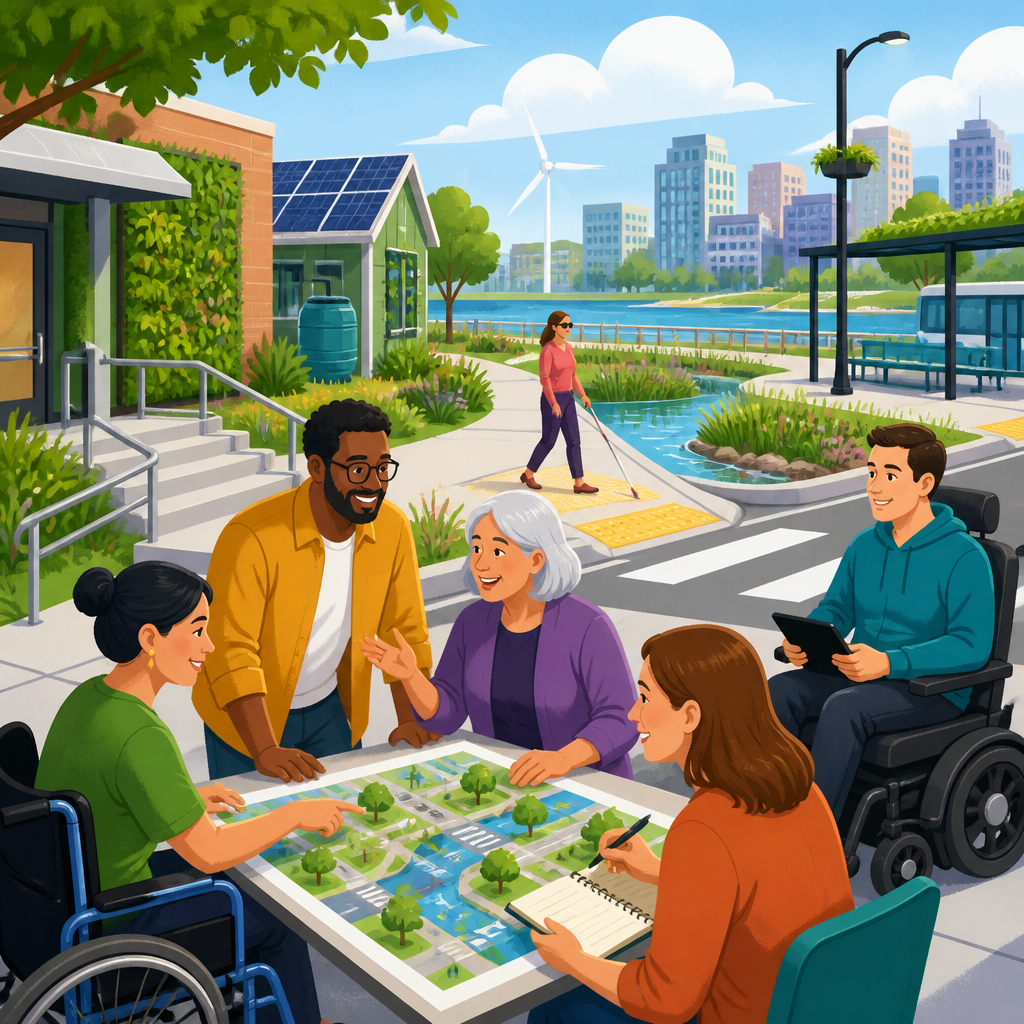
Climate resilience is becoming a defining force in how public spaces, buildings, transportation systems, and digital services are planned, and that shift is poised to reshape ADA planning in the United States. The Americans with Disabilities Act, or ADA, establishes civil rights protections and accessibility requirements for people with disabilities across employment, public services, public accommodations, transportation, and telecommunications. Climate resilience refers to the capacity of systems and communities to anticipate, withstand, adapt to, and recover from climate-related shocks such as extreme heat, flooding, wildfire smoke, hurricanes, drought, and grid failure. When these two fields intersect, the result is not a niche design concern. It is a practical framework for keeping accessibility functional under stress, not just compliant under normal conditions.
I have worked on accessibility reviews where a site met dimensional standards on paper yet became unusable during heavy rain, power outages, or emergency detours. That gap explains why climate resilience now matters in ADA planning. Accessible routes can fail when sidewalks buckle under heat, elevators lose backup power, curb ramps flood, cooling centers lack wayfinding, or emergency alerts are not available in plain language, captions, audio, and multiple languages. As cities update capital plans, hazard mitigation strategies, zoning codes, transit assets, and digital service delivery, accessibility is moving from a checklist at project closeout to a core performance requirement from project start.
This article serves as a hub for future trends and predictions in ADA developments. It explains how climate adaptation is likely to influence codes, funding decisions, transportation design, housing retrofits, emergency management, procurement, and enforcement. It also highlights where planners, facility managers, architects, disability advocates, and compliance teams should focus next. The key idea is simple: resilient communities are not truly resilient if disabled residents cannot evacuate, shelter safely, access information, receive services, or return to daily life after disruption. ADA planning is therefore expanding from barrier removal to continuity of access across changing environmental conditions, and that shift will shape standards, budgets, and legal expectations for years ahead.
Why climate resilience is becoming central to ADA planning
Climate resilience is becoming central to ADA planning because climate hazards expose weaknesses that conventional accessibility reviews often miss. Traditional reviews usually evaluate fixed conditions: slope, clear width, turning radius, signage contrast, reach range, audible and visual alarms, boarding interfaces, and restroom layouts. Those elements remain essential, but climate impacts change operating conditions. Extreme heat can degrade tactile surfaces and make bus shelters dangerous without shade. Floodwater can block accessible entrances, damage lifts, and force pedestrians onto inaccessible temporary routes. Wildfire smoke can turn poorly filtered indoor refuge areas into health risks for people with respiratory conditions. Resilience planning asks a broader question: will access still work during disruption, not only on a calm day after construction is complete.
This broader standard is already influencing public-sector decision making. FEMA hazard mitigation planning, local resilience strategies, and state infrastructure funding increasingly require agencies to identify vulnerable populations and continuity needs. The U.S. Access Board, Department of Justice, Department of Transportation, and HUD each touch pieces of this landscape through guidance, enforcement, funding conditions, and technical standards. While no single climate-specific ADA codebook exists today, the direction is clear. Agencies are moving toward integrated planning in which accessibility, emergency preparedness, and asset resilience are treated as one operational issue. For local governments, that means ADA transition plans will increasingly need to align with climate action plans, capital improvement programs, transportation asset management, and emergency operations plans.
Future standards will focus on performance during disruptions
One major trend is a shift from static compliance toward performance-based accessibility. In practice, this means planners will be asked to show that critical functions remain accessible during foreseeable climate events. A city hall entrance that relies entirely on one elevator may satisfy current circulation design requirements, yet still fail resilience expectations if that elevator lacks emergency power during storms. A compliant paratransit stop may become functionally inaccessible if flood-prone crossings repeatedly sever the route. Future ADA developments are likely to place more weight on redundancy, maintainability, and recovery time.
Expect specifications to evolve around backup power, drainage, material durability, indoor air quality, and temporary operations. Hospitals and emergency shelters already illustrate this direction. Facilities are adding microgrids, battery storage, and resilient HVAC systems not only for continuity of care, but also to preserve accessible communication systems, powered doors, refrigeration for medications, and climate-safe spaces for people with mobility or sensory disabilities. Similar logic is spreading to libraries, schools, transit hubs, and community centers designated as resilience assets. The planning question will no longer be whether a building has an accessible entrance. It will be whether at least one accessible entrance, route, restroom, communication channel, and service point can stay operational or be restored quickly under stress.
Transportation and public right-of-way design will change fastest
Transportation and public right-of-way design are likely to change faster than most other ADA areas because streets, sidewalks, transit stops, and crossings sit directly in the path of climate impacts. I have seen accessible pedestrian routes fail repeatedly from ponding water, tree-root heave, snow storage patterns, and construction detours that left wheelchair users in travel lanes. Climate resilience will push agencies to prioritize accessible continuity, not isolated compliant segments. That means better drainage design at curb ramps, higher scrutiny of detectable warning durability, elevated transit platforms in flood-prone areas, heat-conscious shelter placement, and stronger maintenance standards after storms.
The most important design trend is network thinking. People do not experience accessibility as a single ramp or bus stop; they experience a trip chain. If one link fails, the whole journey fails. Transit agencies are beginning to map this more carefully using GIS, asset condition data, ADA complaints, flood models, and ridership patterns. Agencies that combine accessibility audits with climate vulnerability assessments can identify where recurring failures affect disabled riders most: hospital corridors, dialysis routes, cooling centers, senior housing, schools, and employment districts. That data-driven method will likely define future ADA planning because it ties civil rights obligations to operational evidence and capital prioritization.
| Climate hazard | Common accessibility failure | Likely planning response |
|---|---|---|
| Extreme heat | Unsafe waits at exposed bus stops | Shade, seating, cooler materials, hydration access |
| Flooding | Curb ramps and crossings become impassable | Improved drainage, raised routes, alternate accessible paths |
| Power outage | Elevators, automatic doors, and communication devices fail | Backup power, manual protocols, redundant service points |
| Wildfire smoke | Poor indoor refuge air quality | Filtered resilient spaces and clear health messaging |
| Storm damage | Temporary detours remove accessible circulation | Accessible traffic control plans and rapid repair contracts |
Emergency management will become a core ADA planning function
Another major development is the merging of ADA planning with emergency management. Historically, many jurisdictions handled these functions separately: the ADA coordinator focused on program access and facilities, while emergency managers focused on response logistics. Climate events make that separation risky. During evacuations and shelter operations, inaccessible transportation, registration systems, cots, toilets, charging stations, or public notices can create immediate civil rights failures. As a result, future ADA developments will likely require more formal coordination between these teams, including joint drills, shared data, and procurement standards for accessible emergency equipment.
Practical changes are already emerging. Inclusive evacuation planning increasingly accounts for power-dependent residents, deaf and hard-of-hearing communication access, service animals, cognitive disabilities, and medication storage. Shelters are being evaluated not only for square footage and generator capacity, but also for transfer clearances, bathing access, acoustics, quiet rooms, multilingual wayfinding, and proximity to accessible transit. Digital alerting systems are also improving, with greater emphasis on captions, screen-reader compatibility, plain-language structure, and message redundancy across SMS, app notifications, sirens, radio, and social media. For ADA planning, this means future compliance reviews will extend well beyond the building envelope to include emergency workflows and user experience under pressure.
Housing, retrofits, and community facilities will face new priorities
Climate resilience will also reshape ADA planning through housing policy and public facility retrofits. Multifamily buildings, subsidized housing, senior housing, and mixed-use developments are all exposed to heat, flooding, and utility instability. Accessible units matter, but so do accessible backup systems and survivable common areas. Residents who use wheelchairs, oxygen, refrigeration-dependent medication, or communication technology can face life-threatening risks when elevators fail or cooling systems shut down. Future ADA developments are likely to push owners and public agencies toward resilience upgrades that directly support disabled occupants, including backup power for essential accessible functions, safer refuge areas, and stronger maintenance planning.
Community facilities will face similar pressures. Schools, recreation centers, and libraries often double as cooling centers, charging hubs, or relief distribution sites during disasters. That dual role raises the bar for accessibility. A library serving as a resilience hub needs accessible queuing, restrooms, device charging, acoustic clarity, multilingual and multimodal communication, and routes that remain usable after weather events. These needs will influence renovation scopes, grant applications, and bond programs. Designers who once treated accessibility as a line item will need to integrate it into envelope upgrades, site grading, MEP systems, and continuity operations. In many jurisdictions, the smartest capital projects will be those that deliver compliance, resilience, and public health benefits at the same time.
Data, technology, and procurement will drive the next wave of change
The next wave of ADA planning will be shaped heavily by data, technology, and procurement discipline. Agencies are collecting more information than ever through 311 requests, work-order systems, sidewalk sensors, flood mapping, asset inventories, and digital accessibility monitoring tools. The challenge is to turn that information into decisions. Leading organizations now build dashboards that overlay climate exposure with ADA barriers, service complaints, demographics, and capital schedules. That approach helps answer practical questions: which curb ramps fail most often after storms, which shelters lack power for accessible communications, which websites break screen-reader workflows during emergency traffic spikes, and which neighborhoods have the fewest resilient accessible routes.
Procurement will become just as important as design. If contracts do not specify accessible temporary traffic control, captioned public outreach, resilient wayfinding materials, interoperable alerting platforms, and maintainable backup systems, those features are often value-engineered out. I have found that the most effective public agencies write accessibility and resilience requirements directly into scopes, pre-bid meetings, submittal reviews, and closeout testing. They require vendors to demonstrate not just installation, but operation under plausible failure conditions. Over time, that practice is likely to harden into standard procurement language across transportation, facilities, housing, and digital services. For organizations tracking future trends and predictions in ADA developments, this is the most actionable signal: policy ambition only matters when purchasing rules make it real.
What organizations should do now to prepare
Organizations do not need to wait for new regulations to strengthen ADA planning. Start by identifying critical services and mapping how disabled users access them during normal operations and during disruptions. Review ADA transition plans alongside hazard mitigation plans, continuity plans, transportation asset data, and digital service inventories. Prioritize assets whose failure would cut off essential services, such as accessible routes to shelters, clinics, government counters, transit nodes, and cooling centers. Test assumptions through site walks, user interviews, and tabletop exercises with disability organizations, facilities staff, emergency managers, and communications teams.
The strongest next step is governance. Assign clear ownership, set measurable service standards, and tie accessibility resilience to budgets and capital planning. Update design standards, maintenance protocols, and vendor requirements so accessible function is preserved during heat, flooding, smoke, and outages. Build internal links between facilities, IT, transportation, procurement, and emergency management, because fragmented responsibility is where access failures persist. Climate resilience could reshape ADA planning by making continuity of access the benchmark that matters most. Organizations that act now will reduce legal risk, improve service reliability, and protect people when conditions are hardest. Use this hub as a starting point, then audit your plans, projects, and public-facing systems with climate stress in mind.
Frequently Asked Questions
1. How could climate resilience change the way ADA planning is approached?
Climate resilience could significantly broaden the scope of ADA planning by pushing accessibility considerations earlier and deeper into the design of public spaces, facilities, transportation systems, housing, emergency procedures, and digital services. Traditionally, ADA planning has often focused on meeting defined accessibility requirements such as accessible routes, curb ramps, entrances, restrooms, communications features, and program access. Climate resilience adds another layer: planners must now ask whether those accessible features will remain usable during extreme heat, flooding, wildfire smoke events, stronger storms, power outages, and other climate-related disruptions.
In practice, that means ADA planning may increasingly move from a compliance-centered model to a continuity-and-usability model. An accessible entrance is not truly effective if flooding makes it impassable. A paratransit service is not fully reliable if extreme weather repeatedly disrupts routes without accessible backup options. A website may meet technical accessibility standards, but if it does not provide screen-reader-friendly emergency updates during climate events, it may fail people when access matters most. Climate resilience encourages governments, architects, engineers, transportation agencies, school systems, healthcare providers, and private businesses to think about how accessibility performs under stress, not just under normal conditions.
This shift could also lead to more integrated planning across departments that have historically worked separately. Emergency management, public works, disability services, transit planning, facilities management, and IT teams may need to coordinate more closely so that resilience investments do not unintentionally create new barriers. For example, elevating infrastructure, redesigning streetscapes for stormwater management, hardening buildings against heat, or relocating services after disasters all need to be evaluated for ADA implications. In that sense, climate resilience does not replace ADA planning; it reshapes it into a more dynamic, future-oriented process focused on preserving equal access under changing environmental conditions.
2. Why are people with disabilities especially important to consider in climate resilience planning?
People with disabilities are especially important in climate resilience planning because climate hazards often magnify existing access barriers, communication gaps, transportation limitations, and health risks. The ADA is rooted in equal access and nondiscrimination, but climate-related disruptions can quickly erode that access if resilience planning does not explicitly account for disability needs. During emergencies, for example, evacuation routes may not be accessible, shelters may lack accessible sleeping, bathing, or communication accommodations, backup power may not support essential medical devices, and emergency alerts may not be available in formats usable by people who are blind, low vision, deaf, hard of hearing, cognitively disabled, or have limited mobility.
Extreme heat is a strong example. Some people with disabilities are more vulnerable to heat stress due to medical conditions, medications, mobility limitations, or reliance on equipment that can be affected by power loss. If cooling centers are opened without accessible transportation, accessible entrances, functioning elevators, clear wayfinding, and accessible communication, then a core resilience strategy may exclude the people who need it most. Similar concerns arise with flooding, wildfire smoke, and long-duration outages. If sidewalks become obstructed, transit systems go offline, or health and social service offices move online without accessible digital tools, barriers can multiply very quickly.
There is also a legal and policy reason this matters. Disability inclusion is not simply a best practice; it is central to equitable public planning. Climate resilience efforts that fail to consider disabled residents can create discriminatory outcomes even if the broader project is well intentioned. That is why more jurisdictions are recognizing that disability perspectives should be included at the start of resilience planning, not added later as a retrofit. Meaningful engagement with disability communities helps planners identify practical needs around communication, transportation, sheltering, housing recovery, continuity of care, and long-term access to civic life. In short, planning for disability access makes resilience strategies more realistic, more lawful, and more effective for everyone.
3. What parts of the built environment are most likely to be affected as climate resilience reshapes ADA planning?
Several parts of the built environment are likely to be affected, especially those that people rely on for daily mobility, safety, and access to services. Streets, sidewalks, curb ramps, pedestrian crossings, bus stops, rail stations, public buildings, schools, parks, healthcare facilities, government offices, and multifamily housing all sit at the intersection of climate resilience and ADA planning. As communities adapt to flooding, sea level rise, intense rainfall, heat, and severe storms, they may redesign these environments with new materials, altered elevations, added protective barriers, expanded green infrastructure, shaded routes, cooling features, or hardened utility systems. Each of those changes can improve resilience, but each can also affect accessibility if not carefully designed.
For example, flood mitigation projects may raise walkways, add berms, install floodwalls, or reconfigure entrances. Those strategies must still preserve accessible routes, slopes, handrails, landing areas, door clearances, and safe connections to transit or parking. Heat resilience may increase the importance of shaded sidewalks, accessible seating areas, drinking water access, and waiting areas at transit stops that protect users from dangerous temperatures. Parks and open spaces may need more resilient surfaces and clearer accessible circulation so people with mobility, sensory, or cognitive disabilities can continue using them safely during hotter and wetter conditions.
Transportation infrastructure may see some of the biggest changes. Resilience investments in roads, bridges, transit hubs, and evacuation corridors can directly affect whether disabled riders can travel independently and safely during routine conditions and emergencies. Accessible detour planning, resilient elevator systems, redundant communication systems, and weather-protected boarding areas may become more important. Buildings will also be a major focus, particularly as facilities add backup power, upgraded HVAC systems, relocated entrances, protected refuge areas, and emergency communication systems. The key principle is that resilience upgrades should not be treated as separate from accessibility. If climate adaptation changes how people enter, move through, wait in, or receive services from a place, ADA planning must be part of the decision from the beginning.
4. How might climate resilience affect ADA planning for transportation and emergency response?
Transportation and emergency response are two of the areas where climate resilience is most likely to reshape ADA planning because both are highly vulnerable to disruption and both are essential to equal access. For transportation, climate resilience planning may require agencies to evaluate not just whether buses, trains, sidewalks, stations, and paratransit services are accessible in normal conditions, but whether they remain accessible during extreme weather, service interruptions, and recovery periods. A transit stop that complies with accessibility standards on paper may become unusable if flooding cuts off the sidewalk approach, if real-time alerts are not accessible, or if alternative shuttle service is not equipped to serve riders with disabilities.
Resilient ADA planning in transportation may therefore involve accessible detour design, stronger maintenance plans for curb ramps and pathways after storms, better protection of elevators and ramps from weather impacts, accessible backup communications, and continuity plans for paratransit users who need time-sensitive travel for work, dialysis, school, or medical care. It can also involve rethinking the location of shelters, transfer points, and pickup zones so they remain reachable during climate events. Agencies may need to map accessibility risks in the same way they map flood risk or heat risk, identifying where a disrupted route would disproportionately isolate disabled riders.
In emergency response, the implications are just as significant. Evacuation orders, shelter operations, emergency alerts, disaster recovery centers, and relief distribution programs all have ADA dimensions. Climate resilience could push jurisdictions to improve accessible alert systems across multiple formats, including plain language, captioning, audio, screen-reader-compatible digital notices, multilingual messaging, and visual alerts. Shelters may need stronger planning for mobility device charging, refrigeration for medications, accessible sleeping and bathing areas, service animal accommodation, quiet spaces, and staff training on disability-related needs.
Perhaps most importantly, climate resilience could drive a more inclusive concept of preparedness. Rather than assuming a one-size-fits-all evacuation or sheltering model, ADA-informed resilience planning recognizes that some people need transportation assistance, some need communication supports, some need continuity for personal care attendants or durable medical equipment, and some may face compounded barriers due to age, income, housing instability, or chronic illness. This is where climate resilience can improve ADA planning in a practical way: it encourages emergency systems to be designed around real-world access needs before a crisis occurs, instead of improvising after barriers have already caused harm.
5. What should governments, organizations, and designers do now to prepare for this shift?
They should start by treating disability access as a core resilience objective rather than a secondary compliance review. That means integrating ADA considerations into climate adaptation plans, capital improvement programs, transportation master plans, hazard mitigation plans, emergency operations plans, digital service strategies, and post-disaster recovery frameworks. Organizations should assess where climate risks could undermine access: entrances vulnerable to flooding, elevators at risk of outage, inaccessible emergency notifications, overheated waiting areas, or service disruptions that leave disabled users without workable alternatives. A vulnerability assessment that ignores accessibility is incomplete.
Another critical step is direct engagement with people with disabilities and the organizations that represent them. Effective planning depends on lived experience. Disabled residents, employees, students, riders, patients, and customers can identify barriers that technical reviews often miss, especially during emergencies or unusual environmental conditions. Engagement should not be limited to one public meeting or a checkbox survey. It should be continuous, accessible, compensated when appropriate, and built into project


