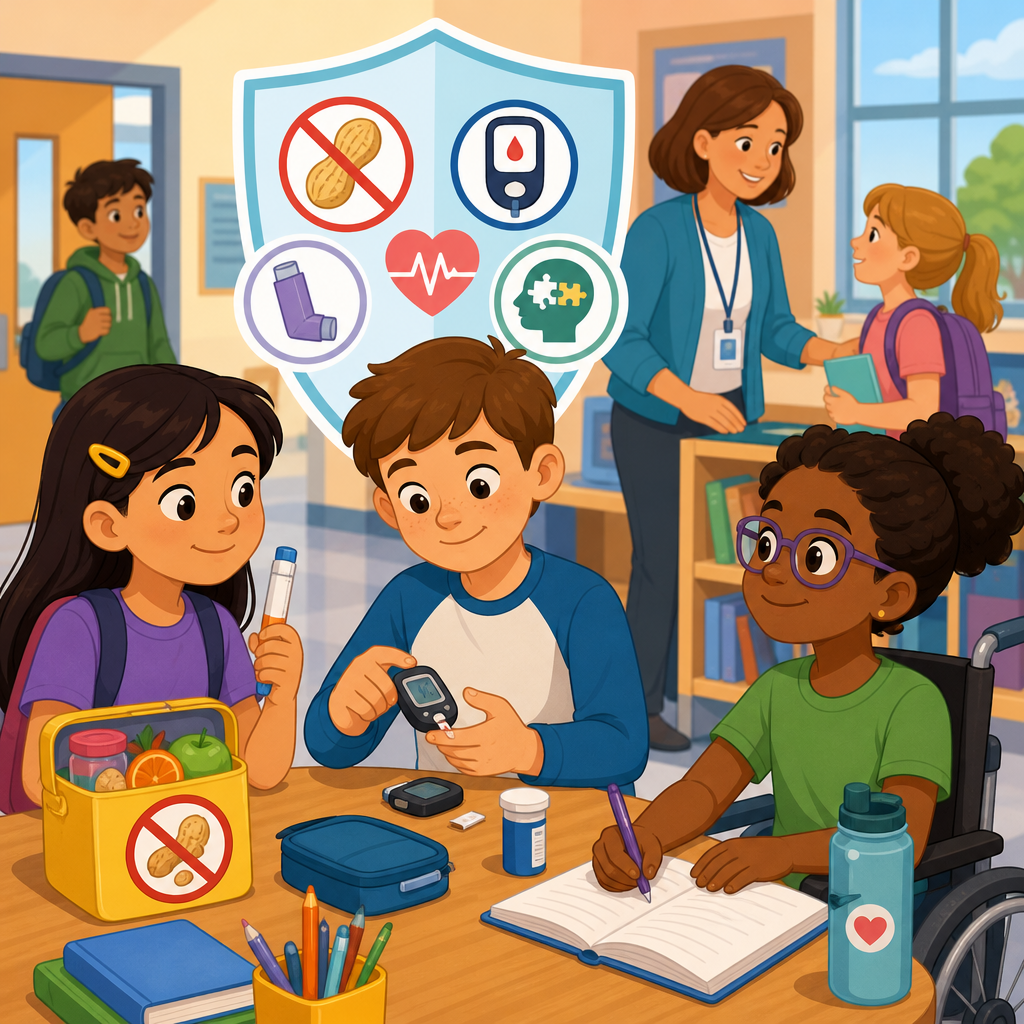
Food allergies, diabetes, asthma, epilepsy, celiac disease, and many other health conditions affect how students participate in school, and the Americans with Disabilities Act often determines what protections schools must provide. In practice, families and school staff usually ask the same questions: when does a medical condition count as a disability, what accommodations are required, and how do parents make sure a child can learn safely without being excluded from school activities. This Education & Family Rights hub explains how disability law applies in K-12 settings, why the ADA matters alongside Section 504 and the Individuals with Disabilities Education Act, and what issues repeatedly arise in classrooms, cafeterias, field trips, transportation, athletics, and before- and after-school programs.
Under the ADA, a student is protected when a physical or mental impairment substantially limits one or more major life activities. Major life activities include eating, breathing, walking, concentrating, learning, thinking, immune system function, digestive function, endocrine function, and other basic bodily operations. That broad definition matters because many school-based health conditions are not obvious to teachers yet still create serious barriers. A child with a severe peanut allergy may be at risk during lunch, celebrations, and science projects. A student with Type 1 diabetes may need blood glucose checks, insulin dosing, unrestricted bathroom access, and trained adults during emergencies. A student with Crohn’s disease may need flexible attendance, restroom access, and help making up work after flare-ups.
I have worked with school accommodation requests where the central problem was not whether a child had a legitimate health condition, but whether the school understood its legal duty to make individualized decisions. Schools cannot rely on blanket policies that sound neutral but effectively deny access. A “no medication administration” rule, a field trip requirement that parents attend to manage diabetes care, or a classroom snack policy that ignores allergy risk can all trigger disability discrimination concerns. The key legal principle is equal access: a student with a covered condition must have an equal opportunity to participate in academic programs, nonacademic services, and school-sponsored activities.
This hub page covers the core rules families need to understand across Education & Family Rights. It explains when the ADA applies, how it interacts with other education laws, what documentation is usually helpful, and what accommodations schools commonly provide for food allergies, diabetes, and other chronic conditions. It also addresses common disputes over service animals, emergency planning, extracurriculars, bullying, discipline, attendance, privacy, and transition points such as moving from elementary to middle school. If you are deciding whether to request a 504 plan, challenge a school decision, or document a denial of access, this article gives you the legal and practical framework to start from.
When the ADA Applies in School Settings
The ADA applies to public schools through Title II and to many private schools, childcare providers, camps, tutoring programs, and testing organizations through Title III. Religious institutions are generally exempt from Title III, although state law may create separate obligations. In public education, families often hear more about Section 504 than the ADA because 504 plans are the standard accommodation vehicle. Even so, the ADA remains critical because it supplies the broader anti-discrimination rule: schools cannot exclude a qualified student with a disability, deny benefits, or fail to make reasonable modifications when needed for equal access.
Whether a health condition qualifies depends on functional impact, not on labels alone. Congress broadened disability coverage through the ADA Amendments Act, and schools should interpret the definition in favor of broad coverage. Mitigating measures such as insulin, epinephrine auto-injectors, inhalers, or a gluten-free diet generally are not used to argue that a condition is not disabling. In plain terms, a child does not lose legal protection just because treatment helps. Type 1 diabetes almost always qualifies because it substantially limits endocrine function. Serious food allergies may qualify because they affect immune system function, eating, and breathing, especially where accidental exposure can cause anaphylaxis.
The ADA analysis asks a practical question: without reasonable modifications, can the student access school safely and equally. That can involve classroom routines, nursing care, meal access, attendance flexibility, communication with substitute teachers, or emergency response procedures. The law does not require schools to eliminate every risk, but it does require reasonable steps grounded in the student’s actual needs.
How the ADA Works with Section 504 and IDEA
Families should think of the ADA, Section 504, and IDEA as overlapping protections with different functions. Section 504 applies to schools receiving federal funds and prohibits disability discrimination. IDEA applies only when a student needs special education because of one of the statute’s qualifying disabilities. The ADA covers discrimination more broadly, including school services that are not strictly academic instruction. A student with diabetes may not need special education under IDEA, yet may still need a detailed 504 plan and ADA-based access protections for testing, sports, transportation, and field trips.
In real cases, schools sometimes make avoidable mistakes by treating these laws as mutually exclusive. For example, a district may tell a parent that because a student earns good grades, the child does not qualify for accommodations. That is wrong. Academic success does not erase a disability, and students can be high achieving while still needing health-related supports. Another common error is offering an informal health plan instead of a legally enforceable accommodation document. Informal plans can help operationally, but they do not replace a formal 504 process when the student needs protected accommodations.
IDEA becomes relevant when the health condition also affects educational performance in a way that requires specialized instruction. Epilepsy, traumatic brain injury, sickle cell disease, long COVID, or severe anxiety tied to medical trauma may create learning needs beyond access accommodations. When that happens, families should ask both whether the school is meeting anti-discrimination duties and whether a special education evaluation is warranted.
Common Accommodations for Food Allergies, Diabetes, and Other Conditions
Effective accommodations are specific, trainable, and written in plain language. For food allergies, schools commonly provide allergen-aware seating arrangements, ingredient review procedures, epinephrine access, staff training on anaphylaxis recognition, cleaning protocols, classroom celebration rules, and field trip safeguards. For diabetes, common accommodations include blood glucose monitoring anywhere needed, trained staff for insulin and glucagon administration, permission to carry supplies, snack access, water access, bathroom breaks, nurse backup plans, and flexibility during hypoglycemia or hyperglycemia episodes. For asthma, plans often cover inhaler access, activity modifications during poor air quality, and response steps for respiratory distress.
The strongest accommodation plans assign responsibility. “Student may have help as needed” is weak language. “Two trained staff members will be present during lunch, recess, transportation loading, and field trips, and substitute packets will include the emergency action plan” is enforceable. Schools should also coordinate the health plan, emergency care plan, and 504 plan so instructions are consistent. Misalignment between documents is a major cause of preventable errors.
| Condition | Typical school barriers | Common reasonable accommodations |
|---|---|---|
| Severe food allergy | Cafeteria exposure, classroom snacks, parties, field trips | Epinephrine access, trained staff, food policies, cleaning protocols, emergency action plan |
| Type 1 diabetes | Blood sugar swings, medication timing, sports, testing interruptions | Anywhere testing, insulin support, snack breaks, water and restroom access, makeup work flexibility |
| Celiac disease | Cross-contact in meals, classroom projects, celebrations | Safe meal procedures, ingredient review, nonfood alternatives, sanitation practices |
| Epilepsy | Seizure response confusion, missed instruction, activity restrictions | Seizure action plan, trained responders, recovery time, makeup work, transportation protocols |
| Asthma | Exercise triggers, poor ventilation, delayed inhaler access | Immediate inhaler access, activity adjustment, air quality monitoring, trained staff response |
Participation Beyond the Classroom: Meals, Trips, Sports, and Childcare
Equal access extends well beyond the classroom. School meal programs must address disability-related dietary needs, and cafeteria practices are a recurring flashpoint for food allergy and celiac disease cases. A school cannot solve the problem by telling a child to bring food from home if that response isolates the student or denies equal participation where reasonable modifications are available. Field trips require the same level of access as ordinary school days. If staff can manage diabetes care on campus, the school usually cannot require a parent to attend a trip solely for medical support.
Athletics and extracurricular programs are equally important. The Department of Education and the Department of Justice have repeatedly emphasized that students with disabilities must have an equal opportunity to participate in nonacademic and extracurricular services. That means schools should examine whether a rule is truly necessary or simply convenient. A blanket ban on self-carrying emergency medication during sports, for instance, can be unlawful when it prevents safe participation. Before- and after-school programs, transportation, and school-sponsored camps also fall within the access analysis when operated by the school or a covered provider.
Testing accommodations matter too. Students with migraines, epilepsy, diabetes, gastrointestinal disorders, or post-viral fatigue may need stop-the-clock breaks, access to medication or food, flexible scheduling, or a low-distraction room. Standardized testing vendors often have separate procedures, so families should start early and align school records with the requested support.
Documentation, Meetings, and Dispute Prevention
The best school accommodation requests are practical and evidence-based. Families should gather diagnoses, physician letters that explain functional limitations, medication orders, emergency care plans, attendance records where relevant, and examples of barriers already encountered. A concise medical note is often more persuasive than a generic statement of diagnosis. For example, “Student faces risk of anaphylaxis from trace peanut exposure and requires immediate epinephrine access, trained responders, and allergen management during meals and field trips” directly connects the condition to school obligations.
At meetings, focus on barriers, not just labels. Ask where the student may be excluded, delayed, or put at risk during a normal day: bus loading, substitute coverage, testing, lunch, recess, after-school clubs, lockdowns, evacuations, and field trips. I have found that walkthrough-style questions reveal gaps faster than legal arguments alone. If a school says an accommodation is unreasonable, ask why, what alternatives were considered, who will implement the alternative, and how staff will be trained.
Written follow-up prevents many disputes. After meetings, send an email summarizing requests, the school’s responses, and unresolved issues. If the school denies coverage or refuses accommodations, ask for the decision in writing. Paper trails matter in complaints to the Office for Civil Rights, state agencies, or due process systems. They also help clarify whether the dispute is about eligibility, implementation, retaliation, or disability-based harassment.
Bullying, Attendance, Discipline, and Privacy Concerns
Health conditions create legal issues that go beyond medical management. Students with visible or stigmatized conditions are often targeted for bullying, including taunts about food restrictions, medication, devices, seizures, or bathroom use. When disability-based harassment is severe and the school responds with deliberate indifference, the issue can become a discrimination violation, not merely a discipline problem. Schools should train staff to intervene quickly, document incidents, and protect the student’s continued access to education.
Attendance and discipline also require individualized judgment. A student with Crohn’s disease, severe migraines, sickle cell disease, long COVID, or immunocompromise may need modified attendance expectations, remote work during recovery, elevator access, or reduced physical exertion. Punishing disability-related absences without considering accommodations can create legal exposure. Discipline raises similar concerns when behavior is linked to hypoglycemia, seizures, medication side effects, pain, or neurological symptoms. Schools must distinguish willful misconduct from conduct shaped by disability-related limitations.
Privacy is another frequent concern. Staff need enough information to keep a student safe, but schools should still limit disclosure to those with a legitimate educational interest. A child does not need to become the subject of staff-room gossip for accommodations to work. Families should ask how information will be shared with teachers, aides, bus staff, coaches, substitutes, and food service personnel, and whether the emergency plan is readily available when needed.
Building a Strong Rights Strategy for Families
The clearest takeaway is that many school health issues are disability rights issues, not mere preferences or informal nurse’s office matters. When a condition substantially limits a major life activity or major bodily function, the ADA can require schools to make reasonable modifications so the student can participate safely and equally. For food allergies, diabetes, and other chronic conditions, that protection often reaches every part of the school day: instruction, meals, transportation, testing, extracurriculars, and emergency response.
Families are most effective when they approach the process systematically. Identify functional barriers, request evaluation or accommodations in writing, support the request with targeted medical documentation, and insist on a plan detailed enough for substitutes and extracurricular staff to follow. Where the school offers informal help, consider whether a formal 504 plan is still necessary. Where access problems continue, preserve records and escalate promptly through district procedures or external enforcement options.
As the hub for Education & Family Rights, this page should be your starting point for deeper topics such as 504 plans, field trip access, school meal accommodations, disability-based bullying, extracurricular inclusion, service animals, and complaint strategies. Use it to frame the right questions before problems become emergencies. If your child’s health condition affects school access, review the current plan, compare it to the barriers your child actually faces, and request the changes needed for equal participation now.
Frequently Asked Questions
When does a health condition like a food allergy, diabetes, asthma, epilepsy, or celiac disease qualify as a disability under the ADA at school?
Under the Americans with Disabilities Act, a student may be protected when a physical or mental impairment substantially limits one or more major life activities. In the school setting, that analysis often includes whether the condition affects activities such as eating, breathing, concentrating, learning, caring for oneself, digestive function, endocrine function, neurological function, or other important bodily functions. Many conditions that families deal with every day in school can meet this standard, including severe food allergies, Type 1 or Type 2 diabetes, asthma, epilepsy, celiac disease, Crohn’s disease, migraine disorders, anxiety-related medical conditions, and other chronic health issues.
A key point is that a student does not have to be completely unable to perform an activity in order to qualify. The question is whether the condition substantially limits the student compared with most people in the general population. For example, a student with a peanut allergy may be substantially limited in eating because exposure can trigger a dangerous reaction. A student with diabetes may be substantially limited in endocrine function because blood glucose regulation requires ongoing monitoring and treatment. A student with asthma may be substantially limited in breathing, especially during exercise, illness, or exposure to triggers at school. Even if medication, diet, or devices help manage the condition, the school generally must still consider the underlying impairment and its impact.
Schools should make an individualized determination based on current medical information, the student’s symptoms, the risk posed by exposure or lack of treatment, and the practical effect the condition has in the educational environment. Labels alone do not decide the outcome, but many commonly seen pediatric health conditions do qualify when they affect school participation in a meaningful way. If there is uncertainty, families should provide medical documentation explaining the diagnosis, the functional limitations, the risk of emergencies, and the accommodations needed for equal access and safety.
What kinds of accommodations or protections might a school be required to provide under the ADA?
The ADA requires schools covered by the law to provide reasonable modifications, aids, services, and policy adjustments when needed to give a student with a disability an equal opportunity to participate in school programs and activities. What that looks like depends on the child’s condition and the demands of the school day. For a student with food allergies, accommodations may include allergen-aware meal planning, ingredient transparency, safe snack procedures, handwashing protocols, cleaning measures, staff training, epinephrine access, emergency response planning, and inclusion in classroom celebrations, field trips, and after-school events without unnecessary exclusion.
For a student with diabetes, accommodations often include blood glucose monitoring, access to snacks and water, permission to carry supplies, insulin administration, assistance with counting carbohydrates, restroom access, flexibility for missed work due to treatment or blood sugar events, and trained personnel available during the entire school day and at school-sponsored activities. Students with asthma may need quick access to inhalers, avoidance of environmental triggers, modified physical activity when medically necessary, and emergency protocols for flare-ups. Students with epilepsy may need seizure action plans, trained staff, recovery time after seizures, medication administration, and academic flexibility. Students with celiac disease may need safe food handling, gluten-free meal options where school meals are offered, precautions during cooking projects, and alternatives when school activities involve food.
Importantly, ADA protections extend beyond the classroom. The school must consider transportation, recess, athletics, clubs, assemblies, field trips, testing, lunch, and emergency evacuations. A school generally cannot exclude a student from participating simply because managing the condition requires planning. The goal is meaningful access, not just basic attendance. Accommodations should be written clearly, shared with the appropriate staff, and implemented consistently so that the student can attend school safely and participate as fully as peers.
How is the ADA different from Section 504 and the IDEA, and which law applies to students with medical conditions?
These laws overlap, but they do different things. The ADA is a broad civil rights law that prohibits disability discrimination and requires equal access in schools and other public settings. Section 504 of the Rehabilitation Act is another civil rights law that applies to schools receiving federal financial assistance, which includes most public schools and many others. In practice, students with health conditions who need accommodations often receive a Section 504 plan, and the school’s obligations under that plan usually help satisfy both Section 504 and ADA requirements.
The Individuals with Disabilities Education Act, or IDEA, is different because it focuses on special education and related services for students whose disabilities affect educational performance and who need specially designed instruction. A student with diabetes, food allergies, asthma, or epilepsy may qualify for IDEA in some cases, but many students with medical conditions do not need special education and are instead protected through the ADA and Section 504. In other words, a child can have a disability requiring accommodations even if the child is performing at grade level and does not need special instruction.
For families, the practical question is not just which law sounds strongest, but what support the child actually needs. If the student primarily needs health-related accommodations, safety planning, staff training, and equal participation, a Section 504 plan is often the main tool used by schools, with the ADA reinforcing the school’s nondiscrimination duties. If the condition also causes significant learning needs requiring specialized teaching, IDEA may come into play. Because these laws can overlap, parents should focus on making sure the school identifies all needed supports rather than getting stuck on labels alone.
What should parents do if they want to request ADA-based accommodations and make sure the school responds appropriately?
Parents should start by making the request in writing and being as specific as possible. The request does not need to use legal language, but it should explain the child’s diagnosis, how the condition affects major life activities or school participation, the risks involved, and the accommodations or services the child needs. It helps to include a letter from the child’s physician, allergist, endocrinologist, neurologist, gastroenterologist, pulmonologist, or other treating provider describing the condition, expected symptoms, emergency concerns, and school recommendations.
Once the school is on notice, families should ask for a meeting to discuss eligibility and accommodations. If the school uses a Section 504 process, parents should request a formal evaluation or review and ask for a written plan that identifies the supports, who is responsible for providing them, where they apply, and what happens during emergencies. Vague language can create problems, so details matter. For example, instead of stating that a child will receive help with diabetes care, a stronger plan identifies whether the student may self-manage, where supplies will be stored, who is trained to assist, and how coverage will work during lunch, testing, transportation, athletics, field trips, and substitute staffing situations.
Parents should also keep organized records, including emails, doctor’s notes, incident reports, meeting notes, and copies of any school plans. If the school delays, minimizes the condition, refuses accommodations, or informally promises help without documenting it, families should follow up in writing. If necessary, they may escalate concerns to the district’s Section 504 or ADA coordinator, use internal grievance procedures, or seek legal guidance. In many cases, clear documentation and a collaborative but firm approach lead to better results and safer, more consistent implementation for the student.
Can a school exclude a student from field trips, extracurricular activities, cafeteria programs, or other school events because of a medical condition?
Generally, no. A school cannot automatically exclude a student with a disability from participating in programs, services, or activities because the student has a medical condition or because staff believe participation may be inconvenient. The ADA is designed to prevent exactly that kind of exclusion. If a student with a food allergy, diabetes, asthma, epilepsy, or another health condition wants to attend a field trip, join a club, ride the bus, play on a team, or participate in celebrations and assemblies, the school should look first at what reasonable modifications or supports would make participation safe and equal.
That means schools should plan ahead rather than deny access. For example, on a field trip, the school may need to ensure trained staff are present, medications travel with the student, food is reviewed for allergens or gluten exposure, emergency procedures are in place, and communication systems are ready if a medical event occurs. In extracurricular settings, the school may need to adjust snack rules, allow medical devices or quick access to supplies, train coaches and sponsors, or modify attendance policies when symptoms flare. Equal access includes nonacademic and after-school activities, not just classroom instruction during the regular day.
There are limited situations in which a school may raise legitimate safety concerns, but those concerns must be based on an individualized assessment using current medical knowledge and objective evidence, not stereotypes or generalized fear. The school should consider whether accommodations can reduce the risk to an acceptable level before restricting participation. If parents hear that a child cannot attend an event, use a service, or join an activity because of a health condition, that is a strong signal to request the school’s reasoning in writing and ask what alternatives or modifications were considered. In many cases, exclusion is not legally justified when proper planning could allow the student to participate safely.