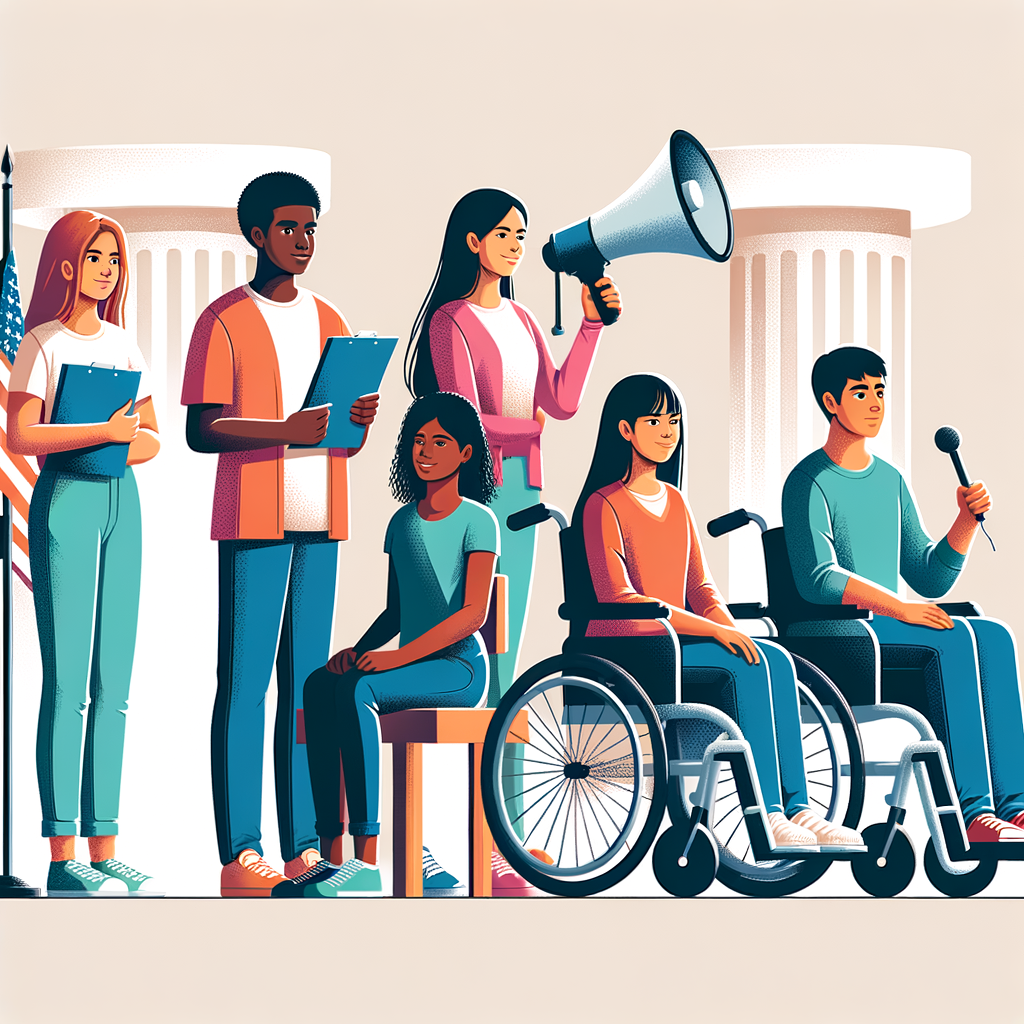
Engaging youth in ADA awareness and advocacy is an essential endeavor that carries the potential to drive societal transformation. At the core of the Americans with Disabilities Act (ADA) is a commitment to prohibiting discrimination and ensuring equal opportunities for individuals with disabilities. Since its enactment in 1990, the ADA has been instrumental in fostering an inclusive society where people with disabilities can access public services, accommodations, transportation, and employment without facing barriers. However, as society evolves, it becomes crucial to involve the younger generation actively in understanding and advocating for the principles enshrined in the ADA. Young people form a considerable portion of the global population, and their perspectives, energy, and technological savviness are vital in spearheading further progress in disability rights. By engaging youth in ADA awareness and advocacy, we can harness their potential to push boundaries, challenge stereotypes, and create a more equitable future for all. This engagement should not merely be seen as a learning exercise but as an opportunity to develop new leaders who contribute meaningfully to society’s understanding of disability inclusion. Through education, active participation, and innovative advocacy strategies, we can empower young individuals to become staunch allies and advocates for the ADA, cementing its values into the fabric of our communities and institutions.
Education and Awareness Campaigns
Education forms the bedrock of building a sustainable awareness campaign aimed at fostering ADA ideals among young individuals. Schools and higher education institutions play a pivotal role here. By integrating ADA awareness into school curriculums, students can learn about the historical context and significance of the ADA, alongside exploring disability rights and listening to firsthand accounts from individuals with disabilities. Such educational modules should go beyond mere legal definitions, instead delving into real-life implications, showcasing case studies, and highlighting the transformative impact of the ADA on society. This approach grounds students in the practical realities of disability inclusion, encouraging empathy and understanding.
In tertiary educational settings, universities can offer workshops and seminars featuring experts in the field of disability rights, creating platforms for students to engage in discussions and debates about ADA-related issues. Institutions can partner with disability advocacy groups to provide mentorship programs, where students explore the intersectionality of disability rights with other social justice movements. These interactions provide rich and original perspectives that allow for a deeper understanding of ADA principles.
Moreover, creative awareness campaigns leveraging social media platforms can effectively reach younger demographics. Platforms like Instagram, TikTok, and YouTube boast high youth engagement rates. Using these platforms, advocacy groups can create compelling visual content that simplifies complex ADA topics and presents them in an engaging manner. Collaborating with influencers who have a strong understanding of ADA topics can boost visibility and normalize the conversation around disability inclusion. Short animated videos, interactive quizzes, and live interviews can further pique interest and disseminate information in a digestible format.
Involvement through Volunteering
Volunteering is another avenue through which youth can gain hands-on experience in ADA advocacy. Participation in volunteer programs organized by disability support organizations provides young individuals with a tangible understanding of the day-to-day experiences of those living with disabilities. These programs can range from assisting individuals in daily tasks to organizing events aimed at raising awareness about specific disabilities.
By volunteering, young people can observe the practical challenges faced by individuals with disabilities and see firsthand the positive impact of inclusive policies. This direct involvement fosters a genuine appreciation for the necessity of ADA compliance and advocacy. Additionally, volunteering encourages the development of soft skills such as empathy, leadership, and teamwork, which are instrumental in effective advocacy.
Student bodies and youth groups can also organize inclusive events that highlight disability rights. These events can serve as platforms to showcase the talents of individuals with disabilities, demonstrate assistive technology, and conduct workshops on disability etiquette and accessibility practices. Collaborations with local communities and businesses amplify the reach and impact of such initiatives, spreading awareness beyond the immediate circles involved.
Policy Advocacy and Leadership Development
Incorporating youth into policy advocacy initiatives challenges them to approach ADA issues from a policymaker’s lens. This involvement can begin at grassroots levels, where young people engage local government representatives and participate in advocacy campaigns. Equipped with an understanding of disability law and the current gaps in its execution, youth can advocate for stronger enforcement mechanisms, improvements in accessibility infrastructure, or propose new policies informed by lived experiences.
Leadership development programs specifically tailored for young disability rights advocates are instrumental in nurturing new leaders. Through mentorship from seasoned advocates and policymakers, young people can learn strategic advocacy methods, effective communication skills, and how to navigate the political landscape. Participation in simulations like model international conferences, where youth can take on roles as policy experts or national representatives, provides experiential learning opportunities that broaden their understanding and capacity for advocacy work.
Youth engagement in advocacy efforts can further be enhanced through partnerships between educational institutions and government bodies. Internship programs that place students within advocacy organizations or government agencies allow them to gain insight into the legislative process and contribute to creating disability-friendly policies.
Leveraging Technology for Advocacy
In the digital age, technology serves as a powerful tool in amplifying ADA advocacy efforts. Youth, being digital natives, can expertly navigate the digital realm to promote disability inclusion. Online platforms provide spaces for discussions, dissemination of knowledge, and collective advocacy campaigns. Websites dedicated to ADA topics offer extensive resources, including newsletters, podcasts, and webinars, that equip young advocates with the information needed to drive change.
Youth can leverage technology to create virtual support groups or forums where individuals share their experiences, challenges, and solutions regarding disability and ADA compliance. These online communities foster support and solidarity, creating networks of advocates who can organize large-scale digital campaigns or awareness drives.
Moreover, the development of mobile applications that assist in ADA compliance, such as apps for locating accessible venues or providing real-time disability assistance, aligns technological innovation with advocacy goals. Encouraging young tech enthusiasts to participate in hackathons focused on designing disability-friendly solutions expands the potential for innovative interventions in ADA advocacy.
Potential Challenges and Solutions
Engaging youth in ADA awareness and advocacy, while promising, is not without its challenges. A significant barrier is the prevalence of misinformation and stereotypes about disabilities that persist even today. Tackling these stereotypes requires a concerted effort involving education, open dialogue, and exposure to diverse disability narratives.
A lack of accessible resources and materials can also hinder involvement. Ensuring that educational content, digital campaigns, and events are accessible to individuals with varying abilities is crucial. This includes providing captioned videos, sign language interpretations, and materials in braille or other suitable formats to cater to the needs of all participants.
Overcoming apathy and instilling a genuine interest in disability advocacy is another challenge. Solutions involve showcasing the relevance and applicability of ADA principles to broader societal contexts and social justice initiatives. When youth understand the interconnected nature of disability rights with housing, education, and employment, they are likely to see the value in their involvement in advocacy.
A collaborative approach involving educators, parents, community leaders, and policymakers in advocating for ADA goals enhances outreach. By fostering communities where disability advocacy is interwoven into everyday discourse, young people naturally grow into advocates passionate about creating equitable societies. Support networks and sustained engagement initiatives ensure that youth advocacy does not dwindle over time but becomes a sustained effort leading to meaningful change.
Conclusion
Engaging youth in ADA awareness and advocacy represents a strategic approach to ensuring that the triumphs of the ADA continue to uplift individuals with disabilities in future generations. By effectively educating and involving young people in efforts surrounding the Americans with Disabilities Act, we lay a foundation for an inclusive society where equality, accessibility, and rights are paramount. The younger generation, with their adaptability, technological fluency, and commitment to social justice, holds the key to advancing the mission and vision of the ADA in innovative and transformative ways.
Energizing youth engagement entails a demographic ready to champion disability rights in multifarious realms encompassing education, workplace policies, urban planning, technology, and more. It presents an opportunity to nurture future leaders equipped with the knowledge, skills, and passion for advocating for change that transcends legislative compliance, embedding the spirit of the ADA in societal consciousness.
Ultimately, a collective pledge toward fostering ADA awareness among youth heralds a future where individuals with disabilities find their rightful place in society, enjoying equal access and opportunities. Embracing this commitment is not merely a moral obligation but a step towards a world where diversity is celebrated, abilities are recognized, and inclusion is a given. Through the active engagement of youth in ADA advocacy, we can transform the ethos of equality into a lasting reality for all generations to come.
Frequently Asked Questions
1. Why is engaging youth in ADA awareness important?
Engaging youth in ADA awareness is critical because young people are the future leaders, policy makers, and advocates of change. By equipping them with knowledge about the Americans with Disabilities Act (ADA), we empower them to promote inclusivity and ensure equality for all individuals, regardless of abilities. When youth become aware of the barriers faced by people with disabilities, they develop empathy and are more likely to contribute positively towards breaking those barriers. Inclusion and accessibility become ingrained in their values. Youth engagement can spark innovative approaches and use their technological skills to advocate for change in new ways. They are adept at using social media platforms, online campaigns, and technology to spread awareness on a broader scale, reaching audiences that traditional mediums might miss.
2. How can youth be effectively engaged in ADA advocacy?
Youth can be effectively engaged in ADA advocacy through education, participation, and empowerment. Education is the foundation – schools can integrate disability rights into their curricula by sharing the history of the ADA and discussing its impact. Workshops, seminars, and interactive sessions can be organized to encourage participation and foster a deep understanding of these issues. Empowerment comes when young people are given leadership roles and responsibilities. Encouraging them to form ADA-focused clubs or committees within their schools or communities fosters active participation. Mentorship programs can be established where more experienced advocates guide the youth. Furthermore, organizing and involving them in campaigns, awareness walks, and accessibility audits in their surroundings makes them active participants rather than passive learners.
3. What roles can technology and social media play in engaging youth with ADA advocacy?
Technology and social media are vital tools for engaging youth in ADA advocacy, as they not only facilitate communication but also allow for creative forms of expression and engagement. Platforms like Instagram, TikTok, and YouTube enable young advocates to share stories, create awareness campaigns, and start viral challenges that can highlight ADA issues. Social media enables real-time communication and community-building among youth from diverse backgrounds. Technology allows for the development of apps and tools that promote accessibility and track ADA compliance, giving youth a hands-on role in advocacy. Online webinars, podcasts, and hackathons can be conducted to educate and involve more young individuals in understanding and championing ADA principles. Gamifying educational content related to ADA can further enhance engagement, making learning interactive and fun.
4. What impact can youth engagement have on the future of ADA and disability awareness?
Youth engagement can significantly impact the future of ADA and disability awareness by fostering a culture of inclusivity that reverberates across generations. As young individuals grow into positions of influence across varied fields, they carry with them their knowledge and commitment to disability rights, influencing policies, design, architecture, technology, and public perception. They become ambassadors of an inclusive society, promoting ADA-like principles globally. Their innovative ideas can lead to technological advancements that make environments more accessible. Youth-led advocacy could reshape societal norms, driving conversations about disabilities beyond legal compliance and towards genuine acceptance and equal opportunity. As they challenge stereotypes and reduce stigma, they pave the way for lasting societal transformation.
5. Can youth-led ADA initiatives influence public policy?
Absolutely, youth-led ADA initiatives can certainly influence public policy. When young advocates come together, they form a powerful force capable of initiating conversations and raising awareness on critical issues. They can attend city council meetings, submit proposals, or engage with policymakers through structured advocacy groups. Shared voices advocating for more inclusive policies, backed by data and personal narratives, make it hard for lawmakers to ignore. Youth-led initiatives can also influence legislation through petitions and campaigns that raise public awareness and apply pressure on decision-makers. By collaborating with established advocacy groups, youth initiatives can be part of larger coalition movements that drive policy change on a larger scale. Moreover, young advocates often bring fresh perspectives and solutions, which can prompt lawmakers to consider alternative and innovative policy options.


