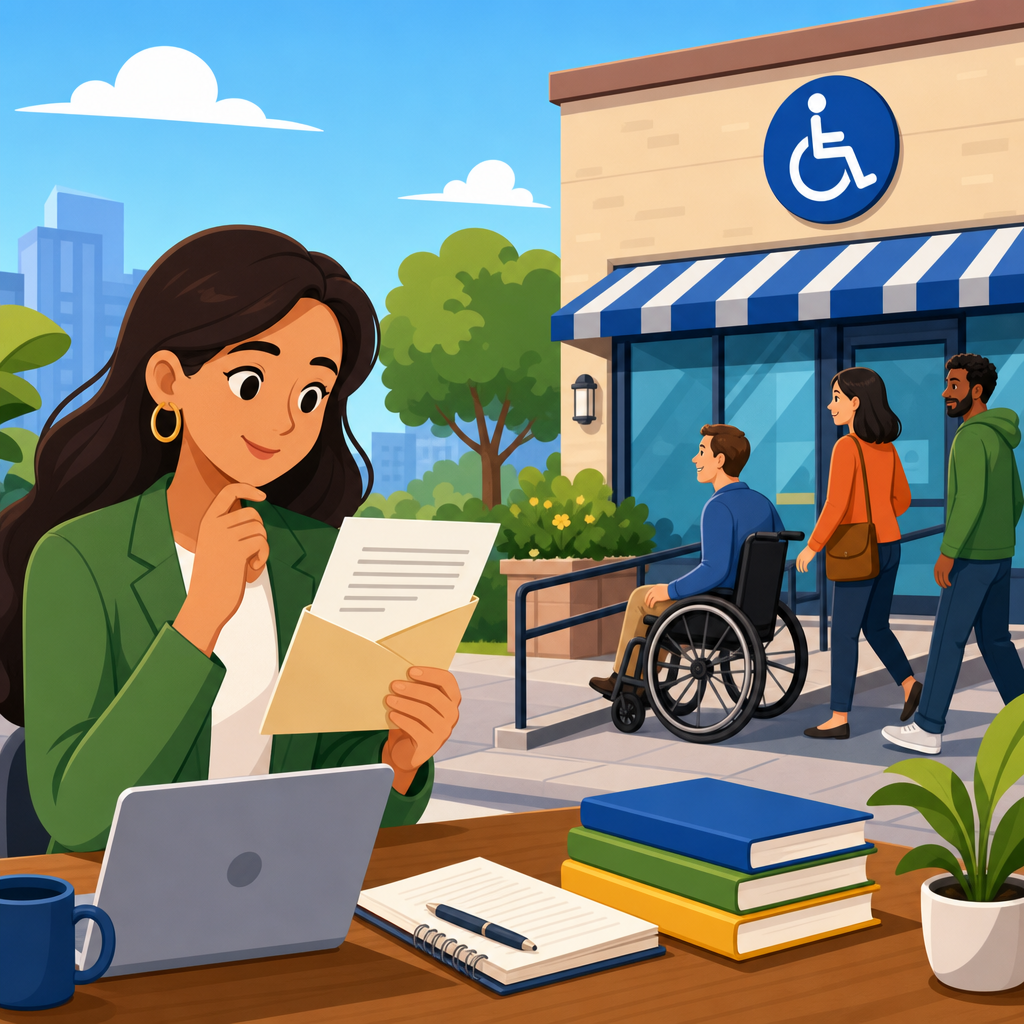
Demand letters under state accessibility laws are often the first sign that a business, landlord, school, healthcare provider, or digital service operator has entered a high-stakes legal process that can escalate quickly into a state or local lawsuit. A demand letter is a written claim, usually sent by an attorney or advocacy group, alleging barriers that violate disability access requirements and requesting corrective action, money, or both. In practice, these letters may target physical spaces, websites, mobile apps, housing policies, transportation services, and public accommodations. They matter because many state accessibility laws allow broader remedies, different standing rules, or faster case filings than federal law alone, which changes how organizations should assess risk, preserve evidence, and respond.
I have worked through these matters with compliance teams, outside counsel, engineers, and operations leaders, and the pattern is consistent: the earliest response usually shapes the outcome. A rushed denial can trigger litigation. An overbroad admission can create unnecessary exposure. A disciplined response can narrow issues, fix barriers, and reduce legal costs. This practical guide explains how demand letters function under state accessibility laws, what legal theories commonly appear, how state and local lawsuits differ from federal-only claims, and what a defensible response looks like. It also serves as a hub for the broader State and Local Lawsuits topic by outlining the major issue areas that related articles should explore in depth.
State accessibility laws generally include statutes, regulations, building code provisions, civil rights ordinances, and consumer protection theories that prohibit disability discrimination or require accessible design. Some states tie accessibility duties to the ADA, while others create independent obligations or stronger damages provisions. California’s Unruh Civil Rights Act and Disabled Persons Act are the most cited examples, but New York, New Jersey, Florida, Massachusetts, Illinois, Colorado, Washington, and many cities also generate significant accessibility claims. Local enforcement can matter as much as state law because municipalities may adopt building standards, housing codes, and public accommodation rules that become evidence in a private dispute. Understanding that layered framework is essential before anyone drafts a response.
What a demand letter usually contains
A well-drafted accessibility demand letter typically identifies the claimant, the covered location or service, the alleged barriers, the legal basis, and the requested relief. The barriers may be highly specific, such as parking slope measurements, inaccessible restroom clearances, missing captioning, keyboard traps on a checkout page, or a housing policy that rejects assistance animals. The legal basis often cites a mix of state civil rights law, building code standards, disability discrimination statutes, local ordinances, and sometimes negligence or unfair business practice theories. Requested relief may include remediation deadlines, policy changes, staff training, expert inspections, attorney’s fees, and monetary settlement. Some letters attach screenshots, measurements, tester declarations, or audit excerpts; others are deliberately sparse and rely on the threat of filing.
One of the most important early tasks is distinguishing a letter that is legally detailed from one that is merely broad and conclusory. That distinction affects how much information should be requested before negotiating. If a claimant alleges website barriers, ask which user flows failed, what assistive technology was used, what browser and device were involved, and whether the barriers blocked core functions such as account creation, appointment booking, or payment. If the claim concerns a storefront or office, verify dates of visit, exact paths of travel, and whether the claimant encountered temporary conditions, tenant-controlled features, or base-building elements. Specificity matters because many state and local lawsuits rise or fall on the facts more than on abstract compliance rhetoric.
Why state and local accessibility claims are different
State and local accessibility claims differ from federal ADA cases in three practical ways: remedies, procedural posture, and proof. Under federal law, private plaintiffs generally seek injunctive relief and attorney’s fees, but several state laws permit statutory damages, minimum damages per violation, or easier access to related claims. That financial leverage changes settlement dynamics immediately. Procedure also differs. Some jurisdictions have pre-suit notice rules, heightened pleading requirements, or special verification rules; others permit quick filings in plaintiff-friendly venues. Proof can differ as well because state statutes may incorporate building code standards more directly, recognize broader classes of covered entities, or apply to digital services through public accommodation or anti-discrimination provisions even where federal doctrine remains unsettled.
California illustrates the point. In accessibility disputes involving places of public accommodation, plaintiffs often pair ADA allegations with the Unruh Act or Disabled Persons Act to pursue monetary recovery. New York plaintiffs may combine state and city human rights laws with federal claims, especially in digital accessibility disputes. In housing, state fair housing acts and local ordinances can create additional duties around reasonable accommodations, reasonable modifications, and design requirements. In education and healthcare, state anti-discrimination laws may supplement federal Section 504 or ADA obligations. The result is a fragmented litigation map. Businesses that prepare only for federal ADA exposure routinely underestimate the leverage of state and local lawsuits.
Common categories of barriers that trigger letters
Most demand letters cluster around recurring barrier categories. In physical locations, the usual targets are parking, curb ramps, door hardware, restroom layouts, sales counters, service lines, seating, lodging rooms, pool access, and path-of-travel issues. In digital matters, claimants focus on unlabeled form fields, low color contrast, inaccessible PDFs, missing alternative text, video without captions, checkout failures, and app gestures that do not work with screen readers. In housing, letters often concern assistance animals, parking assignments, leasing office accessibility, communication access, and refusal to permit reasonable modifications. Employment-related letters may allege inaccessible application systems or failures in the interactive process, though those cases follow their own procedural channels.
The strongest internal response starts by sorting allegations into four buckets: clearly valid, likely valid but fixable, disputed fact issues, and legal overreach. I use that framework because it prevents organizations from treating every allegation as equal. A missing caption on a public-facing onboarding video may be straightforward to fix. A parking slope allegation may require a surveyor because visual inspection is unreliable. A claim that an entire website is inaccessible should be narrowed to tested user journeys and recognized technical criteria, usually WCAG 2.1 AA or the currently adopted benchmark in company policy. A demand for blanket damages across every location in a portfolio may exceed what the facts and statutes support.
| Claim type | Typical evidence | Immediate response step | Common risk driver |
|---|---|---|---|
| Physical access | Photos, measurements, visit declaration | Site inspection with architect or CASp where available | Code-linked standards and repeat visits |
| Website access | Screenshots, test logs, screen reader notes | Replicate issue with manual and automated testing | Checkout or booking failure on core pages |
| Housing accommodation | Emails, policy documents, medical support records | Review interactive process timeline | Delay, inconsistent treatment, poor documentation |
| Local ordinance claim | Permit history, inspection records, agency guidance | Confirm jurisdiction-specific duty | Mismatch between local code and internal standards |
How to investigate a demand letter without making it worse
The first 72 hours matter. Preserve documents, website code snapshots, maintenance logs, service tickets, prior audits, training records, leases, and insurance notices. Identify who controls the allegedly inaccessible feature. In multi-tenant properties, the lease may allocate duties between landlord and tenant. In digital environments, responsibility may be split among product, design, marketing, and third-party vendors. Issue a litigation hold if suit is reasonably anticipated. Then inspect the facts with people who know the standards. For buildings, that may mean an accessibility consultant, architect, engineer, or Certified Access Specialist in California. For digital claims, use both automated scanners like axe, WAVE, or Lighthouse and manual testing with NVDA, JAWS, VoiceOver, keyboard-only navigation, zoom, and captions review.
Investigation should answer direct questions. Was there a barrier on the date alleged? Is it permanent, temporary, or already fixed? Does a technical standard actually apply to this feature, this date of construction, this alteration scope, or this digital workflow? Is there a safe harbor argument, undue burden issue, fundamental alteration concern, or equivalent facilitation defense? Was the claimant denied equal access, or merely inconvenienced in a way the statute does not reach? Those distinctions require precise evidence. I have seen organizations settle weak claims because nobody verified the alteration date of a restroom or the exact checkout path that failed. Accurate chronology is often the difference between exposure and leverage.
Response strategy, negotiation, and settlement structure
A good response letter is measured, fact-based, and strategically incomplete. It should acknowledge receipt, confirm that the organization takes accessibility seriously, request missing details where needed, and avoid admissions before the investigation is complete. If obvious barriers exist, say they are being evaluated for prompt remediation. If some claims appear incorrect, note that the investigation has identified factual or legal issues requiring clarification. Avoid arguing every point in the first letter. The goal is to create time for investigation while signaling competence. Plaintiff’s counsel is often testing whether the target is disorganized. A prompt, informed response can deter inflated settlement demands because it shows the case will be defended on specifics.
Settlement should match the claim type. Physical access matters usually require a scoped remediation plan, expert signoff, completion dates tied to construction realities, and release language limited to identified barriers and locations. Digital accessibility settlements should define the standard, timeline, testing cadence, content governance, vendor obligations, and exception handling for third-party material. Housing settlements often need policy revision, staff training, and individualized relief. In all contexts, confidentiality, non-disparagement, no-admission language, and fee allocation must be handled carefully under applicable ethics rules and local practice. If damages are available under state law, negotiate from evidence, not fear. Plaintiffs demand more when they sense the defendant cannot separate true violations from speculative claims.
Building a defensible compliance program across state and local risk
The best way to reduce demand letters is not a one-time audit but an operating system. Start with a jurisdiction map showing where the organization has facilities, tenants, users, students, patients, or customers. For each state and major city, identify the statutes, code standards, notice rules, damages exposure, and agency guidance most likely to matter. Then create a remediation pipeline with ownership, budget, and deadlines. For physical assets, tie accessibility review to capital planning, maintenance, lease negotiations, and permit-triggered alterations. For digital assets, build accessibility into procurement, design systems, QA, content publishing, and release management. WCAG conformance claims should be backed by testing records, not marketing copy.
Training is where many programs either become durable or collapse. Frontline staff need scripts for accommodation requests and communication access. Property managers need to understand temporary obstructions, maintenance response, and documentation. Designers and developers need competency in semantic structure, focus order, error identification, accessible names, and media alternatives. Legal teams need escalation rules for demand letters, insurance tenders, and preservation. Leadership needs reporting that tracks barriers by severity, repeat root causes, and jurisdictional exposure. When a later demand letter arrives, the organization should be able to show prior audits, fixes, governance, and response discipline. That evidence does not eliminate liability, but it materially improves credibility in negotiation and, when necessary, in court.
Using this hub to navigate state and local lawsuits
This hub article anchors the State and Local Lawsuits subtopic by organizing the major branches of accessibility dispute risk. Related articles should go deeper into California statutory damages claims, New York and city human rights law cases, website accessibility suits under state public accommodation theories, housing reasonable accommodation disputes, education and healthcare claims under overlapping state protections, and local code enforcement issues that spill into private litigation. Additional pages should address evidence preservation, remediation timelines, insurance coverage, expert witnesses, tenant-landlord allocation, and settlement drafting. The benefit of a hub structure is practical: legal teams, compliance officers, and operators need one central framework that shows how these disputes connect while still allowing jurisdiction-specific guidance where the rules diverge.
Demand letters under state accessibility laws are not just legal threats; they are stress tests of an organization’s compliance maturity, documentation discipline, and ability to solve access barriers quickly. The core lessons are consistent across jurisdictions. Read the letter carefully, investigate the facts fast, preserve evidence, confirm which state and local rules actually apply, and separate valid barriers from overbroad allegations. Use qualified experts for inspections and testing. Negotiate from documented reality, not assumptions. Most importantly, treat accessibility as an operational responsibility rather than a sporadic legal project, because state and local lawsuits exploit gaps between policy statements and daily practice.
For teams responsible for the Legal and Technological Frontiers landscape, this page should function as the starting point for every State and Local Lawsuits question. Use it to classify the claim, identify the governing standards, and decide which related issue needs deeper research. Then convert what you learn into action: update policies, fix barriers, train staff, tighten vendor controls, and prepare a response protocol before the next demand letter arrives. That is the practical advantage of a strong hub article and the most reliable way to reduce exposure while improving real access for users, tenants, patients, students, and customers.
Frequently Asked Questions
What is a demand letter under state accessibility laws, and why does it matter?
A demand letter under state accessibility laws is a formal written claim asserting that a business, landlord, school, healthcare provider, public-facing organization, or digital service operator has barriers that allegedly violate disability access requirements. It is often sent by a lawyer, advocacy organization, or claimant before a lawsuit is filed, and it usually identifies the location, service, website, app, or policy at issue. The letter may describe alleged barriers in physical spaces, such as parking, entrances, restrooms, counters, signage, routes of travel, or seating, and it may also address digital accessibility issues involving websites, online forms, videos, mobile applications, or e-commerce functions.
These letters matter because they are frequently the first step in a fast-moving legal process. Even though a demand letter is not the same as a filed complaint, it should be treated seriously because it often signals that the sender has already evaluated potential claims and may be prepared to escalate. Depending on the state and the facts, the letter may seek corrective action, policy changes, training, damages, attorney’s fees, or a negotiated settlement. In some situations, the recipient may face exposure under multiple legal theories at once, including state disability access statutes, state civil rights laws, local ordinances, and related federal standards that may be used as a benchmark for compliance.
From a practical standpoint, a demand letter matters because it creates both legal and business risks. If handled poorly, it can lead to litigation, increased settlement demands, added defense costs, reputational harm, and avoidable delays in fixing access issues. If handled strategically, however, it can become an opportunity to assess compliance, correct barriers, preserve evidence, and reduce escalation. The most important takeaway is that a demand letter should not be ignored, minimized, or answered casually. It is usually the beginning of a high-stakes process, not a routine customer complaint.
Who can receive an accessibility demand letter, and what kinds of barriers are commonly alleged?
Accessibility demand letters can reach a wide range of recipients, not just large retailers or major institutions. Small businesses, shopping center owners, property managers, landlords, restaurants, hotels, medical offices, schools, colleges, nonprofit organizations, transportation providers, event venues, professional practices, and online service operators are all common targets. In many cases, more than one party may be named or contacted, especially where responsibility for the premises or service is shared. For example, both a tenant and a property owner may be accused of maintaining barriers in a commercial space, or both a healthcare system and a third-party digital vendor may be implicated in online access problems.
The alleged barriers can vary widely depending on the setting. In physical spaces, common claims involve inaccessible parking, improper slopes, missing access aisles, heavy doors, narrow routes, inaccessible service counters, restrooms that do not meet accessibility standards, noncompliant seating, inadequate signage, obstructions in paths of travel, and barriers to entry or use by individuals with mobility, vision, hearing, or other disabilities. In education and healthcare settings, allegations may also focus on communication access, auxiliary aids, appointment systems, intake forms, classroom access, examination rooms, equipment, or policies that screen out or disadvantage people with disabilities.
Digital accessibility claims have become increasingly common as more services move online. These allegations often involve websites or mobile applications that cannot be used effectively with screen readers, keyboard navigation, captioning tools, magnification software, or other assistive technologies. Typical issues include unlabeled form fields, missing alt text, inaccessible PDFs, poor color contrast, broken keyboard functionality, inaccessible checkout processes, and video content without captions or transcripts. Because many organizations now rely on digital systems for essential transactions, an accessibility problem online can trigger the same kind of legal pressure as a barrier at a physical location. A practical guide to demand letters must therefore account for both brick-and-mortar and digital exposure.
What should you do immediately after receiving a demand letter about accessibility?
The first step is to take the letter seriously and avoid reacting informally. Do not ignore it, do not send a quick defensive reply, and do not assume it is meritless simply because the allegations seem broad or unfamiliar. Instead, route the letter promptly to the right internal decision-makers and legal counsel, ideally someone with experience in accessibility claims, state civil rights statutes, premises issues, and digital compliance if online barriers are alleged. Timing matters because response deadlines may be short, and delay can increase the risk of litigation or weaken negotiating options.
Next, preserve evidence and gather facts. Identify the property, service, website, app, or policy referenced in the letter. Collect leases, maintenance records, prior accessibility audits, photographs, architectural plans, contracts with vendors, internal policies, customer service records, and any previous complaints or remediation efforts. If the claim involves a website or application, preserve versions of the relevant pages, user flows, source materials, testing records, vendor agreements, and any recent updates or redesigns. It is also wise to limit unnecessary internal speculation in writing. Casual emails can become problematic later if they contain guesses, admissions without context, or statements made before a proper assessment is complete.
Then move quickly to assess the alleged barriers with qualified professionals. That may include outside counsel, an accessibility consultant, a design professional, a contractor, a digital accessibility expert, or internal compliance personnel. The goal is to determine what the claims are, whether they are accurate, who is responsible for remediation, how quickly corrective action can begin, and what legal exposure exists under the relevant state and local laws. In many cases, beginning remediation early is strategically important, but it should be coordinated carefully so that the response is accurate, documented, and aligned with the legal strategy. A thoughtful initial response often combines legal review, factual investigation, and prompt operational action rather than treating the matter as purely legal or purely technical.
Do you have to settle an accessibility demand letter, or can you challenge the claims?
You do not automatically have to settle, but you should evaluate the letter realistically and strategically. Some demand letters identify genuine barriers that should be corrected immediately, while others may overstate the facts, misapply standards, target the wrong party, or request relief that is not well supported by the underlying law. A careful response begins with understanding the applicable state statute, any local requirements, the condition of the site or digital platform, the strength of the claimant’s allegations, and the practical costs of litigation versus negotiated resolution.
In some matters, settlement is the most efficient path, especially if barriers are real, remediation is feasible, and the parties can resolve damages, fees, or monitoring obligations on reasonable terms. Settlement may also provide more control over timing, scope of fixes, confidentiality, and operational disruption. In other matters, it may make sense to challenge some or all of the claims, particularly where the facts are disputed, responsibility is shared by another party, the requested payment is disproportionate, or the legal theory is weak under the applicable state law. A business may also choose a hybrid approach: contest unsupported allegations while agreeing to address legitimate issues through a structured remediation plan.
The key is to avoid treating settlement and litigation as the only two options. Many accessibility demand matters are resolved through negotiation that includes site inspections, technical review, phased correction schedules, policy updates, training commitments, and carefully drafted releases. A strong position usually comes from knowing the facts, documenting remediation, understanding your legal obligations, and responding in a way that is firm but credible. Whether you settle or challenge the claims, the best outcomes usually come from an informed strategy rather than a reflexive denial or a rushed payment.
How can organizations reduce the risk of future accessibility demand letters?
The most effective way to reduce future demand letters is to build accessibility into regular operations instead of addressing it only after a complaint arrives. For physical locations, that means conducting periodic accessibility reviews, correcting known barriers promptly, documenting repairs and upgrades, and ensuring that renovations, tenant improvements, and maintenance work are reviewed for accessibility implications. Organizations should also clarify responsibility in leases, vendor contracts, and property management arrangements so there is less confusion about who must inspect, maintain, and remediate accessible features.
For digital services, risk reduction requires ongoing accessibility governance rather than one-time testing. Websites, mobile apps, online forms, videos, and customer portals should be evaluated regularly using both automated tools and manual testing, including testing with assistive technology. Procurement practices matter as well. If a third-party platform handles scheduling, admissions, payment, telehealth, ticketing, education, or customer support, accessibility expectations should be addressed in contracts, implementation planning, and quality assurance. It is much easier to prevent inaccessible content or code from going live than to retrofit it under the pressure of a legal claim.
Training and internal reporting systems are equally important. Staff should know how to recognize accessibility issues, respond to requests for accommodation, escalate complaints, and avoid creating new barriers through policies or day-to-day practices. Leadership should also treat accessibility as a compliance and service priority, not just a legal risk issue. Organizations that maintain current audits, remediation records, policies, training logs, and vendor oversight are generally in a stronger position if a demand letter is received. They can respond faster, correct problems more efficiently, and show that accessibility is being addressed in a serious, ongoing way. In practical terms, the best defense to future demand letters is a documented culture of accessibility backed by regular review and prompt corrective action.</


