The Americans with Disabilities Act (ADA) has brought monumental shifts in the realm of accessibility, impacting various aspects of society including technology. As the world of technology rapidly evolves, one area that stands out is biometrics. Biometrics involve the identification of individuals based on their physical or behavioral traits. These identifying features can range from fingerprints and facial recognition to voice prints and even retina scans.
In the context of accessibility, biometrics have the potential to transcend traditional interfaces, making daily functions easier for people with disabilities. Imagine bypassing a cumbersome password entry by simply looking into a camera for facial recognition, or logging into a device through voice authentication. These technologies support a more inclusive digital ecosystem where everyone can participate and perform tasks independently.
This article explores the fascinating intersection of biometrics and accessibility, specifically under the ADA framework. We’ll delve into how these advancements are helping people with various disabilities, the legal implications, current challenges, and a look toward future developments in this exciting space.
Understanding Biometrics and ADA Compliance
The ADA, established in 1990, focuses on prohibiting discrimination against individuals with disabilities across different areas of public life. Ensuring technology accessibility is a primary part of this mandate. For technology to be compliant with the ADA, it has to be accessible and usable by individuals with different types of disabilities, ranging from impairments in vision and hearing to mobility and cognition.
Biometric technologies such as fingerprint scanning, facial recognition, and voice recognition fit perfectly into the ADA framework. They serve as alternatives to traditional security measures like passwords, which can be cumbersome for people with disabilities. For instance, individuals with motor impairments may struggle to type passwords, or those with cognitive disabilities might find it challenging to remember them. By using biometric authentication methods, individuals can securely and efficiently access digital platforms and services.
Implementing biometric technology means considering ADA guidelines to ensure these systems are inclusive. For facial recognition, this might involve ensuring that the system can recognize users with facial differences or mobility devices that change their appearance. For voice recognition, sensitivity to different speech patterns or the use of alternative input methods when speech proves challenging is crucial.
Practical Applications of Biometrics in Accessibility
The applications of biometric technology in making digital and physical spaces accessible are vast and varied. Here are some ways biometric technology is enhancing accessibility in real-time:
- Authentication and Security: Biometric data can eliminate the need for complex passwords. Facial recognition or fingerprint scans provide a straightforward and secure way for users to access personal devices or log into accounts without the hassle of typing.
- Voice-Activated Assistance: Virtual assistants like Siri, Google Assistant, and Alexa rely on voice recognition to perform tasks. This is particularly beneficial for people with mobility or vision impairments, enabling them to operate devices and complete tasks through simple voice commands.
- Healthcare Accessibility: In healthcare settings, biometric data ensures patient records are easily and accurately accessible. For instance, voice recognition can help elderly patients, who might struggle with touchscreens, navigate mobile health apps more effectively.
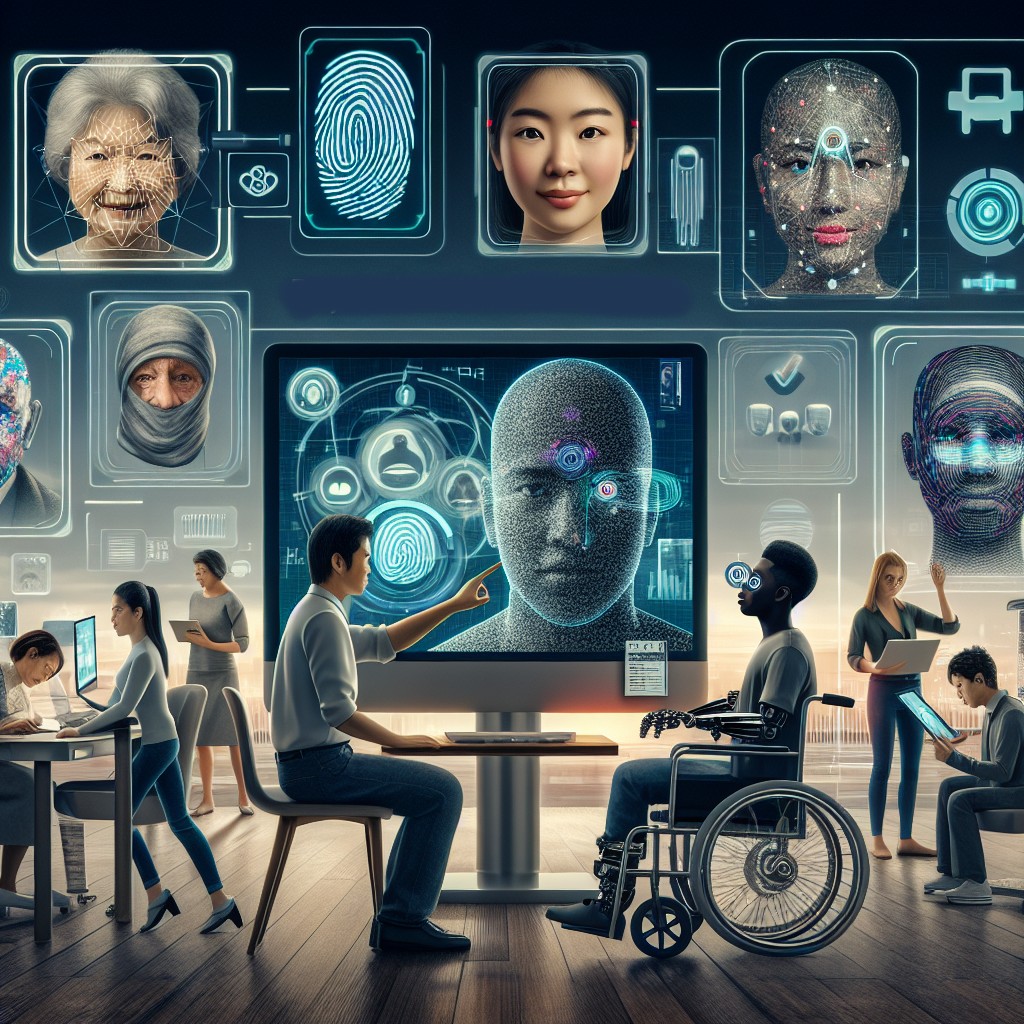
- Physical Access Control: Biometric systems for physical access control in buildings or offices can accommodate wheelchair users who might find traditional access systems inconvenient.
The practical applications of biometric technology are numerous and offer tangible benefits, making technology more adaptive and helpful for individuals with disabilities.
Legal Implications and ADA Compliance
While biometrics offer promising advancements in accessibility, they raise several legal issues, particularly regarding privacy and data security. ADA compliance emphasizes not only making technology accessible but also ensuring it aligns with legal standards on data protection.
Biometric data is inherently sensitive, and unauthorized access or misuse could pose significant risks. Therefore, developing or deploying biometric systems requires strict adherence to legal frameworks, including ADA guidelines, the General Data Protection Regulation (GDPR) in Europe, and the Biometric Information Privacy Act (BIPA) in the United States. These laws require explicit consent for collecting and using biometric data, mandate stringent storage protocols, and allow data to be erased upon user request.
Ensuring ADA compliance means ensuring that biometric systems are not only innovative but also safe and secure for every user. Transparency in how biometric data is gathered, stored, and used is essential, along with providing alternatives if a user is uncomfortable or unable to use biometric methods.
Challenges and Potential Solutions
Despite the benefits, several challenges remain in making biometrics universally accessible under the ADA:
- Bias in Recognition Systems: Current biometric systems often exhibit biases, especially in facial recognition, which may fail to accurately identify individuals with specific facial features or skin tones, leading to exclusion or misidentification.
- Technical Limitations: Not all biometric systems are foolproof. False positives and false negatives can be problematic, causing inconvenience or even security issues.
- Privacy Concerns: The collection and processing of biometric data raise significant privacy concerns. Users must be confident that their data is safe and will not be misused.
- Adaptability: Biometric systems should be adaptable to different types of disabilities. For example, facial recognition should work effectively for users in wheelchairs or with facial differences, and voice recognition should accommodate various speech patterns.
Potential solutions to these challenges include improving algorithmic fairness, deploying redundant security measures, and implementing comprehensive data privacy protections. Technological companies should also engage with disabled communities to create truly inclusive systems.
Future Trends in Biometric Accessibility
The future of biometrics in accessibility holds enormous potential. Continued advancements could lead to more refined, reliable, and inclusive biometric systems. Some emerging trends include:
- Multimodal Biometrics: Combining different biometric systems, such as voice and facial recognition, can compensate for the limitations of any single system.
- AI and Machine Learning: These technologies can improve the accuracy and reliability of biometric systems, making them more adaptable to diverse user needs and reducing biases.
- Wearable Technology: Wearables with biometric sensors offer continuous, unobtrusive authentication, especially aiding individuals with mobility impairments.
- Blockchain for Data Security: Using blockchain technology can provide robust security for biometric data, ensuring tamper-proof storage and transfer.
These trends suggest a future where biometric technology is more personalized, accommodating, and secure, enhancing ease of use for people with disabilities.
Conclusion
Biometrics have transcended their original function as security measures to become integral tools in promoting accessibility. Under the ADA framework, the potential for these technologies to significantly ease the daily lives of people with disabilities is enormous. While current applications illustrate the promise of biometrics, it is essential to navigate the associated challenges carefully. These include biases in recognition systems, technical limitations, and privacy concerns.
Continuing to advance these technologies while keeping ADA guidelines in focus can lead to a more inclusive and accessible future. Engaging with disabled communities and ensuring stringent data protection protocols can help ensure these technologies are safe, secure, and truly inclusive.
As we look toward the future, advancements in AI, multimodal biometrics, and blockchain technology promise even more sophisticated and reliable solutions. By addressing current challenges and embracing emerging trends, biometric technology can lead the way in creating an inclusive digital ecosystem where everyone has equal opportunities to engage and thrive.
Frequently Asked Questions
What is the role of biometrics in enhancing accessibility for individuals with disabilities?
Biometrics is transforming the landscape of accessibility by providing innovative solutions for people with disabilities. Traditional methods of accessing technology, like keyboards and touchscreens, may not be feasible for everyone. Biometrics offers alternative pathways that can accommodate unique needs. For instance, facial recognition can help individuals with limited agility or motor skills to easily unlock devices or access services without needing to physically interact with the technology. Voice recognition allows those with visual impairments to control devices and navigate systems hands-free. Furthermore, biometrics can provide more personalized experiences by dynamically adjusting interfaces based on the user’s needs, which significantly enhances their interaction with technology.
How can biometrics address the needs of people with visual impairments?
For individuals with visual impairments, biometrics offers a wealth of accessible options. Voice recognition is a key biometric tool that allows these individuals to interact with devices using spoken commands, bypassing the need for visual prompts. Retina scans, although more traditionally used for security authentication, have potential in verifying identities without requiring physical typing or handling. In addition to access features, voice recognition systems can continuously improve and learn from the user’s vocal patterns, adjusting feedback and actions to better suit individual preferences, which makes the technology more intuitive and user-friendly over time. These advancements enhance the independence and ease of use for those with visual challenges, integrating seamlessly into both personal and professional environments.
In what ways do biometrics provide security benefits for accessible technology?
Biometrics offer a robust security layer that is particularly beneficial in accessible technology. Unlike passwords or PINs, which can easily be forgotten or hacked, biometric data—such as fingerprints, voice patterns, facial recognition, and retina scans—provides unique identifiers that are inherently part of the individual. This uniqueness makes it nearly impossible for unauthorized users to mimic legitimate access. For people with disabilities, biometrics not only simplifies access but also ensures their accounts and devices remain secure. Such security is crucial for those who may have difficulty with traditional authentication methods. Furthermore, biometric systems can be designed to recognize and take into account the natural variations in physical characteristics that can be amplified by disability, ensuring that security does not impede access.
Are there any challenges related to privacy and ethics in using biometrics for accessibility?
Despite its many benefits, the use of biometrics in accessibility does raise valid concerns regarding privacy and ethics. Collecting and storing sensitive biometric data entails significant responsibility. There is always a risk of data breaches where personal biometric information could be exposed or misused. To mitigate these risks, stringent data protection standards and regulations are crucial. Users must be informed about what data is collected, how it’s stored, and who has access to it. Moreover, ethical considerations include ensuring that biometric systems are equally effective across diverse demographic groups, avoiding biases that could result from the technology being trained predominantly on a limited data set. Transparency and inclusivity in the development and deployment of these technologies are essential for maintaining user trust and ensuring equity in accessibility solutions.
How does the ADA support or influence the adoption of biometrics in technology accessibility?
The Americans with Disabilities Act (ADA) is a pivotal piece of legislation that mandates equal access to technology and services for individuals with disabilities. The ADA’s influence encourages the adoption of emerging technologies, like biometrics, to better serve this population. By advocating for more inclusive design and proactive accessibility strategies, the ADA indirectly promotes advancements in biometric technology as tools that can offer more seamless and effective accessibility solutions. Organizations are motivated to integrate biometrics as part of their compliance strategies to enhance user experience for people with disabilities, ensuring that their products and services are accessible to all, in line with the ADA’s requirements. This legal framework not only pushes for broader adoption of accessible technologies but also prompts continuous innovation in making them more user-centric and inclusive.