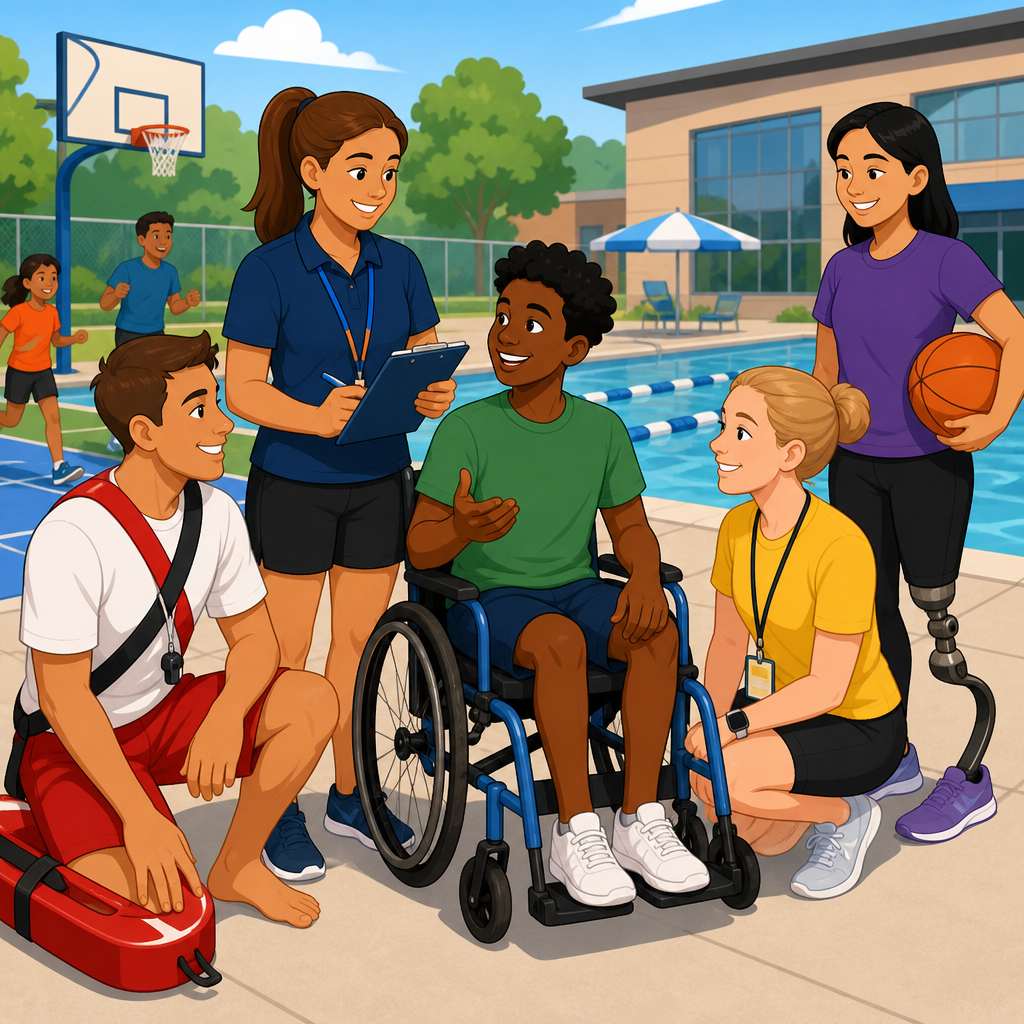
ADA training for lifeguards, coaches, and recreation program staff is the foundation of safe, inclusive, legally compliant public access to pools, gyms, camps, leagues, and community programs. In this context, ADA refers to the Americans with Disabilities Act, the federal civil rights law that prohibits disability-based discrimination by public entities and places of public accommodation. For recreation teams, training means more than reviewing a policy once a year. It requires role-based instruction on communication, reasonable modifications, accessible equipment, service animal rules, integrated participation, emergency response, documentation, and day-to-day judgment calls. I have seen facilities invest heavily in lifts, ramps, and adaptive gear, then undermine those investments because frontline staff did not know when to offer assistance, how to preserve participant dignity, or what modifications were appropriate. That gap creates safety risks, complaints, inconsistent experiences, and preventable legal exposure. A strong training program closes the gap between written compliance and what families actually encounter at the front desk, on the pool deck, in the locker room, on the field, and during trips, competitions, and special events.
This hub article explains how to build training and role-based education for recreation settings where staff responsibilities differ sharply. A lifeguard must understand emergency action plans, aquatic wheelchairs, transfer support boundaries, and how disability affects scanning, rescue, and evacuation. A coach needs practical guidance on modifying drills, tryout procedures, attendance rules, communication methods, and athlete eligibility criteria without fundamentally altering a program. Front desk teams need scripts for registration, companion policies, auxiliary aids, and grievance routing. Camp counselors, volunteer coordinators, and program managers need decision frameworks they can apply quickly and consistently. Training matters because enforcement agencies and courts do not judge accessibility by policy language alone; they look at whether participants with disabilities received equal opportunity to benefit from a service, program, or activity. Effective education therefore combines legal standards, scenario practice, supervisor reinforcement, and documentation. As the hub for training and role-based education within compliance and implementation, this article lays out the core components every organization should address and the linked subtopics every department should build into its operating practice.
Why role-based ADA training matters in recreation settings
Generic disability awareness sessions are not enough for recreation operations because staff make different decisions under time pressure and in physically dynamic environments. A lifeguard’s mistake can affect rescue timing or evacuation safety. A coach’s rigid rule can exclude an athlete from a season. A program supervisor’s poor documentation can make a legitimate modification request look ignored. The ADA requires individualized assessment, effective communication, and reasonable modifications unless doing so would fundamentally alter the activity or create a direct threat that cannot be mitigated. Those standards sound abstract until they are translated into job tasks. For example, if a swimmer with limited mobility requests use of a pool lift before lap swim, staff need to know who is authorized to operate the lift, how to inspect it, what to do if batteries fail, and how to avoid unnecessary delay. If a youth participant uses a speech-generating device, coaches must know that communication access is part of participation, not an optional accommodation.
Role-based training also reduces inconsistency, which is one of the biggest drivers of complaints. Families often report that one employee allowed a support person at no charge while another denied entry, or one coach adjusted a drill while another said “we don’t do accommodations.” Inconsistent answers signal weak implementation. Recreation providers should therefore teach a shared baseline to everyone, then add role-specific modules. The baseline should cover disability etiquette, person-first and identity-first language preferences, confidentiality, service animal rules, reasonable modification concepts, and the internal process for handling requests. Role modules should then address supervision duties, emergency procedures, use of adaptive equipment, and communication expectations specific to each position. When organizations map training to real tasks, staff confidence rises and defensiveness drops, because employees can see the difference between a lawful modification, a safety control, and a fundamental alteration.
Core curriculum every recreation employee should receive
Every employee, seasonal worker, and volunteer should complete a core curriculum before interacting with participants. In my experience, the most effective core program starts with a simple operating principle: people with disabilities must have an equal opportunity to participate in the most integrated setting appropriate. From there, training should define key terms clearly. A reasonable modification is a change in rules, policies, or practices that allows access unless the change would fundamentally alter the nature of the program. Effective communication means providing auxiliary aids and services when needed so communication with a person with a disability is as effective as communication with others. A direct threat determination must be based on actual risk, not assumptions or stereotypes, and should consider whether reasonable modifications can mitigate the risk.
Core training should also explain common recreation scenarios. Staff need to know when they may ask limited questions about a service animal, why they cannot require unnecessary medical documentation from every participant with a disability, and how to respond when a request is not immediately answerable. They should be taught to say, “Let me connect you with the staff member who handles modification requests so we can evaluate this promptly,” rather than improvising a denial. Communication access deserves special emphasis. Recreation settings rely heavily on spoken announcements, whistles, posted signs, registration systems, and waiver forms. Staff should know basic methods for communicating with people who are deaf, hard of hearing, blind, low vision, autistic, or who have intellectual or speech disabilities. That may include using plain language, reading forms aloud when appropriate, providing visual cues, facing the participant while speaking, and understanding when interpreters, captioning, or accessible digital documents are necessary.
Training priorities by role: lifeguards, coaches, and program staff
After the core curriculum, each role needs operational training linked to routine duties. Lifeguards should receive instruction on accessible aquatic entry, lift operation, battery checks, transfer space clearance, and coordination with aquatic managers when equipment fails. They also need scenario-based practice on assisting swimmers with mobility disabilities without exceeding their scope or creating unsafe manual transfer expectations. Coaches need practical examples of how to modify drills, equipment, cueing, timing, and team procedures while preserving legitimate performance standards. Recreation program staff, including front desk teams and supervisors, should learn registration accessibility, companion pass rules, complaint escalation, and how to document modification requests and decisions in a consistent format.
| Role | Critical training topics | Real-world example |
|---|---|---|
| Lifeguards | Pool lift use, aquatic wheelchairs, evacuation, direct threat analysis, emergency communication | A swimmer arrives for open swim using a power chair; staff clear transfer space, confirm lift readiness, and document a battery fault before the next shift |
| Coaches | Rule modifications, integrated participation, visual instruction, behavior support, eligibility criteria | A basketball coach replaces whistle-only starts with visual and verbal cues so a deaf athlete can join drills without delay |
| Program staff | Registration access, auxiliary aids, companion policies, grievance routing, confidentiality | A registrar provides an accessible online form alternative and forwards a request for a support person ticket waiver to the ADA coordinator |
One lesson I emphasize in training is that the same disability may affect different roles differently. For a lifeguard, an autism-related elopement risk changes supervision planning near water. For a coach, it may affect transition routines between drills. For front desk staff, it may affect how check-in instructions are delivered in a crowded lobby. This is why role-based education outperforms one-size-fits-all sessions. It creates practical competence where incidents actually happen.
Aquatics and lifeguard instruction: safety, access, and emergency response
Aquatic environments present some of the highest-risk access issues because accessibility and emergency action intersect in seconds, not hours. Lifeguard ADA training should include the legal requirement to maintain accessible features in operable working condition, which directly affects pool lifts, sloped entries, accessible routes, and locker room access. Staff should know the manufacturer instructions for lift operation, daily readiness checks, weight capacity limits, charging schedules, and reporting protocols. They should also understand the difference between offering assistance and imposing it. Some swimmers will transfer independently; others may need setup assistance or orientation to the controls. Staff should ask what help is wanted instead of assuming incapacity.
Emergency planning is equally important. If an alarm sounds, how will staff evacuate a patron using a mobility device from a wet deck? If a deaf swimmer is in the water, what visual signal supplements the whistle? If a participant with a cognitive disability becomes distressed during a thunder closure, who communicates, where do they wait, and how is reunification handled? The best aquatic programs drill these scenarios rather than treating them as theoretical. National guidance from recognized bodies such as the ADA standards framework and aquatic risk management practices should be translated into site-specific procedures. Training should also cover boundaries: lifeguards are not personal care attendants, and facilities should define when support persons or attendants remain necessary for certain participants while still avoiding blanket exclusionary rules. Clear, practiced procedures protect both dignity and safety.
Coaching and athletics: modifications without changing the sport’s nature
Coaches often worry that modifications will undermine fairness or competitive integrity. Good training addresses that concern directly. The legal question is not whether every requested change must be granted; it is whether the organization can provide equal opportunity through reasonable modifications that do not fundamentally alter the essential nature of the activity. That analysis requires coaches to identify what is truly essential. In a swim lesson, mastering water safety skills may be essential, while the order of drills, cueing method, or rest interval may not be. In a community soccer clinic, participation may be the primary objective, making visual demonstrations, peer buddies, or adapted balls straightforward modifications. In a sanctioned competition, timing rules or lane assignments may be more tightly constrained, but communication access and registration flexibility may still be required.
Training should help coaches separate performance standards from administrative habits. I have seen athletes excluded because a coach treated one check-in procedure or one conditioning format as nonnegotiable when the actual program goal allowed alternatives. Coaches should learn to document the request, the purpose of the rule at issue, possible alternatives, safety considerations, and the final decision. They also need instruction on respectful communication with parents and athletes, especially in youth sports where emotions run high. Practical examples matter: using color-contrast cones for low-vision athletes, replacing spoken-only strategy talks with whiteboard diagrams, permitting extra transition time between stations, or allowing a support person in a noncompetitive camp setting. Training that uses real drills and game situations gives coaches a reliable framework instead of leaving them to improvise under pressure.
Implementation, documentation, and continuous improvement
Training succeeds only when it is embedded in operations. That means onboarding modules for new hires, refreshers before each season, supervisor observations, and written records showing who was trained, on what topics, and when. Documentation should extend to modification requests, equipment outages, incident reviews, and corrective actions. If a pool lift is down for charging too often, that is not just a maintenance issue; it is a training and scheduling issue. If coaches keep escalating the same communication questions, the organization likely needs a stronger playbook and better job aids.
Program leaders should measure outcomes, not just attendance at training sessions. Useful indicators include complaint patterns, response times for modification requests, accessibility equipment readiness rates, and staff confidence scores from post-training assessments. Mystery shopper exercises and after-action reviews are especially effective. So are brief pocket guides covering service animal questions, communication tips, and escalation contacts. Because this page is the hub for training and role-based education, it should connect readers to deeper resources on aquatics training, coach education, front desk protocols, camp inclusion, emergency planning, documentation standards, and refresher cadence. The central benefit is consistency: participants know what to expect, staff know how to respond, and leadership can show that compliance is actively implemented rather than passively assumed. Review your current recreation training by role, identify the highest-risk decision points, and build a practical ADA education plan that staff can use on the next shift.
Frequently Asked Questions
What does ADA training for lifeguards, coaches, and recreation program staff actually cover?
ADA training for recreation staff covers the practical responsibilities that come with serving people with disabilities in public and community-based programs. At its core, the training explains how the Americans with Disabilities Act applies to pools, fitness centers, sports leagues, camps, locker rooms, recreation classes, and other shared spaces. Staff members learn that ADA compliance is not limited to ramps, lifts, or signage. It also includes policies, communication practices, participant interactions, emergency procedures, registration processes, and the day-to-day decisions employees make while supervising the public.
For lifeguards, training usually focuses on accessible aquatic operations, respectful communication with swimmers with disabilities, safe use of pool lifts and transfer walls, emergency response considerations, and avoiding discriminatory rules that unnecessarily exclude participants. For coaches, the emphasis often includes inclusive team participation, reasonable modifications to practices or drills, effective communication with athletes and families, and understanding when a rule is essential to the activity versus when it can be adjusted. For recreation program staff, training commonly covers intake and registration procedures, accommodations, auxiliary aids and services, accessible event planning, complaint handling, and how to respond when a participant requests support.
Strong ADA training is role-based, scenario-driven, and recurring. It should help staff identify barriers before they become problems and give them clear guidance on what to do in real situations. Instead of simply telling employees to “follow the law,” effective training shows them how to welcome participants, evaluate accommodation requests, document concerns appropriately, escalate issues when needed, and maintain safety without making assumptions about disability. That kind of instruction builds confidence, reduces legal risk, and creates a more inclusive recreation environment for everyone.
Why is ADA training especially important in pools, gyms, camps, and sports programs?
Recreation settings present unique challenges because they combine public access, physical activity, safety oversight, and fast-moving staff decisions. In a pool, for example, lifeguards may need to balance emergency readiness with access rights, all while interacting with swimmers of different ages and abilities. In gyms and fitness centers, staff may be asked about accessible equipment, class participation, service animals, locker room access, or communication support. Camps and youth programs add another layer because staff are supervising children, coordinating transportation, managing medication or behavior support issues, and communicating with families about inclusion. Sports programs often involve eligibility rules, tryouts, team procedures, and competition formats that can unintentionally exclude athletes with disabilities if staff are not properly trained.
That is why ADA training matters so much in these environments. Employees are often making judgment calls in real time, and without clear training, they may rely on assumptions, inconsistent practices, or outdated policies. A staff member may incorrectly deny an accommodation request, apply a rule unevenly, fail to provide effective communication, or overlook an accessibility barrier that makes participation difficult or impossible. Even well-meaning employees can create legal and safety problems if they do not understand their responsibilities.
Training helps organizations move from reactive problem-solving to proactive inclusion. It equips staff to recognize that disability access is part of core program operations, not a special exception. It also protects the organization by promoting consistency, reducing complaints, improving participant trust, and supporting lawful decision-making. In short, ADA training is especially important in recreation because these settings are public-facing, dynamic, and highly dependent on staff conduct.
How often should recreation staff receive ADA training?
ADA training should not be treated as a once-a-year checkbox. While annual refreshers are a useful baseline, most recreation organizations benefit from a broader training structure that includes onboarding, periodic updates, and role-specific reinforcement throughout the year. New hires should receive ADA training before or very soon after beginning work so they understand expectations from the start. Seasonal employees, camp counselors, part-time attendants, volunteer coaches, and substitute instructors should not be overlooked simply because they are temporary or limited-hour staff. They are often the people interacting directly with participants every day.
Ongoing training is important because recreation programs change constantly. Facilities add equipment, revise policies, launch new leagues, update emergency plans, and serve participants with a wide range of needs. Staff also face new scenarios that may not have been covered in a basic orientation. Short refresher sessions can address recurring issues such as accommodation requests, pool access procedures, communication with participants who have sensory or cognitive disabilities, and proper responses to complaints. Supervisors and managers usually need additional instruction on reviewing requests, documenting decisions, coordinating with legal or risk personnel, and ensuring policies are applied consistently.
The most effective approach is layered. That means providing foundational ADA education for all staff, advanced instruction for supervisors, and job-specific practice for lifeguards, coaches, instructors, and front-desk personnel. Tabletop exercises, scenario discussions, and incident reviews can make the training more practical and memorable. When training is repeated, updated, and tied to actual job duties, employees are more likely to respond correctly, respectfully, and consistently in real situations.
What is the difference between reasonable modifications and safety requirements in recreation programs?
A reasonable modification is a change to a policy, practice, or procedure that allows a person with a disability to participate more fully, as long as the change does not fundamentally alter the nature of the program or create a legitimate safety issue that cannot be addressed appropriately. In recreation settings, this might include adjusting how instructions are delivered, allowing a support person in certain circumstances, modifying a drill format, changing a check-in process, or making scheduling and participation procedures more accessible. The goal is to provide equal opportunity, not to lower standards arbitrarily or eliminate essential elements of a program.
Safety requirements, by contrast, are rules that are genuinely necessary for safe operation. The key is that they must be based on actual risks and objective considerations, not on stereotypes, discomfort, or speculation about disability. For example, a pool or sports program may enforce emergency procedures, supervision rules, and conduct standards that apply to all participants. But staff cannot deny access simply because they believe someone with a disability “might” be unsafe without evaluating the individual situation. A lawful approach considers whether the person can participate safely with reasonable modifications, support, or equipment rather than excluding them automatically.
This is one of the most important areas of ADA training because it requires judgment. Staff need to know how to distinguish between an essential rule and a habit or preference that can be changed. They also need to understand when to involve a supervisor instead of making a quick decision at the front line. Good training teaches employees to assess requests carefully, focus on facts, avoid assumptions, and document decisions clearly. That protects participant rights while preserving genuine safety standards, which is exactly the balance recreation programs need.
How can an organization tell whether its ADA training program is actually effective?
An effective ADA training program changes staff behavior, improves consistency, and makes programs more accessible in practice, not just on paper. One sign of success is that employees can explain their responsibilities in clear, practical terms and apply them during everyday interactions. Lifeguards should know how to respond to access questions at the pool. Coaches should understand how to handle modification requests without excluding athletes unnecessarily. Front-desk staff should be able to communicate respectfully, direct concerns appropriately, and avoid creating barriers during registration or check-in. If employees still seem unsure, inconsistent, or overly reliant on guesswork, the training likely needs improvement.
Organizations should also look at operational indicators. These can include complaint trends, participant feedback, incident reports, accommodation response times, and observations from supervisors. If the same problems keep surfacing, such as staff denying requests improperly, failing to provide effective communication, or mishandling accessibility equipment, that suggests the training is either too generic, too infrequent, or not tied closely enough to actual job duties. Reviewing real situations after they happen can be especially useful because it reveals where staff need more guidance.
Another measure of effectiveness is whether the training is integrated into broader program management. Strong organizations align ADA training with policies, emergency planning, customer service standards, facility operations, and leadership expectations. They update materials when laws, procedures, or facilities change. They train supervisors to coach employees in real time. They document attendance, evaluate comprehension, and refine content based on recurring issues. In other words, effective ADA training is not a one-time presentation. It is part of an ongoing inclusion and risk-management strategy that supports safe, lawful, and welcoming recreation access for all participants.