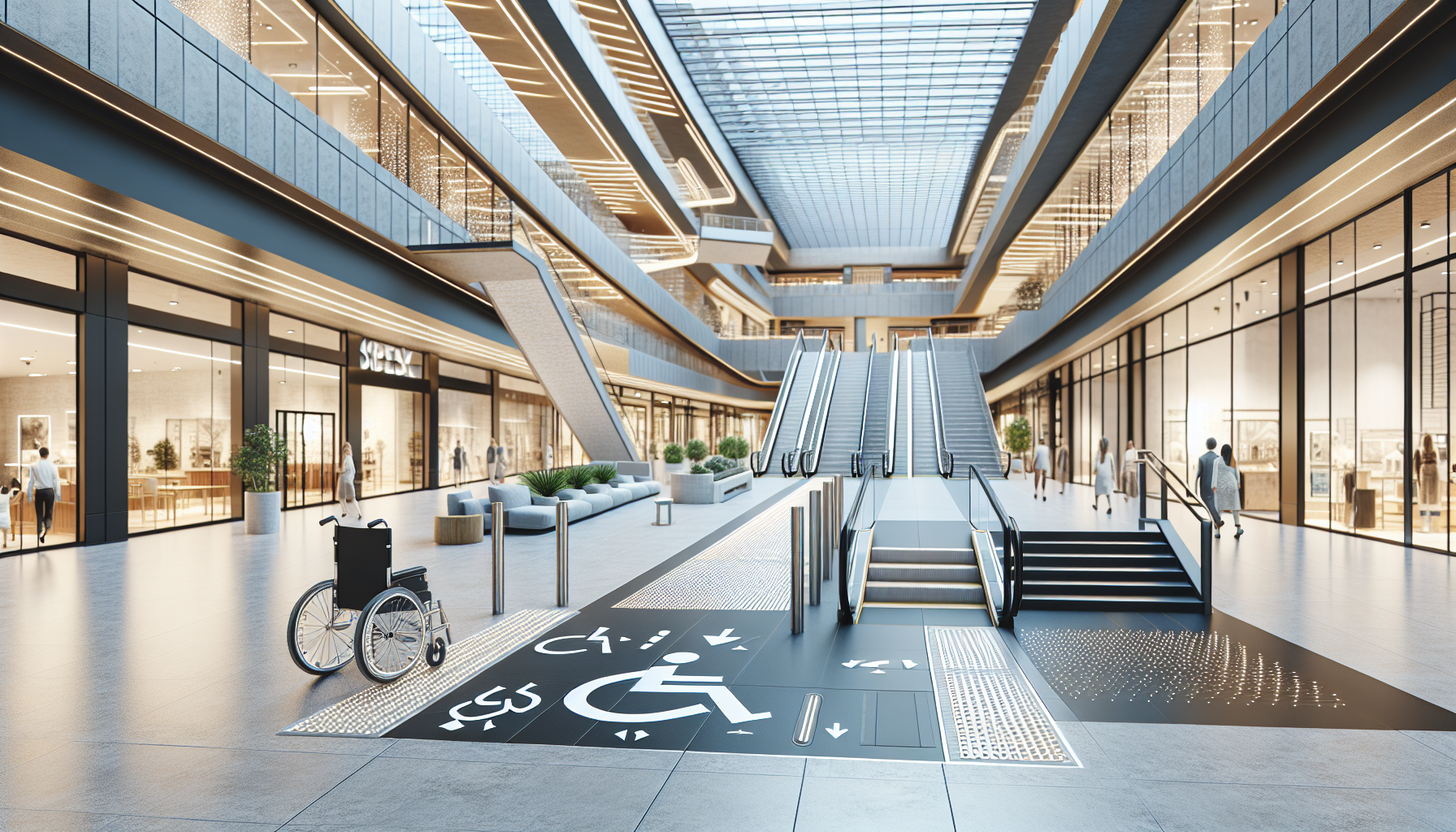
ADA compliance in complex public spaces is not a box-checking exercise; in malls and large retail centers, it is an operational discipline that shapes who can enter, navigate, shop, work, and participate safely. The Americans with Disabilities Act sets the baseline, but “compliance” in this context means aligning physical design, policies, communication methods, digital touchpoints, and day-to-day management with the rights of people with disabilities. For owners, developers, property managers, tenant coordinators, and facility teams, this matters because a retail center functions like a small city: multiple entrances, shared restrooms, parking fields, food courts, entertainment uses, temporary kiosks, seasonal displays, and independent tenants all affect accessibility. I have worked through ADA reviews on multi-tenant sites, and the pattern is consistent: the biggest risks are rarely dramatic design failures. They are cumulative barriers, such as inaccessible routes created by merchandising, inconsistent parking striping, unclear maintenance responsibility, or renovation work that overlooks common-area obligations.
Complex public spaces are governed by overlapping standards and practical realities. In the United States, the 2010 ADA Standards for Accessible Design are the core technical benchmark for public accommodations and commercial facilities, while the Department of Justice enforces Title III obligations. Depending on the site, teams may also need to account for the Fair Housing Act in mixed-use developments, state building codes, local accessibility statutes, and referenced technical standards such as ICC A117.1. “Accessible route,” “program access,” “readily achievable barrier removal,” “effective communication,” and “reasonable modification” are not abstract legal phrases; they determine whether a parent using a wheelchair can move from parking to a tenant space, whether a deaf shopper can receive emergency information, or whether a service animal policy is handled lawfully at security desks. A mall hub page on essential ADA resources should therefore do two jobs at once: explain the rules and point decision-makers toward the tools, checklists, audits, consultants, and internal processes that keep large retail environments usable over time.
The scale of malls and large retail centers makes accessibility resource planning essential. A neighborhood strip center may have one route and a handful of tenant suites. A super-regional mall may have anchor stores, outparcels, structured parking, transit connections, elevators, family restrooms, play areas, movie theaters, and event spaces, each introducing different compliance questions. The operational benefit of getting this right is also significant. Better wayfinding reduces staff interruptions. Reliable accessible parking management lowers complaints. Proper door hardware and circulation clearances improve movement for delivery staff, seniors, and parents with strollers, not only disabled visitors. When accessibility is treated as part of asset management, centers reduce legal exposure, support tenants, and create a better customer experience. This hub article maps the essential ADA resources every mall and large retail center should use, from technical standards and surveys to training, procurement, digital accessibility, and ongoing maintenance.
Core ADA standards and reference materials every retail center should use
The first essential resource is the primary source material itself. Every property and facility team should maintain direct access to the ADA.gov guidance library and the 2010 ADA Standards for Accessible Design, not just summaries from vendors. For mixed-use or newly constructed projects, teams should cross-reference adopted building code provisions and the currently enforced accessibility standard in their jurisdiction, often through the International Building Code and ICC A117.1. In practice, I recommend building an internal reference set that includes parking and exterior route requirements, door and maneuvering clearance diagrams, restroom layouts, elevator provisions, signage rules, sales counter requirements, and assembly-area guidance for food courts, cinemas, and event zones. Retail centers also benefit from Department of Justice settlement agreements and technical assistance documents because they show how regulators interpret recurring issues such as accessible seating distribution, service animal policies, and effective communication.
For a large center, reference materials need to be organized by responsibility. Development teams need design criteria. Property management needs operational guidance. Security, guest services, and janitorial vendors need policy-level instructions. Tenant coordination teams need fit-out rules. The most useful resource format is a property accessibility manual that translates regulatory language into site-specific standards. For example, instead of simply citing the required number of accessible parking spaces, the manual should identify which party restripes after sealcoating, who verifies van aisle markings, how often slopes are checked, and what happens when holiday traffic plans reduce compliant spaces. The law provides the obligation; the internal resource provides execution. That distinction is why some centers with modern construction still receive complaints: they have standards on paper, but not a practical operating document.
Accessibility surveys, audits, and barrier-removal planning
The second essential resource is a current accessibility survey performed by a qualified specialist. In complex retail environments, assumptions are expensive. A center may have been built under one code, altered under another, and maintained inconsistently for years. A professional survey identifies conditions in parking lots, curb ramps, site circulation, entrances, restrooms, elevators, food service areas, common seating, children’s areas, emergency egress components, and tenant interface points. The best surveys include measurements, photographs, cited standards, severity rankings, and remediation priorities. They also distinguish between common-area obligations and tenant responsibilities. That matters because landlords often control site arrival points, restrooms, and shared amenities, while tenants control interiors, counters, fitting rooms, and checkout paths. Without that boundary clearly mapped, fixes get delayed.
Barrier-removal planning should follow the survey immediately. Under Title III, existing facilities must remove barriers when it is readily achievable, meaning easily accomplishable without much difficulty or expense, and that analysis depends on the entity’s resources and the nature of the fix. In real portfolios, the smartest approach is to rank projects by user impact and legal significance. Re-striping compliant accessible parking, adjusting door closers, lowering protruding objects, or adding proper signage are often low-cost, high-impact actions. Reconstructing noncompliant restrooms, replacing steep curb ramps, or regrading routes may require capital planning. A written barrier-removal schedule is an essential ADA resource because it proves the center is managing accessibility deliberately rather than reactively.
| Resource | What it solves | Typical owner | Review cycle |
|---|---|---|---|
| ADA standards library | Defines technical requirements for design and operations | Legal, development, facilities | Annual |
| Accessibility survey | Finds physical barriers and assigns remediation priorities | Facilities, risk management | Every 1–3 years |
| Barrier-removal plan | Sequences corrective work by impact and cost | Asset management | Quarterly updates |
| Tenant design criteria | Applies accessibility rules during fit-out and remodels | Leasing, construction | Each project |
| Staff training program | Prevents policy and service failures | Property management | Semiannual |
| Digital accessibility review | Improves websites, directories, and kiosk usability | Marketing, IT | Annual plus releases |
Design and operational priorities in malls and large retail centers
What areas fail most often in large retail centers? Parking and routes are the top category. Accessible spaces may exist in sufficient numbers yet still be unusable because slopes exceed limits, access aisles are blocked by cart corrals, signage is missing, or curb ramps direct users into traffic. I have also seen centers lose compliance after maintenance work: sealcoating crews repaint stalls but omit van designations, or landscaping narrows clear width along a primary route. Entrance systems are another recurring issue. Heavy manual doors, inadequate maneuvering clearance, malfunctioning automatic operators, and floor mats thicker than allowed can make a compliant entrance inaccessible in practice. Once inside, temporary merchandising displays, promotional vehicles, queue stanchions, and pop-up kiosks often reduce route widths below required minimums. These are not design-intent problems; they are operations problems.
Restrooms and service areas require equal attention. Shared mall restrooms may technically meet fixture requirements but still fail if grab bars loosen, dispensers are placed out of reach, paper waste blocks transfer space, or family restrooms become storage rooms. Customer service desks and food court counters need accessible portions with usable approach space. Seating must include dispersed accessible locations, not a token table in one corner. In entertainment-heavy centers, assembly seating, companion seating, assistive listening systems, and clear lines of sight become critical. For children’s play areas and event spaces, surface changes and perimeter barriers can affect access. Essential ADA resources here include preventive maintenance checklists, post-event reset procedures, and fit-out review forms that catch operational changes before they become barriers.
Tenant coordination, lease controls, and construction review
Because malls are multi-tenant properties, ADA performance depends heavily on lease administration and construction control. A common mistake is assuming that if a tenant builds its own interior, the landlord has no accessibility role. In reality, common-area design, path of travel connections, demising conditions, and approval authority all affect the outcome. Essential ADA resources for this part of the operation include tenant design criteria manuals, accessibility review checklists for plan submissions, and closeout inspection protocols before opening. These tools should address storefront thresholds, maneuvering clearances at entry doors, fitting rooms, accessible sales counters, point-of-sale queues, dining areas, and alarms or communication features where required. Anchor stores and junior anchors should not be treated as exceptions; their site interfaces often create the most visible access issues.
Lease language also matters. Strong lease provisions require tenants to comply with applicable accessibility laws, submit plans for review, correct deficiencies they create, and cooperate on route continuity where landlord and tenant work overlap. During remodels, teams should evaluate whether alterations trigger additional obligations, including accessible path of travel improvements under building codes. Construction review should not end at permit approval. Field conditions change. Millwork dimensions shift. Hardware substitutions occur. An accessibility punch list before turnover is one of the most cost-effective resources a center can adopt because correcting counter heights or restroom accessories before opening is far cheaper than rebuilding after a complaint or demand letter.
Digital access, communication, and customer service resources
Accessibility in malls is no longer limited to bricks and mortar. Shoppers rely on websites, mobile directories, parking guidance tools, digital coupons, event registration forms, and touchscreen kiosks. If those systems are inaccessible, the center creates a barrier before the visitor arrives. The essential resource here is a digital accessibility program aligned with recognized web accessibility standards and supported by regular testing. Property websites should allow keyboard navigation, meaningful alt text, adequate color contrast, clear heading structure, and accessible forms. If the center offers maps, they should be available in accessible formats and backed by staff assistance through phone, chat, or guest services. Kiosks should be positioned on accessible routes, installed at usable heights, and supplemented with nonvisual or staff-supported options.
Effective communication also includes policies and training. Staff should know how to interact with guests who are blind or have low vision, communicate with deaf or hard-of-hearing visitors, respond to requests for assistance, and handle service animals appropriately. Emergency messaging is especially important in large public spaces. Visual alarms, public address systems, captioned video displays, and coordinated emergency procedures all matter during weather events, security incidents, or evacuations. These are essential ADA resources because compliance failures often arise from people and process gaps, not only physical barriers. A center with perfect striping and door hardware can still fail disabled visitors if guest services staff deny lawful accommodations or cannot provide information in accessible ways.
Training, maintenance, and governance for long-term compliance
The final group of essential ADA resources turns compliance into a sustained management system. Training should be role-specific. Maintenance teams need to understand slopes, door force, signage placement, restroom clearances, and how seemingly minor repairs can alter compliance. Security and guest services need scripts and escalation paths for accommodation requests. Leasing and construction managers need to know what to flag in plans and field walks. Janitorial teams should understand that stored supplies cannot intrude into turning spaces or block grab bars. Vendors, from snow-removal contractors to event producers, should receive accessibility requirements in writing. In northern climates, for example, snow piled in accessible spaces or at curb ramps is one of the most common seasonal failures, and it is entirely preventable with proper contract language and inspections.
Governance ties everything together. The most successful retail centers designate an accessibility lead, maintain a corrective action log, document complaints and resolutions, and review conditions after renovations, incidents, and major merchandising resets. They track recurring issues by location and contractor, not just by date. They also budget for accessibility proactively rather than waiting for claims. The practical result is better service and lower risk. For a resources-and-support hub, the core takeaway is clear: malls and large retail centers need authoritative standards, expert audits, written operating procedures, tenant controls, digital accessibility tools, and ongoing staff training. Start by gathering those resources into one managed program, assign ownership, and review your center before the next complaint forces the timeline.
Frequently Asked Questions
What does ADA compliance actually mean in malls and large retail centers?
In malls and large retail centers, ADA compliance means much more than installing a ramp at the front door or reserving a few accessible parking spaces. It is a comprehensive obligation to make the property usable, understandable, and safely navigable for people with disabilities across the full customer and employee experience. That includes arrival routes from parking and transit stops, entrances, interior circulation, elevators, restrooms, food courts, service counters, fitting rooms, entertainment areas, emergency procedures, leasing practices, and digital tools such as directories, websites, and mobile apps. Because these environments are large, multi-tenant, and constantly changing, compliance must be treated as an ongoing operational system rather than a one-time construction task.
The ADA establishes baseline civil rights requirements, but in practice, compliance in a complex retail environment means aligning physical design, communication methods, policies, and daily management decisions with accessibility principles. A shopper who can enter the building but cannot locate an elevator, read a directory, hear an announcement, access a point-of-sale counter, or use an online booking tool has not been given meaningful access. The same is true for employees, vendors, and job applicants with disabilities. Effective compliance therefore requires coordination between owners, property managers, tenants, architects, contractors, security teams, janitorial staff, IT teams, and marketing departments. The goal is not simply to avoid violations; it is to ensure people with disabilities can participate in the retail environment with dignity, independence, and safety.
What are the most common ADA risk areas in large shopping centers and malls?
Some of the most common ADA risk areas in large retail centers are the ones people overlook because they are tied to operations instead of headline design features. Parking is a frequent issue, including incorrect striping, improper access aisles, broken curb ramps, poor maintenance, and inaccessible routes from parking to entrances. Inside the property, recurring problems include heavy doors, obstructed corridors, inaccessible tenant build-outs, inadequate signage, noncompliant service counters, inaccessible restrooms, poor elevator reliability, and seating layouts that do not accommodate wheelchair users or companion seating. Temporary displays, seasonal kiosks, promotional installations, cleaning equipment, and queue stanchions can also create barriers even in otherwise compliant spaces.
Communication access is another major risk area. If emergency messages are only audible, if directories are visually confusing, if customer service staff are not trained on reasonable modifications, or if a website or mobile app prevents users from locating stores, reserving services, or accessing promotions, the center may be creating accessibility barriers. In malls, wayfinding is especially important because these properties are often expansive and complex. A technically compliant entrance does not solve the problem if a visitor cannot independently identify the correct route to a store, restroom, food court, or exit. Risk also increases when responsibilities between landlord and tenant are unclear. Shared spaces may be managed by the property, while interior tenant conditions are controlled by individual retailers, but from a user perspective the experience is seamless. That is why successful ADA management depends on audits, maintenance protocols, tenant coordination, and clear accountability across the entire site.
Who is responsible for ADA compliance in a mall: the property owner, the manager, or the tenants?
In a mall or large retail center, ADA responsibility is often shared, and that is exactly why accessibility can become complicated if roles are not defined early and enforced consistently. Property owners and developers are typically responsible for the design, construction, and maintenance of common areas such as parking lots, sidewalks, entrances, concourses, elevators, restrooms in shared areas, directories, and other site-wide amenities. Property managers usually carry the operational responsibility for keeping those features usable day to day, which includes maintenance, inspections, vendor oversight, incident response, and staff training. Tenants, meanwhile, are generally responsible for accessibility within their leased premises, including sales floors, service counters, fitting rooms, checkout areas, and any policies that affect customer access.
That said, legal responsibility cannot always be avoided through lease language alone. The ADA looks at actual control and access, and both landlords and tenants may face exposure when barriers exist. For example, if a tenant installs displays that block an accessible route, the tenant may be directly responsible, but if management knows this is happening across the center and does nothing, broader risk may develop. Smart operators address this by building ADA expectations into lease documents, tenant design criteria, construction review procedures, fit-out approvals, operating rules, and renewal conversations. They also perform routine inspections of both common areas and recurring tenant interface points. In large retail environments, accessibility works best when everyone understands that compliance is a shared operational commitment, not a handoff between siloed parties.
How can mall owners and property managers maintain ADA compliance over time, not just at opening?
Maintaining ADA compliance over time requires a structured program that treats accessibility as part of facility management, risk management, and customer experience. A property may open in good condition and still drift out of compliance through wear, deferred maintenance, renovations, tenant turnover, seasonal activations, or simple neglect. For that reason, owners and managers should conduct regular accessibility reviews of common areas and high-risk touchpoints, document findings, prioritize corrections, and assign responsibility for follow-through. This should include parking surfaces and signage, curb ramps, entry hardware, power door operation, elevator performance, restroom fixtures, route clearances, seating layouts, service desks, wayfinding systems, and emergency communication tools.
Training is just as important as inspections. Security personnel, guest services teams, janitorial crews, leasing teams, event staff, and maintenance technicians all affect accessibility in daily practice. Employees should understand how to keep accessible routes clear, respond to accommodation requests, communicate respectfully, and identify conditions that require immediate repair. Managers should also review renovation plans, pop-up installations, and temporary merchandising with accessibility in mind before they are deployed. Digital accessibility must be part of this ongoing effort as well, especially when the center relies on websites, interactive kiosks, online directories, QR-code menus, appointment systems, or loyalty apps. The strongest compliance programs combine physical audits, policy review, tenant engagement, staff training, preventive maintenance, and periodic legal or specialist evaluation. That approach helps prevent barriers before they become complaints, injuries, or costly disputes.
Why is ADA compliance a business and operational priority for large retail centers, beyond legal requirements?
ADA compliance is a business and operational priority because accessibility directly affects who can visit the property, how long they stay, how comfortably they navigate the site, and whether they return. Malls and large retail centers serve broad, diverse communities that include people with mobility, sensory, cognitive, and communication disabilities, along with family members, caregivers, and companions who often make decisions together about where to shop, dine, and spend leisure time. When a property is accessible, it expands customer reach, improves visitor confidence, reduces friction, and strengthens brand reputation. When accessibility is neglected, the consequences can include lost foot traffic, negative public feedback, tenant dissatisfaction, safety incidents, and expensive remediation under pressure.
There is also a strong operational case for treating accessibility as part of overall asset performance. Clear routes, reliable elevators, understandable signage, inclusive communication, and well-managed service policies benefit many users, including older adults, parents with strollers, delivery personnel, and people with temporary injuries. In addition, accessible environments help tenants operate more effectively and support workforce participation by employees with disabilities across retail, food service, maintenance, administration, and security roles. For owners, developers, and property managers, the most successful mindset is to view ADA compliance as a core element of quality, resilience, and professionalism. It is not just about meeting a minimum standard. It is about ensuring the center works for real people in real conditions, every day.


