The Americans with Disabilities Act (ADA), enacted in 1990, represents a landmark in civil rights legislation designed to prevent discrimination against individuals with disabilities. Given our society’s increased focus on inclusivity and equal access to facilities and services, understanding ADA compliance is more crucial than ever. Particularly in banking and finance, where interactions with institutions are constant and personal, the ADA ensures that people with disabilities have the same rights and accessibility as those without. However, compliance requires thoughtful implementation and ongoing effort to meet the diverse needs of individuals.
This article will provide a comprehensive overview of ADA compliance within the banking and finance sectors, detailing the significance of the legislation, the specific requirements for financial institutions, challenges faced, and the best practices that can be adopted. For institutions aiming to be both legally compliant and socially responsible, it’s vital to go beyond mere checkbox adherence to truly embrace the spirit of the ADA.
The Significance of the ADA in Banking
The ADA is built on the pillars of fairness, equal opportunity, and accessibility. For financial institutions, ADA compliance isn’t just about following the law—it’s about fostering an inclusive environment that promotes independence for all customers. Since people with disabilities form a significant portion of the population, these institutions must understand their needs and adapt their services accordingly.
Implementing ADA compliance can improve overall customer satisfaction and foster a positive public image, which ultimately translates to brand loyalty and customer retention. Moreover, the commitment to accessibility can yield financial benefits, including opening new streams of revenue from previously underserved demographics. As smartphones and digital services become more ingrained in banking, ensuring these are accessible becomes not just a legal requirement but a competitive differentiator.
Key ADA Requirements for Financial Institutions
ADA compliance involves multiple layers, spanning physical premises, digital services, and customer interaction. Here are some critical areas financial institutions must address:
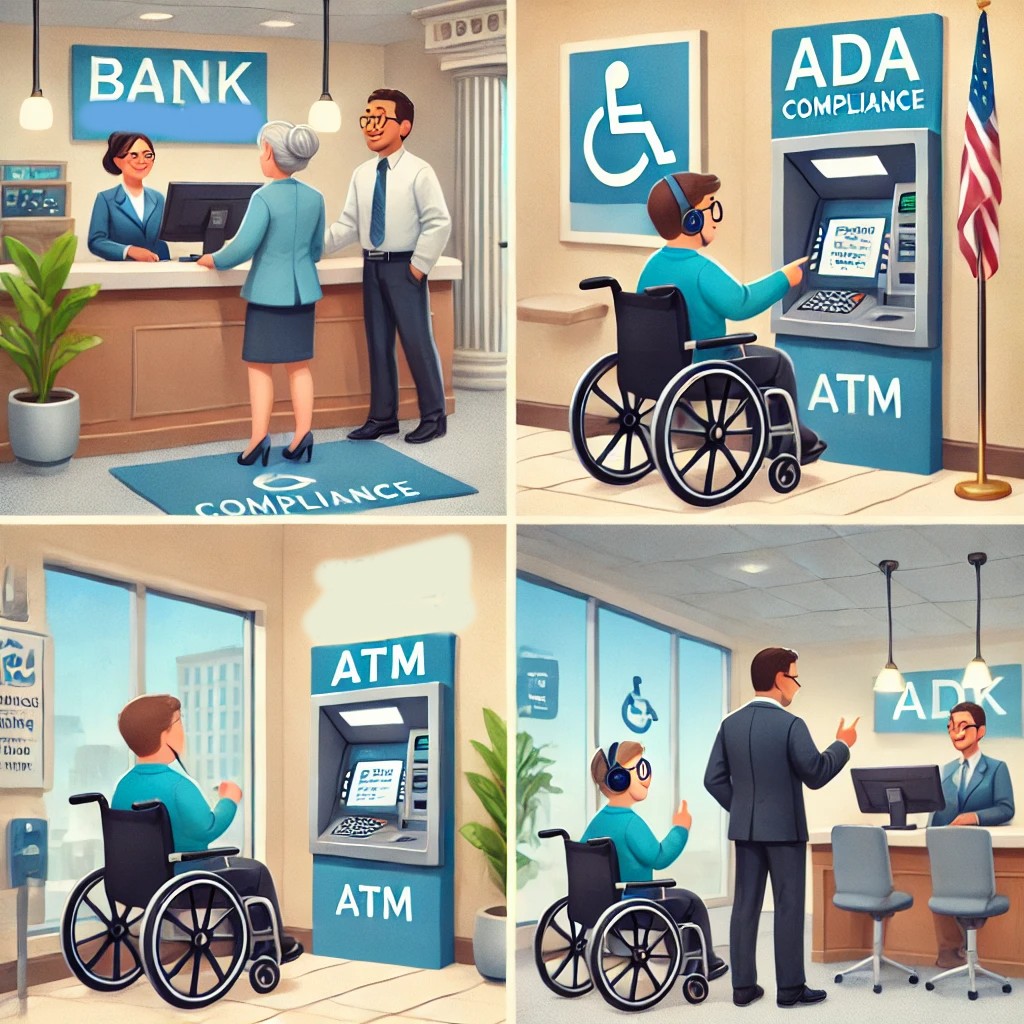
- Physical Accessibility: This includes features such as ramps, wide doors, accessible teller counters, and ATMs designed for wheelchair access. Restrooms, parking, and other facilities must also be compliant.
- Communication: Banks must provide auxiliary aids and services such as TTYs, screen readers, and other assistive technologies for individuals with hearing, vision, or speech impairments.
- Digital Accessibility: Websites, mobile apps, and online banking services must be designed in compliance with the Web Content Accessibility Guidelines (WCAG). This ensures that people using screen readers or other assistive technologies can navigate and use these services effectively.
- Staff Training: Employees should be trained on ADA regulations and best practices to ensure they can provide the necessary support and respect to customers with disabilities.
Compliance is an ongoing process, requiring regular audits and updates to keep up with technological advancements and evolving customer needs.
Challenges in Ensuring ADA Compliance
While the goals of the ADA are clear, compliance can present several challenges for financial institutions. Here are some common obstacles:
- Cost Barriers: Upgrading facilities and digital services to meet ADA standards can be expensive. Smaller institutions may struggle with the financial burden these changes entail.
- Technological Limits: As technology rapidly evolves, staying ahead in terms of digital accessibility can be challenging. Ensuring all updates and new platforms meet compliance standards requires consistent vigilance and investment.
- Complex Regulations: Navigating the maze of federal, state, and local regulations can be overwhelming. Misinterpretations or oversights can lead to unintentional non-compliance.
- Educational Gaps: Ensuring all staff members are knowledgeable about ADA requirements demands extensive training and ongoing education, which some institutions may find difficult to implement effectively.
Overcoming these challenges requires strategic planning, allocation of resources, and a dedicated commitment to uphold the principles of the ADA.
Best Practices for ADA Compliance
Financial institutions can implement several best practices to ensure they are truly accessible to all customers. These include:
- Regular Audits: Conducting regular audits of physical and digital environments to identify and address areas of non-compliance.
- Inclusive Design: When rolling out new services or facilities, incorporate accessibility from the start rather than retrofitting for compliance later.
- Customer Feedback: Actively seek feedback from customers with disabilities to understand their needs and preferences better.
- Employee Training: Provide regular training on ADA requirements and effective ways to assist customers with disabilities.
- Technology Adoption: Invest in the latest accessible technology and services to enhance the experience of customers with disabilities.
By embracing these practices, institutions not only comply with legal requirements but also champion the cause of inclusion and equality.
ADA Compliance in Online Banking
With the shift towards digital banking, the accessibility of online services has become paramount. Key considerations for ADA compliance in online banking include:
- WCAG Compliance: Adhering to the Web Content Accessibility Guidelines (WCAG) ensures your website and mobile apps are accessible to users with disabilities.
- Accessible Design: Design online forms, statements, and navigation elements to be readable by screen readers and other assistive technologies.
- User Testing: Regularly test digital platforms with users who have disabilities to identify and rectify potential barriers.
- Accessible Resources: Offer tutorials, FAQs, and customer support in accessible formats. Ensure support channels are easy to access for all customers.
Focusing on the digital aspect of ADA compliance not only helps in meeting legal obligations but also enhances user experience and customer trust.
Conclusion
The importance of ADA compliance in the banking and finance sectors cannot be overstated. It is a crucial step toward creating an inclusive environment where all customers, regardless of their abilities, have equal access to financial services. Beyond legal compliance, it reflects an institution’s commitment to social responsibility and ethical practices.
By understanding and implementing the fundamental requirements of the ADA, financial institutions can build stronger relationships with their customers. Regular audits, inclusive design practices, employee training, and the adoption of accessible technologies are the cornerstones of effective compliance. While challenges exist, they can be mitigated with strategic planning and a customer-centric approach.
In the ever-evolving landscape of banking and finance, prioritizing ADA compliance not only helps institutions stay ahead of legal requirements but also ensures they are leaders in providing excellent, inclusive service to all customers. Ultimately, ADA compliance is more than a mandate; it is a commitment to equity, access, and respect for all individuals.
Frequently Asked Questions about ADA Compliance in Banking and Finance
1. What exactly does ADA compliance mean for banks and financial institutions?
ADA compliance in the context of banking and finance means that these institutions are required to make their services accessible to everyone, including individuals with disabilities. This includes ensuring that facilities, such as bank branches, ATMs, and websites, are accessible to people with physical disabilities, hearing impairments, visual impairments, and other challenges. The aim is to remove barriers that might prevent these individuals from fully participating in the banking system. It means, for example, providing easily accessible ATM branches, or ensuring that online banking platforms are compatible with screen readers or other assistive technologies, so those with visual impairments can use them.
2. What types of disabilities do banks need to consider under ADA compliance?
Banks and financial institutions need to be mindful of a wide range of disabilities under ADA compliance. These include, but are not limited to, mobility disabilities, such as those requiring wheelchair access; visual impairments, which necessitate compatible online platforms or Braille signage; auditory disabilities, which require services like captioning or sign language interpreters; cognitive disabilities that might necessitate simplified processes or communication strategies; and more. Essentially, banks must adopt universal design principles that serve all potential clients equitably.
3. How can financial institutions ensure that their digital platforms are ADA compliant?
To ensure ADA compliance for digital platforms, financial institutions should adopt Web Content Accessibility Guidelines (WCAG). These guidelines recommend that web content be perceivable, operable, understandable, and robust. This includes providing text alternatives for non-text content (to cater to screen readers), creating content that can be presented in different ways without losing meaning (like scalable text sizes), and making all functionality available from a keyboard. In addition, banks should incorporate testing phases where real users with disabilities can provide feedback on accessibility, and ensure regular audits and updates to maintain compliance as technological standards evolve.
4. What are the potential consequences for banks that fail to comply with ADA requirements?
Banks that neglect ADA compliance face several potential consequences, both legally and reputationally. Legally, they can be subject to lawsuits and penalties which can be costly in terms of fines and legal fees. Non-compliance could also result in orders from regulatory bodies to cease operations of non-compliant services until they meet standards, disrupting business continuity and services. From a reputational standpoint, failure to comply damages consumer trust and brand image, potentially driving customers—especially those advocating for disability rights—away to more inclusive competitors. Ultimately, non-compliance not only harms individuals but also represents a missed opportunity for financial institutions to serve a broader, underserved market.
5. Are there any benefits for banks and financial institutions in actively pursuing ADA compliance?
Absolutely, there are multiple benefits for financial institutions that actively pursue ADA compliance. Primarily, there’s the expansion of their customer base—being inclusive enables banks to attract and retain customers who place importance on accessibility and diversity. Moreover, it demonstrates social responsibility and support for community welfare, which can enhance the institution’s reputation and appeal to socially conscious consumers. Internally, fostering an accessible environment can also improve employee satisfaction and morale, especially for employees with disabilities. Furthermore, actively engaging in ADA compliance helps preempt litigious scenarios related to non-compliance, thus safeguarding the organization from the financial and reputational losses associated with lawsuits. In essence, ADA compliance is not merely a regulatory obligation, but a strategic advantage that reinforces goodwill and market competitiveness.