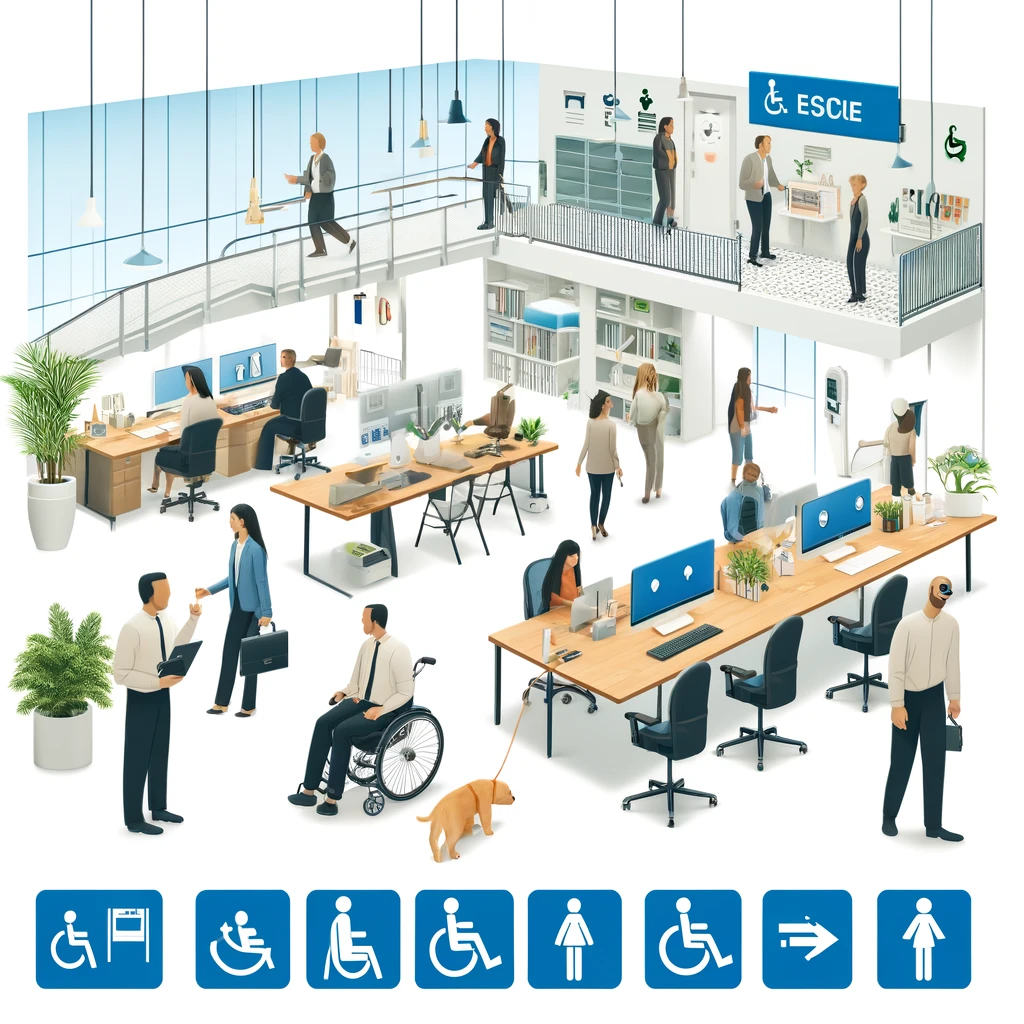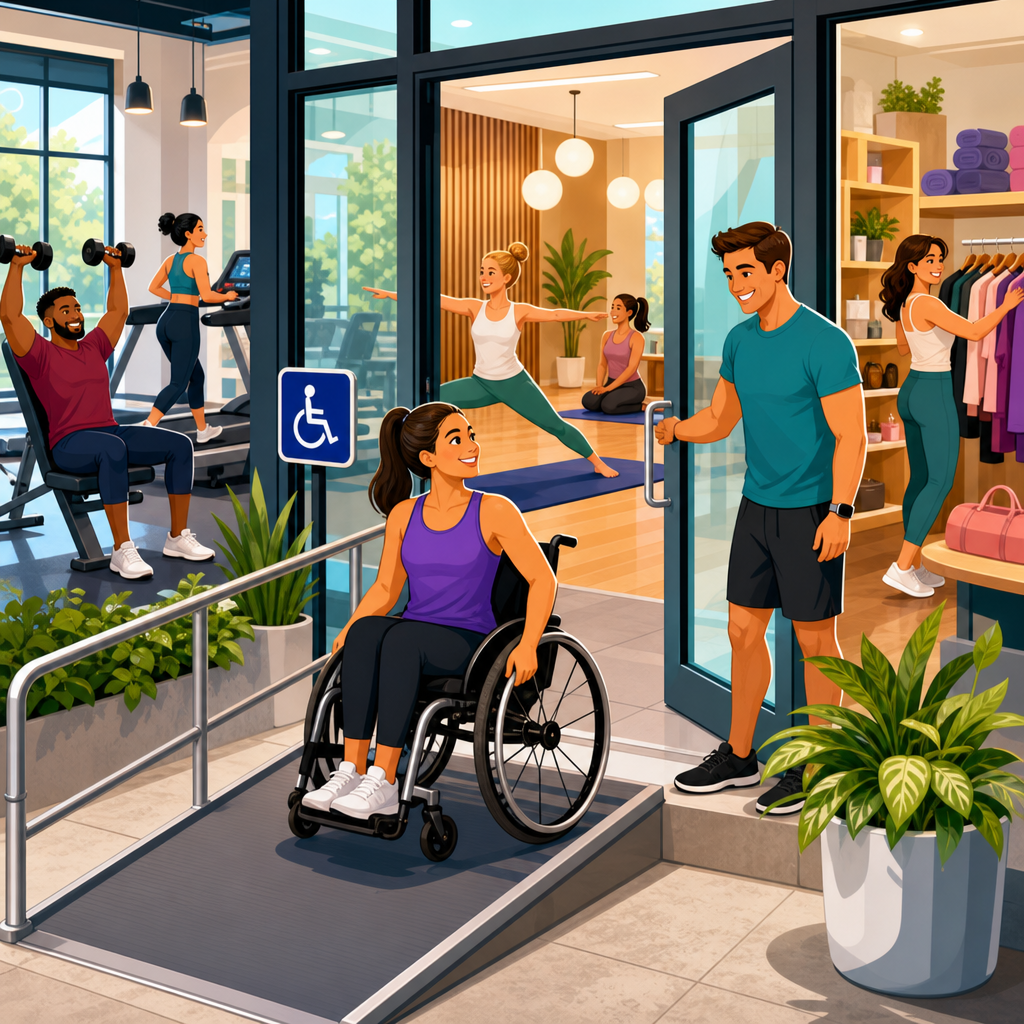
ADA compliance for gyms, boutiques, and studio fitness businesses is not a niche legal issue; it is a core operating requirement that affects facility design, digital access, customer service, hiring, and day-to-day risk management. For fitness operators, the Americans with Disabilities Act sets the baseline for equal access so people with disabilities can enter the building, use key services, communicate effectively with staff, and participate in programs without unnecessary barriers. In practice, that means far more than adding a ramp at the front door. It includes parking, paths of travel, locker rooms, restrooms, websites, booking flows, policies on service animals, accessible equipment layouts, staff training, and how modifications are handled when a member needs support.
When I audit fitness facilities, the biggest misconception I see is the belief that ADA compliance is only about construction. It is partly about the built environment, but it also governs operational decisions. A Pilates studio with a beautiful entry ramp can still create access problems if its online class scheduler cannot be used with a screen reader, if staff refuse a reasonable modification to a no-food policy for a diabetic client, or if circulation space around reformers is too tight for wheelchair users. A neighborhood gym may think it is too small to attract scrutiny, yet small businesses are often the least prepared because they rely on inherited layouts and informal practices.
Sector-specific ADA compliance matters in fitness because the customer journey is unusually physical, timed, and space-sensitive. Members move through entrances, check-in desks, changing areas, machine zones, group exercise rooms, recovery areas, and digital booking systems, often under time pressure. Unlike many retail settings, fitness services involve repeated visits and sustained participation, so small barriers compound quickly. A boutique cycling studio with inaccessible showers may lose members who cannot transition comfortably before work. A martial arts school without effective communication practices may exclude deaf participants from instruction. Understanding the sector-specific issues helps owners prioritize fixes that reduce legal exposure while improving member retention and staff confidence.
This hub article explains the main ADA compliance requirements for gyms, boutiques, and studio fitness businesses, with emphasis on the practical questions operators ask most: what standards apply, what barriers are most common, how accessibility affects classes and memberships, what digital obligations exist, and how to build a workable compliance program over time. It is designed as a central guide for the broader topic of sector-specific ADA compliance, so each section covers a major risk area and gives a clear foundation for deeper implementation work across fitness environments.
What ADA compliance means for fitness businesses
For most fitness operators, ADA compliance begins with understanding which parts of the law apply. Title III covers private businesses that serve the public, including gyms, yoga studios, barre studios, dance fitness brands, personal training facilities, and wellness boutiques open to members or drop-in clients. The law requires these businesses to provide equal access, remove barriers where removal is readily achievable, make reasonable modifications to policies when necessary, and provide auxiliary aids and services when needed for effective communication. If the business has employees, Title I can also apply to employment practices. State and local accessibility laws may impose additional obligations, and some are stricter than federal law.
The design benchmark most operators use is the 2010 ADA Standards for Accessible Design. Those standards guide parking geometry, accessible routes, door clearances, turning space, counter heights, restroom layout, signage, and many other physical elements. They do not answer every operational question in a fitness setting, but they provide the starting framework for facility reviews. In existing buildings, the obligation is often barrier removal where it is readily achievable, meaning easily accomplishable without much difficulty or expense. That standard is fact-specific. A national chain may be expected to do more than a single-location studio, but every operator should be able to show an informed process for identifying barriers, prioritizing fixes, and budgeting improvements.
Fitness businesses also need to distinguish between access to the facility and access to the program. A person may be able to enter the building but still be denied equal participation if there is no accessible path to the group exercise room, no way to receive spoken safety instructions, or no policy for modifying an attendance rule tied to a disability-related absence. In my experience, program access is where many disputes begin, because staff improvise responses without training. Clear policies are essential: what to do when a member asks for communication support, when a trainer needs to adapt instruction, and when a class format can be modified without fundamentally altering the service.
Physical accessibility priorities in gyms, boutiques, and studios
The highest-risk barriers in fitness facilities are usually predictable. Parking and arrival come first. If accessible parking is required, the number of spaces, access aisles, signage, and route to the entrance must meet the standard. From there, operators should assess door hardware, thresholds, lobby circulation, counter heights, and the availability of an accessible route to all primary service areas. In a studio fitness business, that includes reception, sales points, exercise rooms, restrooms, and any retail area. In larger gyms, it extends to locker rooms, pools, saunas, basketball courts, training zones, smoothie bars, and recovery rooms.
Equipment layout is a frequent problem because facilities evolve faster than floor plans. New racks, benches, reformers, bikes, or retail displays often reduce circulation width below usable levels. The ADA does not require every piece of fitness equipment to be accessible in the same way, but it does require access to the facility’s goods and services. In practice, that means maintaining accessible routes, avoiding dead-end congestion, considering transfer space where relevant, and ensuring staff can assist appropriately. The U.S. Access Board has issued guidance on fitness equipment and recreation facilities that operators should know, especially when selecting machines or planning renovations.
Locker rooms and restrooms deserve special attention because they are central to the member experience and expensive to retrofit. Common failures include inaccessible benches, missing grab bars, improper turning space, mirrors mounted too high, inaccessible showers, and hardware that requires tight grasping or twisting. Boutique studios sometimes assume they are exempt because clients arrive dressed for class, but if changing areas or showers are offered, they must be reviewed. I have seen operators spend heavily on branding and premium finishes while leaving basic access barriers untouched. That is a costly mistake because these areas are both visible to members and frequently cited in complaints.
| Area | Common Barrier | Practical Fix | Why It Matters |
|---|---|---|---|
| Entrance | Heavy door with round knob | Install accessible hardware or power assist | Independent entry is a baseline access requirement |
| Check-in desk | Counter too high for seated users | Provide compliant lowered transaction surface | Sales and service must be equally usable |
| Studio floor | Narrow aisles between equipment | Reconfigure layout to preserve accessible route | Members need safe movement to class space |
| Restroom | Insufficient turning radius | Renovate layout during next capital project | Restroom access affects length and comfort of visit |
| Shower area | No accessible shower or seat | Add compliant roll-in or transfer shower | Full participation often depends on post-workout access |
Class access, policies, and reasonable modifications
Group fitness creates ADA issues that do not appear in ordinary retail. Instructors manage safety, pacing, and choreography in real time, so policy decisions must balance inclusion with legitimate operational limits. The rule is straightforward: a fitness business should make reasonable modifications to policies, practices, or procedures when necessary for a person with a disability, unless the modification would fundamentally alter the nature of the service. That analysis must be individualized. A blanket rule such as “no exceptions to late entry” or “all participants must remain standing” can create preventable legal risk if staff cannot evaluate disability-related needs.
Examples help. A yoga studio may need to allow a participant to use a chair, take additional transition time, or position themselves near the door for medical reasons. A boxing studio may need to modify how drills are demonstrated so a deaf participant can maintain visual access to instruction. A Pilates business may need to permit a support person in limited circumstances. A gym with a strict no-bag policy may need an exception for disability-related supplies. These are often reasonable modifications because they preserve the essential service while removing an avoidable barrier. By contrast, waiving core safety rules that protect all participants may not be required if there is no safe alternative.
Membership policies also require review. Freezing accounts, handling cancellations, companion policies, and attendance penalties can all implicate disability access. I have worked with operators who denied short-term freezes for members hospitalized due to disability-related events while routinely granting informal exceptions for other reasons. That inconsistency is hard to defend. Businesses should document a process for receiving requests, gathering only necessary information, evaluating options promptly, and communicating decisions respectfully. The objective is not to promise every requested accommodation; it is to show a thoughtful, interactive approach that reaches workable modifications whenever possible.
Digital accessibility and the modern fitness customer journey
For gyms, boutiques, and studio fitness businesses, the website and mobile booking flow are now front-door functions. Prospects search class schedules, buy memberships, sign waivers, reserve spots, receive text reminders, and manage accounts online before they ever visit the facility. If these systems are inaccessible, the business may be excluding users at the first point of contact. The most reliable benchmark for digital accessibility is WCAG 2.1 Level AA, which addresses text alternatives, keyboard navigation, color contrast, error identification, focus order, captions, and compatibility with assistive technologies. Courts and settlement agreements regularly point businesses toward this standard because it is concrete and widely recognized.
Studio operators often depend on third-party platforms such as Mindbody, Mariana Tek, WellnessLiving, Vagaro, Shopify, or custom membership tools. That does not remove responsibility. If booking, payments, or waivers are essential to accessing the service, accessibility must be addressed in procurement and vendor management. In audits, I routinely find image-only class buttons, unlabeled form fields, inaccessible pop-up modals, countdown timers with no adjustment, and waiver forms that cannot be completed by keyboard. A blind user may never finish registration; a low-vision user may struggle with light gray text on white backgrounds; a deaf user may miss promotional content if videos lack captions.
Digital access also connects to customer support. If a member cannot complete an online reservation because of an accessibility barrier, staff should have a documented alternate method that does not impose extra burden or worse terms. That might include a staffed phone line, email support with prompt response, or manual account assistance. However, an alternate channel is not a substitute for fixing the site itself when the site is central to the service. The best practice is to combine periodic accessibility testing, vendor accountability, remediation tracking, and staff escalation procedures so online access is treated as an operating function, not a one-time web project.
Communication access, service animals, and staff training
Communication access is one of the most overlooked obligations in fitness. Effective communication may require qualified interpreters in some contexts, but more often it involves simpler measures: captioned instructional videos, written summaries of key rules, visual cues during class, accessible PDFs, and staff who know how to communicate with deaf, hard of hearing, blind, low-vision, or speech-disabled members respectfully. The correct aid depends on context, complexity, and importance of the communication. A quick check-in may need a different solution than a detailed personal training consultation about injury history and emergency procedures.
Service animal issues also arise regularly. Staff should know the limited questions allowed when the need is not obvious, the difference between service animals and emotional support animals under public accommodation rules, and when an animal may be excluded because it is out of control or not housebroken. Problems often occur when front-desk teams enforce pet policies without understanding the exception. A calm script and a short written policy prevent conflict and reduce the chance of a viral incident.
Training ties everything together. The best ADA policies fail if staff do not know them. Every fitness business should train front-desk staff, instructors, sales teams, managers, and maintenance personnel on access basics, escalation paths, and respectful interaction. Training should include real scenarios from the facility, not generic slides. When teams practice how to respond to a request for class modification, an inaccessible restroom complaint, or a website booking issue, compliance becomes operational instead of theoretical.
Building a practical compliance program
The most effective compliance programs are phased, documented, and tied to actual business operations. Start with an accessibility review covering the facility, website, policies, and vendor stack. Rank issues by legal risk, member impact, safety, and cost. Quick wins might include adjusting furniture layouts, adding signage, updating service animal policies, captioning videos, or correcting online form labels. Medium-term projects often involve restroom improvements, counter modifications, door hardware changes, or booking platform remediation. Larger capital items, such as showers, locker room reconfiguration, or parking changes, should be placed on a written barrier removal plan with target dates and budget assumptions.
Documentation matters because it shows intent and progress. Keep audit notes, photos, vendor tickets, purchase records, training logs, and policy revisions. If a complaint arrives, a documented program puts the business in a much stronger position than an ad hoc response. Operators should also integrate accessibility into lease negotiations, remodel scopes, equipment purchasing, and software procurement. The cheapest time to solve many accessibility problems is before signing the contract or finalizing the design.
ADA compliance for gyms, boutiques, and studio fitness businesses is ultimately about sustainable access. The operators who do this well do not treat accessibility as a legal afterthought. They build it into member experience, facility management, digital operations, and staff culture. The payoff is broader participation, fewer complaints, better retention, and lower enforcement risk. Use this hub as the starting point for your sector-specific ADA compliance work, then turn the guidance into an audit, a remediation roadmap, and a training plan your team can execute this quarter.
Frequently Asked Questions
What does ADA compliance actually mean for gyms, boutiques, and studio fitness businesses?
For fitness businesses, ADA compliance means making sure people with disabilities have equal access to the facility, services, communication, and programs offered to the public. It applies far beyond wheelchair ramps or parking spaces. A compliant gym, boutique fitness studio, or training facility should consider accessible entrances, paths of travel, locker rooms, restrooms, reception areas, signage, and equipment layout so members and guests can move through the space safely and independently where possible. It also includes operational issues such as how staff communicate with patrons who have hearing, vision, speech, or cognitive disabilities, how policies are applied, and whether a customer can meaningfully participate in classes, training sessions, or membership activities.
ADA obligations also extend to digital touchpoints. If a customer cannot use your website to review schedules, sign up for classes, purchase memberships, complete intake forms, or contact your team, that can create a real access barrier. In practical terms, compliance means looking at the entire customer journey, from parking lot to front desk to class participation to online account management, and identifying where barriers may exist. The ADA sets a baseline expectation that businesses open to the public do not exclude people with disabilities through poor design, inflexible policies, or inaccessible communication methods. For fitness operators, that makes ADA compliance a core part of daily business operations, not a one-time construction checklist.
Are fitness businesses required to make physical changes to their facilities under the ADA?
Yes, many are, but the exact obligation depends on the age of the building, whether the space has been altered, and what changes are readily achievable. New construction and significant renovations generally must meet applicable accessibility standards in a much more complete way. Existing facilities that have not been newly built or substantially altered still have obligations to remove architectural barriers when doing so is readily achievable, meaning easily accomplishable without much difficulty or expense in light of the business’s resources and circumstances.
In a gym or studio setting, common issues include inaccessible entrances, narrow routes between equipment, reception counters that are too high, locker rooms or restrooms that do not provide required clearances, inaccessible showers, missing grab bars, poor signage, and group fitness rooms that do not allow accessible participation. Even when a business cannot immediately redesign the entire facility, it should assess practical improvements that can remove barriers and expand access. Repositioning equipment to create accessible routes, adjusting check-in counters, improving door hardware, adding compliant signage, or modifying restrooms may be examples of meaningful steps. The key is that owners should not assume that because a building is older, no action is required. A proactive accessibility review can help identify both legal exposure and operational improvements that make the facility more welcoming to a broader customer base.
How does the ADA affect class participation, personal training, and customer service policies?
The ADA requires fitness businesses to provide people with disabilities an equal opportunity to participate in programs and services, which includes classes, coaching, personal training, consultations, and related customer interactions. That does not mean every class format must be changed beyond recognition or that a business must fundamentally alter what it offers. It does mean the business should evaluate whether reasonable modifications to policies, practices, or procedures would allow a customer with a disability to participate without creating an undue burden or fundamentally altering the nature of the service.
For example, a studio may need to modify a standard rule to permit a support person in certain situations, allow extra time for transitions, offer clear verbal cues in addition to visual demonstrations, or adapt intake and communication processes so a customer can understand safety instructions and class expectations. Staff should be trained to respond thoughtfully rather than reflexively saying no. A front desk employee, instructor, or trainer who understands how to handle accommodation requests can often resolve issues quickly and respectfully. Customer service is a major ADA touchpoint because many access problems arise from rigid policies or inconsistent staff behavior, not just the physical space itself. Businesses that document accommodation procedures, train employees, and use an interactive, case-by-case approach are generally in a much better position to serve customers effectively while reducing legal risk.
Does ADA compliance include a gym or studio’s website, mobile forms, and online booking tools?
Absolutely. For many fitness businesses, the digital experience is now the front door. Customers use websites and apps to explore memberships, read schedules, reserve classes, sign waivers, purchase packages, communicate with staff, and manage accounts. If those tools are not accessible to people who use screen readers, keyboard navigation, captioning, color contrast adjustments, or other assistive technologies, the business may be creating barriers just as real as a step at the entrance.
Digital accessibility is especially important in the fitness industry because so much of the customer journey is self-service and time-sensitive. If someone cannot complete a registration form, review class details, or book a spot in a limited-capacity session because the system is inaccessible, they are effectively excluded from the service. Businesses should evaluate websites, embedded scheduling platforms, waiver systems, PDFs, videos, and mobile experiences for accessibility issues. This often includes readable structure, alt text for images, proper labeling of form fields, keyboard operability, sufficient color contrast, captioned multimedia, and compatibility with assistive technology. Even when a third-party platform is involved, the business should not assume the issue belongs entirely to the vendor. Operators should ask accessibility questions during procurement, review contracts carefully, and monitor whether the tools customers rely on are actually usable. Strong digital access practices are now a practical necessity for both compliance and customer retention.
What are the biggest ADA compliance risks for fitness businesses, and how can owners reduce them?
The biggest risks usually come from treating ADA compliance as reactive instead of operational. Many gym, boutique, and studio owners only focus on accessibility after a complaint, demand letter, injury, or negative customer experience. By that point, the business may already be facing legal costs, reputational damage, and operational disruption. Common risk areas include inaccessible facility features, websites that block access to scheduling or membership functions, poorly trained staff, inconsistent accommodation decisions, and policies that unintentionally exclude people with disabilities. Businesses may also create problems by failing to document complaints, ignoring recurring accessibility issues, or assuming that good intentions alone are enough.
The most effective risk-reduction strategy is to build accessibility into routine management. That means conducting periodic facility audits, reviewing equipment placement and customer pathways, assessing restrooms and locker rooms, checking digital platforms, training staff on disability etiquette and accommodation procedures, and creating a clear process for responding to access requests. Owners should also review leases, renovation plans, vendor agreements, and online systems with accessibility in mind. When concerns are raised, prompt follow-up matters. A respectful response, practical corrective action, and documented review process can make a significant difference. ADA compliance is not just about avoiding lawsuits; it is about ensuring that customers, prospects, employees, and applicants with disabilities can interact with the business on equal terms. Fitness operators that approach accessibility as part of quality operations tend to be better positioned legally, commercially, and reputationally.