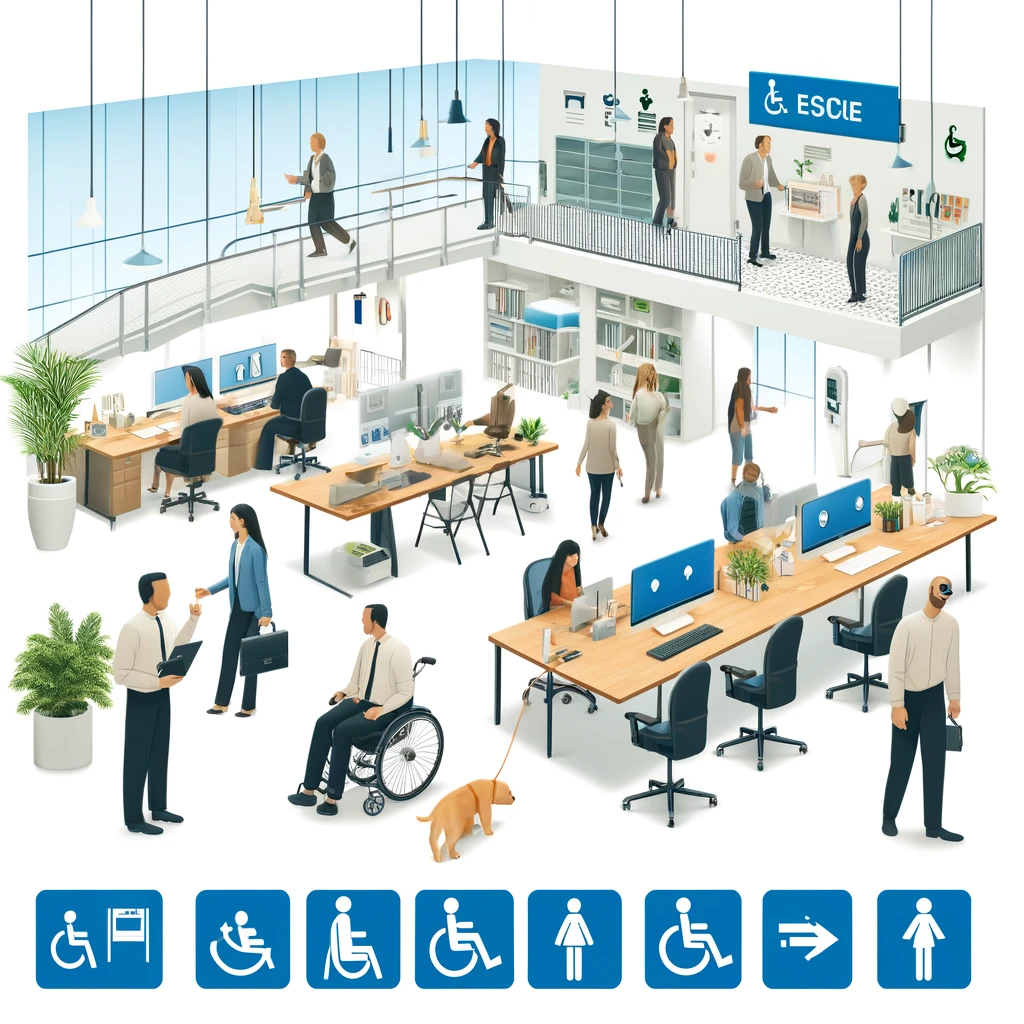
ADA complaint escalation paths for multi-site organizations determine whether accessibility issues are resolved quickly, consistently, and with defensible documentation. In practice, these paths are the formal routes employees, customers, patients, students, tenants, or visitors use to report barriers and the internal steps an organization follows to investigate, triage, remediate, communicate, and, when necessary, elevate the matter to legal, executive, or regulatory review. For organizations with many locations, a weak process creates predictable failures: local managers improvise, similar complaints receive different responses, deadlines slip, and corrective actions never scale beyond one facility or digital property. I have helped standardize complaint handling across distributed operating environments, and the biggest lesson is simple: accessibility compliance is not sustained by policy statements alone. It is sustained by a repeatable escalation system that turns a single complaint into a managed workflow, a documented decision, and a preventive fix.
The Americans with Disabilities Act applies differently depending on the entity and setting, but the operational challenge is similar across sectors. Title I governs employment. Title II applies to state and local government programs and services. Title III covers public accommodations and commercial facilities. Section 504 and Section 508 may also affect federally funded entities or digital procurement practices, and state accessibility laws can add obligations. A complaint may involve a physical barrier, such as inaccessible parking or a service counter that is too high, or a digital barrier, such as an unlabeled form field, keyboard trap, missing captions, or incompatible PDF. It may also concern policy failures, including ineffective communication, refusal to modify procedures, inadequate auxiliary aids, or inaccessible emergency planning.
This matters because complaint handling is where compliance, risk, and operations intersect. Regulators and plaintiffs’ counsel often evaluate not just whether a barrier existed, but how the organization responded after notice. A prompt, well-documented response can narrow legal exposure, preserve trust, and reveal systemic weaknesses before they multiply across locations. For that reason, this hub covers the full lifecycle of policies, complaints, and corrective action for multi-site organizations: intake design, ownership, triage rules, investigation standards, remediation planning, closure criteria, training, reporting, and continuous improvement. If your organization operates stores, campuses, clinics, hotels, branches, warehouses, or franchise-like networks, the escalation path should work the same way every time, while still allowing site-specific facts and practical constraints to be addressed.
Core components of an ADA complaint escalation path
An effective escalation path begins with clear intake channels and ends with verified corrective action. At minimum, multi-site organizations need a public-facing complaint mechanism, an employee accommodation or concern route where applicable, a standard case record, defined response times, decision rights, and closure standards. Every complaint should capture the who, what, when, where, and impact: complainant identity if provided, site or system involved, barrier description, requested remedy, date received, protected communication needs, and evidence such as screenshots or photos. Anonymous complaints should be allowed where feasible, especially for employees and students, because fear of retaliation often suppresses reporting.
Ownership must be explicit. Local site leaders rarely have enough specialized knowledge to evaluate technical accessibility issues on their own, so the process should identify a central function responsible for governance. In most organizations, that is a cross-functional accessibility lead, compliance office, risk team, civil rights coordinator, HR accommodations team, or legal department, depending on issue type. The central owner sets the standard while local operations provide facts, implement short-term fixes, and coordinate vendors. This balance prevents fragmentation. I have seen multi-site retailers where one store manager offered immediate assistance and another denied the same request because neither had a common script or escalation matrix. Central ownership corrected that inconsistency quickly.
Triage rules are the backbone of consistency. Complaints involving immediate health or safety risk, denial of essential service, possible retaliation, repeated prior notice, threatened litigation, regulator contact, or broad impact across multiple sites should escalate automatically beyond the local level. Lower-risk matters can remain with site operations initially, but only under time-bound supervision. A blocked accessible entrance at a single branch may be remediated locally the same day; a defective online appointment workflow used across fifty clinics requires enterprise escalation because the same code affects every patient.
Who handles what across local, regional, and enterprise levels
Multi-site organizations need layered accountability. The local level handles immediate service recovery and fact gathering. The regional level monitors patterns, coaches site leadership, and allocates operational resources. The enterprise level governs policy, legal risk, technical standards, and systemwide corrective action. Without this structure, organizations either over-centralize routine matters or under-escalate complex ones. The right design separates operational response from final authority. A site manager may arrange temporary assistance, but should not unilaterally reject a requested accommodation, declare a barrier compliant, or close a matter that affects a shared platform.
The distinction between complaint types also matters. Employment-related issues typically route through HR, disability accommodation specialists, or employee relations under Title I. Customer-facing and public accommodation complaints may route through operations, compliance, patient relations, student affairs, guest services, or a civil rights office depending on the sector. Digital accessibility complaints often require IT, product, procurement, learning technology, or web teams. In mature programs, the intake form tags each case by domain so it reaches the right subject matter experts quickly. ServiceNow, Salesforce, Jira Service Management, and Microsoft Dynamics are commonly adapted for this purpose, while smaller organizations may use SharePoint lists or case management modules in governance platforms.
| Escalation level | Typical owner | Best used for | Required action window |
|---|---|---|---|
| Local site | Site manager or department lead | Immediate assistance, temporary workaround, evidence collection | Same day to 2 business days |
| Regional or divisional | Regional operations or compliance manager | Repeat issues, resource barriers, coaching, cross-site pattern review | 2 to 5 business days |
| Enterprise program | Accessibility, compliance, legal, HR, or civil rights office | High-risk cases, policy interpretation, digital defects, systemic remediation | Immediate to 5 business days |
| Executive or board reporting | General counsel, chief compliance officer, audit committee | Litigation, regulator inquiry, material risk, persistent nonconformance | As risk dictates |
This layered model supports both fairness and speed. It also creates a reliable hub structure for related operating procedures: intake standards, documentation rules, response templates, investigation playbooks, remediation governance, and closure validation. Those connected procedures are what transform a complaint program from reactive handling into a compliance system.
How to investigate complaints and document findings
Every ADA complaint requires a disciplined investigation, even when the barrier seems obvious. The investigation should confirm scope, applicable standards, root cause, interim measures, and durable remediation. For physical access complaints, teams often evaluate against the 2010 ADA Standards for Accessible Design, relevant state building code, lease obligations, and maintenance records. For digital complaints, the practical benchmark is usually WCAG 2.1 AA or WCAG 2.2 AA, depending on policy and enforcement expectations. Investigators should not rely solely on a vendor’s accessibility statement. They need direct evidence from testing, inspection, user reports, and screenshots or photographs.
A strong case file answers five questions. First, what barrier was alleged and by whom? Second, what standard or policy applies? Third, what did the organization observe during investigation? Fourth, what interim accommodation or workaround was offered while remediation was pending? Fifth, how and when was the matter resolved and validated? These records matter because complaints often resurface months later in demand letters, agency inquiries, internal audits, or class action discovery. When records are weak, organizations lose the ability to show good-faith response.
Root cause analysis is especially important for multi-site environments. A malfunctioning automatic door may be a maintenance lapse at one site. Missing captions across hundreds of training videos usually trace to procurement failures, publishing workflows, or absent quality assurance controls. In digital work, I routinely separate content defects, design defects, code defects, and governance defects, because each requires a different owner and prevention strategy. A complaint about an inaccessible PDF may actually expose a broader records management issue if local teams routinely publish scanned image files without OCR or tagging.
Corrective action planning, deadlines, and closure criteria
Corrective action must be specific enough to execute and measurable enough to verify. A valid plan identifies the barrier, business owner, remediation steps, funding source, target dates, interim access method, and proof of completion. Vague entries such as “review accessibility” or “fix website soon” are not corrective actions. A stronger example is: “Replace inaccessible PDF admission packet with HTML form and tagged PDF by May 30; validate with keyboard testing, screen reader check in NVDA, and automated scan in axe DevTools; retire legacy file from all clinic pages.”
Not every issue can be permanently fixed overnight, especially in leased facilities, legacy software, or capital projects. That reality does not excuse delay. The organization should define temporary measures that preserve access while the long-term correction is underway. For a ramp replacement awaiting contractor scheduling, the interim step may be staff-assisted side entry with posted contact information and documented service protocol. For an inaccessible ecommerce checkout, the interim measure may include staffed phone ordering and proactive outreach to affected customers, but only as a temporary bridge, not a substitute for accessible design.
Closure criteria should be objective. A case closes when the organization has communicated with the complainant where possible, implemented or documented the approved resolution, verified effectiveness, and determined whether broader preventive actions are needed. Verification should match the issue type. Physical changes may need reinspection and photographs. Digital fixes require retesting with assistive technology and user flows, not just an automated score. Policy complaints may require revised procedures, retraining, and manager attestations. Mature programs also ask one final question before closure: could this same issue exist elsewhere? If yes, the corrective action is incomplete until the broader risk is addressed.
Policy design, training, and vendor controls that prevent repeat complaints
The best complaint escalation path does more than route cases; it reduces future volume by strengthening policy and implementation. Every multi-site organization should maintain written accessibility and nondiscrimination policies, complaint and grievance procedures, accommodation guidance, digital publishing rules, procurement requirements, and capital project controls. Those documents should specify standards, responsible roles, timelines, and escalation triggers. They also need to be usable. Frontline managers cannot apply a twenty-page policy in a live customer interaction unless it is supported by short decision trees, scripts, and contact channels.
Training should be role-based. Frontline staff need service recovery basics, communication etiquette, and escalation steps. Site managers need documentation discipline, interim accommodation practices, and when not to make unilateral judgments. Designers, developers, content authors, facilities teams, and procurement staff need technical requirements relevant to their work. Annual refresher training is helpful, but incident-driven coaching is often more effective. After a real complaint, teams remember the lesson because they can tie the rule to an operational consequence.
Vendor governance is a frequent blind spot. Many recurring complaints originate in outsourced web development, learning platforms, kiosk systems, document conversion, call center tools, or construction projects. Contracts should include accessibility requirements, testing obligations, remediation timelines, indemnity language where appropriate, and acceptance criteria. VPATs can be useful starting documents, but they are not proof of accessibility. Organizations should require demonstrations, sample testing, and remediation commitments before purchase and again before renewal. In my experience, the strongest programs align procurement, legal, IT, and operations so inaccessible products do not enter the environment and create predictable complaint volume.
Metrics, reporting, and governance for enterprise visibility
Complaint data becomes valuable only when leaders can see trends across sites, channels, and root causes. Core metrics include number of complaints by location and issue type, acknowledgment and resolution times, percentage requiring enterprise escalation, repeat complaints, open corrective actions past due, and cases linked to the same vendor, template, or facility condition. Governance forums should review these measures regularly. A monthly operational review may focus on aging cases and service recovery, while a quarterly executive review should examine systemic risk, budget needs, and policy gaps.
Context matters when interpreting metrics. A higher complaint volume can indicate worsening accessibility, but it can also reflect better intake visibility and growing trust in the reporting process. That is why quantitative dashboards should be paired with qualitative case reviews. One well-founded complaint about inaccessible emergency egress communication may deserve more executive attention than twenty minor website formatting defects. The governance function should also track whether lessons from one case were translated into enterprise controls such as design system updates, maintenance checklists, contract templates, or revised training.
For organizations building this hub area of compliance and implementation, the practical objective is coherence. Policies define expectations. Complaint channels surface failures. Investigations establish facts. Corrective actions fix the issue and reduce recurrence. Reporting shows leaders where controls are weak. When these elements are integrated, accessibility moves from scattered reactions to managed performance.
For multi-site organizations, ADA complaint escalation paths are not administrative extras; they are the operating system for policies, complaints, and corrective action. A reliable path starts with accessible intake, assigns the right owners, escalates high-risk issues quickly, investigates against recognized standards, and closes cases only after verified remediation. It also looks beyond the individual complaint to the systemic cause, whether that is a local maintenance lapse, a broken digital release process, or a procurement failure repeated across the enterprise.
The central benefit is consistency. Customers, employees, patients, students, and visitors should not receive different answers simply because they encountered different locations or managers. Consistency protects rights, improves service recovery, and gives leadership usable data for budgeting, training, and risk reduction. It also creates a clear framework for the broader subtopic this hub supports: policy drafting, grievance procedures, documentation, investigations, corrective action plans, verification, and governance reporting all depend on a sound escalation model.
If your organization operates across multiple sites, map your current complaint path today. Identify intake channels, decision makers, escalation triggers, documentation gaps, and closure rules. Then test the process with a recent physical and digital complaint. The organizations that improve fastest are the ones that treat every complaint as both a case to resolve and a control to strengthen.
Frequently Asked Questions
1. What is an ADA complaint escalation path in a multi-site organization, and why does it matter?
An ADA complaint escalation path is the defined process a multi-site organization uses to receive, document, investigate, resolve, and elevate accessibility complaints across all of its locations, departments, and digital channels. In practical terms, it answers several critical questions: where a complaint is submitted, who owns the first response, how severity is assessed, when local managers can resolve an issue on their own, when corporate accessibility leaders or legal counsel must be involved, and how the organization proves it handled the matter consistently and in good faith. For organizations operating across many sites, this structure is essential because accessibility issues rarely stay contained to one location. A barrier reported at one facility may indicate a system-wide policy problem, a training gap, a vendor issue, or a recurring design flaw affecting many users.
A clear escalation path matters because speed, consistency, and documentation are often what determine whether a complaint becomes a manageable operational issue or grows into a formal dispute, regulatory inquiry, demand letter, or lawsuit. Without a formal path, complaints can get stuck at the site level, responses can vary widely by location, and important details may be lost when staff turnover occurs or multiple departments are involved. That creates legal risk and undermines trust with employees, customers, patients, students, tenants, or visitors who are trying to access programs, services, or facilities. By contrast, a well-designed escalation path helps organizations resolve barriers faster, standardize response times, identify repeat issues across properties or branches, and maintain defensible records showing the organization took the complaint seriously, investigated it, communicated with the complainant, and worked toward an appropriate solution.
It also matters from a governance standpoint. In a multi-site environment, accessibility is rarely owned by one team alone. Human resources, operations, facilities, IT, digital teams, compliance, risk management, and legal may all have a role depending on the nature of the complaint. A formal escalation framework ensures the right people are involved at the right time. For example, a parking access issue may be handled locally with facilities support, while a complaint about inaccessible online scheduling or repeated failure to provide auxiliary aids may require enterprise-level intervention. In short, ADA complaint escalation paths are not just administrative procedures; they are core risk management and service quality tools that help large organizations respond in a coordinated, credible, and legally informed way.
2. Who should be involved in an effective ADA complaint escalation process for organizations with multiple locations?
An effective ADA complaint escalation process should involve both local site personnel and centralized oversight functions, with clearly assigned responsibilities at each level. At the local level, the first line of response often includes site managers, front-line supervisors, human resources representatives, patient relations staff, student services teams, property managers, or customer service leaders, depending on the type of organization. These individuals are usually the first to receive a complaint and are often best positioned to gather immediate facts, preserve relevant records, speak with on-site staff, and address straightforward barriers that can be corrected quickly. However, in a multi-site setting, local ownership alone is not enough. There also needs to be a central accessibility, compliance, or risk function that can monitor patterns, enforce standards, provide subject-matter expertise, and step in when complaints involve legal exposure, systemic failures, or unresolved disputes.
Most mature organizations also define escalation roles for facilities, IT, digital product teams, procurement, security, training, communications, and legal counsel. Facilities teams may be responsible for built environment issues such as entrances, restrooms, counters, routes, and signage. IT and digital teams may be responsible for inaccessible websites, apps, kiosks, portals, or electronic documents. Human resources may handle employee accommodation concerns. Operations leaders may be needed where service delivery practices create access barriers, and procurement may need to intervene when a vendor-supplied product or service is part of the problem. Legal counsel should typically be involved when a complaint alleges discrimination, threatens external action, involves repeated failures, raises uncertainty about obligations, or suggests a pattern that could affect multiple sites. Executive leadership may also need visibility into high-risk matters, particularly when a complaint has reputational implications or requires funding, policy changes, or enterprise-wide remediation.
The most effective teams define not only who is involved, but when and why each role enters the process. For instance, the intake team may log the complaint and send an acknowledgment within a set timeframe. A site-level reviewer may assess whether the issue can be corrected immediately. A centralized accessibility lead may determine whether similar complaints have arisen elsewhere. Legal may review communications when exposure increases. Executive sponsors may help remove roadblocks if remediation requires budget approval or cross-functional coordination. This role clarity is what prevents confusion, duplication, and delay. It also helps ensure the organization responds consistently no matter which location receives the complaint first. For multi-site organizations, strong ADA escalation processes are collaborative by design, but they only work when ownership, timelines, and decision authority are spelled out in advance.
3. What should a strong ADA complaint workflow include from intake through final resolution?
A strong ADA complaint workflow should include intake, acknowledgment, triage, investigation, interim response where needed, remediation planning, communication, escalation triggers, closure, and post-resolution review. Intake should be accessible and easy to use, offering more than one reporting channel such as web forms, email, phone, in-person reporting, or dedicated accessibility contacts. The organization should capture enough detail at intake to understand the who, what, where, and when of the complaint, while also allowing people to report barriers even if they do not use legal language or know exactly which standard applies. The process should then require prompt acknowledgment so the complainant knows the issue was received, assigned, and is being reviewed.
Next comes triage. This is where the organization assesses urgency, impact, and scope. Not every complaint carries the same level of risk. A broken accessible entrance affecting immediate access to services may require same-day action, while a lower-priority website formatting issue may still require remediation but follow a different timeline. Triage should distinguish between life safety issues, service access problems, accommodation requests, digital accessibility failures, and allegations of discriminatory treatment. It should also identify whether the issue appears isolated or may affect multiple sites, systems, or populations. Once triaged, the matter moves into investigation. That typically includes reviewing facts, interviewing relevant staff, inspecting the physical or digital environment, reviewing policies, checking prior complaints, and determining whether temporary measures are needed while a permanent fix is developed.
From there, the workflow should require documented remediation planning and communication. The organization should identify the corrective action, assign an owner, set target dates, and explain any interim steps if the full solution will take time. Communications with the complainant should be respectful, clear, and appropriately detailed, without overpromising. Just as important, the workflow should define formal escalation triggers. Examples include complaints involving multiple sites, repeated complaints about the same issue, missed response deadlines, requests that implicate policy interpretation, threats of legal action, media attention, or barriers tied to enterprise systems or vendors. Final resolution should include a closure record explaining what was found, what was done, when it was completed, and whether follow-up is needed. The best workflows also include post-resolution analysis so the organization can identify trends, improve training, revise policies, and prevent the same accessibility problem from recurring elsewhere.
4. When should an ADA complaint be escalated beyond the local site to corporate leadership, legal counsel, or regulators?
An ADA complaint should be escalated beyond the local site whenever the issue exceeds local authority, presents heightened legal or reputational risk, suggests a systemic problem, or remains unresolved despite reasonable site-level efforts. In many organizations, local teams can handle routine and clearly fixable issues, such as replacing incorrect signage, addressing a service counter obstruction, retraining a staff member on an established accommodation procedure, or coordinating a straightforward communication aid. But complaints should move upward quickly when they involve alleged discrimination, repeated failures to provide access, denial of requested accommodations without a clear basis, conflicting interpretations of policy, or barriers that affect core access to programs, services, employment, housing, healthcare, or education. These cases often require broader review because the consequences go beyond one manager or one location.
Escalation to corporate accessibility leaders or compliance teams is especially important when there is evidence that the same issue may exist in multiple places. For example, if a complainant reports that a self-service kiosk is inaccessible at one site, the organization should ask whether the same kiosk is deployed across dozens of sites. If so, a local fix is not enough; the matter may require enterprise coordination, vendor engagement, and executive oversight. Legal counsel should generally be involved when the complaint includes a demand letter, threat of litigation, external agency filing, request for policy exceptions, allegations of retaliation, involvement of outside advocates, or facts that could create precedent for the organization. Legal review may also be necessary where regulations overlap, such as healthcare, education, housing, transportation, or public accommodation settings with additional state or local requirements.
Regulatory escalation is different because it may be reactive or proactive. In some cases, a complainant files directly with a government agency, and the organization must respond through a formal process. In other situations, an organization may decide that a serious issue requires structured executive attention before it reaches that point, particularly if immediate corrective action, external reporting, or broad remediation is needed. The key is that escalation should not be improvised. Organizations should define objective triggers