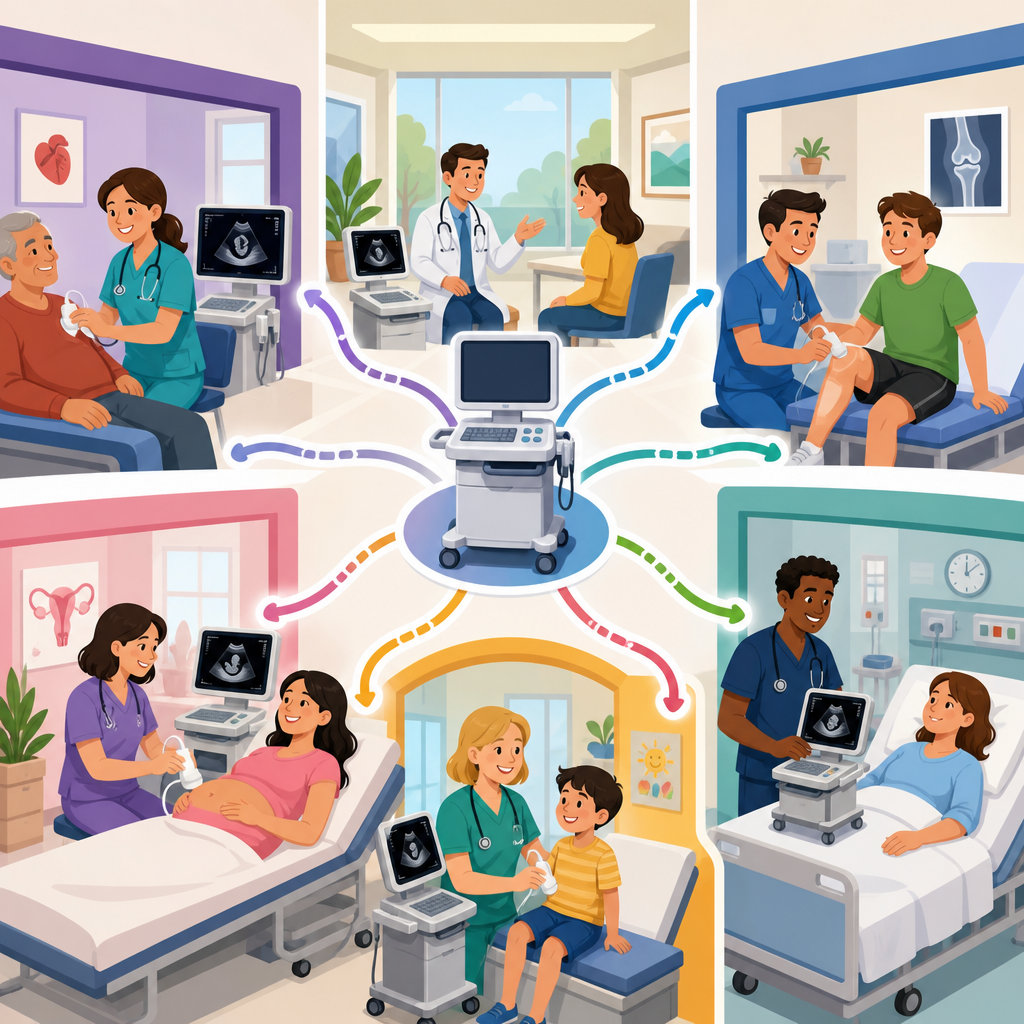
Accessible MDE dispersion in multi-specialty clinics determines whether patients with disabilities receive timely, dignified care or face avoidable delays caused by one overloaded room, one dedicated department, or one inaccessible workflow. MDE, or medical diagnostic equipment, includes exam tables, weight scales, imaging transfer supports, wheelchair-accessible mammography components, and other devices covered by the U.S. Access Board’s MDE Standards and closely tied to ADA accessibility standards in healthcare settings. In practice, dispersion means placing accessible medical equipment across specialties instead of concentrating it in a single department that becomes the default destination for every patient who needs height adjustability, seated positioning, transfer assistance, or step-free access. I have seen clinics buy one accessible table, place it in family medicine, and assume the problem is solved, only to discover that cardiology, orthopedics, OB-GYN, and dermatology continue examining patients in suboptimal ways. That creates a bottleneck with scheduling, staffing, patient flow, and compliance risk. For multi-specialty clinics, the question is not whether accessible equipment matters; it is how to distribute it so access is routine rather than exceptional. This hub explains the core principles, operational decisions, equipment categories, and implementation steps that make medical care and accessible equipment work together across an entire outpatient enterprise.
What accessible MDE dispersion means in a multi-specialty clinic
Accessible MDE dispersion is the intentional placement of usable equipment in the locations where care is actually delivered. Instead of relying on one “ADA room,” clinics distribute key assets by service line, visit type, floor, and patient volume. The goal is simple: a patient should be able to complete the same clinical pathway as any other patient, with reasonable modifications built into normal operations. That requires more than purchasing one power exam table. It means matching equipment capabilities to clinical needs, room sizes, caregiver techniques, and transfer scenarios.
In a multi-specialty setting, concentrated equipment fails because specialties use different workflows. Endocrinology may need an accessible scale at nearly every visit. Orthopedics may need transfer space plus imaging-adjacent support surfaces. Women’s health may need accessible exam tables with stirrup access and room layouts that permit side transfers. Neurology may need seated weight options and support for mobility devices. If all of those needs point to one room or one department, appointment templates collapse. Staff start “making do,” and making do often means incomplete examinations, skipped weights, hallway discussions instead of proper positioning, or rescheduling to a different clinic day. Those are operational failures, not patient failures.
The strongest accessibility programs map patient journeys from arrival through checkout. They identify where a patient may encounter a barrier: entrance, registration, changing area, scale, exam table, imaging, restroom, or treatment chair. Then they remove those barriers where they occur. Dispersion is therefore both a clinical design strategy and a risk-control strategy. It reduces dependence on heroic staff workarounds and supports consistent access regardless of which specialty, provider, or floor a patient visits.
Why a single-department bottleneck creates clinical, legal, and operational risk
A single accessible room sounds efficient until demand increases. In real clinics, one room quickly becomes contested space. Primary care wants it for annual wellness visits. Rheumatology needs it for joint assessments. Cardiology needs an accessible scale. OB-GYN needs prolonged use for pelvic exams. Imaging wants nearby transfer equipment. As utilization rises, delays spread across the schedule. Patients who need accessible equipment are then offered fewer time slots, longer waits, or different clinic days. That is a service disparity, even if unintentional.
Clinically, the bottleneck undermines exam quality. Providers may skip portions of the physical exam when a patient cannot be positioned safely. Weight may be estimated instead of measured. Skin assessments may be incomplete. Preventive screening can be delayed when transfer access is unavailable. I have audited clinics where staff documented “patient remained in wheelchair” as if that alone resolved the issue; often it reflected the absence of suitable equipment, not a clinically chosen method. Some wheelchair-based exams are appropriate, but they should be intentional and equivalent, not default substitutes for inaccessible tables or scales.
Legally, concentrated access can conflict with disability nondiscrimination obligations because equal access depends on availability at the point of care. Federal enforcement actions and settlement agreements have repeatedly emphasized accessible equipment, staff training, and policies for safe transfers. The ADA requires reasonable modifications and effective access to services, while Section 504 applies to many funded healthcare entities. The U.S. Department of Justice and the Department of Health and Human Services have both treated inaccessible medical care as a significant barrier. Clinics do not need identical equipment in every room, but they do need enough accessible capacity to avoid segregated or delayed care.
Operationally, bottlenecks increase manual lifting risk, staff frustration, and equipment downtime impact. If one accessible table fails, access fails with it. If one trained team member is absent, transfer confidence drops. Dispersion creates redundancy. Redundancy is not waste in healthcare operations; it is resilience.
Core equipment categories every medical care accessibility hub should address
Medical care and accessible equipment planning should start with equipment categories, because each solves a distinct barrier. Height-adjustable exam tables support lateral transfers and proper positioning. Accessible weight scales, including wheelchair and seated models, allow routine and specialty monitoring without unsafe estimates. Procedure chairs with adjustable height and supports are important in areas such as ENT, ophthalmology, podiatry, and dermatology, depending on services offered. Mammography units may require wheelchair-accessible positioning features. Imaging and treatment areas often need transfer aids, clearance space, and compatible surfaces rather than a single standalone device.
Clinics also overlook adjunct items that determine whether equipment is truly usable. Transfer boards, gait belts, portable lifts where appropriate, step-free room routes, accessible gowning spaces, and accessible patient seating all matter. So do floor clearances, door widths, turning space, and the location of sharps containers, keyboards, and stools. An accessible table blocked by cabinetry is not functionally accessible. A wheelchair scale at the end of a narrow corridor may meet purchasing goals while failing operationally.
The hub approach works because it lets organizations connect detailed subtopics without losing the bigger picture. A table may deserve its own technical article, but leadership still needs one page that explains how exam tables, scales, imaging supports, transfer practices, maintenance, and staff competency fit together. This is that page: the strategic center for medical care and accessible equipment within ADA accessibility standards.
How to decide where accessible equipment should be placed
Placement decisions should be based on service demand, not assumptions. Start with encounter data by specialty, room utilization reports, no-show impacts, and the percentage of patients who use mobility devices or require transfer accommodations. Then compare that demand against existing equipment, room dimensions, and staffing patterns. In one clinic network I worked with, endocrinology had far greater need for accessible scales than leadership realized because weights were required at almost every visit, yet the only wheelchair scale sat in rehabilitation on another floor. Patients were routed through three checkpoints before seeing the physician. Moving one scale reduced delays immediately.
A practical distribution model considers four variables: frequency of need, duration of room use, travel distance, and backup coverage. High-frequency, short-duration tasks such as weighing should be placed close to intake flow and duplicated where volumes justify it. Longer room blocks, such as gynecologic or complex musculoskeletal exams, may require multiple accessible exam rooms within that specialty rather than one shared room across the building. Backup coverage means no critical service depends on a single device. If one table goes out of service, another suitable option should exist without forcing patients into another department unless clinically necessary.
| Clinic area | Accessible MDE priority | Reason for local placement |
|---|---|---|
| Primary care | Height-adjustable exam tables, wheelchair scale | High visit volume and broad preventive exam needs |
| Endocrinology | Accessible scale near intake | Frequent weight monitoring affects treatment decisions |
| OB-GYN | Accessible exam table and transfer space | Positioning needs make shared remote rooms impractical |
| Orthopedics | Transfer supports, wide clearances, accessible table | Mobility limitations are common and visits can be lengthy |
| Cardiology | Accessible scale and exam surface | Weight and edema assessment are routine clinical inputs |
| Imaging | Transfer aids and compatible support surfaces | Safe transitions are essential for complete studies |
Room design should follow placement. Measure turning radii, side transfer clearances, approach routes, and caregiver working space before purchasing. Manufacturer specifications matter, but real usability depends on the room around the device.
Department-specific examples that show why dispersion works
Primary care usually needs the broadest accessible equipment base because it handles preventive visits, chronic disease management, acute concerns, and referrals. A height-adjustable table in only one family medicine pod can create cascading delays for wellness visits, skin checks, and follow-ups that require positioning. Adding accessible capacity to each pod allows teams to schedule without labeling patients as exceptions.
Women’s health shows the limits of centralized access even more clearly. Pelvic exams, prenatal assessments, and procedures require privacy, setup time, and specialty instruments already located in the department. Sending patients to another floor for an accessible table is inefficient and often clinically unrealistic. The same principle applies to cardiology, where standing scales may exclude some patients from accurate heart-failure monitoring, and to orthopedics, where transfer needs are expected rather than rare.
Dermatology and ENT are often overlooked because leadership assumes patients can remain seated in mobility devices. Sometimes that is appropriate. Sometimes it prevents a complete exam. Full-skin assessment, lesion treatment, ear procedures, or positioning under task lighting may require an adjustable surface. The right answer depends on actual services, which is why specialty-by-specialty workflow review is essential. Dispersion does not mean every room has identical equipment; it means every department has what it needs to deliver equivalent care without delay or improvisation.
Policy, training, maintenance, and procurement: the systems behind the equipment
Equipment alone does not create access. Clinics need policies that define scheduling flags, patient intake questions, transfer assistance procedures, emergency contingencies, maintenance intervals, and escalation paths when a device is unavailable. Registration scripts should ask about accommodation needs in plain language before the appointment. Scheduling teams should know which rooms have accessible tables or scales and reserve them without making patients repeat their needs at every visit.
Training is equally important. Staff should understand safe patient handling principles, lateral transfer techniques, device controls, locking procedures, and when to request additional assistance. Competency should be refreshed, documented, and tailored by role. Medical assistants may need detailed table operation training; front-desk staff may need accommodation documentation guidance; managers need to monitor whether accessible rooms are being repurposed for storage or convenience scheduling.
Procurement should use standardized evaluation criteria. Compare minimum and maximum heights, weight capacity, side rail options, foot controls, transfer supports, cleanability, service network coverage, and warranty terms. Include facilities, clinicians, risk management, infection prevention, and patient representatives in product review. Maintenance cannot be an afterthought. A broken actuator or out-of-calibration scale can remove access as surely as never buying the equipment. Preventive maintenance schedules, asset tagging, and service-response expectations should be written into operational plans.
Measuring success and building the rest of the medical care accessibility program
The best clinics track whether accessible MDE is actually improving care. Useful metrics include time from arrival to completed weight, percentage of visits conducted in accessible rooms when indicated, transfer-related incident reports, preventive screening completion rates for patients with mobility disabilities, equipment downtime, and patient complaints related to access. Patient experience surveys should ask specific questions about exams, transfers, and equipment usability, not just generic satisfaction items.
This hub should also connect to related subtopics that deepen the program: accessible exam tables, accessible weight scales, imaging and mammography access, transfer and lift policies, room layout requirements, staff training, maintenance planning, procurement checklists, and documentation practices. Those child articles can go deeper on dimensions, model selection, or specialty workflows, while this page anchors the overall strategy. The central lesson is consistent across all of them: accessible care must be integrated into ordinary clinical operations, not isolated in one room or one department.
Multi-specialty clinics avoid single-department bottlenecks when they treat accessible medical diagnostic equipment as distributed infrastructure. Place the right equipment where care happens, train teams to use it confidently, maintain it reliably, and measure whether patients receive equivalent service without delay. That approach improves clinical quality, reduces scheduling friction, strengthens compliance, and preserves patient dignity. If you are building or upgrading an ADA accessibility standards program, start by mapping every specialty’s real equipment needs and closing the gaps department by department.
Frequently Asked Questions
1. What does “accessible MDE dispersion” mean in a multi-specialty clinic?
Accessible MDE dispersion means placing medical diagnostic equipment that patients with disabilities can use across multiple departments, service lines, and exam areas instead of concentrating it in a single room or specialty. In practice, that includes distributing items such as height-adjustable exam tables, accessible weight scales, patient lifts or transfer supports, accessible mammography components, and other equipment aligned with the U.S. Access Board’s Medical Diagnostic Equipment Standards. The goal is to make accessible care part of the clinic’s normal operating model rather than a special exception that requires rerouting patients to one “accessible” location.
In a multi-specialty setting, dispersion matters because patients often move between primary care, orthopedics, cardiology, women’s health, imaging, and other departments during the same episode of care. If only one department has the accessible equipment needed for safe transfers, accurate weight measurement, or proper positioning, the clinic creates delays, scheduling barriers, and unnecessary handoffs. That setup can also undermine patient dignity by signaling that accessibility is an accommodation offered only when convenient, rather than a baseline expectation of care delivery.
Well-planned dispersion reduces bottlenecks and supports more consistent ADA-aligned access. It allows clinicians to perform examinations where care is already being delivered, improves staff efficiency, and helps prevent missed or incomplete diagnostic services. Most importantly, it ensures that patients with mobility limitations, transfer needs, or other disabilities are not excluded from the same timely, integrated care experience offered to everyone else.
2. Why is relying on one accessible room or one designated department a problem?
Relying on one accessible room or one designated department may seem operationally simple, but it often creates serious access failures. When accessible MDE is centralized in a single location, scheduling becomes more complicated because every patient who needs that equipment must compete for the same limited space. That can delay appointments, force patients into less desirable time slots, or require rescheduling when the room is occupied. In busy multi-specialty clinics, this kind of concentration quickly becomes a capacity issue rather than a true accessibility solution.
There are also clinical and workflow concerns. Patients may need care from specialists who are not located near the accessible room, and moving them across departments can increase fatigue, discomfort, and confusion. In some cases, staff may skip parts of an examination, weigh a patient inaccurately, or rely on unsafe manual transfers because the proper equipment is not available where the visit is actually occurring. That is not just inconvenient; it can affect diagnostic quality, treatment planning, and patient safety.
From a compliance and patient-experience perspective, a single-department model can also be risky. Accessibility is not fully achieved when a clinic can technically provide care somewhere in the building but cannot do so in the department the patient needs, at the time the patient needs it, and through a process that preserves dignity and independence. Patients should not have to navigate a separate pathway simply because accessible equipment has been treated as a specialty resource instead of a clinic-wide standard.
3. What types of medical diagnostic equipment should be distributed across a multi-specialty clinic?
The right mix depends on the clinic’s services, patient population, and volume, but several categories commonly deserve broad distribution. Height-adjustable exam tables are among the most important because they support safer transfers, more complete physical examinations, and more consistent use across many specialties. Accessible weight scales are also essential, since accurate weight is a basic clinical data point used for medication dosing, treatment monitoring, and chronic disease management. If a patient cannot be weighed because the only accessible scale is in another department, the clinic has created a preventable barrier to routine care.
Transfer and positioning supports should also be considered wherever patients are examined or imaged. Depending on the setting, that may include ceiling lifts, mobile lifts, transfer boards, stirrups or supports designed for accessible positioning, and equipment that helps clinicians obtain diagnostic-quality exams without requiring unsafe lifting. In women’s health and imaging environments, wheelchair-accessible mammography components and accessible imaging transfer supports may be necessary. Other departments may require adjustable procedure chairs, accessible dental or ENT positioning solutions, or specialty-compatible supports that enable comparable care for patients with limited mobility.
The key is not simply buying one accessible device in each category, but matching placement to actual care pathways. A clinic should ask where patients are most likely to need transfer assistance, weight measurement, positioning, or imaging support, then ensure those functions are available in those locations. A thoughtful dispersion strategy balances clinic-wide baseline access with specialty-specific needs so that accessible equipment is both available and usable in real workflows.
4. How can a clinic decide where accessible MDE should go to avoid bottlenecks?
The best approach is to start with a workflow and utilization assessment rather than an equipment shopping list. Clinics should map how patients move through the facility, which specialties see the highest volume of patients with mobility disabilities, where transfers happen most often, and where essential diagnostics are likely to be delayed when accessible equipment is missing. Appointment data, staff feedback, incident reports, and patient complaints can all reveal where bottlenecks already exist. This kind of analysis helps leadership place equipment where it will prevent real barriers instead of where space happens to be available.
It is also helpful to distinguish between universal needs and department-specific needs. For example, nearly every clinic benefits from having accessible exam tables and scales distributed across multiple care areas, while certain specialty devices may only be necessary in imaging, orthopedics, gynecology, or oncology. The objective is to create enough redundancy that one broken device, one overbooked room, or one unavailable staff member does not collapse access for the entire clinic. Redundancy is not wasteful in this context; it is what prevents accessibility from becoming fragile.
Finally, clinics should include the people who will use and support the equipment in decision-making. That means not only administrators and purchasing teams, but also frontline clinicians, medical assistants, imaging staff, facilities teams, risk management personnel, and ideally patients or disability advisors. Placement decisions are far more effective when they reflect actual room layouts, transfer clearances, power needs, storage issues, and staffing realities. A successful dispersion plan is operational, not theoretical: the equipment must be easy to reach, easy to schedule, and integrated into everyday care.
5. Beyond purchasing equipment, what else is required to make accessible MDE dispersion successful?
Buying equipment is only the first step. For accessible MDE dispersion to improve care, clinics need policies, training, scheduling protocols, maintenance practices, and accountability measures that support routine use. Staff should know how to identify patient access needs in advance, assign appropriate rooms, operate the equipment safely, and avoid defaulting to workarounds when the process feels slower. Without training and clear expectations, even well-placed equipment can sit unused while inaccessible practices continue.
Scheduling and registration workflows are especially important. If access needs are not documented accurately at intake or carried forward in the electronic health record, patients may still arrive to rooms that cannot support safe transfer, weight measurement, or proper examination. Clinics should build reliable methods for flagging equipment needs without stigmatizing patients, and they should ensure that room assignment protocols reflect those needs across departments. Accessibility should be embedded in operational planning, not handled informally by whichever staff member happens to notice a problem.
Maintenance, monitoring, and continuous improvement matter as well. Accessible equipment must be inspected, repaired promptly, and replaced on a planned cycle, because a broken lift or inoperable scale can instantly recreate a bottleneck. Clinics should also track practical indicators such as delayed appointments, incomplete exams, transfer-related safety events, and patient feedback about dignity and access. When leadership treats accessible MDE as part of core quality and patient safety infrastructure, dispersion becomes sustainable. The result is a multi-specialty clinic that delivers more equitable, efficient, and clinically sound care for everyone.