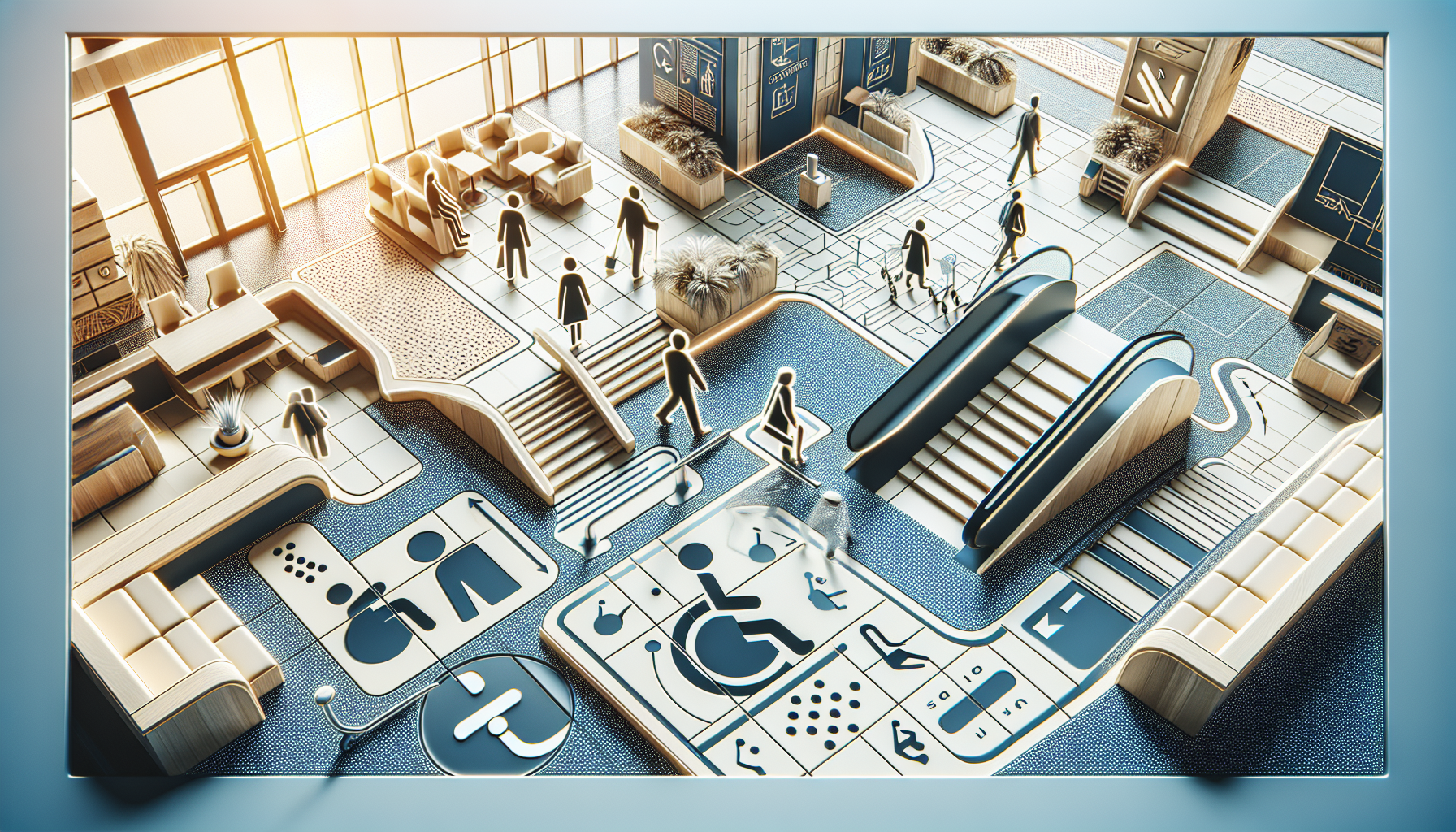
Accessibility rights in unconventional public accommodations matter because many barriers appear outside the places people usually picture when they think about disability law. The Americans with Disabilities Act, or ADA, is the primary federal civil rights law prohibiting disability discrimination in public life, and public accommodations generally include private businesses and nonprofits open to the public. Unconventional public accommodations are spaces, services, and experiences that do not fit the classic model of a storefront, hotel, or restaurant: pop-up venues, farmers markets, mobile clinics, festival grounds, food trucks, coworking spaces, online booking platforms tied to physical services, and members-only facilities that regularly invite the public. In practice, I have seen organizations overlook these settings because they assume temporary, hybrid, or niche operations fall outside accessibility rules. That assumption is risky. Accessibility rights apply based on function, not branding, and supporting ADA awareness and implementation starts with understanding how rights travel across modern service models, contracts, digital touchpoints, and on-site operations.
This hub article explains the legal foundation, common risk areas, implementation steps, and support resources organizations need to improve access in unconventional public accommodations. It is designed as a central reference within Resources and Support, connecting the practical side of compliance with broader inclusion goals. Readers usually ask the same core questions: What counts as a public accommodation? Do temporary spaces have to comply? How do digital tools affect physical access? What standards should operators follow? The short answers are straightforward. If a business serves the public, accessibility obligations likely attach. Temporary operations still must remove barriers when readily achievable and provide effective communication. Digital systems that control reservations, ticketing, wayfinding, or service access can create real discrimination when they are not usable. The most reliable path is to evaluate policies, the built environment, technology, and staff practices together rather than treating accessibility as a construction issue alone.
What qualifies as an unconventional public accommodation
An unconventional public accommodation is any publicly offered service environment that operates in a nontraditional, temporary, shared, mobile, or hybrid format. Title III of the ADA lists broad categories such as sales establishments, service establishments, places of exhibition, recreation, education, dining, social service centers, and healthcare providers. Those categories are intentionally expansive. A food truck is still a dining service. A wellness fair booth may function as a healthcare intake point. A wedding venue rented for public events can operate as a place of entertainment or assembly. A seasonal haunted attraction, escape room, or traveling exhibit can trigger accessibility duties even if it runs for only part of the year.
The practical test is not whether the operator has a permanent building. The practical test is whether disabled members of the public can access the goods, services, privileges, and advantages being offered. I have worked with event operators who believed gravel lots, portable counters, and app-based ticketing put them outside normal requirements. They did not. Their customers still needed accessible routes, captioned announcements, alternative check-in methods, and policies allowing service animals. The Department of Justice has consistently interpreted the ADA broadly, and courts often focus on whether a barrier excludes people with disabilities from meaningful participation.
Shared-use environments create another common misunderstanding. Coworking sites, maker spaces, private clubs hosting public classes, and religiously affiliated venues renting to the public may occupy legally mixed territory, but parts of their operations can still be covered. A facility can have exempt activities and covered activities at the same time. That is why an access review should map every service line, every entry point, and every user journey rather than relying on a single label.
Core rights people with disabilities can expect
Accessibility rights in these environments are not abstract. They translate into concrete expectations. People with disabilities have the right to equal access to the goods and services offered, the right to reasonable modifications of policies when necessary, the right to effective communication, and the right to use service animals in covered settings unless a narrow exception applies. They also have protection against eligibility criteria that screen out disabled people unless the criteria are necessary for safe operation.
Equal access does not always mean identical access, but it must be genuinely comparable. If a pop-up retail market places all accessible entries at a rear loading gate with no signage, that is not equivalent access. If a ticketed outdoor event only shares emergency instructions over loudspeakers, deaf attendees may miss critical information. If a mobile health provider requires all forms to be completed on a tablet that does not work with screen readers, blind users may be blocked from care. In each case, the denial arises from design choices, not from disability itself.
Effective communication is often the most neglected right in unconventional settings. Operators should think beyond interpreters, although interpreters are sometimes required. Communication access can include captioning, plain-language materials, accessible PDFs, tactile signage, readable contrast, assistive listening systems, text-based customer support, and staff able to handle accommodation requests promptly. The standard is context specific: a brief retail transaction may require different aids than a complex legal, educational, or medical discussion.
Where unconventional venues most often fail
Most accessibility failures cluster in four areas: route planning, transaction systems, policy design, and staff execution. Temporary venues frequently place parking, drop-off zones, entrances, and restrooms without considering the full accessible path of travel. A beautiful market can become unusable when vendors spread into circulation space and turn a nominal route into a maze. A rooftop event can exclude wheelchair users if the only elevator is locked after business hours. Portable restrooms may be present but placed on soft ground that makes entry impossible.
Transaction systems cause just as many problems. QR-code-only menus, touchscreen-only ordering, inaccessible ticketing widgets, timed reservation flows, and cashless kiosks can all create barriers. I have seen operators fix ramps while leaving inaccessible checkout software untouched, only to discover that the legal risk shifted from architecture to digital access. If the service cannot be reserved, purchased, or completed independently, access is incomplete.
Policy barriers are subtler but equally serious. “No outside food” rules can conflict with disability-related dietary needs. “No re-entry” policies can burden attendees who need medication, cooling breaks, or sensory regulation. “Members only” language used loosely in promotional materials can create confusion about coverage and inconsistent accommodation handling. Accessibility rights depend heavily on frontline decisions, so a weak policy framework almost always becomes an access failure on the ground.
| Setting | Common Barrier | Practical ADA-Supportive Fix |
|---|---|---|
| Food truck court | High service windows and no clear queue route | Add lower auxiliary service point, stable mats, and staff-assisted ordering |
| Festival or fairground | Uneven terrain and audio-only announcements | Create accessible routes, publish map details, and caption or text alerts |
| Pop-up clinic | Tablet-only intake and inaccessible exam setup | Offer paper or accessible digital forms and adjustable equipment |
| Coworking space | Booking app barriers and inaccessible meeting rooms | Provide accessible reservation path and verify door, table, and restroom usability |
| Farmers market | Narrow aisles, poor signage, and payment barriers | Maintain width standards, add high-contrast signs, and allow flexible payment assistance |
Built environment standards and what they mean in practice
For physical spaces, the 2010 ADA Standards for Accessible Design remain the core technical benchmark. In unconventional settings, the challenge is translating fixed-facility standards into temporary or adaptable operations. The best approach is to identify the user journey first: arrival, entry, circulation, transaction, restroom access, seating, emergency egress, and departure. Then test whether each point works for people using wheelchairs, scooters, canes, low vision tools, hearing devices, and sensory accommodations.
Not every temporary site can be made identical to a newly constructed facility, but that does not excuse inaction. Existing facilities must remove barriers where readily achievable, meaning easily accomplishable without much difficulty or expense when viewed in context. That analysis is fact specific. Installing temporary ramps, repositioning furniture, using cable covers, leasing accessible portable restrooms, reserving accessible seating areas, and changing queue layouts are often relatively low-cost steps with immediate impact. New construction and alterations, however, face a higher standard and should be designed correctly from the start.
Operators should also pay attention to state and local building codes, fire codes, and event permit requirements, which may add obligations beyond federal law. I routinely advise teams to coordinate accessibility planning with permitting instead of treating it as a post-approval patch. When access is addressed during procurement and site design, costs drop and outcomes improve.
Digital access is part of physical access
Modern public accommodations increasingly depend on digital tools to deliver physical services. Reservation systems, online waivers, event maps, menu platforms, parking apps, telehealth portals, customer chat, and email confirmations all shape whether a person can actually use a venue. That is why supporting ADA awareness and implementation now requires close attention to website and app accessibility. While the ADA does not contain a single technical web standard in its statutory text, WCAG 2.1 Level AA is the most widely recognized benchmark used by agencies, institutions, and settlement agreements.
In practical terms, digital access means keyboard navigation, alternative text, proper form labels, sufficient color contrast, resizable text, captions, error identification, and compatibility with screen readers and speech input. It also means process design. If a user times out before completing an accommodation request, the form is not truly accessible. If a map only communicates via color-coded icons without text, users with low vision or color blindness may lose essential information. If customer support for accommodations is hidden behind a chatbot with no human escalation, equal access is compromised.
The strongest organizations treat digital and in-person access as one system. They audit ticketing vendors, test forms with assistive technology, write accessible event pages, and include accommodation request fields that route to trained staff. This is especially important for hub pages like this one, because resource content itself must be easy to navigate and understand.
Policies, training, and vendor management drive real implementation
Accessibility improvements fail when they live only in a checklist. Real implementation depends on policies, repeatable training, and contract controls. Every unconventional public accommodation should maintain written procedures covering accommodation requests, service animals, mobility device access, communication aids, maintenance response, and emergency planning. Staff need examples, not slogans. A vendor captain at a street festival should know how to keep aisles clear, how to respond to a request for seating relocation, and when to escalate a communication access need.
Vendor management is critical because many unconventional settings are multilayered operations. The site owner, event promoter, platform provider, caterer, security contractor, and payment vendor may all influence accessibility. I have seen contracts assign insurance and waste removal in detail while saying nothing about accessible counters, captioning, or app usability. That omission creates preventable disputes. Contracts should define responsibilities, technical expectations, reporting lines, and remediation timelines.
Training should be role based. Customer-facing staff need disability etiquette and accommodation handling. Operations teams need route and equipment standards. Marketing teams need accessible content practices. Leadership needs a decision framework for budget, risk, and prioritization. When everyone understands their piece, accessibility becomes operational discipline rather than reactive troubleshooting.
How to build an ADA support program that lasts
A durable ADA support program starts with an access audit and continues through planning, budgeting, remediation, and review. Begin by inventorying all service channels: physical locations, pop-ups, partner sites, digital properties, phone support, documents, and payment flows. Next, identify barriers by severity and frequency. A missing ramp at the only entrance is urgent. So is an inaccessible online reservation system that blocks every customer before arrival. Then assign owners, budgets, and deadlines.
Good programs also include feedback loops. Publish a clear accessibility contact method, respond promptly, track complaints, and document fixes. Use mystery shopping, user testing with disabled participants, and periodic reinspections. Metrics should include completion rates for accommodation requests, time to resolve access issues, training coverage, and remediation aging. The point is not perfection on day one. The point is demonstrable, organized progress tied to real user experience.
As the hub for Supporting ADA Awareness and Implementation, this page should anchor related resources on service animals, effective communication, digital accessibility, temporary events, accessible procurement, and complaint response. Organizations that centralize guidance make it easier for teams to act consistently across unusual venues and evolving service models.
Accessibility rights in unconventional public accommodations are a daily operational issue, not a niche legal footnote. If a service is open to the public, disabled people must be able to use it with dignity, safety, and independence. The most important lesson is simple: coverage follows the service being offered, even when the setting is temporary, mobile, shared, or digitally mediated. Strong ADA awareness and implementation depend on seeing access as a system that includes space, technology, policy, training, and vendor oversight.
For organizations under the Resources and Support umbrella, this hub provides the framework for that work. Define the service clearly, map the user journey, apply recognized standards, fix the highest-impact barriers first, and document decisions. Use this page as your starting point, then build outward into deeper topic guides and operational checklists. The benefit is larger than reduced legal exposure. Better accessibility expands reach, improves customer experience, strengthens trust, and makes public life more usable for everyone. Review your current accommodations today, identify one barrier that can be removed quickly, and turn awareness into implementation.
Frequently Asked Questions
What counts as an “unconventional public accommodation” under accessibility law?
An unconventional public accommodation is generally a business, nonprofit, or service open to the public that does not fit the everyday image people often have of a store, restaurant, hotel, or theater. The ADA covers many categories of public accommodations, but real-world access issues often arise in less obvious settings such as pop-up shops, seasonal attractions, mobile services, farmers markets, food halls, private event spaces rented to the public, short-term exhibit venues, recreational experiences, app-based service locations, and businesses operating out of shared or nontraditional spaces. The legal question is usually not whether a place looks conventional, but whether it functions as a place or service offered to the public.
That matters because accessibility obligations do not disappear simply because a business uses a temporary setup, a hybrid online-and-physical model, or a creative venue. If the public is invited in, served, entertained, or sold goods or services, disability rights concerns may be triggered. Depending on the facts, ADA obligations can include accessible routes, reasonable modifications to policies, effective communication, auxiliary aids and services, and removal of architectural barriers where doing so is readily achievable. In other words, a business cannot avoid accessibility responsibilities simply by operating in a novel format or outside a traditional brick-and-mortar model.
Does the ADA apply to temporary, pop-up, seasonal, or mobile businesses?
Yes, in many cases it does. A temporary or mobile operation is not automatically exempt from accessibility requirements just because it is short-term, movable, or set up in a nontraditional environment. If a pop-up retail store, ticketed experience, food vendor, traveling exhibit, seasonal market stall, or mobile service is open to the public, ADA principles may still apply. The precise requirements can depend on the kind of operation, the physical layout, the degree of control over the space, and whether barriers can be addressed without undue difficulty or expense. But as a practical matter, operators should assume accessibility must be considered from the beginning.
For example, a seasonal attraction may need to consider accessible entrances, stable ground surfaces, seating options, communication access, and whether rules can be modified for customers with disabilities. A mobile business may need to think about how customers with mobility, sensory, or communication disabilities can place orders, receive services, and interact with staff. The fact that a business is “just there for the weekend” or “only operates out of a truck or tent” does not eliminate the need to provide equal access where feasible. Courts and regulators tend to focus on whether people with disabilities are being excluded, screened out, or denied equal enjoyment, not merely on whether the business format is unconventional.
What accessibility rights do people with disabilities have in these less traditional spaces?
People with disabilities generally have the right to full and equal enjoyment of the goods, services, facilities, privileges, advantages, and accommodations offered to the public. In unconventional public accommodations, that can mean the right to enter and move through a space where possible, to receive information in an accessible way, to request reasonable modifications to standard policies, and to avoid discriminatory rules or practices that unnecessarily limit participation. It also includes protection against being treated as a burden, turned away because access seems inconvenient, or offered a separate and inferior experience when integration is possible.
These rights can look different depending on the setting. In a temporary market, they may involve accessible pathways and checkout interactions. In a private venue hosting public events, they may involve accessible seating, restrooms, or communication support. In a service experience built around reservations, digital check-in, or timed entry, they may involve accessible websites, alternative reservation methods, captioning, sign language interpretation in some contexts, or flexibility with policies when disability-related needs are involved. The core principle is equal access. A person with a disability should have a meaningful opportunity to participate, obtain services, and enjoy the experience in a way that is comparable to others, even if the business must make practical adjustments to achieve that result.
Are websites, apps, and digital platforms connected to unconventional public accommodations covered too?
Often, yes. Digital access is increasingly important because many unconventional public accommodations rely heavily on websites, apps, QR-code menus, online ticketing, digital waivers, reservation portals, and mobile-only customer communication. If these tools are the gateway to the goods or services being offered, inaccessibility can function just like a physical barrier. A blind customer may be shut out by an unreadable booking system, a deaf customer may be denied important event information if videos are not captioned, and a person with limited manual dexterity may be unable to complete a transaction if an app is not navigable with assistive technology.
Although digital accessibility law continues to evolve through court decisions and agency guidance, the ADA’s broader anti-discrimination principles strongly support making these systems accessible. For businesses, that usually means designing online and mobile tools so customers with disabilities can independently obtain information and complete essential tasks. Accessible digital practices may include screen-reader compatibility, keyboard navigation, sufficient color contrast, captioned multimedia, alt text, clear forms, accessible PDFs, and alternatives when technology fails. For unconventional public accommodations, digital accessibility is especially important because the business model itself may depend on technology. If the public can only meaningfully access the service through a digital platform, accessibility cannot be treated as optional.
What should someone do if they face accessibility barriers in an unconventional public accommodation?
A good first step is to identify the barrier clearly and, if possible, notify the business or organizer in a practical, specific way. Sometimes barriers are the result of poor planning rather than intentional exclusion, and a direct request for access can lead to a quick solution. It helps to explain what obstacle exists, how it affects access, and what reasonable change would help. For example, a person might request an alternative check-in method, a ramped entry route, accessible seating, assistance with communication, or a modification to a no-outside-items policy for disability-related equipment. Keeping records such as emails, screenshots, photos, receipts, and names of staff involved can be useful if the issue is not resolved.
If the business refuses to address the problem, gives inconsistent explanations, or continues to deny equal access, the individual may wish to consult an attorney familiar with disability rights law or file a complaint with the appropriate agency. The right path can depend on whether the issue involves physical access, digital access, communication barriers, or discriminatory policies. In some cases, informal advocacy works. In others, legal action or an administrative complaint may be necessary to achieve change. The broader point is that disability rights still matter in unconventional settings. Novel business models, temporary venues, and creative public experiences are not outside the reach of accessibility principles simply because they are unfamiliar or hard to categorize.


