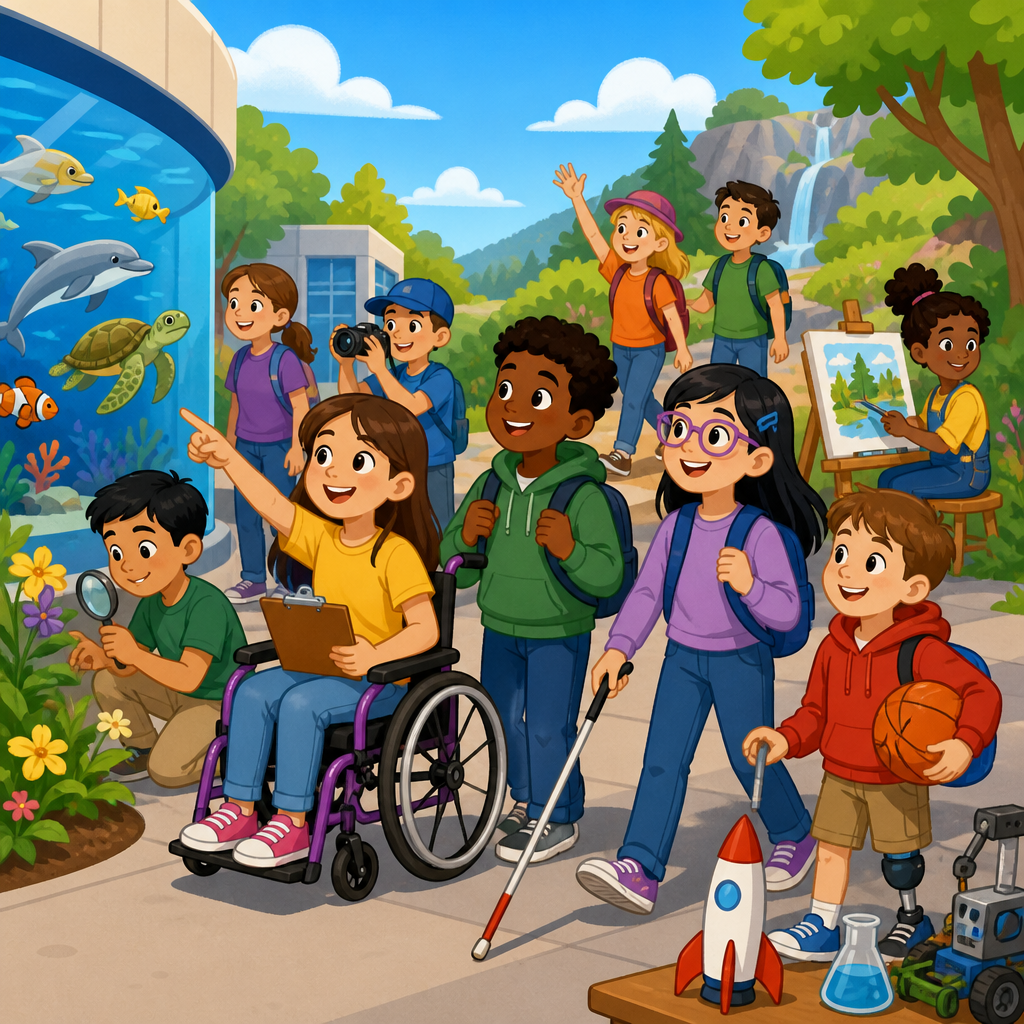
ADA rights in school field trips, clubs, and extracurricular activities matter because equal access to education is not limited to the classroom. Students build friendships, leadership skills, confidence, and future opportunities in museums, athletics, robotics teams, drama productions, after-school programs, graduation events, and every activity that surrounds the school day. When a student with a disability is excluded from those experiences, the harm is educational, social, and often legal. Families, educators, and advocates need a clear understanding of what disability law requires and how those protections work in everyday school life.
In practice, this area sits within the broader landscape of education and family rights. That landscape includes enrollment, evaluation, individualized supports, discipline, transportation, communication access, digital access, parent participation, transition planning, and protection from retaliation. Field trips, clubs, and extracurricular activities are a hub issue because they connect all of those topics. A student may need accessible transportation for a zoo trip, a sign language interpreter for debate club, diabetes care during band travel, wheelchair access at prom, or behavior supports during a science competition. The legal question is usually straightforward: can the student participate in an equal and meaningful way, with reasonable modifications and necessary aids and services, unless doing so would fundamentally alter the program or create an undue burden?
The key laws are familiar but often confused. The Americans with Disabilities Act bars disability discrimination by public entities and many private schools or community organizations. Section 504 of the Rehabilitation Act applies to schools receiving federal funds and requires equal opportunity, reasonable accommodations, and procedural safeguards. The Individuals with Disabilities Education Act governs special education and related services for eligible students, including participation in nonacademic and extracurricular services when needed for a free appropriate public education. State law, athletic association rules, school board policies, and safety codes also matter, but they cannot override federal disability rights. I have worked with schools that assumed a trip waiver or staffing shortage solved the issue; it does not. The legal duty is to plan access, not avoid responsibility. Families should treat this page as a practical hub for education and family rights questions that branch into transportation, medical supports, discipline, communication access, and dispute resolution.
What equal access means in field trips and extracurricular activities
Equal access means a student with a disability must have an equal opportunity to participate in school-sponsored and school-related activities. That includes field trips during the school day, overnight travel, athletics, clubs, performing arts, assemblies, dances, student government, graduation activities, and enrichment programs. Equal does not always mean identical. Schools may use different methods if those methods provide an equally effective opportunity, but separate arrangements are usually disfavored when integrated participation is possible.
For example, if a fourth-grade class visits a history museum, a student who uses a wheelchair cannot be left behind with a worksheet packet because the bus lacks a lift. The school must address transportation, route access, and staffing in advance. If the museum tour includes audio-only exhibits, a student who is deaf may need captioning, an interpreter, or a different tour format. If an after-school chess club meets in an inaccessible second-floor classroom, the meeting location should be changed. If a student with epilepsy needs rescue medication during an overnight trip, trained personnel and medication procedures may be required. These are not special favors. They are core access measures.
Schools also need to avoid eligibility rules that screen out disabled students unless the rule is necessary for the program. A club cannot require “independent participation” if that phrase is used to exclude a student who needs an aide, communication device, or health support. Athletic programs can apply legitimate safety standards, but they must be based on actual risk, not stereotypes. The Office for Civil Rights has repeatedly emphasized that schools must make individualized assessments and provide auxiliary aids and services where needed. In daily practice, the best test is simple: would the student be able to join, benefit, and belong without facing barriers that the school could reasonably remove?
How the main disability laws work together for students and families
Parents often ask which law controls: the ADA, Section 504, or IDEA. The answer is usually all three, depending on the student and the setting. Public schools are covered by Title II of the ADA. Most private schools, private camps, museums, theaters, and activity vendors are covered by Title III, though religious entities have different rules. Section 504 reaches schools and colleges that receive federal funds. IDEA applies when a student qualifies for special education and related services under one of its disability categories.
These laws overlap but do different jobs. The ADA and Section 504 are broad anti-discrimination laws. They require equal access, reasonable modifications, effective communication, and removal of unnecessary barriers. IDEA is an education-delivery law focused on specially designed instruction and related services. During extracurricular participation, IDEA matters when the support is necessary for the student to receive educational benefit or to access nonacademic services the school offers to peers. A one-to-one nurse, behavior intervention support, orientation and mobility training, or transportation may flow from an IEP, while a Section 504 plan may spell out accommodations for clubs, sports, and travel.
Because this page is a hub for education and family rights, it helps to see how common issues map across the framework. Families dealing with field trip exclusion often also face questions about accessible school transportation, service animals, discipline for disability-related behavior, communication with limited-English-proficient parents, and grievance procedures. The strongest approach is coordinated documentation: notes from doctors where appropriate, current IEP or 504 language, written requests, incident timelines, and policy excerpts. In my experience, disputes are resolved faster when the school team moves from abstract labels to concrete supports, dates, staff assignments, and transportation details.
Common barriers and the supports that usually solve them
Most disputes arise from predictable barriers, not unusual cases. Schools know trips and extracurriculars will involve transportation, schedules, crowds, physical access, communication demands, medication needs, and behavior expectations. The work is to plan for those realities before permission slips go home.
| Barrier | Typical school activity | Support that often provides access |
|---|---|---|
| Inaccessible transportation | Field trip to museum or farm | Lift-equipped bus, accessible van, adjusted loading plan |
| Communication barrier | Debate club, assembly, theater rehearsal | Interpreter, CART, captions, visual agenda, AAC support |
| Medical need during activity | Band travel, athletics, overnight trip | Medication plan, trained staff, refrigeration, emergency protocol |
| Sensory overload | Pep rally, dance, carnival, graduation | Quiet space, noise protection, preview, flexible attendance plan |
| Behavioral support need | After-school club or competition | Positive behavior plan, extra supervision, break schedule |
| Physical access barrier | Club meeting, stadium, camp cabin | Accessible route, room change, seating adjustment, adapted equipment |
Notice that these supports are practical and routine. They rarely require reinventing the program. A robotics team can move tables for wheelchair turning radius. A drama teacher can provide scripts in accessible digital format. A coach can permit diabetes supplies at the sideline. A senior trip can reserve accessible hotel rooms and verify shuttle lifts before departure. Problems usually come from late planning, poor communication with vendors, or assumptions that disability support ends when the bell rings.
There are limits. Schools do not have to make changes that fundamentally alter the nature of an activity or impose an undue financial or administrative burden, but those exceptions are narrower than many teams think. The analysis must be individualized, and schools should consider alternative methods before saying no. “We have never done that before” is not a legal defense. Neither is “our insurer might not like it” unless the concern is supported by actual policy terms and objective risk evidence.
Responsibilities of schools, vendors, coaches, and club advisers
School districts cannot outsource accessibility. If the school sponsors the field trip or extracurricular activity, it remains responsible for nondiscrimination even when transportation companies, museums, camps, stadiums, or third-party instructors are involved. That means contracts, purchase orders, and trip planning should address accessibility directly. I have seen avoidable conflicts where the school assumed the venue was accessible because it had ramps at the front entrance, but the accessible restroom was in a locked area and the lunch space required stairs. Basic pre-trip verification prevents many failures.
Coaches and advisers play a critical role because they make day-to-day participation decisions. They should know the student’s accommodations, understand emergency protocols, protect privacy, and avoid ad hoc exclusions. A choir director cannot drop a student from a performance because arranging wheelchair space on stage feels inconvenient. A club adviser cannot tell a parent to attend every meeting as a condition of participation if nondisabled students are not held to that rule. A bus contractor must follow accessibility requirements, but the district must ensure the right vehicle is actually assigned on the right day.
Training matters. Staff need practical guidance on medication delegation, communication access, disability etiquette, de-escalation, and trip-specific planning. Written policies should explain who approves accommodations, how far in advance requests should be discussed, what to do when a venue changes, and how families can raise concerns quickly. Strong systems reduce legal risk and also make participation smoother for everyone.
What families can do when access is denied or limited
When a school denies participation, delays a decision until the last minute, or offers a watered-down alternative, families should respond in writing. Ask for the reason, the policy relied on, the specific safety concern if one is claimed, and the alternatives considered. Request an immediate meeting with the 504 coordinator, principal, special education case manager, nurse, coach, or activities director as appropriate. If the issue involves an upcoming event, put the timeline front and center. Short deadlines often require quick escalation.
Useful documentation includes the event notice, emails, text screenshots, current IEP or 504 plan, medical orders when relevant, transportation information, and a concise description of what the student needs to participate. Keep the request concrete: accessible bus, trained medication support, interpreter, schedule change, seating change, extra adult support, or modified policy. If the school says a requested support is too burdensome, ask what alternatives were analyzed and who made that determination. Under the ADA and Section 504, blanket refusals are weak; individualized review is the standard.
If informal efforts fail, families can use the district grievance process, request a 504 meeting, seek IEP team action, file an OCR complaint, pursue state complaint procedures under IDEA where applicable, or consult counsel. The best outcome is usually fast correction before the activity happens. Even when the event has passed, documenting the denial matters because recurring exclusion patterns often affect future trips, athletics, clubs, and end-of-year events.
Building an inclusive education and family rights strategy
Field trips, clubs, and extracurricular activities should be planned as part of the student’s full school access, not treated as optional extras. For families, that means reviewing the IEP or 504 plan before the school year begins and adding language that covers nonacademic and extracurricular participation, transportation, nursing, communication, behavioral supports, and emergency procedures. For schools, it means creating accessible trip checklists, training sponsors, vetting venues, and budgeting for auxiliary aids and services as a normal operating cost.
The larger lesson across education and family rights is that inclusion works best when schools stop reacting case by case and start building systems. A district that keeps one accessible bus available, maintains interpreter contracts, trains staff on medication administration, and uses accessible digital forms will solve most disputes before they start. Families should expect that level of competence. Students should not have to earn access by pushing through preventable barriers.
ADA rights in school field trips, clubs, and extracurricular activities protect more than attendance. They protect belonging, dignity, safety, and the full promise of public education. If you are building your understanding of education and family rights, use this hub as the starting point for connected issues such as school transportation, communication access, discipline protections, health supports, and dispute resolution. Then review your child’s current plan, identify upcoming activities, and ask one practical question now: what support will make participation equal from the first day, not after a problem occurs?
Frequently Asked Questions
Do ADA rights apply to school field trips, clubs, and extracurricular activities, or only to classroom instruction?
Yes. ADA rights extend beyond the classroom and generally apply to the full range of school programs, services, and activities, including field trips, athletics, student clubs, assemblies, after-school programs, performing arts, graduation events, competitions, and other extracurricular opportunities. Equal access to education is not limited to academics alone. Schools are expected to provide students with disabilities an equal opportunity to participate in the experiences that shape social development, leadership, independence, and school belonging.
That matters because field trips and extracurricular activities are often where students build friendships, practice teamwork, explore career interests, and gain confidence. A robotics club, theater rehearsal, museum trip, debate tournament, or school dance may seem separate from academics, but these experiences are part of a student’s educational life. Excluding a student because of mobility needs, medical needs, communication differences, behavior supports, sensory needs, or the need for an aide or accommodation can raise serious legal concerns under the ADA and, in many cases, Section 504 as well.
In practical terms, schools usually cannot treat participation in extracurricular activities as optional for disability-access purposes. If the school offers the activity to students generally, it must consider how to make that activity accessible unless doing so would fundamentally alter the nature of the program or create an undue burden under the law. That means schools should think proactively about transportation, accessible venues, medication administration, communication supports, schedule flexibility, supervision, assistive technology, dietary needs, and reasonable modifications to policies and practices. The core rule is straightforward: students with disabilities should have a meaningful and equal chance to participate, not merely be invited in theory.
What kinds of accommodations or modifications might a student be entitled to during field trips or extracurricular activities?
The answer depends on the student’s individual needs and the nature of the activity, but schools may need to provide a wide range of reasonable accommodations and modifications so the student can participate safely and meaningfully. Examples can include wheelchair-accessible transportation, accessible seating, sign language interpreters, captioning, visual supports, communication devices, modified schedules, breaks for medical or sensory regulation, allergy precautions, behavior supports, trained staff assistance, permission for a service animal, adapted equipment, medication support, and one-to-one assistance when required.
For field trips, access issues often begin with planning. The school may need to choose an accessible destination, confirm that bathrooms and entrances are usable, arrange transportation with lifts or other accessibility features, and ensure the student can participate in the educational parts of the trip rather than simply being present. For clubs and after-school activities, the school may need to adjust meeting spaces, provide communication access, allow extra time, modify attendance rules tied to disability-related absences, or adapt procedures so a student can fully join the activity. In athletics or performance-based programs, schools may need to consider modified drills, accessible routes, adaptive equipment, or other changes that preserve the essential nature of the activity while expanding access.
Importantly, the law usually focuses on individualized decision-making rather than blanket assumptions. A school should not decide that a student cannot attend a trip or join a club simply because the student has a disability or because accommodations might require effort. Instead, the school should assess what barriers exist and what reasonable steps can remove them. Families can help by sharing information about the student’s needs, but the school typically has the responsibility to engage in a thoughtful process and avoid avoidable exclusion.
Can a school refuse to let a student with a disability attend a field trip or participate in an extracurricular activity because of safety concerns?
Schools can consider legitimate safety issues, but they generally cannot rely on vague fears, stereotypes, or unsupported assumptions to exclude a student with a disability. If a school claims a student cannot safely participate, that decision should be based on an individualized assessment using current, objective information about the specific student and the specific activity. The school should also consider whether reasonable accommodations, added supports, staff training, or policy modifications would address the concern before deciding exclusion is necessary.
For example, a school may be worried about seizures on a trip, elopement risk during a museum visit, diabetic care during athletics, or communication access in an emergency. Those can be real planning issues, but they are not automatic reasons to deny participation. The school should ask practical questions: Can trained staff accompany the student? Can medication or emergency plans travel with the group? Can the itinerary be adjusted? Can the student ride accessible transportation? Can sensory supports or a quieter area be arranged? Can the venue provide accessibility assistance? Often, careful planning solves what initially looks like a barrier.
Exclusion may become legally risky when a school jumps straight to “no” without exploring reasonable options. A school also usually cannot require a parent to attend a trip or event as a condition of the student’s participation if that requirement is imposed because of the student’s disability and the school would otherwise provide supervision for students generally. While there may be rare circumstances where participation truly cannot be made safe or would fundamentally alter the activity, those cases should be the exception, not the default. The legal and educational expectation is inclusion whenever reasonably possible.
Is a school required to provide aides, transportation, or other support services so a student can participate in extracurricular activities?
Often, yes, if those supports are necessary to give the student an equal opportunity to participate and the support is a reasonable accommodation in the context of the activity. The exact obligation can vary based on the school setting, the student’s disability-related needs, and the nature of the program, but schools commonly must consider support services that make participation actually possible rather than merely theoretical. Equal access is not achieved if a student is technically allowed to join but cannot get to the event, cannot communicate, cannot navigate the environment, or cannot safely remain there without assistance.
An aide or paraprofessional may be needed if the student requires assistance with behavior regulation, communication, mobility, health supports, or transitions during the activity. Transportation may need to be accessible if the school is providing transportation for other students. If a club meets in an inaccessible room, the meeting space may need to be moved. If an event includes spoken presentations, the school may need to provide interpretation or other communication access. If a student needs nursing-related care, medication support, or supervision tied to a disability, the school may need to plan for those services just as it would during the regular school day, depending on the circumstances and applicable obligations.
What schools generally should not do is shift the burden entirely onto families by saying, in effect, “Your child can participate only if you provide and pay for the support.” While there can be complex cases involving outside providers, independent activities, or services not normally available in that context, schools usually must at least analyze what supports are necessary and whether the law requires them. A student’s right to participate should not disappear simply because the activity takes place after school, off campus, or outside traditional academic instruction.
What should parents do if a school excludes their child from a club, trip, sport, or other extracurricular activity because of a disability?
Start by asking for the reason in writing and requesting a clear explanation of what barriers the school believes prevent participation. It is often helpful to respond in writing as well, explaining that the student is seeking equal access under the ADA and, when applicable, Section 504, and asking the school to identify reasonable accommodations or modifications that would allow participation. Written communication creates a record and often encourages a more careful, legally sound review by the school.
Parents should gather relevant documentation, which may include medical information, accommodation history, behavior plans, communication needs, transportation needs, prior successful supports, and examples of how similar access has been provided in other settings. It can also help to propose concrete solutions. For instance, if the issue is a field trip, suggest accessible transportation, nurse coverage, an aide, a revised schedule, or communication supports. If the issue involves a club or sport, ask whether meeting locations, rules, equipment, or supervision can be modified. Framing the discussion around practical solutions often moves the process forward.
If informal efforts do not resolve the problem, parents can request a Section 504 meeting, use the district’s grievance procedure, contact the district’s ADA or Section 504 coordinator, or seek guidance from an advocate or attorney experienced in disability rights in education. Depending on the facts, complaints may also be filed with appropriate government agencies. The key point is that exclusion from extracurricular activities is not a minor issue. These programs are part of the educational experience, and denying access can affect a student’s growth, peer relationships, confidence, and future opportunities. Families are right to press for inclusion, and schools are expected to take that obligation seriously.