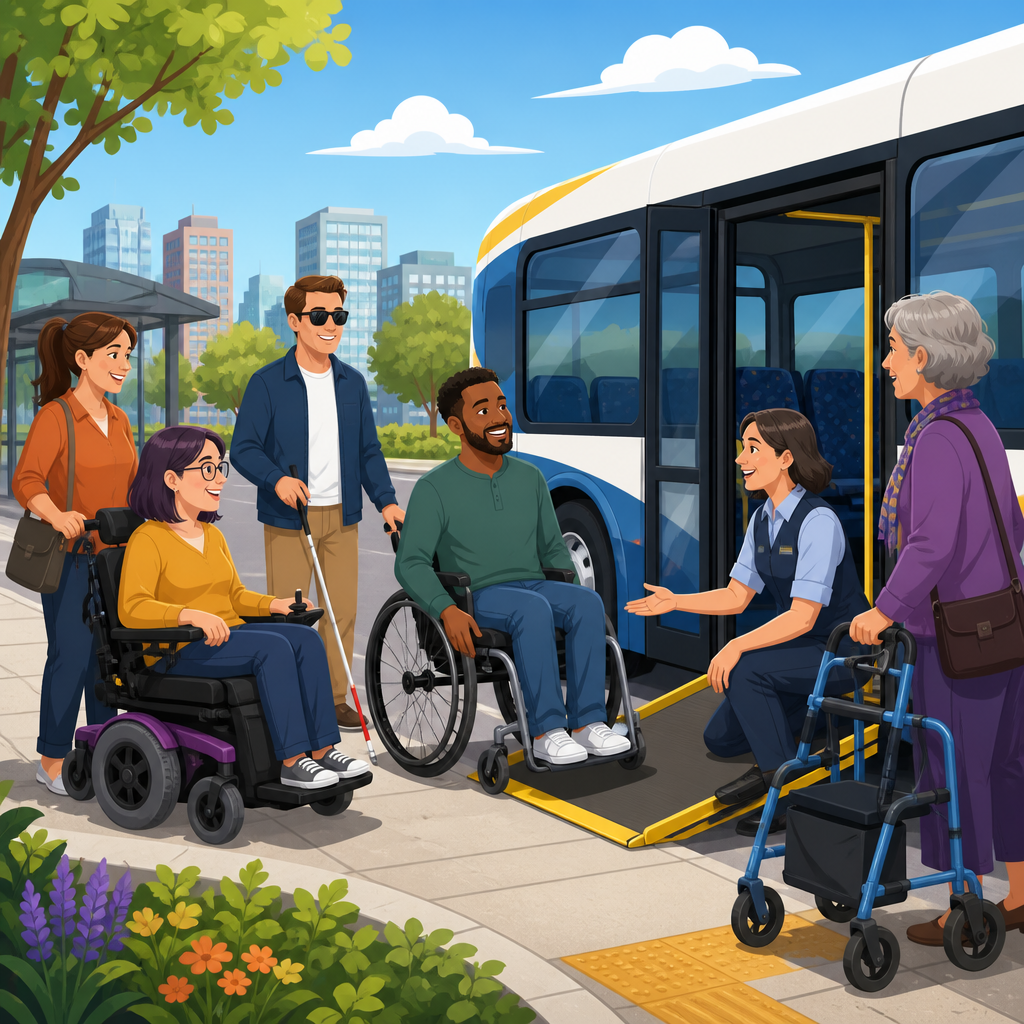
Partnering with disability organizations on transportation access turns compliance into collaboration and makes mobility systems work better for the people who use them every day. Transportation access includes fixed-route buses, rail, sidewalks leading to stops, paratransit eligibility and booking, wayfinding, digital trip planning, customer service, and the policies that shape each of those touchpoints. Disability organizations include centers for independent living, advocacy groups, parent organizations, veteran networks, blind and low-vision associations, deaf and hard of hearing groups, autism support organizations, aging and disability resource centers, and cross-disability coalitions. When public agencies, private operators, and community partners work together early and consistently, they identify barriers faster, prioritize improvements more accurately, and avoid expensive retrofits or failed outreach later.
I have seen agencies spend months refining a service change only to learn in one meeting that the proposed stop relocation removed the only boarding point with a continuous accessible path. I have also seen the opposite: a transit team that invited local disability leaders into corridor planning from the first concept stage ended up with better boarding pads, clearer stop announcements, stronger public support, and fewer complaints after launch. That is why this topic matters within Resources and Support. Community engagement and advanced ADA support are not side tasks for legal staff; they are operating disciplines that influence capital planning, communications, procurement, training, and rider trust.
At a practical level, partnering well means moving beyond occasional listening sessions. It means building structured relationships, paying attention to representation, sharing information in accessible formats, and acting on what is heard. The legal baseline in the United States comes from the Americans with Disabilities Act, Section 504 of the Rehabilitation Act, U.S. Department of Transportation regulations in 49 CFR Parts 27, 37, and 38, and guidance from the Federal Transit Administration. Those rules set minimum requirements. Strong partnerships help agencies interpret how those requirements play out in local conditions, such as snow clearance near bus stops, elevator outage communications, tactile wayfinding in stations, or the usability of mobile ticketing apps with screen readers.
This hub article covers the full landscape of community engagement and advanced ADA support for transportation access. It explains why disability organizations should be treated as long-term partners, how to structure engagement, what operational areas benefit most, which metrics show progress, and where common mistakes undermine good intentions. Use it as a roadmap for deeper work on outreach strategy, paratransit quality, stop accessibility, accessible communications, travel training, and rider-centered service design.
Why disability organizations are essential transportation partners
Disability organizations bring lived expertise that operators cannot generate internally, no matter how committed staff may be. Planners understand route productivity, schedulers understand runtime, and maintenance teams understand asset conditions. Riders with disabilities understand whether the curb ramp actually connects to the stop, whether the bus operator pauses long enough for a securement, whether an elevator alert is readable by a screen reader, and whether a same-day trip is realistic for someone using paratransit to reach work. Those insights are operationally significant because access failures are usually cumulative. A compliant bus is not enough if the sidewalk is broken, the stop pole is placed in a narrow pinch point, the audio announcement is inaudible, and the customer service line cannot relay through text or video options.
Partnerships also improve legitimacy. Agencies often hear from the same few participants at public hearings, while people with disabilities face extra barriers to attending meetings, reviewing technical documents, or providing input within short deadlines. Working through trusted organizations expands reach and improves representation, especially among riders with intellectual disabilities, non-English speakers, low-income households, and people who rely on attendants or family support. In practice, this leads to better decisions because the agency hears a wider range of travel patterns and constraints.
Finally, partnership reduces risk. ADA complaints, Title VI concerns, negative media coverage, and project delays frequently emerge when disability impacts were considered too late. Early collaboration is cheaper than redesign. If a station renovation omits intuitive tactile cues, correcting it after construction can be costly and disruptive. If rider testing happens before final design, the fix may be a modest layout adjustment. The business case is straightforward: better engagement improves accessibility outcomes, customer satisfaction, and project delivery.
How to build a durable engagement framework
A durable framework starts with identifying the right partners and defining roles clearly. Do not rely on one organization or one vocal advocate to represent every disability experience. Mobility needs differ across blindness, deafness, cognitive disability, ambulatory disability, chronic illness, and neurodivergence. Create a stakeholder map that includes local and regional advocacy groups, service providers, independent living centers, school transition programs, disability-led businesses, and healthcare or workforce organizations that depend on reliable transportation access for their clients. Then establish an advisory structure with predictable meeting schedules, clear agendas, compensation or stipends when appropriate, and documented follow-up.
In my experience, agencies get better results when engagement is tied to decision points instead of broad open-ended discussion. Ask precise questions at the right time: Is the proposed temporary stop accessible during construction? Is the paratransit no-show policy understandable and fair? Does the trip planner return accessible path information? Are service alerts available in plain language, large print, braille on request, captioned video, and formats compatible with assistive technology? Specific prompts help organizations provide actionable feedback rather than generic frustration.
Accessibility of the engagement process itself is nonnegotiable. Meetings should offer captioning, sign language interpretation when requested, accessible digital materials, plain-language summaries, and remote participation options. Venues need step-free access, accessible restrooms, and reliable audio. Survey tools should work with screen readers and keyboard navigation. When agencies fail here, they signal that accessibility is still performative. When they succeed, they gather higher-quality information and build credibility.
| Engagement practice | What it looks like in transportation | Why it improves access |
|---|---|---|
| Standing advisory group | Quarterly meetings with cross-disability representatives reviewing projects, policies, and complaints data | Creates continuity and catches recurring barriers before they spread systemwide |
| Paid rider testing | Participants test stations, apps, signage, and boarding processes before launch | Reveals practical obstacles that technical reviews often miss |
| Accessible public communication | Captioned videos, plain-language notices, screen-reader-friendly PDFs, and multilingual outreach | Increases participation and reduces information gaps during service changes |
| Feedback loop with deadlines | Agency logs issues, assigns owners, and reports back on actions taken within set timeframes | Builds trust and turns comments into measurable improvements |
Applying advanced ADA support across the rider journey
Advanced ADA support means looking beyond minimum compliance and designing the entire rider journey for reliability, dignity, and independence. Start with trip discovery. Websites and apps should present elevator status, stop accessibility constraints, boarding information, and paratransit options in formats compatible with assistive technology. Many agencies use platforms such as Google Maps integrations, Transit app partnerships, GTFS and GTFS-Realtime feeds, and customer alert systems, but the data only help if accessibility attributes are complete and current. A stale elevator feed is worse than no feed because riders make decisions based on false confidence.
Next comes the path to the stop or station. This is where transportation agencies often depend on city public works, state departments of transportation, or private property owners. Disability organizations can help agencies document missing curb ramps, inaccessible pedestrian signals, ponding, snow obstruction, and sidewalk gaps that sever access to otherwise compliant transit service. Some agencies now use stop accessibility inventories combined with GIS mapping and condition scoring to prioritize upgrades. That approach works best when rider reports are layered onto asset data rather than treated as anecdotal exceptions.
Boarding and riding require disciplined operations. Operators need recurrent training on ramp deployment, securement, stop announcements, disability etiquette, service animal handling, and communication with riders who are deaf, blind, or non-speaking. Refresher training matters because employee turnover erodes skills quickly. Vehicle maintenance matters just as much. A lift that works ninety-five percent of the time still creates major disruption for the rider who misses a medical appointment. Partner organizations can co-develop training scenarios grounded in local realities, making instruction more credible than generic video modules.
Paratransit deserves special attention because it is where legal compliance, customer experience, and cost pressure often collide. Eligibility processes should be understandable, respectful, and functionally focused, not designed to discourage applicants. Scheduling windows, on-time performance, pickup communication, negotiated pickup expectations, and complaint resolution all shape whether paratransit supports real participation in work, school, healthcare, and social life. Disability organizations frequently help agencies refine eligibility interviews, travel training materials, and rider handbooks so policies are clearer and more consistent. They can also surface patterns, such as chronic late pickups in certain zones or inaccessible subcontractor vehicles.
Using collaboration to improve projects, policies, and procurement
Partnerships are most valuable when they influence decisions before contracts are signed and concrete is poured. In capital projects, disability organizations should review concept plans, not just final renderings. For bus stop programs, that means discussing clear landing areas, shelter placement, bench reach space, detectable warnings, lighting, and snow storage. For rail stations, it means elevator redundancy, intuitive circulation, tactile and visual wayfinding, fare gate width, acoustics, platform gaps, and emergency egress. A station can meet dimensional requirements and still be confusing or exhausting to navigate if wayfinding is fragmented.
Policies need the same scrutiny. Consider service disruptions. During a planned shutdown, does the agency provide accessible shuttle buses, boarding staff, audible and visual announcements, and routefinding support at temporary stops? During elevator outages, are alternative paths realistic or only theoretical? During fare policy changes, can riders using paratransit, reduced-fare programs, or cash alternatives understand and use the new system? These are policy questions as much as operations questions, and disability organizations routinely identify where a well-meant rule produces exclusion in practice.
Procurement is another underused lever. Accessibility requirements should appear in requests for proposals, technical specifications, testing protocols, and acceptance criteria. That applies to vehicles, ticket vending machines, websites, kiosks, call-center software, and wayfinding systems. Named standards and testing methods matter. Agencies often reference WCAG for digital interfaces, ADA Standards for Accessible Design for facilities, and Buy America plus transit vehicle specifications for equipment, but they also need user testing with disabled riders before final acceptance. Vendors will deliver to the requirements they are given. If accessibility is vague, it becomes negotiable. If it is specific and tested, it becomes deliverable.
Measuring results and sustaining accountability
Good intentions are not enough; transportation access partnerships need metrics, ownership, and public reporting. Start with a baseline: number of inaccessible stops, elevator availability, lift reliability, on-time paratransit performance, complaint categories, website accessibility defects, average time to resolve service barrier reports, and participation rates in accessible outreach. Then set targets that are meaningful to riders. For example, reducing unresolved stop path-of-travel barriers by a certain percentage is more useful than counting how many meetings were held.
Qualitative feedback still matters. Complaint narratives, rider interviews, and shadow trips reveal whether the system feels predictable and respectful. In several projects I have supported, the most valuable metric was repeat issue frequency. If the same problem appears across channels, such as operators bypassing stops after snow events or inaccessible detour signs during construction, the agency likely has a process gap, not isolated incidents. Share that analysis with disability partners and invite them to challenge assumptions.
Accountability also requires internal structure. Someone should own the partnership program, but every department must carry responsibility. Planning, operations, facilities, IT, communications, procurement, and contractor management all affect transportation access. Publish progress in plain language, note tradeoffs honestly, and explain why some fixes take longer than others. Trust grows when agencies show their work. If your organization has not built a formal partnership with disability organizations yet, start now: map stakeholders, audit your engagement process, and invite riders with disabilities to help shape every transportation decision that affects independence.
Frequently Asked Questions
Why should transportation agencies partner with disability organizations instead of relying only on legal compliance and internal planning?
Partnering with disability organizations helps transportation providers move beyond minimum compliance and toward services that work reliably in real-life conditions. Laws and standards are essential, but they do not always reveal the day-to-day barriers riders face when they are trying to get to work, school, medical appointments, or community activities. Disability organizations bring direct knowledge from people who use fixed-route buses, rail, sidewalks, paratransit, trip-planning tools, and customer service systems every day. That insight can uncover issues that might otherwise be missed, such as bus stop access blocked by uneven sidewalks, confusing transfer points, inconsistent stop announcements, inaccessible digital booking flows, or policies that look reasonable on paper but create unnecessary burdens in practice.
These partnerships also build trust. When agencies involve disability organizations early, they signal that disabled riders are not an afterthought but a core part of transportation planning. That can improve public confidence, reduce conflict, and lead to better project outcomes because concerns are addressed before changes are finalized. In many cases, collaboration also saves time and money by identifying practical fixes early instead of responding later to complaints, service failures, or expensive retrofits. Most importantly, disability organizations help agencies understand accessibility as a system-wide experience. Transportation access is not just about a lift on a bus or a designated seating area. It includes sidewalks to stops, signage, audio and visual information, operator training, customer support, eligibility processes, digital platforms, and the policies that connect all those touchpoints. A strong partnership makes the entire mobility system more usable, equitable, and effective.
Which disability organizations should be included in transportation access planning and decision-making?
The strongest approach is to engage a broad cross-section of disability organizations rather than relying on a single advisor or one type of group. Transportation agencies should consider centers for independent living, disability rights and advocacy organizations, parent and family-led groups, organizations serving blind and low-vision riders, Deaf and hard-of-hearing communities, people with intellectual and developmental disabilities, wheelchair users, neurodivergent riders, veterans with disabilities, and groups representing seniors who may have overlapping mobility and access needs. It is also important to include organizations serving people with chronic illnesses, mental health disabilities, and individuals who rely on personal care attendants or service animals, since their transportation experiences often surface different barriers.
Representation should reflect the actual rider population and the full transportation network. That means looking at geography, race, language, income, and urban, suburban, and rural travel patterns in addition to disability type. A paratransit rider in an outer neighborhood may face different challenges than a fixed-route rider in a downtown corridor, and a parent traveling with a disabled child may raise issues that differ from those of an independent adult commuter. Agencies should also avoid limiting engagement to executive leadership at major nonprofits. Frontline advocates, peer counselors, community navigators, and disabled people with lived experience often provide the most practical and specific feedback. The goal is not simply to check a stakeholder box but to build an ongoing table where a range of voices can inform route design, stop improvements, paratransit processes, communications, technology procurement, and service policies in meaningful ways.
What are the most effective ways to work with disability organizations on transportation access improvements?
Effective collaboration starts early and continues consistently. Disability organizations should be involved at the problem-definition stage, not just invited to review a nearly finished plan. Agencies can create advisory committees, hold structured listening sessions, conduct ride-alongs and walk audits, convene focus groups on specific topics such as paratransit booking or digital accessibility, and include disability representatives in procurement reviews, pilot programs, and policy development. The key is to match the engagement method to the decision being made. For example, if the issue is stop accessibility, joint field assessments may be more useful than a standard public meeting. If the issue is trip-planning software, usability testing with screen-reader users and people with cognitive disabilities is essential.
Good partnership practices also include accessibility in the engagement process itself. Meetings should be physically accessible, offer captioning and sign language interpretation when needed, provide materials in plain language and accessible digital formats, and allow multiple ways to participate, including virtual options, phone input, and time for written comments. Agencies should compensate community members and organizations for their expertise when appropriate, especially when asking for sustained participation that requires staff time or lived-experience consultation. Just as important, agencies need a feedback loop. Participants should be told what was heard, what changes will be made, what cannot be changed yet, and why. That transparency is what turns outreach into collaboration. Over time, the most successful partnerships become operational, not symbolic, influencing training, maintenance priorities, communications standards, service monitoring, and performance measurement across the transportation system.
What transportation issues benefit most from input from disability organizations?
Nearly every part of the transportation system benefits from disability-informed input because accessibility barriers often arise at the points where systems connect. Fixed-route service is a major area, including bus stop placement, boarding conditions, shelter design, route changes, transfer timing, priority seating, securement practices, audible and visual announcements, and operator interactions. Rail access can involve platform gaps, elevator reliability, wayfinding, tactile warnings, customer assistance, and emergency communication. Sidewalks and curb ramps leading to stops are equally critical because a fully accessible vehicle is of limited use if the rider cannot safely reach it. Disability organizations can also identify hidden friction points, such as snow removal at stops, temporary construction detours, inaccessible payment kiosks, or unclear signage during service disruptions.
Paratransit is another high-impact area for collaboration. Organizations can help agencies improve eligibility criteria, application forms, functional assessments, rider communications, booking options, on-time performance standards, no-show policies, subscription trip rules, and complaint resolution. Digital systems also deserve focused attention. Trip-planning websites, mobile apps, real-time alerts, customer chat tools, and online forms should be tested for screen-reader compatibility, captioning, color contrast, keyboard navigation, plain language, and ease of use under stressful travel conditions. Customer service and policy design are just as important as infrastructure. Riders may encounter barriers when reporting problems, requesting reasonable modifications, understanding fare policies, or navigating inconsistent staff responses. Because disability organizations hear directly from community members across many of these touchpoints, they can help agencies prioritize improvements that produce the biggest real-world gains in independence, reliability, and rider confidence.
How can agencies measure whether partnerships with disability organizations are actually improving transportation access?
Agencies should measure both the quality of the partnership and the outcomes it produces. On the partnership side, useful indicators include how early disability organizations are involved in planning, how often engagement occurs, whether multiple disability communities are represented, whether participants are compensated, and whether agencies routinely report back on how input was used. These process measures matter because they show whether collaboration is embedded in decision-making or treated as occasional outreach. Agencies can also track whether accessibility concerns are being raised and resolved faster, whether advisory recommendations are being incorporated into projects, and whether internal teams such as planning, operations, IT, customer service, and capital delivery are all participating in the partnership rather than leaving accessibility to a single department.
Outcome measures should focus on the rider experience across the full transportation journey. That can include fewer complaints about inaccessible stops or missed announcements, better elevator and lift reliability, improved on-time performance for paratransit, shorter call wait times, simpler eligibility processes, more accessible digital tools, and higher rider satisfaction among disabled passengers. Agencies can also evaluate audit results, mystery rider findings, trip success rates, and the percentage of identified barriers that are corrected within a defined timeframe. Qualitative feedback remains essential. Regular check-ins with disability organizations can reveal whether riders are actually experiencing meaningful improvement, not just seeing better metrics on paper. The best measurement systems combine operational data, accessibility audits, customer feedback, and community validation. When agencies can show that collaboration led to concrete changes in service design, policy, communications, and infrastructure, they demonstrate that partnership is not just good public engagement but a practical strategy for building a transportation system that works better for everyone.


