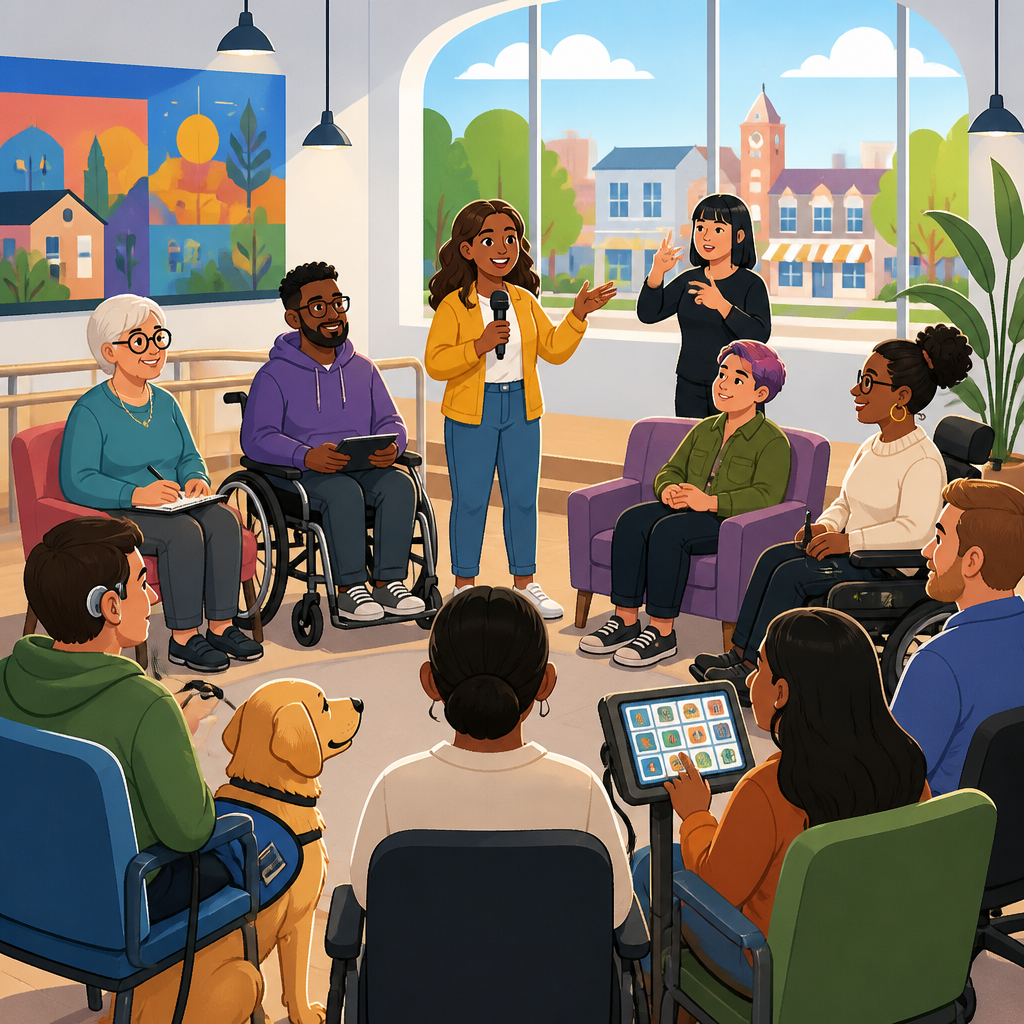
An accessible town hall on accessibility is a public meeting designed so people with disabilities can participate fully, safely, and with dignity before, during, and after the event. That means more than adding a wheelchair ramp or turning on captions. It requires planning for physical access, digital access, communication access, sensory needs, transportation, wayfinding, safety, and follow-up. I have helped plan and audit community meetings for municipalities, universities, and housing agencies, and the same pattern appears every time: when accessibility is built into the format from the start, participation rises, conflict drops, and decision-makers get better information from the people most affected.
This matters because a town hall about accessibility carries a higher bar than a standard civic meeting. If the meeting itself excludes disabled residents, the process loses credibility immediately. In the United States, organizers also need to understand the practical implications of the Americans with Disabilities Act, Section 504 of the Rehabilitation Act, state and local nondiscrimination rules, and in some cases Title VI language access obligations that overlap with disability access. Community engagement and advanced ADA support meet at this point. The goal is not just legal compliance. The goal is meaningful access: giving attendees equal opportunity to hear, be heard, ask questions, submit comments, and influence outcomes.
For this hub article, think of an accessible town hall as a system with four layers. First is policy: notice requirements, accommodation workflows, procurement standards, and moderator rules. Second is venue and platform: parking, entrances, restrooms, stage access, livestream tools, microphones, captioning, and accessible documents. Third is facilitation: pacing, plain language, speaker management, trauma-informed practice, and alternatives to verbal comment. Fourth is accountability: recording requests, publishing materials in accessible formats, tracking unresolved barriers, and connecting residents to support resources. When all four layers work together, the meeting becomes a genuine public forum instead of a box-checking exercise.
Start with purpose, scope, and an accommodation process
The first operational question is simple: what decisions will this town hall inform? A listening session, a policy workshop, and a formal hearing need different structures. Define whether the event is collecting lived experience, reviewing a draft accessibility plan, responding to a complaint trend, or prioritizing capital projects. Then publish a plain-language statement of purpose in every invitation. Residents should know what will happen with their comments, who will review them, and when next steps will be shared. That clarity increases trust, especially in communities that have attended many meetings without seeing action.
Every accessible town hall needs a visible accommodation process with deadlines, but the process cannot be rigid. Standard notices often say, “Request accommodations 72 hours in advance.” Keep that language, but add a commitment to make best efforts for late requests. Provide multiple request channels: phone, relay-friendly phone, email, web form, and TTY if used locally. Ask only for information needed to arrange access, not for medical details. In practice, the most common requests are ASL interpretation, CART captioning, large print, reserved seating, wheelchair space integrated with companion seating, fragrance-reduced space, sensory supports, and remote participation options.
Assign one staff lead to own accommodations from intake to confirmation. I have seen well-funded events fail because requests sat in a shared inbox while no one verified interpreter scheduling or accessible parking signage. Use a checklist and a tracking sheet that records request type, date received, vendor confirmed, materials sent in advance, and day-of contact. If your organization already has grievance procedures or disability services workflows, align the event process with them so residents see one coherent support system rather than disconnected departments.
Choose a venue and platform that remove barriers before people arrive
Venue selection determines whether many residents can attend at all. Confirm step-free arrival from public sidewalk, transit stop, and parking area; functioning automatic doors or low-force doors; accessible restrooms on the same route; elevators if any part of the program is above or below grade; stage or dais access; and dispersed accessible seating, not one isolated section at the back. Measure, do not assume. A venue that claims to be ADA compliant may still create barriers through heavy doors, poor sight lines, dim lighting, or inaccessible registration tables.
Acoustics are often overlooked. High ceilings, echo, and HVAC noise reduce speech intelligibility for everyone, especially people using hearing aids or CART. Test microphones in the room with actual speakers before the event. If you use assistive listening systems, post clear signage and train staff to distribute receivers and troubleshoot batteries. For hybrid meetings, choose a platform that supports live captions, pinning interpreters, keyboard navigation, screen-reader compatibility, and accessible chat. Zoom Webinar, Zoom Meetings, and Microsoft Teams can work well when configured carefully, but default settings rarely produce a fully accessible experience.
Digital materials need the same attention as the room. Agendas, slides, maps, surveys, and comment forms should be accessible PDFs or properly structured web pages with headings, alt text, descriptive links, and sufficient color contrast. Videos should be captioned, and prerecorded content should include transcripts. If attendees are expected to review policy drafts, provide them early in accessible formats so people using screen readers, braille displays, or language translation tools have time to prepare. Last-minute uploads are a hidden barrier because accessibility remediation takes time.
Build communication access into the agenda, not as an add-on
Communication access is the core of a town hall. If attendees cannot understand presentations or contribute in the format that works for them, the event is inaccessible no matter how compliant the building looks. Budget for qualified ASL interpreters and CART providers whenever the audience may need them, and confirm placement, lighting, internet reliability, and terminology preparation in advance. Share speaker names, acronyms, and technical vocabulary with providers beforehand. This single step significantly improves accuracy in meetings about zoning, transportation, education, or healthcare access, where specialized terms appear constantly.
Use plain language in presentations and moderation. That does not mean oversimplifying. It means defining acronyms, limiting dense slides, and stating action items directly. For example, instead of saying, “We are evaluating curb ramp remediation under transition planning,” say, “We are identifying sidewalks where missing or damaged curb ramps block wheelchair and stroller access, then prioritizing repairs.” Plain language helps people with cognitive disabilities, people with limited English proficiency, and residents new to public process. It also produces clearer public records and more usable summaries.
Design multiple participation channels. Public comment should include microphone remarks, written cards, accessible online forms, text-based chat for remote attendees, and post-event comment windows. Some disabled residents cannot wait through a two-hour agenda to speak for two minutes. Others communicate more effectively in writing or with support persons. Moderators should announce all participation options at the start and repeat them before comment periods. If the meeting includes breakout groups, ensure each room or virtual space has equivalent access supports; otherwise the most substantive conversation may become the least accessible part of the event.
| Planning area | Minimum standard | Stronger practice |
|---|---|---|
| Notice | Accommodation statement with contact information | Multilingual notice, plain language summary, transit and parking details |
| Communication | Microphones and live captions | ASL, CART, interpreter prep materials, accessible slides distributed early |
| Participation | Live verbal comment | Written, digital, remote, and post-event comment channels |
| Venue | Accessible entrance and restroom | Quiet room, sensory supports, stage access, dispersed seating |
| Follow-up | Post minutes online | Accessible recording, response log, referral pathways for unresolved issues |
Facilitate for dignity, pacing, and real dialogue
Strong facilitation can correct small access issues before they become exclusion. Begin with a clear verbal orientation: where restrooms are, how to request support, how to join the speaker queue, whether the event is recorded, and how comments will be used. Ask all speakers to use microphones every time, even in small rooms. Inaccessible habits usually appear when officials “just answer quickly” without amplification. For remote and hybrid meetings, describe visual content aloud, identify speakers by name before speaking, and keep one person responsible for monitoring chat and accommodation issues in real time.
Pacing matters more than many organizers expect. People using interpreters or captions need time to process. Attendees with chronic pain, fatigue, traumatic brain injury, autism, or anxiety may need breaks and predictable transitions. Build pauses into the agenda every 45 to 60 minutes and announce them in advance. If public comment runs long, do not cut off access supports first to save money. I have seen meetings continue after CART ended, leaving deaf and hard-of-hearing participants effectively excluded from the final, often most consequential, discussion. Access services should cover the entire event, including overrun time where possible.
Psychological safety is part of accessibility. Discussions about inaccessible services, school supports, policing, housing, or benefits systems can surface trauma and anger. Set moderation rules that protect participants from interruptions, mocking, side conversations, and hostile challenges to disability identity. Permit support persons to accompany speakers. If your audience includes people with intellectual or developmental disabilities, consider visual agenda boards, shorter speaking prompts, and staff trained in supported decision-making principles. None of these practices weaken the rigor of public engagement. They improve it by widening who can participate effectively.
Plan for transportation, sensory access, safety, and emergency procedures
Many town halls fail before attendees reach the door. Include transit routes, paratransit information, pickup zones, parking location, entrance photos, and an accessibility map in the event notice. If the route from parking to entry is long, uneven, or weather-exposed, say so plainly and offer alternatives. Evening meetings may require added lighting and security escorts. In rural areas or transit deserts, remote access may be the most important accommodation of all. Accessibility planning is local; the right answer depends on how residents actually travel, not how planners assume they travel.
Sensory access deserves explicit attention. Fragrance-reduced requests are common and should be reflected in attendee guidance, though they cannot be guaranteed completely. Reduce flashing visuals, avoid background music during registration and breaks, and provide a quiet room or decompression area with seating and low lighting. Print signs in high contrast and place them consistently. For some attendees, crowded lobbies and chaotic check-in lines are bigger barriers than stairs. Small changes, such as staggered arrival windows, clearly marked waiting areas, and pre-printed badges, can materially lower cognitive load.
Emergency procedures must include disabled attendees. Review evacuation routes, areas of refuge, audible and visual alarms, and staff roles for assisting people without making unsafe assumptions. If interpreters are present, ensure emergency announcements reach them immediately so they can relay instructions. For hybrid meetings, establish a backup plan if captions fail, internet drops, or the platform crashes. Publish a phone number and alternate stream link. Accessibility is resilience planning. A meeting that can absorb disruptions without excluding disabled participants is usually better organized for everyone.
Follow up with documentation, referrals, and measurable improvement
The meeting is only the midpoint. Publish recordings with captions, transcripts, slide decks, and minutes in accessible formats within a stated timeline. Summaries should identify themes, unanswered questions, and the specific actions the agency or organization will take next. If residents raised individual access problems, direct them to the correct support channels, such as an ADA coordinator, disability services office, fair housing contact, special education ombudsman, transportation complaint process, or civil rights office. This is where a hub under Resources and Support becomes valuable: it should connect broad civic participation to deeper articles on grievance procedures, accommodation requests, accessible events, digital accessibility, and advanced ADA enforcement pathways.
Measure success with more than attendance. Track accommodation requests fulfilled, no-show rates by access service, remote versus in-person participation, average speaking time, number of comments submitted through alternative channels, and post-event satisfaction on access. Review complaints for root causes. If multiple attendees report poor interpreter visibility or inaccessible PDFs, treat that as a systems issue, not an isolated mistake. Over time, build an event accessibility standard operating procedure and vendor roster. Communities notice when organizers learn from one meeting to the next, and that consistency builds trust faster than polished messaging.
Running an accessible town hall on accessibility requires intention at every stage: a defined purpose, a reliable accommodation process, an accessible venue and platform, strong communication access, respectful facilitation, and disciplined follow-up. The benefit is practical and immediate. You gather better evidence, reach more residents, reduce preventable complaints, and create decisions that reflect real community conditions rather than the views of the easiest people to include. Most important, you demonstrate that accessibility is not a talking point but a method of governance. Use this hub as your starting point, then map each upcoming event against these standards and close the gaps before the invitation goes out.
Frequently Asked Questions
What makes a town hall on accessibility truly accessible, beyond basic ADA compliance?
A truly accessible town hall is designed so disabled people can participate fully, safely, and with dignity at every stage of the event, not just enter the building. Basic compliance measures like a ramp, an elevator, or captions are important, but they are only part of the picture. A well-run accessible meeting starts with planning. Organizers need to think about how people will learn about the event, register, travel there, enter the venue, find their way inside, hear and understand the discussion, ask questions, use restrooms, manage sensory or medical needs, and receive follow-up materials afterward.
In practice, that means choosing a venue with step-free routes, accessible parking, nearby public transit, accessible restrooms, clear signage, and seating options for different mobility needs. It also means making digital materials accessible, providing registration forms that work with screen readers, offering multiple ways to request accommodations, and sharing agendas in advance in usable formats. Communication access is equally important. Depending on the audience, that may include live captioning, ASL interpretation, microphones for every speaker, plain-language summaries, translated materials, and visual descriptions of key content.
Real accessibility also includes sensory access and safety. Organizers should minimize unnecessary noise, reduce glare, identify quiet spaces, avoid overpowering scents, and make emergency procedures accessible to everyone. Staff and volunteers should be trained so they know how to support participants respectfully rather than improvising during the event. The most effective standard is not “Can people technically attend?” but “Can people participate on equal terms without extra burden, confusion, or embarrassment?” That is the difference between a meeting that is merely compliant and one that is genuinely inclusive.
How do you choose the right venue for an accessible town hall on accessibility?
The venue sets the foundation for everything else, so it should be selected with a detailed access checklist rather than assumptions. Start by confirming that the building has a continuous step-free route from arrival to the meeting room, including curb cuts, entrances, hallways, elevators if needed, and restrooms. Check whether accessible parking spaces are available, properly marked, and located near the entrance. If many attendees will rely on public transportation, review how close the venue is to accessible bus or rail stops and whether the route from transit to the building is usable and safe.
Inside the venue, look closely at layout and circulation. There should be enough space for wheelchair users and other mobility device users to move independently, turn comfortably, and choose where to sit instead of being separated into one designated area. Seating should accommodate a range of needs, including chairs with and without arms, spaces for service animals, and areas with better sightlines for interpreters or screens. Restrooms should be accessible and easy to locate. Lighting should be bright enough for visibility without creating harsh glare, and acoustics should support clear speech rather than echo and background noise.
Do not rely solely on marketing language from venue staff. Conduct an in-person access review whenever possible, and ask specific questions. For example: Are all entrances unlocked and staffed? Is the accessible entrance the same public entrance everyone else uses, or does it require a separate route? Are there heavy doors without automatic openers? Is there a nearby quiet room? Can assistive listening technology be supported? Is the stage accessible if community members are invited to speak? The best venue is one that reduces friction before people even arrive in the room. An accessible town hall should feel welcoming from the sidewalk to the closing remarks.
What accommodations and communication supports should be offered at the event?
The short answer is that accessibility supports should be built in by default, with additional accommodations available on request. Every attendee benefits when core communication access is standard practice. At a minimum, organizers should use microphones for all speakers, provide high-quality real-time captioning, ensure any slides or videos are accessible, and distribute agendas and key materials in advance in formats that work for screen readers and mobile devices. If the event involves technical language or policy discussions, plain-language summaries can make the content far easier to follow for many participants, including people with cognitive disabilities, brain injuries, or limited familiarity with the topic.
Depending on the community, organizers may also need ASL interpreters, Deaf interpreters, tactile interpreters, language translation, large-print materials, Braille, audio versions of handouts, or assistive listening systems. The important point is not to guess what people need and stop there. Registration should clearly invite accommodation requests, explain deadlines if any, and provide more than one way to respond, such as email and phone. That request process should be easy to use and monitored closely so no one is ignored or left uncertain before the event.
Communication access also includes how the meeting is run. Speakers should identify themselves before talking, avoid speaking over one another, describe visuals that are essential to understanding the discussion, and repeat audience questions into the microphone. If attendees can participate virtually, the platform must also be accessible, with captions, keyboard navigation, readable chat functions, and clear turn-taking. A well-supported town hall does not treat accommodations as special exceptions. It assumes a wide range of access needs from the beginning and plans accordingly so participation is smooth, respectful, and equal.
How can organizers make the town hall accessible for people with sensory, cognitive, and mental health disabilities?
This is an area that is often overlooked, even by well-intentioned organizers. Accessibility is not only about mobility and hearing or vision access. Many people attend public meetings with sensory sensitivities, cognitive disabilities, anxiety, trauma histories, autism, PTSD, migraines, or other conditions that affect how they process environments and information. A crowded, noisy, fast-moving meeting can become inaccessible very quickly if these needs are ignored.
Start by reducing avoidable sensory strain. Choose a room with controllable sound and lighting, and avoid flashing visuals, loud music, or constant background noise. If possible, provide a quiet room or decompression space where attendees can step away without leaving the event entirely. Keep fragrances to a minimum and consider a fragrance-aware policy in event communications, while recognizing that enforcement should be handled realistically and respectfully. Good signage, clear schedules, and predictable transitions also matter because they reduce stress and confusion.
For cognitive access, simplify the experience wherever possible. Share the agenda in advance, explain how public comment works, define acronyms, and break information into manageable parts. Use plain language without talking down to people. Repeat key points verbally and visually. If there are multiple topics, announce them clearly and let attendees know what is coming next. Moderators should set expectations at the beginning, including how to ask questions, where to find restrooms or quiet spaces, and who can help if someone needs support.
Trauma-informed facilitation can make a major difference as well. Public discussions about disability, barriers, housing, education, or civic services may involve frustration, exclusion, or painful personal experiences. A good moderator creates structure without being rigid, validates community input, and de-escalates tension respectfully. People should be allowed different ways to participate, including speaking aloud, submitting written comments, using chat in a hybrid format, or following up after the event. Accessibility for sensory, cognitive, and mental health disabilities is not an extra layer added at the end. It is central to whether people can stay present, contribute meaningfully, and leave feeling respected rather than overwhelmed.
What should happen after the town hall to make sure accessibility continues in the follow-up?
Accessibility does not end when the meeting adjourns. In many cases, the follow-up determines whether community members believe the town hall was meaningful or merely performative. Organizers should share a post-event summary promptly in accessible formats, including a plain-language recap of what was discussed, what decisions were made, what questions remain open, and what the next steps will be. If the event was recorded, the recording should be captioned accurately and posted on an accessible platform. Any slides, reports, or handouts should be remediated for accessibility before they are distributed.
It is also important to capture feedback specifically about access. A general satisfaction survey is not enough. Ask attendees whether they were able to get to the venue, navigate the space, understand the discussion, use the provided accommodations, and participate in the way they wanted. Offer multiple ways to respond, such as an accessible online form, email, phone, or mailed options if appropriate for the audience. This feedback should be reviewed seriously and used to improve future events.
Just as importantly, close the loop with participants. If people raised access barriers, policy concerns, or service gaps during the town hall, explain how those issues will be addressed or why certain actions may take more time. Trust grows when organizers document what they heard and show what changed as a result. Staff should also debrief internally about what worked, what failed, whether accommodations were delivered well, and what needs to be built into future budgets and planning processes. An accessible town hall is not a one-time performance. It is part of a broader practice of accountability, continuous improvement, and genuine public participation.


