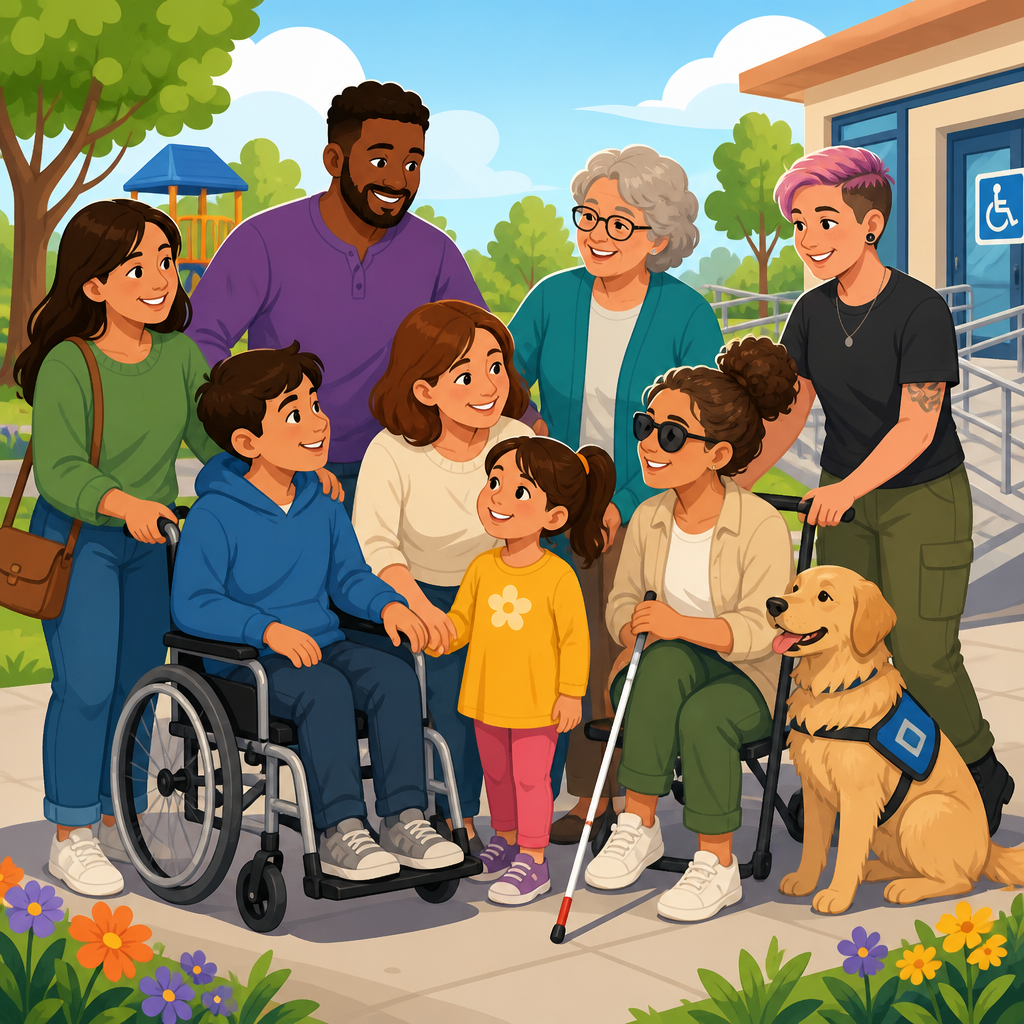
Families, caregivers, and support persons often become the practical bridge between disability rights on paper and daily access in schools, workplaces, transportation systems, health care settings, and community life. ADA resources for families, caregivers, and support persons include legal guidance, advocacy organizations, public agency materials, accommodation planning tools, independent living centers, transportation assistance, assistive technology programs, and crisis response supports. The ADA, or Americans with Disabilities Act, is the federal civil rights law that prohibits disability discrimination in public life, while “support persons” can include relatives, friends, personal care attendants, interpreters, case managers, direct support professionals, and anyone helping a person navigate services or assert rights. This topic matters because most access barriers are not abstract legal disputes; they are concrete problems like a child denied communication support at a recreation program, an adult unable to board paratransit reliably, or a caregiver struggling to obtain effective workplace flexibility while supporting a disabled family member.
In practice, I have seen families lose time, money, and peace of mind simply because they did not know which ADA resource matched the problem in front of them. A transportation complaint belongs in a different channel than an inaccessible website issue. A denial by a private business requires a different response than a barrier created by a state agency or public school. Good resources do more than explain rights; they help people document incidents, understand timelines, identify the covered entity, request reasonable modifications, and escalate effectively when informal problem solving fails. For a hub page, the goal is to map that landscape clearly so readers can move from confusion to action.
Specialized ADA resources and support also matter because disability access is rarely one-dimensional. A family may need legal information, emotional support, equipment funding, and practical service coordination at the same time. Someone supporting an aging parent with mobility limitations may need guidance on accessible transit, medical appointment communication access, service animal rules, and home modification funding. Parents of a child with autism may need help understanding sensory accommodations in public places, effective behavior support planning, and how ADA protections intersect with school-based rights under Section 504 and IDEA. The strongest support systems recognize these overlaps and connect people to the right mix of information, advocacy, and local services.
This hub explains the major categories of ADA resources for families, caregivers, and support persons, how to use them, and where each type fits. It covers federal information sources, disability rights organizations, independent living supports, accommodation tools, transportation and communication access resources, complaint pathways, and best practices for keeping records. Used well, these resources reduce delays, strengthen advocacy, and help disabled people participate more fully in everyday life with dignity and equal access.
Core ADA information sources and how families should use them
The first layer of support is accurate, primary-source information. The U.S. Department of Justice ADA.gov website is the central source for ADA regulations, technical assistance, service animal guidance, effective communication rules, and complaint information. Families and caregivers should start there when they need to confirm whether a business, nonprofit, local government program, or state agency must provide equal access. For employment-related issues, the Equal Employment Opportunity Commission provides guidance on reasonable accommodation, medical inquiries, and retaliation. For transportation, the U.S. Department of Transportation and the Federal Transit Administration publish ADA transit requirements covering fixed-route buses, rail, stop announcements, lift maintenance, and paratransit eligibility and service standards.
The most useful approach is to match the problem to the title of the law involved. Title I covers employment, Title II covers state and local government services, and Title III covers public accommodations such as stores, restaurants, hotels, health clubs, and private health care offices. That distinction matters because the enforcement pathways differ. If a caregiver is helping a disabled adult challenge inaccessible voting equipment at a county site, that is typically a Title II issue. If the barrier is an exam table in a private medical clinic, it is usually a Title III access problem. If the issue is an employer refusing an accommodation to an employee who also has caregiving responsibilities related to disability, the ADA may overlap with other employment laws and internal HR processes.
Families should rely on technical assistance documents, not social media summaries, when an issue turns urgent. A one-page online post may oversimplify a nuanced question like whether a support person can accompany someone into a treatment area, whether a business may ask limited questions about a service animal, or what counts as an undue burden in communication access. The official guidance is more precise and usually includes examples. When I have helped people resolve disputes quickly, the turning point was often a concise citation from an authoritative source attached to a written request.
Disability rights organizations, legal aid, and advocacy networks
Primary legal text is essential, but most families also need interpreters of the system: disability rights organizations, protection and advocacy agencies, legal aid programs, and issue-specific nonprofits. Every state and territory has a federally mandated Protection and Advocacy system, often called P&A, that works on disability rights matters including abuse, neglect, discrimination, and access to services. These agencies vary in scope and capacity, but they are often the best starting point when the issue involves systemic barriers, institutional settings, or repeated access denials that informal negotiation has not solved.
Legal aid organizations can be especially valuable for low-income families facing intersecting problems such as housing discrimination, benefit disruptions, school discipline tied to disability, or denial of accessible services. The National Disability Rights Network helps people locate their state P&A. The ADA National Network is another critical resource. Its regional centers provide training, practical guidance, and answers to ADA questions in plain language. Unlike litigation-focused organizations, these centers are built for education and problem solving, which makes them ideal when families want to understand options before escalating.
Condition-specific organizations also matter because they translate broad ADA rights into daily realities. The Autistic Self Advocacy Network, the National Federation of the Blind, the Hearing Loss Association of America, the Christopher & Dana Reeve Foundation, and the Arc all offer targeted resources that help support persons understand access needs in context. A family supporting someone with a psychiatric disability may need guidance on de-escalation, peer supports, and effective communication in public settings, while a family supporting a deaf adult may need resources on qualified interpreters, captioning, and relay services. General rights language becomes far more useful when paired with community-specific expertise.
Independent living centers and community-based support
Independent Living Centers are one of the most practical and underused ADA-related resources for families and caregivers. These community-based, cross-disability organizations are run on a philosophy of self-determination and are often staffed by disabled people themselves. Their core services typically include information and referral, peer support, independent living skills training, advocacy, and transition assistance. For families, an ILC can help move the conversation from “What are our rights?” to “How do we actually make this work next week?”
An ILC may help a caregiver identify accessible housing options, request a curb ramp repair from a city, locate a durable medical equipment reuse program, or prepare for an ADA accommodation meeting with a local service provider. They often know local transit reliability patterns, regional assistive technology loan programs, and which agencies respond effectively to access complaints. That local intelligence is hard to replace. In my experience, families who connect with an ILC early usually solve smaller access problems before they become costly crises.
These centers are also important because they balance family support with the disabled person’s own voice and autonomy. That matters when support persons are making decisions in high-stress situations. The ADA is fundamentally about equal participation, not substitute decision-making by default. Good community-based supports help families advocate strongly while still centering the preferences, communication style, and goals of the person directly affected.
Specialized resource categories families should know
Because this page functions as a hub, it helps to organize resources by problem type. The categories below are the ones families and caregivers use most often when supporting access across daily life.
| Need | Best Resource Type | Example Use |
|---|---|---|
| Legal rights question | ADA.gov, ADA National Network, P&A agency | Confirm whether a city recreation program must provide communication access |
| Local advocacy support | Independent Living Center, disability nonprofit | Prepare for a meeting after repeated barriers at a community facility |
| Employment accommodation | EEOC guidance, JAN, HR process | Request schedule flexibility or assistive software |
| Transportation barrier | Transit ADA office, FTA complaint channels, local advocates | Address missed paratransit pickups or lift failures |
| Communication access | Interpreter agencies, captioning vendors, DOJ guidance | Secure ASL interpretation for medical visits or public events |
| Technology and equipment | State AT program, vocational rehabilitation, loan closets | Trial speech devices or obtain adapted computer tools |
| Crisis and abuse concerns | Adult protective services, P&A, ombuds programs | Report neglect in a congregate care setting |
Several specialized channels deserve special attention. The Job Accommodation Network is the leading practical resource for workplace accommodations. It provides examples of accommodation ideas by limitation and job task, which is far more useful than generic advice. State Assistive Technology Act programs offer device demonstrations, short-term loans, financing options, and reutilization programs. For housing-related issues, fair housing organizations and HUD-funded counseling agencies can help when the barrier involves disability-based rules, common area access, parking, or reasonable modifications. For telecommunications, the Federal Communications Commission oversees relay-related rules and accessibility requirements affecting communication technology.
Transportation, communication, and digital access resources
Transportation, communication, and digital access are the categories where families most often need specialized ADA support fast. Public transit systems covered by the ADA must maintain lifts, provide stop announcements, operate complementary paratransit for eligible riders, and avoid capacity constraints such as excessive denials or long telephone hold times. When caregivers track trip denials, late pickups, missed connections, or repeated no-show errors, patterns become visible. That documentation can support a complaint to the transit agency first and, if needed, to the Federal Transit Administration.
Communication access requires the same level of specificity. Health care providers, courts, colleges, and public agencies often meet resistance by offering ineffective alternatives instead of the aid or service that actually works. Qualified interpreters, CART captioning, accessible electronic documents, plain-language materials, and communication boards are not interchangeable. The standard is effective communication, not the cheapest option. Support persons can help by documenting the individual’s usual communication method, the purpose of the interaction, and why the requested aid is necessary for accuracy and equal participation.
Digital access has become unavoidable. Appointment portals, school forms, transit alerts, and benefit applications increasingly live online. When a website or app is inaccessible to screen readers, keyboard navigation, captions, or color-contrast needs, families may face exclusion even when physical spaces are accessible. Although digital accessibility rules vary by sector, recognized standards such as the Web Content Accessibility Guidelines are widely used as the benchmark. In real settings, the fastest fix is often a written notice to the organization identifying the inaccessible task, the assistive technology affected, and the specific step where access failed.
Building an effective advocacy and documentation system
The most successful families and caregivers build a repeatable system rather than reacting from scratch every time a barrier appears. Start with a simple access file that includes diagnoses only when relevant, current accommodation letters, communication preferences, equipment information, transportation eligibility records, and contact details for key agencies. Add a log for incidents with dates, times, names, locations, screenshots, photos, and the impact of the barrier. This record turns frustration into evidence.
Written requests are usually stronger than verbal complaints. A clear request should identify the person, the program or service, the barrier, the accommodation or modification requested, and the deadline if timing matters. It should stay factual and avoid unnecessary legal threats early on. If the first-line staff member says no, ask for the ADA coordinator, civil rights office, patient relations office, HR specialist, or program director depending on the setting. Many disputes resolve at that level when the request is specific and well documented.
Families should also know the limits of ADA resources. Not every problem is covered, and not every unfair outcome is illegal discrimination. Funding shortages, staffing crises, or safety rules do not automatically excuse noncompliance, but they can affect what solution is feasible in the moment. Good advocacy means pressing firmly for equal access while remaining precise about the legal issue and flexible about implementation when the result is effective.
How to use this hub and take the next step
ADA resources for families, caregivers, and support persons work best when matched to the exact barrier, the setting, and the urgency of the situation. Start with the core question: Is this employment, government service, public accommodation, transportation, housing, health care, education, or digital access? Then identify whether you need legal clarification, local advocacy, equipment support, communication access, or a formal complaint path. That sequence prevents wasted effort and helps families move quickly toward the resource most likely to solve the problem.
The central takeaway is simple: specialized ADA resources are not just reference materials. They are operational tools for securing access, protecting dignity, and reducing the burden that falls on families and caregivers when systems fail. Federal guidance provides the rules, advocacy organizations help interpret them, independent living centers connect rights to daily problem solving, and documentation turns isolated frustrations into actionable cases. When these pieces work together, support persons are better equipped to help disabled people participate fully in community life.
Use this hub as your starting point for the broader Resources and Support section, then move into the related articles most relevant to your immediate need, whether that is transportation, communication access, assistive technology, workplace accommodations, or complaint procedures. Save the key agencies for your state, build your documentation file now, and make your next request in writing. The right ADA resource, used at the right time, can change the outcome dramatically.
Frequently Asked Questions
What ADA resources are most helpful for families, caregivers, and support persons?
Some of the most helpful ADA resources are the ones that combine clear legal information with practical next steps. For many families and caregivers, that starts with official guidance from the U.S. Department of Justice, the ADA National Network, and state or local disability rights agencies. These sources explain how the Americans with Disabilities Act applies in everyday settings such as schools, transportation, health care offices, recreation programs, public buildings, and jobs. They can help families understand core protections involving effective communication, reasonable modifications, physical accessibility, nondiscrimination, and equal participation.
Beyond legal guidance, advocacy organizations and community-based disability service providers are often essential. Independent living centers, parent training and information centers, protection and advocacy agencies, and nonprofit disability rights groups can help interpret rights in real-life situations. For example, a caregiver trying to secure accessible transportation, a support person helping someone request an accommodation at work, or a family member navigating barriers in a medical setting may all benefit from organizations that offer case support, referrals, workshops, and self-advocacy tools.
Accommodation planning tools are also highly valuable. These may include checklists for preparing accommodation requests, templates for documenting barriers, communication planners for medical appointments, and access planning guides for school events, employment, travel, or housing-related interactions. Families and caregivers often act as organizers and advocates, so having structured tools can make conversations with schools, employers, public agencies, and service providers more effective and less stressful.
Additional resources that often matter greatly include assistive technology programs, paratransit and accessible transit information, state vocational rehabilitation agencies, crisis response services, and local disability resource centers. Taken together, these resources support not only legal compliance, but also daily problem-solving, independence, and community inclusion. The most useful resource is often the one that helps translate ADA rights into an actionable plan for a specific setting and need.
How can families and caregivers use ADA resources to request accommodations or address accessibility barriers?
Families and caregivers can use ADA resources most effectively by approaching accessibility concerns in an organized, documented, and collaborative way. The first step is to identify the specific barrier and the setting in which it is happening. For example, the issue might involve inaccessible entrances, lack of sign language interpretation, refusal to allow a reasonable policy modification, inaccessible transportation, or communication barriers in a health care setting. Once the issue is clearly defined, ADA guidance materials can help determine which title of the law applies and what type of accommodation or modification may be appropriate.
It is often helpful to put requests in writing, even when verbal requests are allowed. A written request creates a clear record of the need, the barrier, and the proposed solution. Families and support persons can use templates or sample language from disability organizations or ADA technical assistance centers to explain the request in practical terms. Good requests usually describe the disability-related need, the specific access problem, and a reasonable change that would provide equal access. In many situations, the request does not need to use highly technical legal language to be effective; clarity, relevance, and documentation are often more important.
Keeping records is another important strategy. Caregivers and family members should save emails, letters, notes from phone calls, appointment records, photographs of physical barriers when appropriate, and any policies or notices related to the issue. This documentation can be extremely useful if the matter is delayed, denied, or escalated. ADA resources from advocacy groups or legal aid organizations often include step-by-step guidance on how to document barriers and how to follow up when an entity does not respond appropriately.
If an informal request does not resolve the issue, families can turn to additional supports such as disability rights agencies, mediation programs, administrative complaint processes, or legal consultation. Many public agencies and advocacy organizations provide technical assistance before a dispute becomes formal. In practice, many accessibility problems are resolved through education, persistence, and well-documented communication. ADA resources are valuable because they help families and caregivers move from frustration to a structured advocacy process that is informed, respectful, and effective.
Where can support persons find reliable ADA information for schools, workplaces, transportation, and health care?
Reliable ADA information is usually found through official government sources and established disability rights organizations with a strong track record of public education. For general ADA guidance, the U.S. Department of Justice and the ADA National Network are among the most trusted starting points. They provide fact sheets, technical assistance materials, training resources, and plain-language explanations that can help support persons understand how disability access requirements work across different areas of life.
For school-related issues, it is important to remember that disability rights may involve more than one law, including the ADA, Section 504, and the Individuals with Disabilities Education Act in some situations. Parent training and information centers, state education agencies, and disability advocacy organizations can help families understand how these laws interact. These resources are especially useful when questions involve equal access to extracurricular activities, communication access, school policies, transportation, or discrimination in educational settings.
For workplaces, support persons can look to the Equal Employment Opportunity Commission for disability discrimination information and the Job Accommodation Network for practical accommodation ideas. These resources are particularly useful when a family member is helping someone explore workplace adjustments, documentation practices, disclosure decisions, or return-to-work planning. They can offer concrete examples of accommodations while clarifying the difference between what is helpful and what is legally required.
For transportation and health care, state and local transit agencies, departments of transportation, hospital patient advocacy offices, and federal agencies such as the U.S. Department of Transportation and the U.S. Department of Health and Human Services can provide setting-specific guidance. Disability rights organizations can also help interpret what effective communication, accessible scheduling, mobility access, and nondiscriminatory treatment should look like in these environments. The most dependable approach is to compare information across official agencies and recognized advocacy networks, especially when a situation is urgent, complex, or likely to affect safety and continuity of care.
What role do independent living centers, advocacy organizations, and assistive technology programs play in ADA support?
Independent living centers, advocacy organizations, and assistive technology programs often provide the hands-on support that helps people use ADA protections successfully. Independent living centers are especially important because they are community-based organizations focused on disability rights, self-determination, and practical access to community life. They may offer peer support, information and referral services, benefits counseling, housing and transportation guidance, skills training, and help with navigating local systems. For families and caregivers, these centers can be invaluable because they often understand how access issues show up in everyday routines, not just in legal theory.
Advocacy organizations play a different but equally important role. They may provide public education, policy guidance, representation in disputes, self-advocacy training, and assistance with complaints or appeals. Some focus on specific disabilities, while others work across the disability community. Support persons often rely on these groups when they need help understanding whether a denial is lawful, how to respond to inaccessible services, or how to escalate a problem strategically. Many advocacy organizations also publish guides, webinars, and toolkits that make complex disability rights concepts easier to use in real situations.
Assistive technology programs are critical when access depends on devices, equipment, software, communication tools, or environmental modifications. These programs may help individuals explore low-tech and high-tech options, borrow equipment, receive training, locate funding sources, or coordinate evaluations. For a caregiver or family member, this can be a major benefit because the right technology can improve communication, safety, mobility, employment participation, education access, and independence at home and in the community. In many cases, assistive technology becomes part of a broader accommodation plan under the ADA.
Together, these resources create a support network that is both practical and empowering. They help bridge the gap between rights and implementation by offering education, problem-solving, local referrals, and tools that fit a person’s actual life. For families, caregivers, and support persons, that kind of guidance can reduce confusion, strengthen advocacy, and improve outcomes across multiple settings.
How can families prepare for emergencies, transportation problems, and crisis situations while protecting ADA rights?
Preparation is one of the most effective ways families and caregivers can protect access and safety during emergencies, transportation disruptions, and crisis situations. A strong plan usually starts with identifying likely barriers in advance. This may include inaccessible evacuation procedures, interruption of paratransit services, communication breakdowns during medical crises, inability to access medications or equipment, or first responders who are unfamiliar with disability-related needs. ADA-related preparedness resources from public agencies, disability organizations, and emergency management offices can help families create realistic plans for these situations.
It is often wise to develop a written support plan that includes essential medical and disability information, communication preferences, mobility needs, sensory considerations, emergency contacts, equipment instructions, transportation backup options, and provider information. Families may also want to prepare a portable document packet or digital file that can be quickly shared during hospital visits, shelter stays, or urgent service interruptions. For individuals who use assistive technology, backup power plans, charger access, replacement contacts, and equipment transportation planning can be especially important.
Transportation planning deserves special attention because missed rides, inaccessible vehicles, or service breakdowns can affect employment, medical appointments, education, and community participation. Families can review local paratransit eligibility, complaint procedures, rider policies


