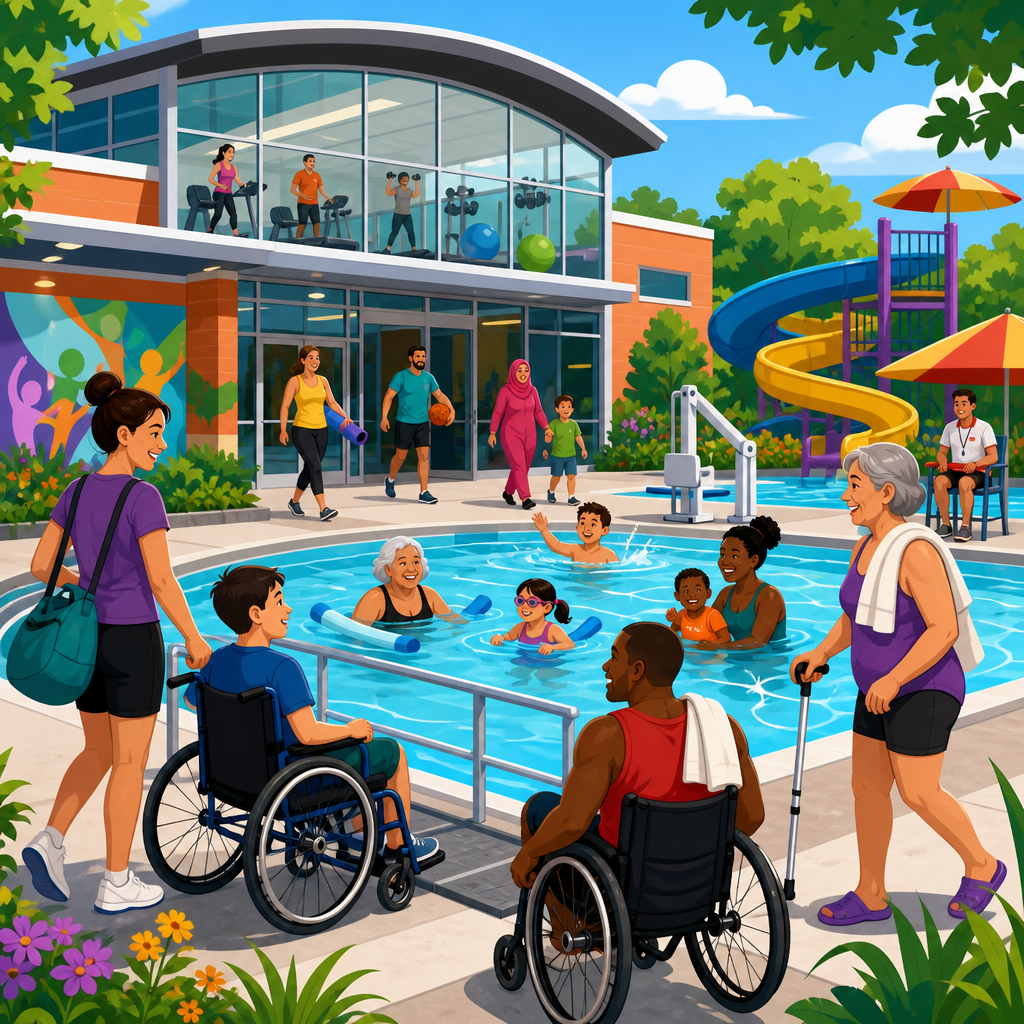
Recreation centers and pools are some of the most important public spaces in any community because they combine fitness, safety, social connection, youth programming, and basic civic access under one roof. In sports and recreation, access means far more than getting through the front door. It includes whether a swimmer can transfer into a pool lift, whether a parent can navigate a locker room with a child, whether signage is readable, whether spectators can find seating, and whether staff know how to support people with different mobility, sensory, and communication needs. I have worked with facility managers, aquatic staff, and accessibility reviewers long enough to see the same pattern repeatedly: buildings may look modern, yet key barriers remain in entries, changing areas, routes, equipment, policies, and staff training. That gap matters because recreation is not optional infrastructure. It affects public health, drowning prevention, rehabilitation, competitive athletics, after-school participation, and community belonging. For operators in sports and recreation, an accessible facility expands program reach, reduces avoidable complaints, improves risk management, and supports stronger use of taxpayer or membership dollars. For users, it determines whether participation feels routine or exhausting. This hub article explains how recreation centers and pools can deliver access beyond the locker room, covering physical design, aquatic features, operations, communication, staffing, and planning priorities across the sports and recreation sector.
Key terms help frame the discussion. A recreation center is a multiuse facility that may include courts, fitness rooms, tracks, meeting rooms, childcare, and locker areas. An aquatic center or pool facility may include lap pools, leisure pools, therapy pools, splash pads, spectator areas, and support spaces. Accessible design refers to meeting established requirements such as the 2010 ADA Standards for Accessible Design in the United States, along with state or local codes. Usable access goes a step further. It asks whether a person can participate with dignity, safety, and independence during real operations, not just during plan review. In practice, that means looking at routes, clear floor space, transfer systems, water entry options, acoustics, lighting, check-in counters, family changing rooms, emergency procedures, and digital information. Sports and recreation leaders often focus first on locker rooms because they are obvious pressure points. However, access breaks down just as often at parking lots, curb ramps, reception desks, natatorium doors, wet deck surfaces, or class registration systems. A true hub article for sports and recreation must connect all of those pieces so facility owners, municipal leaders, architects, coaches, and program directors can see the full picture and prioritize improvements that matter most to users.
Why access in sports and recreation must be viewed as a full journey
The most useful way to assess a recreation center or pool is to map the entire user journey from arrival to departure. Start with transportation and parking. If accessible parking is undersized, poorly signed, or located across active traffic lanes, the visit already begins with stress. Then move to sidewalks, ramps, automatic doors, security gates, and front desks. At many sites I have reviewed, the building technically had an accessible entrance, but the practical route was blocked by seasonal planters, floor mats, sandwich boards, or turnstiles that created unnecessary pinch points. Inside, users need continuous, intuitive routes to program spaces, seating, restrooms, fitness equipment, pools, and exits. This is especially important in sports and recreation environments because people may be carrying bags, pushing strollers, guiding children, using wheelchairs, or navigating wet surfaces.
Pools add another layer because access must continue into and around the water. Under ADA requirements, qualifying pools generally need an accessible means of entry such as a fixed pool lift or sloped entry, with additional options depending on pool size and type. Yet compliance alone does not guarantee a good experience. A lift that is not charged, a deck crowded by storage, or a sloped entry occupied by lesson equipment effectively removes access. I have seen facilities spend heavily on capital improvements while neglecting small operational details that determine whether the feature can actually be used on a busy Saturday. The lesson for sports and recreation operators is simple: accessibility is a chain, and the chain fails at its weakest point.
Physical design priorities for recreation centers and aquatic facilities
Physical design should support both code compliance and everyday usability. In recreation centers, priority areas usually include accessible parking, exterior routes, entrance hardware, reception counters with appropriate heights, elevator access, restrooms, family or assisted-use changing rooms, and circulation clearances around equipment and seating. In gymnasiums and fitness spaces, users need enough maneuvering room between machines, stable transfer surfaces where appropriate, and reachable storage for portable equipment. Spectator spaces should provide integrated wheelchair seating, companion seating, and accessible routes without isolating users at the back of the room. Good design also considers acoustics and contrast. Echo-heavy lobbies, low-contrast signage, and glare on polished surfaces create barriers for many users even when dimensions meet code.
In pools, the wet environment changes the design conversation. Deck materials need slip resistance without becoming difficult for mobility devices. Route widths matter because wheelchairs, walkers, lifeguard stands, lane storage, and teaching equipment all compete for space. Water entry systems must be selected based on the actual program mix. A therapy pool serving older adults may benefit from sloped entry, transfer walls, and handrails positioned for supported movement. A competitive lap pool often relies on a fixed lift and deck clearances that allow independent boarding. Family changing rooms should be close enough to the natatorium to be useful, not hidden at the opposite end of the building. Shower controls, benches, hooks, mirrors, and hair-drying stations all affect whether a swimmer can manage the visit independently. These details are not cosmetic. They determine whether access works under real conditions.
Operational barriers that often matter more than the building
Many of the hardest problems in sports and recreation are operational, not architectural. Staff may not know where the pool lift sling is stored, how to deploy a portable hearing assistance system, or how to adjust registration rules for a support person. Maintenance teams may unintentionally block required clearances with carts, cones, or stored lane lines. Program schedules may place adaptive classes in low-demand time slots that conflict with paratransit service or school hours. Membership policies may require all communication through an app that is difficult for some users to navigate. None of those barriers show clearly on a floor plan, but they shape the user experience more than a drawing ever will.
A practical operating model includes written accessibility procedures, regular equipment checks, incident reporting that captures access-related issues, and clear ownership across departments. Aquatics, fitness, customer service, and custodial teams all need defined responsibilities. For example, if a fixed pool lift battery is not included on a daily checklist, the feature may fail when needed most. If a reservation system does not note requests for a water wheelchair or visual support, frontline staff are forced to improvise. In my experience, the strongest recreation centers treat accessibility the same way they treat chemical safety, emergency action plans, and preventive maintenance: as a routine operational discipline rather than a one-time project.
Common access points across sports and recreation facilities
| Facility area | Frequent barrier | Practical improvement |
|---|---|---|
| Parking and arrival | Missing signs, steep routes, long travel distance | Re-stripe accessible spaces, improve curb ramps, shorten route where possible |
| Front desk and check-in | High counters, inaccessible turnstiles, unclear wayfinding | Provide lower transaction surface, accessible gate, high-contrast signs |
| Locker and changing areas | Tight benches, inaccessible lockers, lack of privacy options | Add family changing rooms, varied locker heights, larger turning spaces |
| Pool deck and water entry | Blocked lifts, slippery surfaces, narrow routes | Daily lift checks, keep clear deck zones, upgrade surface treatments |
| Program registration | Forms or apps difficult to use | Offer phone, in-person, and accessible digital registration options |
| Spectator seating | Separated wheelchair spaces, poor sightlines | Integrate seating choices and companion seats at multiple elevations |
Inclusive programming, communication, and staff training
Accessible sports and recreation programs depend on communication as much as construction. A family deciding whether to enroll in swim lessons or adaptive fitness usually asks straightforward questions: Can we get from parking to the pool without barriers? Is there a family changing room? Is the lift available during open swim? Are staff trained to assist without taking over? Those questions should be answered clearly on the facility website, in registration materials, and at the front desk. Good communication includes alt text on images, readable PDFs or HTML pages, accurate amenity descriptions, and direct contact information for accommodation requests. Vague claims that a facility is “fully accessible” are not useful. Specific descriptions are.
Training should cover disability etiquette, transfer and support boundaries, emergency procedures, service animal access, communication with Deaf or hard-of-hearing users, and setup of accessible equipment. In aquatics, staff should know how to position a water wheelchair, operate a pool lift safely, and explain options without making the user feel like a disruption. Coaches and instructors need guidance on modifying drills, pacing, and sensory load while preserving program integrity. The National Center on Health, Physical Activity and Disability has long emphasized inclusion through planning, equipment, and staff competence, and that matches what works on the ground. When staff are trained, calm, and consistent, participation rises because people trust the facility. When staff rely on guesswork, even a well-designed center feels unwelcoming.
Planning upgrades, budgeting wisely, and building a stronger hub
Most sports and recreation operators cannot renovate everything at once, so prioritization matters. Start with an access audit that combines code review, user journey testing, maintenance records, and direct feedback from patrons with disabilities, older adults, caregivers, and adaptive athletes. Then rank issues by safety risk, frequency of impact, and cost to resolve. Some fixes are inexpensive and immediate: removing obstructive furniture, revising website content, adding visual contrast to signs, or training staff on lift checks and accommodation requests. Others require capital planning, such as reconfiguring locker rooms, replacing doors, adding family changing rooms, or upgrading pool entry systems. The key is to separate quick operational wins from long-term construction items without losing momentum.
As the hub page for sports and recreation within industry-specific guides, this article points to the larger strategy every operator needs. Recreation centers and pools should be evaluated as connected systems that include arrival, circulation, participation, supervision, communication, and departure. Access beyond the locker room is the standard that improves real participation because it addresses the full experience, not a single room. Facilities that take this approach serve more residents, reduce friction for staff, and protect the public value of recreation investments. Review your site from the parking lot to the pool edge, document every barrier, and turn the findings into a phased action plan. That is how sports and recreation spaces become genuinely usable for everyone.
Frequently Asked Questions
What does accessibility in a recreation center or pool really include?
Accessibility in a recreation center or pool goes well beyond whether someone can enter the building. True access includes the entire experience, from arrival to departure. That means accessible parking, smooth exterior routes, automatic or easy-to-open doors, clear check-in counters, readable signage, and interior paths wide enough for wheelchairs, walkers, strollers, and other mobility devices. Inside aquatic and recreation settings, access also includes locker rooms, family changing spaces, restrooms, pool decks, spectator seating, fitness rooms, classrooms, and program registration systems.
In practical terms, people need to be able to move through the space safely and independently whenever possible. A swimmer may need a reliable pool lift or sloped entry. A parent with a child may need a private changing area or a locker room layout that feels manageable and safe. A visitor with low vision may need high-contrast directional signs and consistent wayfinding. Someone with hearing loss may benefit from visual announcements, captioned content, or staff who know how to communicate clearly. Accessibility also includes policies and staff training, because even a well-designed building can become difficult to use if procedures are confusing or support is inconsistent.
The most effective recreation centers treat accessibility as part of customer service, public safety, and community inclusion. When facilities plan for a wide range of needs, they create spaces that work better for everyone, including older adults, families with young children, people recovering from injuries, and visitors who may not identify as disabled but still benefit from thoughtful design.
Why are locker rooms and changing areas such an important part of recreation access?
Locker rooms are a critical part of the recreation experience because they often determine whether someone can comfortably use the facility at all. A pool may have an accessible entrance and an available program, but if the changing area is cramped, poorly designed, or confusing to navigate, that access breaks down quickly. People need enough maneuvering space around benches, lockers, showers, toilets, and sinks. They may need grab bars, roll-in shower options, accessible hardware, lower hooks, and non-slip surfaces that support safe movement before and after activities.
Changing spaces also affect privacy, dignity, and family use. Parents may need to assist children of a different gender. Caregivers may need room to support another adult. Some visitors may need a private changing room because of disability, medical equipment, sensory needs, or personal comfort. Family changing rooms and universal changing spaces can make a major difference by giving people flexible options that are easier to use without stress or embarrassment.
From an operations standpoint, locker room access is also tied to supervision, cleanliness, signage, and policy clarity. Users should be able to identify where to go, understand the available options, and find help easily if needed. Staff should know how to respond respectfully to questions about accessible changing spaces, family access, and accommodations. When recreation centers take locker room design seriously, they remove one of the most common barriers that keeps people from participating fully in swimming, fitness, and community programs.
How can recreation centers make pools safer and more usable for people with disabilities and families?
Safer, more usable pools begin with multiple ways to enter and enjoy the water. A facility should not rely on a single feature to meet everyone’s needs. Pool lifts, sloped entries, transfer walls, wide deck routes, handrails, and stable seating areas all support different users in different ways. Equipment should be maintained, available during operating hours, and positioned so it can actually be used without unnecessary delays. If a lift exists but staff do not know how to operate it or it is routinely unavailable, the pool is not meaningfully accessible.
Families and disabled users also benefit from strong deck design and clear circulation. Wet surfaces need slip-resistant finishes. Pathways should remain free of clutter such as stacked chairs, storage bins, or loose equipment. Depth markings, visual cues, and readable rules help users make informed decisions. Spectator areas should include accessible seating choices with good sightlines, not just isolated spaces at the edge of the room. For children, beginners, and people with sensory or mobility needs, calmer zones and predictable layouts can improve safety and confidence.
Training is equally important. Staff should understand transfer assistance boundaries, emergency procedures, communication strategies, and how to offer help without making assumptions. Inclusive swim lessons, adaptive recreation programming, and straightforward accommodation procedures can also expand participation. When facilities combine physical accessibility with thoughtful staffing and program design, they create pool environments that are safer, more welcoming, and more practical for a broad range of community members.
What role do signage, wayfinding, and communication play in recreation center access?
Signage and communication are often overlooked, but they are central to whether people can use a recreation center confidently and independently. Visitors need to know where to park, where to enter, how to check in, where programs are located, and how to find restrooms, changing rooms, exits, and spectator areas. If signs are small, poorly placed, overly wordy, or inconsistent, even a physically accessible building can become frustrating to navigate.
Good wayfinding uses clear language, high contrast, logical placement, and consistent terminology throughout the facility. Symbols can help, but they should support rather than replace plain, understandable directions. Large print, tactile signage where appropriate, and visual cues such as color-coded zones can help many users, including people with low vision, cognitive disabilities, limited English proficiency, or those visiting for the first time. Digital communication matters too. Websites, schedules, registration platforms, and posted policies should be easy to read and easy to access on phones and assistive technologies.
Communication also includes how staff share information in person. Front desk employees, coaches, lifeguards, and attendants should be ready to explain access features, direct visitors clearly, and answer questions about accommodations. Emergency announcements should be delivered in ways that reach as many people as possible, including visual and audible formats when feasible. In recreation settings, wayfinding is not just a convenience feature. It is a core access tool that helps people move through the environment safely, reduce anxiety, and participate more fully.
How can facility leaders evaluate whether a recreation center is truly inclusive?
Facility leaders should evaluate inclusion by looking at the full user journey rather than checking off a few physical features. Start with arrival, entry, registration, circulation, program participation, changing, restrooms, spectator access, emergency procedures, and departure. Ask whether people with different mobility, sensory, cognitive, and family-related needs can use each part of that journey with reasonable independence, safety, and dignity. A building may meet some technical standards and still create avoidable barriers in practice.
One of the best evaluation methods is direct observation paired with community feedback. Walk the site as if you were a first-time visitor, a wheelchair user, an older adult, a parent with multiple children, or a spectator with low vision. Review whether accessible routes stay clear, whether doors and hardware are manageable, whether pool access equipment is functional, whether locker rooms offer meaningful options, and whether staff can explain available accommodations accurately. Public input from disabled users, caregivers, youth, and regular patrons often reveals issues that formal reviews miss.
Leaders should also assess policy and training. Are staff taught how to interact respectfully and respond consistently? Are accommodation requests handled clearly and promptly? Are programs designed with flexibility, or do unnecessary rules exclude participants? Is maintenance treated as part of accessibility, especially for lifts, doors, alarms, seating, and showers? True inclusion requires ongoing review, not one-time compliance. The most successful recreation centers build accessibility into capital planning, daily operations, customer service, and long-term community engagement so that access is reliable, not accidental.