Introduction to ADA Compliance in Sales and Service Counters
The Americans with Disabilities Act (ADA) sets the standard for accessible design in public places, including sales and service counters. Ensuring ADA compliance means these areas are accessible to individuals with disabilities, allowing them to engage in transactions, receive services, and navigate spaces with ease and dignity. ADA compliance tackles physical, communicative, and technological access barriers to accommodate a diverse population.
ADA compliance in sales and service counters is crucial not only for inclusivity but also for legal and business reasons. Businesses that fail to comply can face hefty fines and lawsuits, damaging their reputations and bottom lines. Moreover, making a location accessible broadens the potential customer base and reflects an organization’s commitment to inclusion and equality. An ADA-compliant design ultimately benefits everyone by offering a more navigable space and fostering a positive, welcoming environment for all patrons.
The Essentials of Counter Height and Location
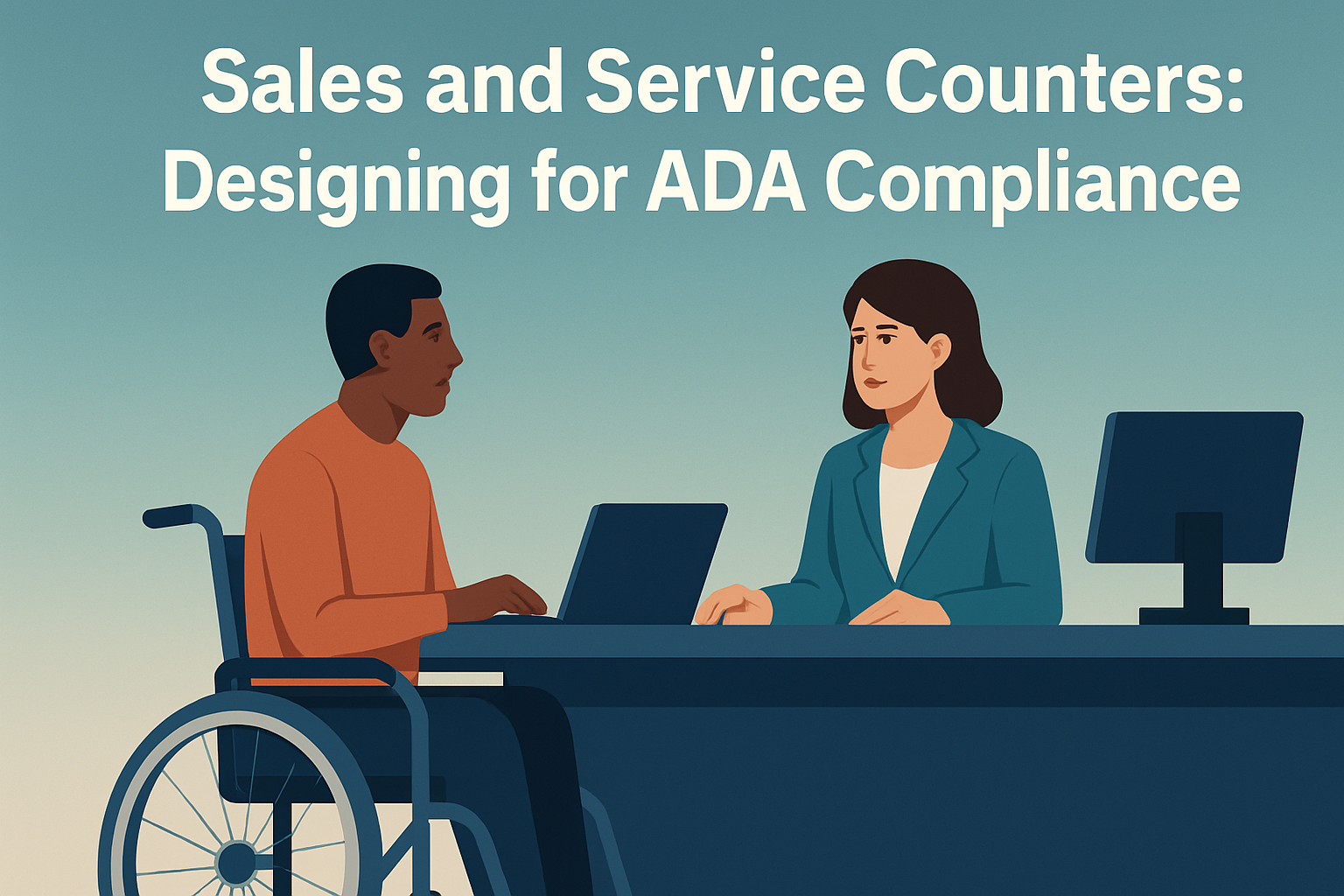
A key component of ADA-compliant sales and service counter design is ensuring the right height and placement. According to the ADA Accessibility Guidelines (ADAAG), the counter height should not exceed 36 inches from the ground to accommodate individuals in wheelchairs comfortably. Adequate space in front of the counter – at least 30 by 48 inches – should be maintained so that wheelchairs can approach easily without obstruction.
For instance, a large retail chain remodeled its checkout counters to feature a designated lower segment, ensuring equivalent service for all customers. This adjustment was well-received, improving the overall customer experience while meeting ADA requirements. Accessible design should consider both the layout of the establishment and the tactical placement of service counters.
Effective Communication Considerations
Communication barriers can be as daunting as physical ones, but thankfully, there are effective ways to bridge this gap. Methods include installing accessible technology options, such as hearing loops or smart tablets, ensuring customers can receive important information relative to their purchase or service in an accessible format.
For example, a local government office added computerized kiosks with interactive voice response systems and adjustable screen heights to cater to people with hearing or visual impairments. By introducing these measures, not only was compliance achieved, but service improved across the board, demonstrating how technology can offer practical solutions to accessibility issues.
Designing for Adequate Reach Range
People with disabilities may have limited reach, which needs to be appropriately accommodated in counter design. The ADA stipulates a reach range for elements such as credit card machines, receipt printing, and informational brochures that ensure they are accessible to all. An accessible design allows for a forward reach not exceeding 48 inches and a side reach up to 54 inches.
Take, for instance, an airport’s ticketing counter redesigned to incorporate movable elements on extendable arms, which significantly improved the reach for patrons with limited motor skills, thus ensuring an easy check-in process for all travelers. These features helped the airport stand as an exemplary model of accessibility without sacrificing functionality or aesthetics.
A Table Approach to Space Management
Effective design for space management can be best appreciated when demonstrated through a comparison across practical applications:
| Feature | Non-ADA Compliant | ADA Compliant |
|---|---|---|
| Counter Height | Over 36 inches | 36 inches or less |
| Approach Space | Less than 30×48 inches | 30×48 inches or more |
| Reach Range | Above 54 inches | Not exceeding 48 inches forward, 54 inches side |
This table highlights the stark contrast between non-compliant and compliant attributes, illustrating the precise standards needed to ensure access and inclusivity.
Training and Staff Awareness
Even with the most thoughtfully designed counters, trained personnel are integral to operation. Employees should be well-versed in addressing and facilitating service for people with disabilities. A commitment towards cultivating such expertise can differentiate an establishment from competitors and foster an inclusive atmosphere.
One global bank has set a gold standard by implementing a rigorous training program that instructs staff on disability awareness and appropriate interaction strategies. By prioritizing these principles, the bank ensures its services are efficiently accessible to every client, encompassing the nuances that standardized designs alone cannot address.
Summary and Key Takeaways
Designing sales and service counters for ADA compliance is vital for providing equal access to all patrons, ensuring satisfaction and legal adherence. The critical components to bear in mind include maintaining appropriate counter height, facilitating clear communication, designing for an adequate reach range, and ensuring staff are knowledgeable and prepared to assist patrons with different needs. Real-world examples demonstrate how these principles can be effectively implemented across various industries, promoting environments that are not only legally compliant but more welcoming and accessible.
By striving for ADA compliance, businesses unlock greater potential, widening their clientele and strengthening community ties. With these actionable steps, the path to creating fully accessible environments becomes ever-clearer. As a call to action, business owners and operators should assess their current counter setups and operational practices, identify areas that need improvement, and implement necessary changes to ensure ADA compliance and customer satisfaction.
Ensure your business is part of the solution to accessibility challenges, seizing the opportunity to create spaces that welcome and serve everyone. By doing so, you move closer to a more inclusive and compassionate world.
Frequently Asked Questions
What is the importance of ADA compliance in designing sales and service counters?
ADA compliance is crucial in designing sales and service counters because it ensures that the physical environment is accessible to individuals with disabilities. It allows everyone, regardless of physical limitations, the opportunity to engage equally in transactions and receive services with the same ease and dignity as anyone else. This inclusivity not only matches legal requirements but also reflects positively on businesses, making them more welcoming and customer-friendly. It aids in removing barriers in communication, technology, and access, fostering an inclusive atmosphere. Also, being ADA compliant helps businesses avoid costly lawsuits and penalties related to inaccessibility, while potentially attracting a larger customer base, including individuals with disabilities and their families and friends, thus enhancing the overall business reputation and profitability.
What are the specific ADA requirements for sales and service counters?
The ADA outlines various design and functional requirements for sales and service counters to ensure accessibility. Specifically, counters must have an accessible height, which generally should not exceed 36 inches above the finished floor, to accommodate wheelchair users easily. Additionally, there should be a clear floor space in front of the counter to allow maneuvering, a depth of at least 17-19 inches beneath the working surface, and knee space for comfort. For service counters that incorporate technology, controls should be within reach range for individuals with different mobility levels. Furthermore, if there’s signage, it should be placed within the line of sight for someone sitting and be supplemented with braille if necessary for communicative accessibility. Also, the path to the counter must be free of obstacles and ramps or lifts should be provided where needed to avoid stairs, any transactions or paperwork than needs additional privacy should be handled attentively, and all staff should be trained to assist disabled customers respectfully and effectively.
How can businesses ensure compliance with ADA standards in existing facilities?
Achieving ADA compliance in existing facilities involves a multi-step approach. Firstly, conducting an ADA audit for the existing sales and service counters is essential. It involves checking every aspect of compliance from counter height and clear floor space to the visibility of signage. After the assessment, businesses need to prioritize modifications based on the areas that most hinder accessibility. Adjustments might involve lowering counters, adding signage with braille, ensuring there’s adequate floor space for wheelchair maneuvers, or installing ramps if needed. Training staff is also pivotal; employees must be familiar with accessible services and know how to interact appropriately with individuals with disabilities. Financially, businesses can look for grants or tax credits to offset the costs of ADA improvements. Consulting with accessibility experts or utilizing ADA compliance software can bring additional insights into making comprehensive improvements. The goal is to align every operative and physical feature of the counter space with ADA standards to ensure seamless service delivery to everyone, regardless of ability.
How does ADA compliance enhance the customer experience at sales and service counters?
ADA compliance greatly enhances the customer experience by making sales and service environments accessible to everyone, regardless of physical limitations. By implementing ADA standards, businesses ensure that customers with disabilities can navigate their facilities with ease, complete transactions without undue stress, and feel valued and respected. This accessibility translates into practical benefits, making it easier for customers to approach counters, view displayed items, and communicate effectively with staff. Furthermore, it shows commitment to inclusion, signaling to all customers that the environment is welcoming and respectful toward everyone. By reducing physical and communicative barriers, businesses may see increased customer satisfaction and loyalty because customers feel they can comfortably return to a location that accommodates their needs. In essence, an ADA-compliant setup isn’t just about meeting legal requirements; it’s about enhancing the overall experience by acknowledging and addressing diverse customer needs, thereby enriching the service provided and strengthening customer relationships.
What are some common misconceptions about ADA compliance in sales and service counters?
One common misconception is that achieving ADA compliance is excessively cost-prohibitive, when in reality, many adjustments are cost-effective and there are existing funds or incentives available to assist with larger modifications. Another misconception is that ADA compliance only benefits a small group of people, when in fact, it benefits a wide range of individuals, including those with temporary disabilities or limitations due to accidents or aging. People might also think that the regulations are too complex to understand without extensive legal guidance; however, with many resources available, as well as consultants who specialize in ADA compliance, businesses can easily navigate necessary changes. Additionally, some believe that ADA compliance only involves physical alterations, overlooking how important policy adjustments and staff training are to the overall accessibility strategy. Finally, a frequent misunderstanding is that once a facility is made ADA compliant, no further changes are needed. In reality, ADA compliance should be an ongoing process of assessing and enhancing accessibility features as business settings change and customer needs evolve.