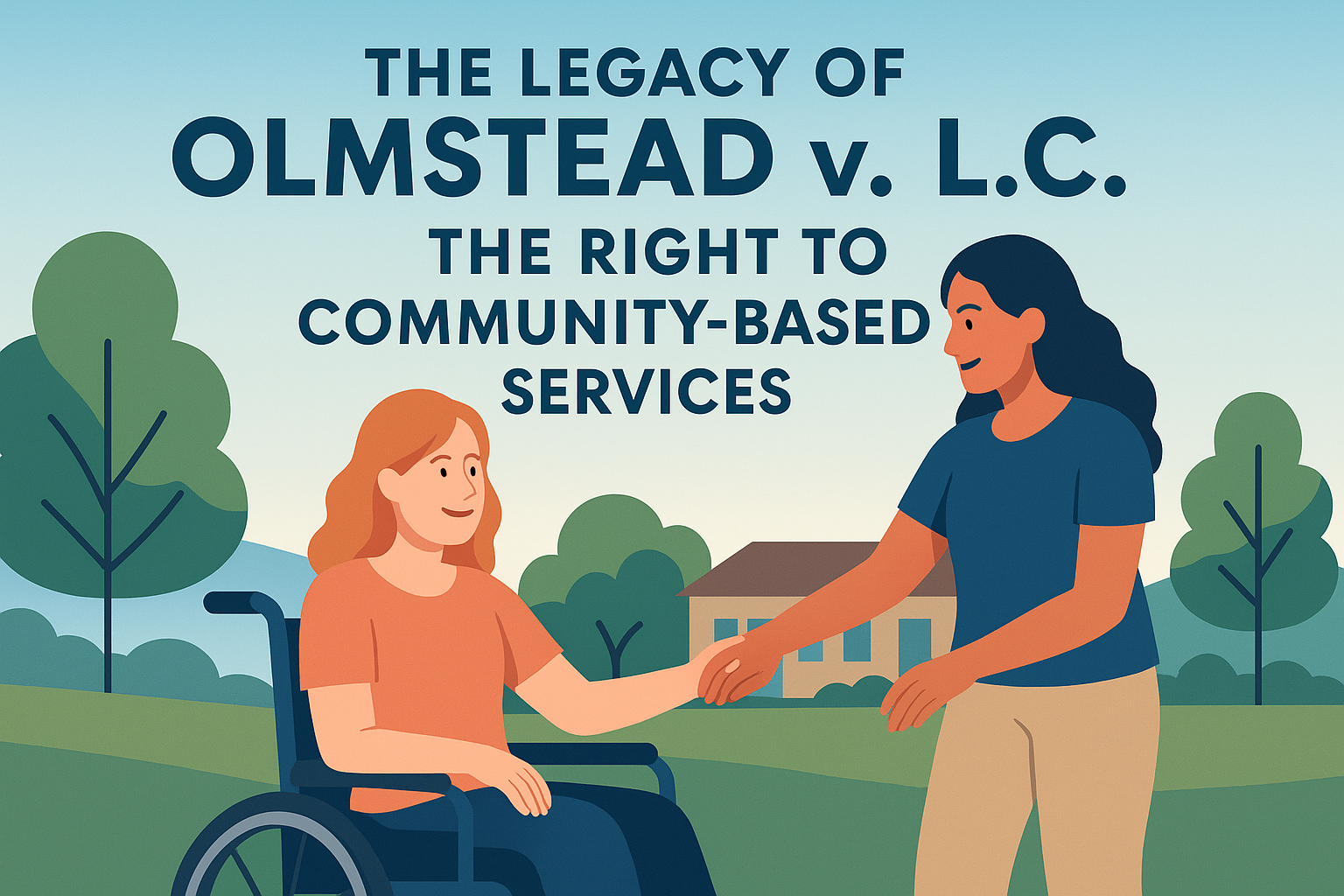
Introduction: Understanding the Olmstead v. L.C. Case and Its Importance
In the annals of American legal history, certain cases stand out not just for their jurisprudential value, but for the immense impact they have on societal norms and individual lives. Olmstead v. L.C. is one such landmark case. This 1999 Supreme Court ruling fundamentally reshaped the landscape for Americans with disabilities, anchoring their rights to community-based services. Understanding this decision requires dissecting the terminology and concepts surrounding it, such as “community-based services” and the “Americans with Disabilities Act” (ADA). These services are mechanisms through which individuals with disabilities can enjoy life within their communities rather than being isolated in facilities like mental institutions or nursing homes. The significance of Olmstead v. L.C. lies in its affirmation of disabled individuals’ rights to live as integrated, valued members of society. This article will delve into the real-world implications of Olmstead, breaking down each facet into comprehensible sections enriched with examples that bring the legacy of this ruling to life.
The Background and Legal Context of Olmstead v. L.C.
The case of Olmstead v. L.C. arose from the experiences of two women, Lois Curtis and Elaine Wilson, who both had intellectual disabilities and psychiatric conditions. Both had been voluntarily admitted to a state-run psychiatric unit in Georgia. However, even after professionals recommended their transfer to community-based programs, they remained institutionalized for years. This led to a legal challenge under the ADA, which prohibits discrimination against individuals with disabilities. The ADA mandates that services be administered in the most integrated setting appropriate to the needs of qualified individuals. The Supreme Court’s ruling in Olmstead v. L.C. was pivotal as it held that undue institutionalization of persons with disabilities constitutes discrimination by reason of disability. This case underscored that it is not just a medical or social convenience, but a civil right for individuals to live within their communities.
The Legal and Social Impact of the Olmstead Decision
Post-Olmstead, the ruling served as a catalyst for the promotion of deinstitutionalization and an affirmative push towards community living. States across America were required to evaluate and implement policies that supported individuals transitioning from institutions to community settings. This decision heralded a significant shift in how social and healthcare services are delivered to those with disabilities. Real-world applications saw numerous success stories. For instance, in Oregon, initiatives that followed the ruling resulted in thousands transitioning from institutional settings to living in their home communities with appropriate support. Such examples highlight the vital role community-based services play in enabling meaningful participation in everyday life.
Community-Based Services: Core Components and Benefits
Community-based services encompass a wide range of support mechanisms including residential, employment, educational, and healthcare services. One prominent example is Supported Living Services, which provide personal assistance to individuals in home-like settings. These services ensure that individuals receive appropriate care while maintaining their independence. Another aspect is supported employment, enabling those with disabilities to find and maintain meaningful work. This facet of community-based services is instrumental in promoting socio-economic inclusion and enhancing quality of life. Education systems have also undergone transformation with integrated classroom settings that provide additional resources and support to guarantee equal learning opportunities. These services collectively underscore the principle that community living is essential for personal and social well-being.
Challenges in Implementing Community-Based Services
Despite the clear mandates and successful examples of community integration, the implementation of community-based services has faced numerous challenges. One significant obstacle is funding. States often struggle with budget constraints, which can impact the availability and quality of services. Additionally, there is often a lack of infrastructure, such as adequate housing and transportation, necessary to support individuals in community settings. Another challenge is the shortage of trained professionals to deliver comprehensive services tailored to individual needs. These hurdles necessitate continuous advocacy and policy development to ensure that the legacy of the Olmstead ruling is fully realized. It’s imperative to address these challenges through strategic planning, increased funding, and infrastructure development.
Innovative Models and Future Directions for Community-Based Services
To overcome challenges and enhance the effectiveness of community-based services, innovative models and collaborations have emerged. Public-private partnerships have been particularly effective in this regard. For instance, the Massachusetts Housing and Shelter Alliance has worked with state departments to create supportive housing units that offer both affordable housing and access to essential services. Moreover, technological advancements have facilitated better service delivery. Telehealth services, for instance, enable individuals in remote or underserved areas to access healthcare professionals. Similarly, online educational tools provide flexible learning options for students with disabilities. These innovations represent the future direction for community-based services, ensuring they remain responsive to evolving needs and technological advancements.
| Type of Service | Example |
|---|---|
| Supported Living | Assistance in daily activities such as cooking and cleaning. |
| Supported Employment | Job coaching and placement services for individuals. |
| Integrated Education | Classroom aids and special education resources. |
| Telehealth Services | Remote consultations and therapy sessions. |
Summary and Call to Action: Embracing the Olmstead Legacy
The legacy of Olmstead v. L.C. continues to resonate today, driving the ongoing transformation toward inclusive and equitable social structures. The decision reinforced the rights of individuals with disabilities, emphasizing their right to live in community settings rather than institutional isolation. As we reflect on the key takeaways — the importance of community integration, the benefits and challenges of implementing services, and the innovative path forward — it becomes clear that collective action is essential. It’s crucial that policymakers, community leaders, and individuals alike commit to advancing these principles. By promoting awareness, advocating for resources, and embracing technological advancements, we can honor the legacy of Olmstead v. L.C. and ensure a more inclusive society for future generations. It’s a call to action: let’s continue to push for policies and practices that uphold the rights and dignity of all individuals, fostering communities that truly reflect the diversity and capabilities of all their members.
Frequently Asked Questions
1. What was the Olmstead v. L.C. case, and why is it significant?
Olmstead v. L.C. is a landmark legal case decided by the Supreme Court in 1999 that significantly impacted the rights of individuals with disabilities in the United States. The case centered around two women, Lois Curtis and Elaine Wilson, who were voluntarily admitted to a psychiatric unit in Georgia, where they were treated and later deemed fit for community care. Despite this assessment, they remained institutionalized for several years. The case questioned the state’s right to confine these individuals when community-based treatments were more appropriate.
The Supreme Court’s decision, grounded in the Americans with Disabilities Act (ADA), determined that unjustified isolation of individuals with disabilities constitutes discrimination and that they have the right to receive services in the most integrated setting suitable to their needs. This case is significant because it reinforced the rights of people with disabilities to live in community settings rather than being confined to institutions, promoting independence and equality.
2. How did the Supreme Court’s ruling in Olmstead v. L.C. change the provision of services to people with disabilities?
The ruling in Olmstead v. L.C. catalyzed a shift in how services for people with disabilities were approached, emphasizing community integration over institutionalization. Before the ruling, many individuals with disabilities were relegated to institutions, lacking independence and opportunities for social interaction and integration into society.
Post-Olmstead, there was a marked transition to developing and enhancing community-based services, enabling individuals to live more independent and fulfilling lives. States were encouraged to develop and implement plans to provide services and supports that prioritize integration and accessibility. This often includes personal care services, housing supports, vocational training, and healthcare services delivered within the community setting. The aim is to ensure that individuals can live, work, and engage as fully as possible in society, supporting a higher quality of life and greater autonomy.
3. What are the challenges faced by states in implementing the Olmstead decision?
Despite the clear directive from the Olmstead decision, states face several challenges in its full implementation. A significant hurdle is the availability of funding and resources. Transitioning from institutional to community-based services often requires substantial investment in infrastructure, workforce development, and ongoing operational costs.
Additionally, there is a need for comprehensive planning and coordination among various state agencies, service providers, and stakeholders to design and implement community-based services effectively. This involves training professionals, building new service networks, and ensuring that communities are equipped to support diverse needs. There’s also an ongoing challenge of balancing limited resources while addressing waiting lists and ensuring timely access to necessary services. Resistance or lack of understanding from bureaucracies and certain community segments can further complicate the rollout of community-based initiatives.
4. What rights do individuals with disabilities have under the Olmstead ruling?
Individuals with disabilities are entitled to several critical rights under the Olmstead ruling. Primarily, they have the right to receive care and services in the most integrated and least restrictive environment appropriate to their needs, as per the ADA. This means that individuals should not be institutionalized if they can thrive in community settings with appropriate supports.
Furthermore, they have the right to be included in decisions regarding their care and have their preferences considered. Individuals also have the right to participate fully in community life, which includes access to daily activities, employment, education, healthcare, housing, and social services. The enforcement of these rights helps promote dignity, respect, and equality, ensuring that individuals with disabilities are recognized as full participants in society.
5. What ongoing impacts has Olmstead v. L.C. had on disability rights?
Over two decades since the decision, Olmstead v. L.C. continues to influence disability rights significantly. It has been a driving force for policy reforms and advocacy efforts that prioritize the rights and independence of individuals with disabilities. Its principles underpin much of the dialog around equal opportunities and inclusivity within education, employment, healthcare, and housing sectors.
The Olmstead ruling has also encouraged a broader societal shift towards recognizing and dismantling barriers faced by people with disabilities, fostering more accessible and inclusive communities. Legal and civil rights organizations continue to use Olmstead as a foundation for challenging systemic disparities and advocating for comprehensive implementation of disability rights. Furthermore, it serves as a critical reference point for discussions and legislation regarding disability services, pushing the boundaries towards increased integration and reduced discrimination.


