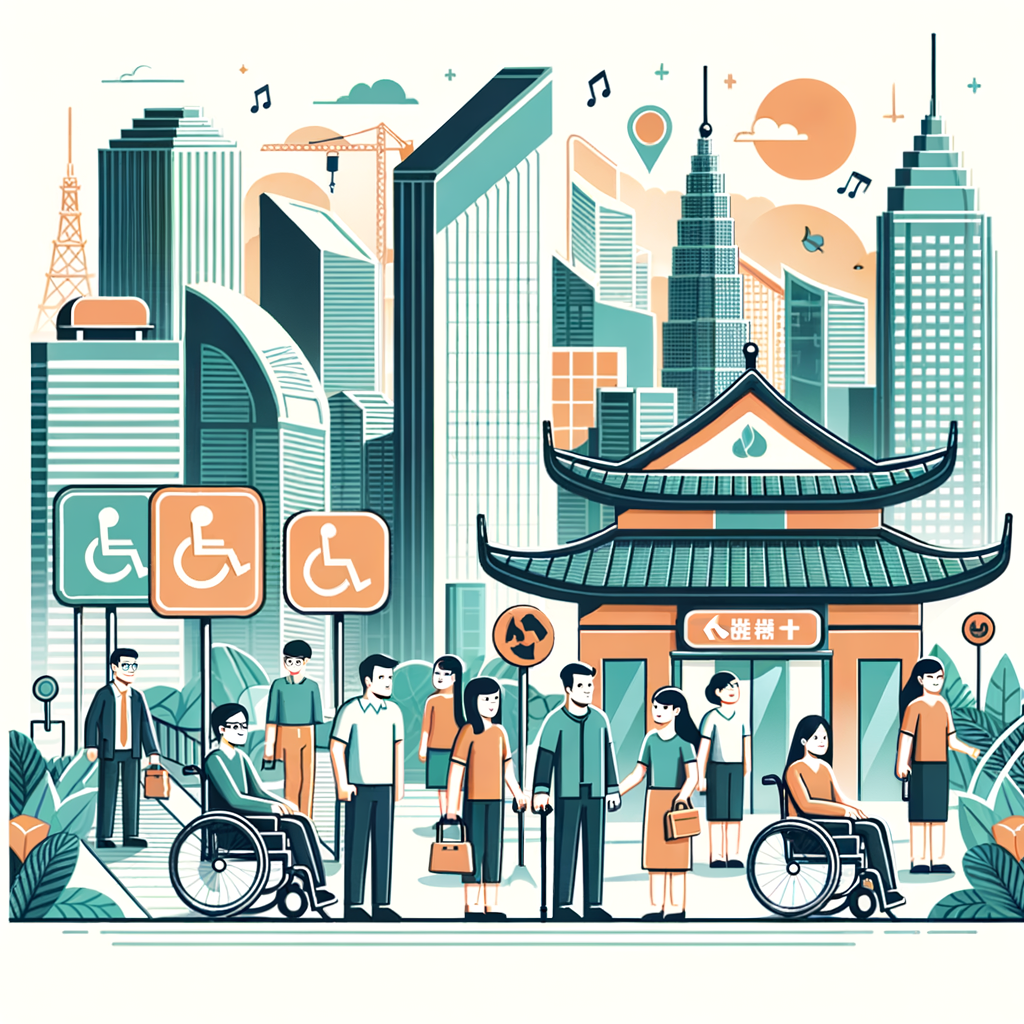
Accessibility in public infrastructure has gained significant attention globally, as nations strive to ensure inclusivity and ease of access for all individuals, regardless of physical limitations. Designing and implementing accessible public infrastructure are paramount in catering to diverse needs, thereby promoting social justice and equality. From transportation networks, buildings, parks, and communities, creating spaces that cater to everyone is essential. Various countries have taken significant steps in creating barrier-free environments, establishing legal frameworks, and implementing technological advancements to serve this purpose. Accessibility is not just about compliance with laws but about ensuring the well-being of individuals, enabling them to participate fully in society. By exploring international case studies, we can gain insights into successful strategies and practices fostering accessibility. This dissection of global efforts aids in identifying common challenges, innovative solutions, and the tangible benefits of accessible infrastructure, encouraging other regions to adopt and adapt successful models.
Understanding the pivotal role of accessibility in public infrastructure sheds light on its intrinsic value in shaping inclusive communities. This subject resonates with universal human rights principles and facilitates healthier societal interactions. Accessibility issues are multifaceted, requiring a blend of policy measures, design ingenuity, and technological innovations. Countries like the United States, Japan, Sweden, and Australia have emerged as pioneers in integrating accessibility into their public infrastructure, setting benchmarks for others to follow. While these nations showcase substantial progress, understanding the breadth of their initiatives highlights both the commonalities and the divergences in approaches. Concrete measures to enhance accessibility typically involve renovations, investments, and careful planning, emphasizing the need for a comprehensive and collaborative endeavor across governmental and non-governmental entities. By exploring various global initiatives, we aim to distill lessons and create a more inclusive future. This article examines significant case studies, drawing on a mix of legal representations, technological advances, and innovative practices, to understand how accessibility can be universally ingrained into public infrastructure.
Case Study 1: The United States – Americans with Disabilities Act (ADA)
The Americans with Disabilities Act (ADA), enacted in 1990, represents a landmark step in ensuring public infrastructure accessibility in the United States. This comprehensive legislation prohibits discrimination against individuals with disabilities, necessitating equal access to all public spaces. Key features of the ADA include stringent architectural requirements for buildings and facilities, mandating accessible design features such as ramps, elevators, and Braille signage. Public transportation systems, including buses and rail, must be equipped with accommodations like lifts and priority seating, ensuring individuals with disabilities can travel freely.
The implementation of the ADA has dramatically influenced public infrastructure development across the United States. Cities like New York have improved subway access with elevators and audio-visual aids for the hearing and visually impaired. Similarly, extensive remodeling of older buildings has been undertaken to meet accessibility standards, showcasing a commitment to inclusivity. Nevertheless, the enforcement of ADA standards is not without challenges. Some areas grapple with outdated infrastructure and significant renovation costs, presenting barriers to complete compliance. Despite these issues, the ADA serves as an exemplary legislative framework, illustrating the power of law in driving societal change.
Case Study 2: Japan – Universal Design Principles
Japan, a leading nation in accessibility, prioritizes universal design principles in its public infrastructure development. Universal design implies creating environments usable by all, to the greatest extent possible, without need for adaptation. Japan’s approach manifests in both policy and practice, striving to overcome the physical limitations faced by its increasingly aging population.
Sites such as Tokyo’s Haneda Airport exemplify Japan’s commitment to universal design. The airport boasts accessible layouts, from ticket counters to check-in procedures and restroom facilities that prioritize user comfort and accessibility. Tokyo’s public transport system, including its vast network of subways and trains, supports passengers with reduced mobility through platform screen doors, tactile paving, and information systems in multiple languages. Additionally, Japan has enacted laws like the Barrier-Free Law, mandating accessibility in newly constructed facilities. Local municipalities actively participate in accessibility standards formulation, ensuring local contexts are considered. Despite significant advances, obstacles remain, mainly in rural areas where infrastructure upgrades can lag. However, Japan’s holistic approach is a testament to how design philosophy can guide infrastructure improvements.
Case Study 3: Sweden – Policy and Practice Synergy
Sweden stands out for its synergistic approach, integrating accessibility policies with practical execution. The Swedish government embraces comprehensive legislation like the Discrimination Act 2008, which prohibits discrimination based on disability and emphasizes accessibility in public sector activities. This statutory support is reinforced by a societal commitment to equality, significantly influencing infrastructure design and access.
Cities like Stockholm have embraced these concepts, offering expansive green spaces with pedestrian-friendly layouts and accessible public transport options, including low-floor buses and trams. Sweden’s architectural policies encourage the construction of buildings that accommodate individuals with varying levels of mobility, emphasizing wide corridors, accessible toilets, and sensory design elements like visual contrasts. Additionally, information is communicated through multiple formats, catering to diverse needs. While Sweden is often lauded for accessibility, challenges such as balancing historical preservation with modernization remain. Nonetheless, the Swedish model exemplifies how government support, combined with societal willingness, can achieve substantial accessibility.
Case Study 4: Australia – All Abilities Framework
Australia pioneers an inclusive strategy through its National Disability Strategy, focusing on creating equitable communities. This framework promotes collaboration between government levels and sectors, facilitating tangible changes in public infrastructure. The strategy underscores the importance of engaging individuals with disabilities in policy development, ensuring their needs and insights shape accessible environments.
Australia’s public transport sector highlights this framework’s effectiveness. The Disability Standards for Accessible Public Transport mandates wheelchair access, tactile paving at stations, and information systems catering to diverse needs. Cities like Melbourne have adopted accessible tram networks, focusing on reducing distance between platforms and tram entrances. Additionally, public buildings include features like automated doors and ramps, reflecting a commitment to universal accessibility.
While Australia’s legislative and policy frameworks guide accessibility improvements, implementation inconsistencies and resource allocation pose challenges. Regional disparities exist, necessitating targeted efforts to standardize access across urban and rural areas. Despite this, Australia’s multi-faceted strategy underscores the importance of inclusive planning, advocating for adaptive practices in public infrastructure frameworks.
Innovations and Technology in Accessibility
Technological advancements significantly enhance accessibility within public infrastructures worldwide. Innovations such as smart city technologies, assistive devices, and digital services are transforming how individuals interact with their environment. In Singapore, smart navigation systems, including sensors and mobile applications, guide individuals with disabilities through urban spaces. Furthermore, innovations like those developed in the United Kingdom, including wheelchair-friendly routing apps and augmented reality guides in heritage sites, facilitate easier navigation.
Additionally, technological solutions like hearing induction loops in public venues and speech-to-text services revolutionize access to information. Such devices bridge communication barriers for individuals with hearing impairments, ensuring they partake wholly in societal events. Mexico City’s Metro is notable for its adoption of smartphone apps which aid visually impaired users by providing real-time navigation assistance and push alerts when the user is near their destination. As technology continues to evolve, its role in enhancing accessibility becomes paramount, providing nations with innovative tools to complement physical infrastructure adaptations.
Public-Private Partnerships and Community Engagement
Successful execution and sustainability of accessibility initiatives often hinge on effective public-private partnerships. Collaboration between government entities, private businesses, and community organizations ensures holistic approaches to infrastructure development. In Canada, the Rick Hansen Foundation works alongside various stakeholders to certify buildings meeting rigorous accessibility standards, encouraging improvement.
Similarly, Brazil’s Avenida Paulista, a famous avenue in São Paulo, showcases impactful community engagement efforts. Weekly closures of the road to motor vehicles allow open accessibility for pedestrians, cyclists, and individuals with mobility aids. This initiative encourages public interaction, promoting awareness and appreciation for universally accessible spaces.
Additionally, input from disability advocacy groups and individuals with disabilities aids in identifying areas requiring attention, driving tailored solutions. Comprehensive engagement and partnerships align public infrastructure projects with actual needs, fostering inclusive environments and generating societal change.
Conclusion
Examining global case studies on accessibility in public infrastructure reveals unique and shared approaches that enhance inclusivity and equal access. While progress varies among regions, overarching principles such as legislation compliance, universal design adoption, and technological incorporation hold universal applicability. The United States, Japan, Sweden, and Australia exemplify successful integration of these principles, overcoming challenges and setting accessibility standards globally.
As nations continue to modernize their public infrastructure, continuous evaluation and adaptation are critical to address emerging needs and technological trends. The rich insights gathered from international experiences advocate for collaborative efforts, transcending borders to influence global best practices in accessibility. Challenges remain, especially in resource allocation and balancing modernization with conservation. Yet, the commitment to equality and inclusivity underscores a global movement towards more accessible infrastructure.
Nurturing this commitment requires persistent advocacy, public-private partnerships, and community-driven initiatives to thrive. As societal understanding of accessibility grows, so does the potential to transform infrastructures for the betterment of all individuals, fostering societies where accessibility is a shared responsibility and a common goal.
Ultimately, accessible public infrastructure is integral to fostering inclusive communities that honor diversity and promote equality, embodying the essence of human rights and societal progress.
Frequently Asked Questions
1. What is accessibility in public infrastructure, and why is it important?
Accessibility in public infrastructure refers to designing and creating public spaces and transport systems that everyone can use easily and safely, including people with disabilities, the elderly, and those with temporary injuries. The importance lies in fostering an inclusive society where every individual, regardless of their physical capabilities, has equal opportunities to navigate and participate in community life. It means ensuring that bus stops, train stations, parks, public buildings, and other amenities can be reached and enjoyed by everyone. Accessibility is crucial for social justice and equality, as it breaks down barriers, enabling all community members to engage fully, enhance their quality of life, and reach their potential.
2. Which global case studies highlight successful examples of accessible public infrastructure?
Several countries lead by example in implementing accessible public infrastructure, setting standards that can inspire other regions. For instance, the city of Oslo in Norway has developed an extensive public transport system with features like low-floor trams, audio and visual announcements, and step-free access, making it a model of accessibility. Similarly, Canada, known for its proactive stance, has the “Canadian Human Rights Act” and “Accessible Canada Act,” helping ensure all public and federal spaces are accessible. Tokyo, Japan, has made significant strides, especially through its efforts to make the city more accessible ahead of and during the Paralympic Games. Their seamless integration of universal design principles, including tactile paths, audio guidance systems, and accessible washrooms, provides a lesson in inclusivity. These case studies reflect a commitment to making society equitable for all by creating environments where everyone can participate and thrive.
3. What are the key components of designing accessible public infrastructure?
Designing accessible public infrastructure involves several critical components integral to ensuring environments that serve everyone effectively. Key elements include: – **Universal Design:** Implementing a design that can be used by all people, to the greatest extent possible, without the need for adaptation or specialized design. This includes ramps, tactile indicators, and sufficiently wide doorways and corridors. – **Wayfinding Systems:** Clear, intuitive signage and paths that help people navigate spaces easily, which are essential for individuals with cognitive disabilities or those new to the area. – **Transportation Accessibility:** Ensuring that public transport options, such as buses, trains, and subways, offer step-free access, priority seating, audio-visual announcements, and assistance for boarding for those who need it. – **Communication Accessibility:** Providing information in various formats, like Braille and large print, and ensuring public announcements are also visually displayed for those with hearing impairments. – **Policy and Standards Compliance:** Adhering to local, national, and international standards and regulations, such as the ADA Standards in the U.S. or the Equality Act in the UK, which help ensure consistency and reliability in accessibility features.
4. What are some challenges faced in implementing accessible public infrastructure globally?
Numerous challenges can impede the successful implementation of accessible public infrastructure across the globe. These issues often stem from financial constraints, as comprehensive accessibility measures can be costly to implement, particularly in existing older structures or public transport systems requiring retrofitting. There is also the challenge of balancing historical preservation with modern accessibility needs, which can create tension in culturally significant sites. Furthermore, there can be a lack of awareness or understanding of accessibility needs among designers and policymakers, leading to insufficient planning and execution of accessibility measures. Another challenge lies in enforcing compliance, as without stringent regulatory oversight, adherence to accessibility standards can become inconsistent, affecting the success of these initiatives. Building a culture of inclusivity also requires ongoing public education and engagement, which can be complicated by diverse cultural perceptions of disability and inclusivity.
5. How can individuals contribute to improving accessibility in their own communities?
Individuals play a vital role in enhancing accessibility in their communities through a variety of approaches. Advocacy is crucial; by raising awareness about the importance of accessibility and calling for changes in local infrastructure, individuals can influence decision-makers to prioritize inclusive design. Engaging in dialogue with local government officials, participating in community planning meetings, and bringing forward concerns or suggestions for improvement can make a difference. People can also provide support to organizations that champion accessibility rights, whether through volunteerism, donations, or spreading awareness of their efforts. Another way to contribute is by embracing inclusive practices in one’s own business or social environments, ensuring these spaces are welcoming and accommodating to all. By educating oneself and others about the various needs within the community and the importance of accessibility, individuals contribute to fostering an inclusive society that values and respects diversity.