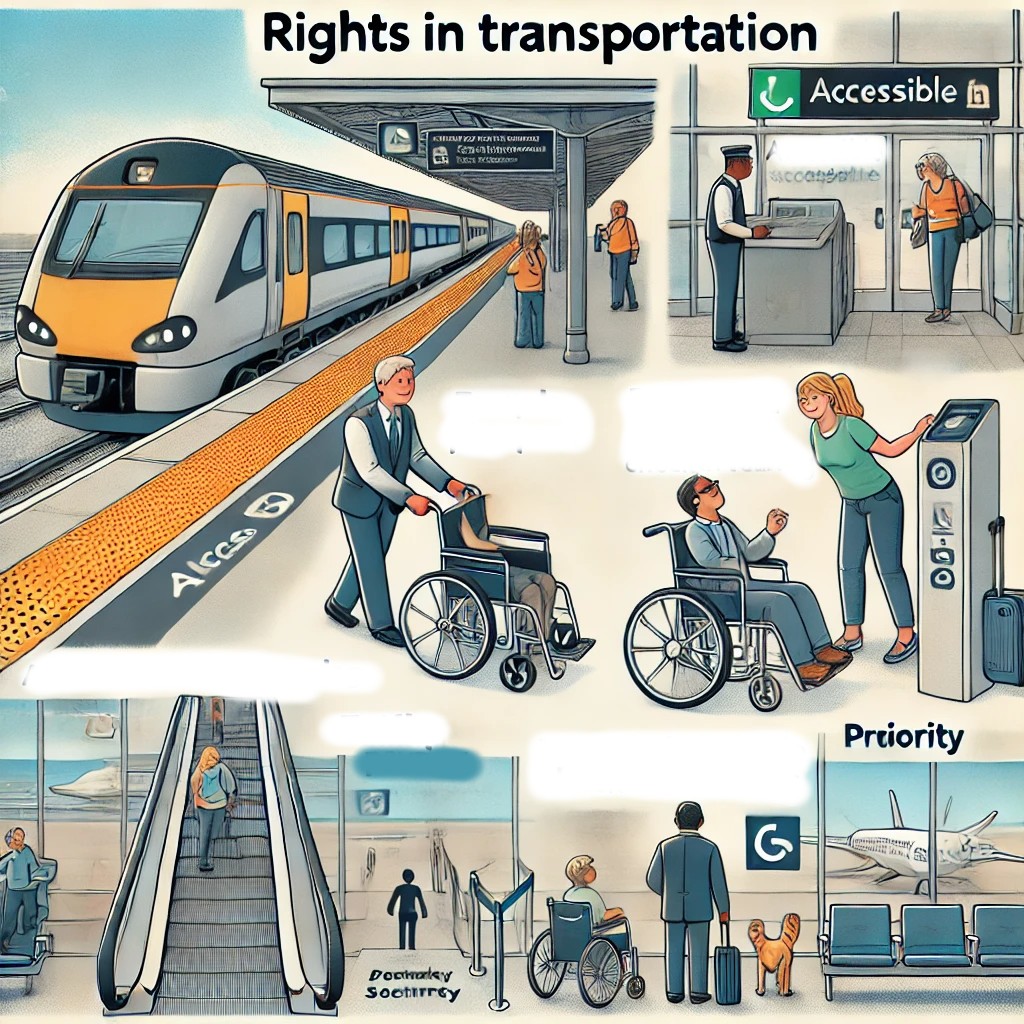
The Americans with Disabilities Act (ADA) enacted in 1990 remains one of the most significant pieces of civil rights legislation in U.S. history. Its primary objective is to prohibit discrimination against individuals with disabilities across all areas of public life, including jobs, schools, transportation, and all places open to the general public.
When discussing ADA rights, transportation stands out as a crucial aspect, ensuring that people with disabilities have equal access to movement and travel, which directly impacts their independence and quality of life. The focus here will be on advanced topics related to ADA rights in transportation, focusing particularly on air travel and other critical areas.
Navigating ADA rights can feel overwhelming due to the various forms of documentation, the specific regulations, and the roles of different organizations. However, understanding these provisions is essential for advocating for the rights and betterment of individuals with disabilities. The discussion below details significant aspects of ADA in transportation, guidance on air travel, and real-world applications and implications.
Air Travel Rights Under ADA
Air travel represents a unique subset of ADA rights through a combination of the ADA and the Air Carrier Access Act (ACAA). The ACAA, enforced by the U.S. Department of Transportation, ensures that individuals with disabilities do not face discrimination on airlines, including domestic and international flights with the U.S.
To make air travel accessible, airlines must provide certain accommodations unless they cause undue hardship or fundamentally alter the service. These accommodations include accessible seating arrangements, communication assistance, and pre-boarding services.
A crucial component is the availability of on-board wheelchairs on aircraft with over 60 seats. Accessible lavatories are also mandated on twin-aisle aircraft, highlighting the effort toward inclusivity. However, passengers must notify airlines about specific needs at least 48 hours prior to flying.
Another area involves service animals. Airlines are required to accommodate service animals and Emotional Support Animals (ESA), although the latter has recently seen revisions in requirements. This ensures that both the passengers with disabilities and other travelers’ needs are balanced.
Despite such provisions, challenges persist—ranging from mishandled assistive devices to inadequate training of airline staff. Knowledge of one’s rights and the complaint processes becomes essential to effectively address these challenges.
Public Transports and ADA Compliance
ADA’s reach extends into public transportation, ensuring that buses, trains, and transit stations are accessible to everyone, including those with disabilities. The ADA requires that all new public transit buses, accessibility features on rail systems, and paratransit services mimic regular routes for individuals unable to use fixed-route transit systems.
Buses must be equipped with lifts or ramps, securement devices for wheelchairs, priority seating areas, signage, and stop announcement systems, among other features. Transit agencies must also offer complementary paratransit services that are comparable to the level of service provided by traditional public transport.
Train systems also must meet stringent ADA standards. Stations must be accessible, with tactile warning strips, raised character and Braille information, and communication systems for passengers with hearing disabilities.
The compliance monitoring falls under the jurisdiction of the Federal Transit Administration (FTA). They periodically review transit agencies and impose corrective measures if they are found lacking in compliance.
Despite these provisions, there remain logistical and infrastructural challenges. Ensuring consistent systems and technology can help mitigate some issues, although advocating for continual updates and improvements in services is necessary.
Private Transportation Services
The ADA doesn’t only cover public transport but also private transportation services like taxis, ride-sharing services, and shuttle services. Taxis must accommodate passengers with disabilities, and while all vehicles are not required to be accessible, companies must provide equivalent services.
Ride-sharing services, such as Uber and Lyft, have progressively included accessibility features. These apps now offer wheelchair-accessible vehicles in many regions, aided by third-party services often in compliance with ADA. The companies must also communicate clearly regarding available options for users with disabilities.
Additionally, private shuttles and transport services offered by hotels, hospitals, and similar establishments must include accessible vehicles or ensure that equivalent alternatives are available.
Enforcement and compliance, again, are key issues requiring oversight. Continuous advocacy and dialogue with private service providers are vital to ensuring and improving services.
Accessibility in Maritime Transportation
While the focus often remains on terrestrial and aerial transportation, maritime transport, including ferries and cruise ships, also falls under ADA regulations. These vessels must accommodate passengers with disabilities, creating a more inclusive environment.
Cruise ships, for instance, need to have accessible cabins, bathrooms, dining areas, and recreational facilities. Prior notice might be required for specific needs, ensuring that accommodations are prepared.
Ferry services must also ensure accessibility, including ramps or lift systems, seating arrangements, and safety features considering the needs of passengers with disabilities.
Ports must facilitate boarding and disembarking processes, with clear markings, tactile pathways, and assistive services for passengers with visual or hearing disabilities. The responsibility for oversight lies with the U.S. Coast Guard in collaboration with other maritime authorities.
Like other transportation modes, continuous oversight and amendments are necessary to match increasing expectations and technological advancements.
Challenges and Advocacy
While the ADA serves as a powerful tool for ensuring rights and facilitating better accessibility, challenges in enforcement, awareness, and continuous advocacy are widespread. Many individuals still encounter barriers, from attitudinal biases to infrastructural inadequacies.
One significant challenge lies in the varying levels of awareness and training among transportation service providers’ employees. Frequent complaints regarding improper handling of assistive devices or lack of communication support arise from inadequate training.
Another area is technological advancements. While technology can aid in creating better systems, it can also inadvertently create barriers if not designed with inclusivity in mind. Including feedback from individuals with disabilities during the design and implementation process is crucial.
Advocacy organizations play an essential role in bridging gaps. They help voice the concerns of individuals with disabilities, work on policy changes, and assist in litigation when necessary. Collaboration between these organizations, individuals, and regulatory bodies can drive meaningful change.
Public awareness campaigns can also help shift societal attitudes, promoting a more inclusive mindset and encouraging better implementation of ADA provisions.
Conclusion
Navigating the multifaceted landscape of ADA rights in transportation — from air travel to public and private services — underscores the importance of a comprehensive understanding and persistent advocacy for inclusive practices. Tailoring services to cater equitably to individuals with disabilities isn’t merely a regulatory requirement but a moral imperative fostering societal inclusivity and support.
Knowledge of ADA rights combined with proactive measures by service providers can immensely improve the travel and transportation experience for individuals with disabilities, ensuring that they enjoy the same freedoms and opportunities as every other passenger.
It’s crucial for individuals to be aware of their rights and the channels available for addressing grievances effectively. Equally vital is the role played by transportation agencies, service providers, and advocacy groups, each contributing towards a future where inclusive and accessible transportation is the norm.
Therefore, while acknowledging the progress made, it is essential to recognize the continuous efforts required to uphold and enhance ADA regulations’ spirit and letter. Through education, advocacy, and collaboration, a more inclusive and supportive transportation network can be achieved, allowing individuals with disabilities to navigate the world with confidence and ease.
Frequently Asked Questions
1. What are the basic ADA rights for air travel?
Under the Americans with Disabilities Act (ADA), certain rights ensure individuals with disabilities are not discriminated against in air travel. These rights are supported by the Air Carrier Access Act (ACAA), which mandates airlines to accommodate the needs of passengers with disabilities. Some of the basic rights include the ability to request assistance with boarding, deplaning, and during flights, at no additional charge. Airlines must provide wheelchairs or transports equipped with lifts or other devices to facilitate easy boarding and deplaning. Furthermore, they cannot limit the number of disabled passengers on a flight. The airline must also provide accessible lavatories on aircrafts with more than 30 seats. Additionally, if a passenger with a disability needs to bring a service animal onboard, the airline must allow it without extra fees, provided the animal is properly trained and certified as a service animal. It is important for passengers to communicate their needs to the airline in advance to facilitate these accommodations smoothly.
2. How does ADA apply to other modes of transportation other than air travel?
The ADA applies broadly across all public transportation systems, which include buses, trains, and ferries, to ensure they are accessible for individuals with disabilities. Public transportation agencies are required to maintain accessible features, such as elevators and escalators, and to ensure that new vehicles purchased are accessible to and usable by individuals with disabilities, including those who use wheelchairs. There are requirements for announcing stops and ensuring that there is proper signage for accessibility, as well as prioritizing seating for individuals with disabilities. If a transit system has fixed-route services, it must also provide paratransit services—which are specialized transportation services for individuals with disabilities who cannot use the regular transit system—within the same service area, during regular hours, and at a comparable fare. These measures are in place to prevent discrimination and ensure that people with disabilities can move with independence and ease.
3. Are there any specific requirements for communication under the ADA for people with disabilities during travel?
Yes, the ADA mandates effective communication to accommodate travelers with disabilities who may have communication challenges. This includes providing alternative formats like braille, large print, audio, or digital formats for informational materials. For individuals who are deaf or hard of hearing, it is required that airlines and other public transportation services offer communication aids such as TTYs, visual displays, or communication boards. Digital boards displaying real-time updates and announcements at terminals are often essential for passengers with hearing impairments. Many transportation providers now also offer mobile apps for booking and service updates, which also cater to those who have visual impairments by including voice-over features and high-contrast display options. These communication requirements ensure that everyone, regardless of their disability, can access important travel information without barriers.
4. What should a person with a disability do if they encounter discrimination in transportation services?
If a person with a disability encounters discrimination during air travel or any other form of transportation, there are several steps they can take to address the situation. Firstly, they should try to resolve the issue by speaking with the transportation provider’s customer service or complaint resolution official (CRO), who is trained to handle ADA-related inquiries and complaints. Additionally, the individual can file a formal complaint with the Department of Transportation’s Aviation Consumer Protection Division for air travel issues or with the Department of Justice for other forms of transportation. It is beneficial to document the incident thoroughly, including dates, times, descriptions of what happened, and names of any staff involved, as this documentation can be critical in the complaint process. Legal support or advocacy groups specializing in disability rights might also provide additional guidance and support for addressing these issues. Every person has the right to travel without being subjected to discrimination, and these avenues exist to help enforce those rights.
5. Are there any recent changes to ADA regulations that affect transportation for individuals with disabilities?
While the ADA has been a cornerstone for disability rights since 1990, legal interpretations and implementations can evolve. Recent years have seen some changes and increased enforcement efforts aimed at improving access to transportation for individuals with disabilities. Enhanced guidelines on service animals have been implemented, as well as efforts to ensure that ride-sharing services and emerging transportation technologies, like autonomous vehicles, are accessible. The Department of Transportation has been active in ensuring rideshare services are not exempt from providing access and that new transportation technologies comply with ADA standards. There have also been advances in accessibility technology, like apps to assist travelers with disabilities navigate airports and stations more independently. It’s essential to stay informed through official DOT statements and ADA-related resources for the latest changes that impact transportation accessibility.