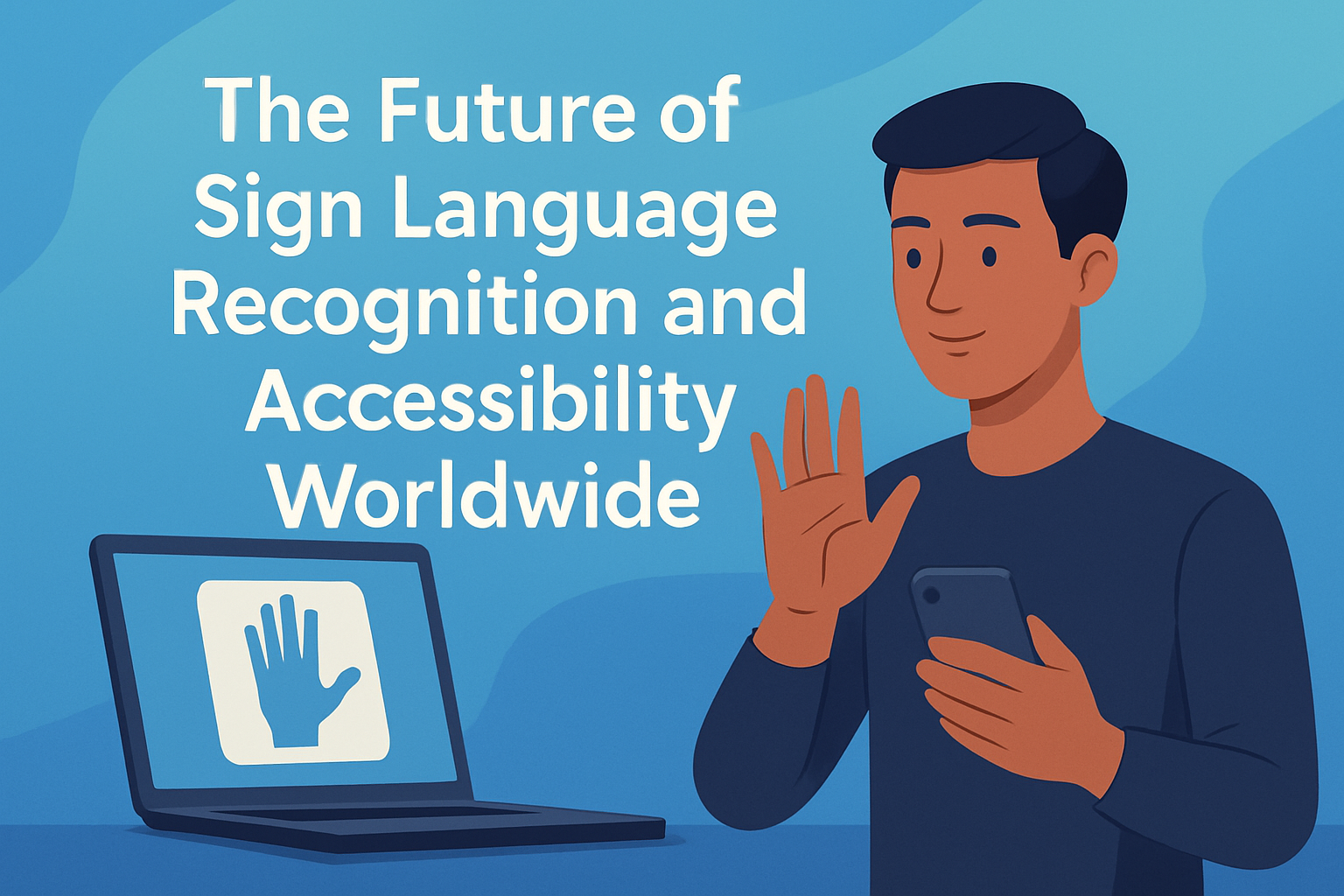
The global landscape is evolving, driven by technology, and a key beneficiary of this evolution is the field of sign language recognition and accessibility. Sign language recognition refers to the ability of technology to identify and interpret sign language in real time, empowering communication for millions who rely on it for everyday interaction. Accessibility, meanwhile, ensures that those who are deaf or hard of hearing can interact with the world around them with as few barriers as possible. Understanding these two facets is crucial as we move towards a more inclusive society. Why does this matter? It’s estimated that over five percent of the world’s population—430 million people—require rehabilitation to address their disabling hearing loss. As we explore the future of sign language recognition, we will uncover not only technological advancements but also the potential for cultural shifts that promote inclusivity.
The Rise of Artificial Intelligence in Sign Language Recognition
Artificial intelligence (AI) has revolutionized various fields, and sign language recognition is no exception. Utilizing video input, machine learning algorithms can identify gestures and convert them into text or spoken language. One standout example is Google’s Project Euphonia, which seeks to make speech recognition more inclusive for people with speech impairments. However, similar approaches are being developed for sign language. AI models are trained using vast datasets of sign language to improve accuracy and understanding. The potential here is immense, as it can lead to applications that allow for seamless communication between the hearing and non-hearing communities.
Consider a classroom where a deaf student relies on a sign language interpreter. With AI-driven recognition systems, this student could potentially receive real-time translations of lessons directly on their device. This doesn’t just benefit the student but also educators who can spend more time on teaching rather than logistical challenges.
Wearable Technologies and Their Impact on Accessibility
Self-contained and mobile, wearable technology can revolutionize accessibility for sign language users. Smart gloves equipped with sensors capture hand movements and gestures, translating them into speech via connected devices. One such innovation comes from a team of researchers at the University of California, Riverside, who have developed a glove that can interpret American Sign Language (ASL) into spoken words.
Imagine a conversational scenario where a deaf individual uses a glove to communicate with someone who doesn’t understand ASL. The person on the other end hears spoken words, fostering a natural conversation without intermediate translation hurdles. Beyond verbal exchange, this kind of technology promises improved independence by reducing reliance on human interpreters in various situations.
Integration of Sign Language Recognition in Consumer Electronics
Consumer electronics manufacturers are slowly integrating sign language capabilities into their products. Devices like smartphones, tablets, and virtual assistants can potentially serve as platforms for sign language recognition software. Companies such as Apple have invested in enhancing accessibility across their products by providing features like VoiceOver for the visually impaired and Live Listen for the hearing impaired. Sign language recognition seems a natural progression.
Consider the utility of a smartphone camera that can process and translate sign language in real-time, transforming it instantly into text for a hearing person or spoken language for those with partial hearing. Such features can open up endless possibilities for communication efficiency and effectiveness.
Challenges and Potential Solutions
Despite the optimistic outlook, several challenges remain in making sign language recognition universally accessible. Variability in sign languages is significant; there are hundreds worldwide, each with unique gestures and dialects. Furthermore, cultural nuances could complicate the development of uniform platforms. To overcome these barriers, developers must create inclusive datasets that account for these differences and refine algorithms to handle various sign languages dynamically.
Collaboration with the deaf community is crucial for effective solutions. Including native sign language users in the development process can ensure sensitivity to cultural variations and appropriate system training. Alongside, government policies supporting research and funding can accelerate these initiatives.
Economic and Social Implications
The financial and cultural benefits of advancing sign language recognition technologies are substantial. Globally, enhanced communication opens pathways to education, employment, and social interaction for the deaf community. By dismantling communication barriers, we promote a more inclusive society and enable people with hearing impairments to contribute economically and socially to their communities.
| Benefit | Impact |
|---|---|
| Education | Increased access to educational materials and inclusive learning environments. |
| Employment | Broader job opportunities with improved workplace communication. |
| Social Interaction | Reduced barriers to personal and community interactions. |
Employers incorporating these technologies can create more inclusive environments and benefit from a diverse workforce that offers unique perspectives. Economically, the increased participation of deaf individuals can enhance economic growth and reduce dependency-related costs for society as a whole.
The Role of Global Collaboration
Global collaboration is essential to standardize sign language recognition and make it widely accessible. International organizations like the World Federation of the Deaf (WFD) and the United Nations must play a pivotal role. These bodies can spearhead efforts to create frameworks that support technology integration and encourage the sharing of resources and knowledge across borders.
- Policies encouraging technological research in sign language recognition.
- Funding for global projects that emphasize inclusive technology development.
- Promoting awareness and cultural education about sign languages worldwide.
Such collaboration can lead to harmonized developments that serve diverse linguistic communities and address the global challenge of sign language barrier eradication.
Envisioning an Accessible Future
Advancements in sign language recognition and accessibility herald a future where communication barriers between the deaf and hearing communities are significantly reduced. As AI, wearable tech, and consumer electronics converge to facilitate this goal, the core message is one of inclusivity and empowerment. The key takeaways suggest that embracing advanced technology can bring about unprecedented change in how we interact within our communities and across borders.
Ultimately, technology alone isn’t the solution; commitment from governmental bodies, industry leaders, and communities themselves is crucial for fostering an environment that truly caters to all. With cooperative efforts, the vision for a world inclusive of all forms of communication can become a reality. If you’re inspired by this vision and want to contribute, consider supporting or volunteering with organizations dedicated to improving accessibility for the deaf and hard-of-hearing communities.
Frequently Asked Questions
1. What is sign language recognition, and why is it important for the future?
Sign language recognition is the process by which technology, typically using advanced algorithms and machine learning, is able to identify and interpret sign language in real time. This technology is crucial for the future because it significantly enhances communication accessibility for the deaf and hard of hearing communities. As our global landscape continues to evolve, driven by technological advancements, integrating sign language recognition into everyday devices and platforms can bridge communication gaps. Imagine a world where the deaf can communicate seamlessly through video call applications that recognize sign language and translate it into spoken or written words in real-time. This would democratize access to education, employment, and social interaction, ensuring that millions who rely on sign language can engage with the world more fully and independently. Furthermore, as the technology becomes more sophisticated and accurate, it has the potential to educate those who do not understand sign language, promoting inclusivity and awareness in society.
2. How is technology currently being used to enhance accessibility for those who are deaf or hard of hearing?
Right now, technology plays a critical role in enhancing accessibility for individuals who are deaf or hard of hearing. There are several innovative examples, from simple devices to complex systems. Hearing aids have long been fundamental, but modern versions often come with advanced features such as Bluetooth connectivity, allowing users to stream audio directly from their smartphones or other devices. Beyond traditional aids, there are video relay services that allow real-time video calls in sign language with interpreters, enabling clearer communication with those who are hearing. More cutting-edge applications include mobile apps that provide instant transcription of spoken word into text—as seen in services like Google’s Live Transcribe—or even in the form of motion-sensing gloves that can translate sign language into text or speech. Real-time captioning on TV broadcasts, public announcement systems, and online content is also another essential development. This range of technologies not only facilitates communication but promotes a more inclusive society where barriers that once existed are more easily overcome.
3. What challenges does sign language recognition technology currently face, and how are they being addressed?
While sign language recognition technology holds tremendous potential, it faces several daunting challenges. One major challenge is the diversity and complexity of sign languages, which vary significantly around the world. Each language has its own syntax, grammar, and even dialects, making it difficult to develop a universal recognition system. Additionally, factors such as facial expressions and body language, which are integral to sign language, add a layer of intricacy that technology must learn to interpret with high accuracy. Another significant challenge is the computational power required for real-time recognition and processing, especially in devices that need to be portable and affordable for widespread use. To address these challenges, researchers and developers are leveraging deep learning and neural network methodologies, which have shown promise in handling complex data sets and learning intricate visual patterns. Collaborative efforts are also encouraged, where international communities contribute to datasets, making systems more inclusive. There’s also ongoing work specifically focused on improving processing speeds and reducing the power requirements of these technologies, ensuring they are scalable and can reach a broader audience.
4. In what ways can we expect sign language recognition technology to evolve in the next decade?
Over the next decade, we are likely to see remarkable progress in the realm of sign language recognition technology. As computational capabilities continue to advance, we can anticipate more sophisticated algorithms that will be capable of processing the complexities of sign language with heightened precision and speed. The integration of artificial intelligence and machine learning in this domain will mean that systems could become more adaptive, learning more about individual users and improving over time. In terms of accessibility, we might see these technologies becoming more prevalent in public spaces and institutions, such as schools and hospitals, thereby normalizing their usage. Additionally, with the advent of augmented reality (AR) and virtual reality (VR), we might witness the creation of immersive environments where virtual avatars communicate in sign language with seamless fluency, providing engaging and interactive experiences for learning and communication. This evolution could lead to a more inclusive society where barriers for the deaf and hard of hearing are minimized, allowing full participation in daily life. Collaborative efforts across tech industries, government bodies, and global communities will be essential to accelerate these advancements and ensure that they are inclusive and equitable.
5. How can individuals and organizations contribute to the advancement of sign language recognition and accessibility?
Individuals and organizations have numerous opportunities to contribute to the advancement of sign language recognition and accessibility. For individuals, gaining an understanding and respect for sign language and the deaf community is fundamental. This can involve learning sign language or engaging with initiatives that foster inclusivity and awareness. By advocating for and supporting policies that promote accessibility, individuals can also help drive societal change. Organizations, particularly those in tech, have a significant role to play. By investing in research and development of accessibility technologies, and ensuring that products and services are inclusive by design, companies can lead the way in innovation. Additionally, organizations can collaborate with academic institutions and non-profits that focus on sign language and deaf culture, funding research projects or setting up sponsorships. Another critical contribution is the open sharing of research and data, which can help build comprehensive models that support better recognition technologies. Globally, partnerships can focus on creating universally accessible technological solutions, ensuring that people in less developed regions also benefit. Ultimately, a combined effort from individuals, corporations, and governments will help accelerate the technological evolution needed to create a more accessible world for everyone.