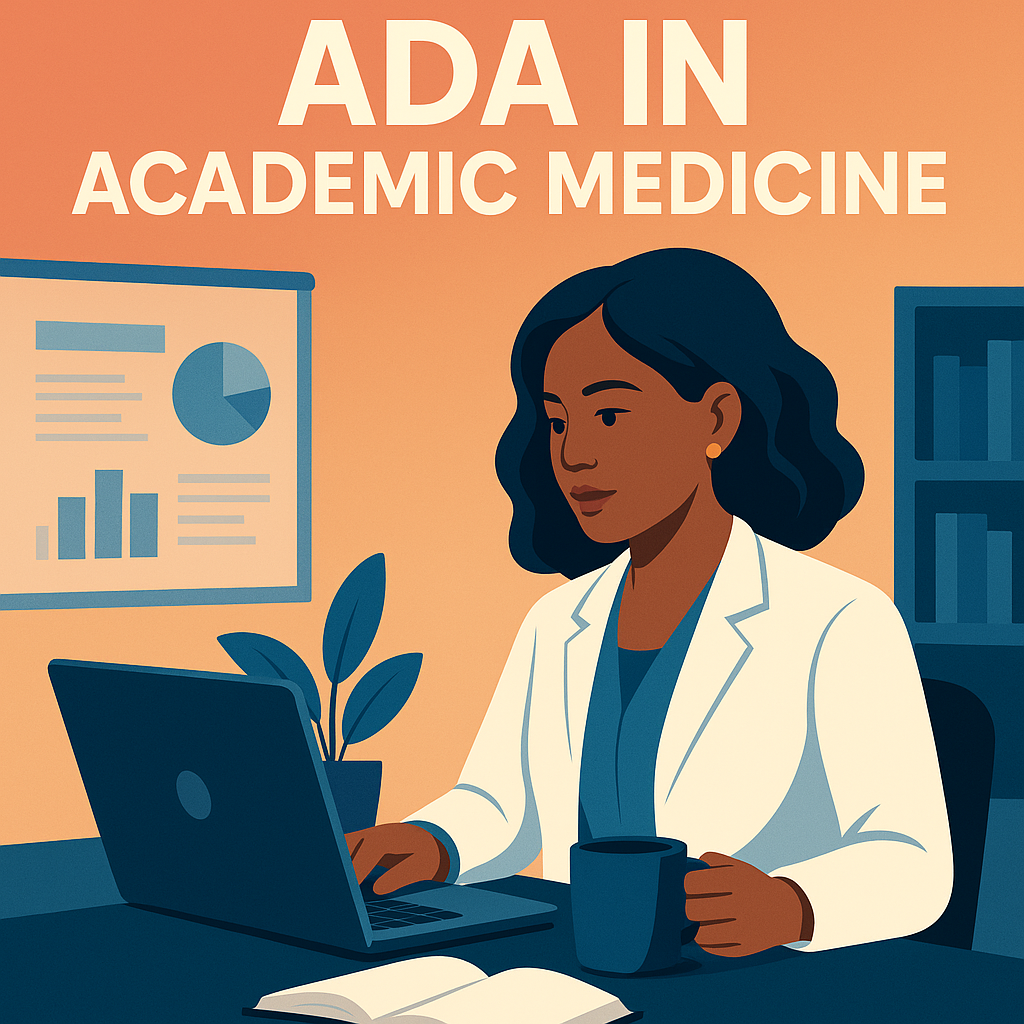
In modern academic medicine, the standards and regulations set by institutions are vital in ensuring fair access and treatment of individuals with disabilities. One significant case highlighting the intersection of academic medicine and disability rights is “Good v. University of Chicago Medical Center.” This legal battle focuses on the application of the Americans with Disabilities Act (ADA) within the realm of academic medicine, examining whether medical institutions uphold their responsibilities under the ADA. Understanding this case is crucial because it delineates how medical institutions are held accountable in adapting their programs to be inclusive, fair, and accessible to all, regardless of disability status.
The ADA, a pivotal piece of legislation passed by Congress in 1990, prohibits discrimination against individuals with disabilities in all areas of public life, including jobs, schools, transportation, and all public and private places open to the general public. It aims to ensure that people with disabilities have the same rights and opportunities as everyone else. Within the academic medicine landscape, the ADA’s implications are profound. These institutions, which train future medical professionals, are bound by law to create an environment where those with disabilities can learn and thrive, thus setting a precedent for inclusivity that echoes throughout the medical field.
The case of Good v. University of Chicago Medical Center emerged when the plaintiff, identified as Mr. Good, claimed he faced discrimination based on his disabilities during his time at the medical center. He alleged that despite clear indications of his capabilities and adjustments needed, the institution did not provide reasonable accommodations. As a result, Good faced unnecessary obstacles that impinged on his educational and professional development. This confrontation brought the spotlight on how academic medical centers integrate ADA compliance in their operations and the importance of systemic change for inclusivity.
Background of ADA in Academic Institutions
The Americans with Disabilities Act has a broad reach, impacting various sectors, including education. Educational institutions, including universities and colleges, are required to provide reasonable accommodations to ensure students with disabilities can participate on an equal basis with their peers. For medical schools, this includes offering adjustments that would allow students with disabilities to complete their studies without undue hardship or discrimination.
An example of ADA compliance can be seen in how many universities have developed comprehensive disability services offices. These offices typically provide support, resources, and advocacy to ensure that students’ diverse needs are met. They offer services such as sign language interpreters, note-taking assistance, alternative test formats, and assistive technologies.
However, the implementation of these services can vary significantly from one institution to the next, depending on their resources, commitment to inclusivity, and understanding of ADA requirements. Amidst these variations, the case of Good v. University of Chicago Medical Center raises pivotal questions about consistency and fairness in accommodating students with disabilities in highly demanding environments like academic medicine.
Challenges Faced by Medical Students with Disabilities
Medical students with disabilities often encounter unique challenges due to the rigorous demands and physical requirements of their training programs. These challenges can include accessing clinical rotations, handling long hours in high-intensity environments, and meeting certain physical demands that may traditionally be expected of medical trainees.
In the case of Mr. Good, his allegations centered on the medical center’s failure to adapt its programs adequately to accommodate his needs. This oversight led to an environment where he could not perform to his potential, affecting his academic performance and professional opportunities. Institutions are expected to assess cases individually and implement accommodations that ensure students with disabilities can perform on an equal footing with others.
- Ensuring access to clinical environments
- Modifying procedures for physical exams
- Implementing flexible scheduling for rotations
- Providing necessary assistive technologies
These elements are not merely administrative; they are indicative of an institution’s commitment to equal opportunity and non-discrimination. The case of Good v. University of Chicago Medical Center underscores the gaps that can exist between policy and practice, emphasizing the need for accountability in fulfilling ADA requirements.
Institutional Responsibilities and Compliance
Institutions engaged in training future medical professionals hold the responsibility of aligning with ADA stipulations. This synergy between medical training and ADA compliance is not trivial, as it also reflects the values and ethos that future healthcare professionals will carry into their practice.
The University of Chicago Medical Center, under scrutiny in this case, was tasked with proving that its policies and practices were both inclusive and compliant with ADA legislation. This involves routine re-evaluation of curricula, practices, and the physical environment to remove unnecessary barriers for individuals with disabilities.
A practical example of proactive compliance is visible in how certain medical schools have taken steps to review and redesign their curricula, ensuring that all aspects of training—from classroom learning to hands-on clinical experience—are accessible. This might involve incorporating virtual simulation experiences as a supplement for those who might struggle with certain physical demands.
The Legal Implications of Non-Compliance
When institutions fail to meet ADA requirements, they not only face legal challenges but also risk losing credibility as inclusive and fair establishments, which can have broader ramifications affecting their reputation and attractiveness to potential students.
The legal proceedings in Good v. University of Chicago Medical Center highlighted that non-compliance can lead to litigations that are costly both in financial resources and public perception. Legal outcomes in cases like these set precedents and thus have a significant impact not just on the parties involved but on the wider educational landscape.
Consider the following demands put forth in such cases:
| ADA Compliance Requirement | Institutional Obligation |
|---|---|
| Provide reasonable accommodations | Adapt curriculum and physical spaces appropriately |
| Ensure non-discriminatory practices | Regular training and policy reviews |
| Handle complaints and grievances effectively | Transparent, fair procedural frameworks |
Such expectations emphasize the necessity of institutional readiness to address and integrate ADA requirements actively. These guidelines serve not merely as legal obligations but as a commitment to fostering an inclusive learning environment.
Conclusion: Reinforcing Access and Inclusion in Academic Medicine
The case of Good v. University of Chicago Medical Center serves as a stark reminder that equal access in education, particularly in fields as crucial as medicine, is non-negotiable. Through a thorough examination of institutional policies, adaptation of curricula, and direct engagement with students’ needs, academic medical centers can ensure compliance with ADA standards, fostering an environment of inclusivity.
For institutions, the progression towards inclusivity means more than just fulfilling legal obligations—it is about taking a proactive stance in shaping the future of healthcare to be accessible to all. While legal challenges like Good’s highlight gaps, they also illuminate opportunities for growth and improvement, acting as a catalyst for change.
Students and educators alike must hold their institutions accountable, advocating for environments where everyone, regardless of disability status, can thrive. By ensuring ADA compliance, academic institutions not only protect themselves from legal repercussions but also fortify their foundational values of diversity, equity, and excellence in education.
In closing, medical institutions are encouraged to revisit their strategies, engage in open dialogue with their communities, and embrace change. This way, they will not only adhere to ADA regulations but also come to embody the very principles of medicine—care, understanding, and inclusion for all.
Frequently Asked Questions
1. What is the “Good v. University of Chicago Medical Center” case about?
The case of “Good v. University of Chicago Medical Center” is a pivotal legal battle focusing on the application of the Americans with Disabilities Act (ADA) within the domain of academic medicine. At its core, the case questions whether medical institutions like the University of Chicago Medical Center are fulfilling their legal obligations under the ADA to ensure fair access and treatment for individuals with disabilities. The plaintiff, in this case named Good, alleges that the university failed to provide necessary accommodations that would allow for equitable participation and access within the medical academic environment. This lawsuit underscores the critical intersection between disability rights and the educational duties of medical schools and hospitals. By examining the adherence to ADA regulations, this case sheds light on the broader issue of inclusion and nondiscrimination in academic medicine.
2. How does the Americans with Disabilities Act (ADA) apply to academic medicine?
The Americans with Disabilities Act (ADA) is a landmark civil rights law that prohibits discrimination against individuals with disabilities in various aspects of public life, including employment, education, and access to public spaces. In the context of academic medicine, the ADA requires medical institutions to provide reasonable accommodations for students, staff, and patients with disabilities to ensure they have equal opportunities for success and participation. These accommodations could include physical modifications to facilities, providing assistive technologies, adapting teaching methods, or offering additional support services. Academic medical centers, like any other educational or healthcare institutions, must continually evaluate and update their policies to align with ADA standards, ensuring they do not unintentionally create barriers to equality for people with disabilities.
3. What are some examples of reasonable accommodations that might be required under the ADA in a medical academic setting?
Reasonable accommodations in a medical academic setting can vary widely depending on the needs of the individual and the resources available within the institution. Common examples include modifying examinations and assessments to be more accessible, providing note-taking or sign language interpretation services, offering extended time for completing assignments or exams, and ensuring campus facilities are physically accessible to all students and faculty members. Other accommodations might involve curriculum modifications, access to assistive technology, or the provision of written materials in alternative formats. Institutions are expected to engage in an interactive process with the individual to determine the appropriate accommodations that effectively address the specific barriers faced in an academic medical environment.
4. How might academic medical centers ensure they are ADA-compliant?
To ensure compliance with the ADA, academic medical centers must undertake several key actions. Firstly, they should conduct thorough accessibility audits to identify and address physical and procedural barriers present within their facilities. Establishing robust policies and procedures for requesting and implementing accommodations is crucial, as is training faculty, staff, and administrators on disability rights and the importance of inclusivity. Continuous community engagement with students and employees with disabilities will help identify new challenges and solutions over time. Furthermore, medical centers can establish an ADA coordinator or office dedicated to overseeing compliance efforts, handling grievances, and promoting an inclusive campus culture. Regular review and updates of institutional policies in response to legal developments and feedback can further ensure ongoing compliance.
5. What are the potential implications of the “Good v. University of Chicago Medical Center” case for other academic medical institutions?
The “Good v. University of Chicago Medical Center” case could have significant implications for other academic medical institutions, setting precedents for how they interpret and implement the ADA. If the court finds in favor of Good and concludes that the institution failed to meet ADA standards, other medical schools could face increased legal pressure to reassess and improve their own compliance practices. It could lead to enhanced scrutiny of existing policies and encourage institutions to proactively address accessibility issues. The case could also heighten awareness and understanding among faculty and staff about their responsibilities under the ADA, resulting in a more conscientious and informed approach to accommodating students and staff with disabilities across the country. Ultimately, this legal outcome has the potential to drive systemic changes in how academic medical centers across the nation embrace inclusivity and equality for all members of their communities.