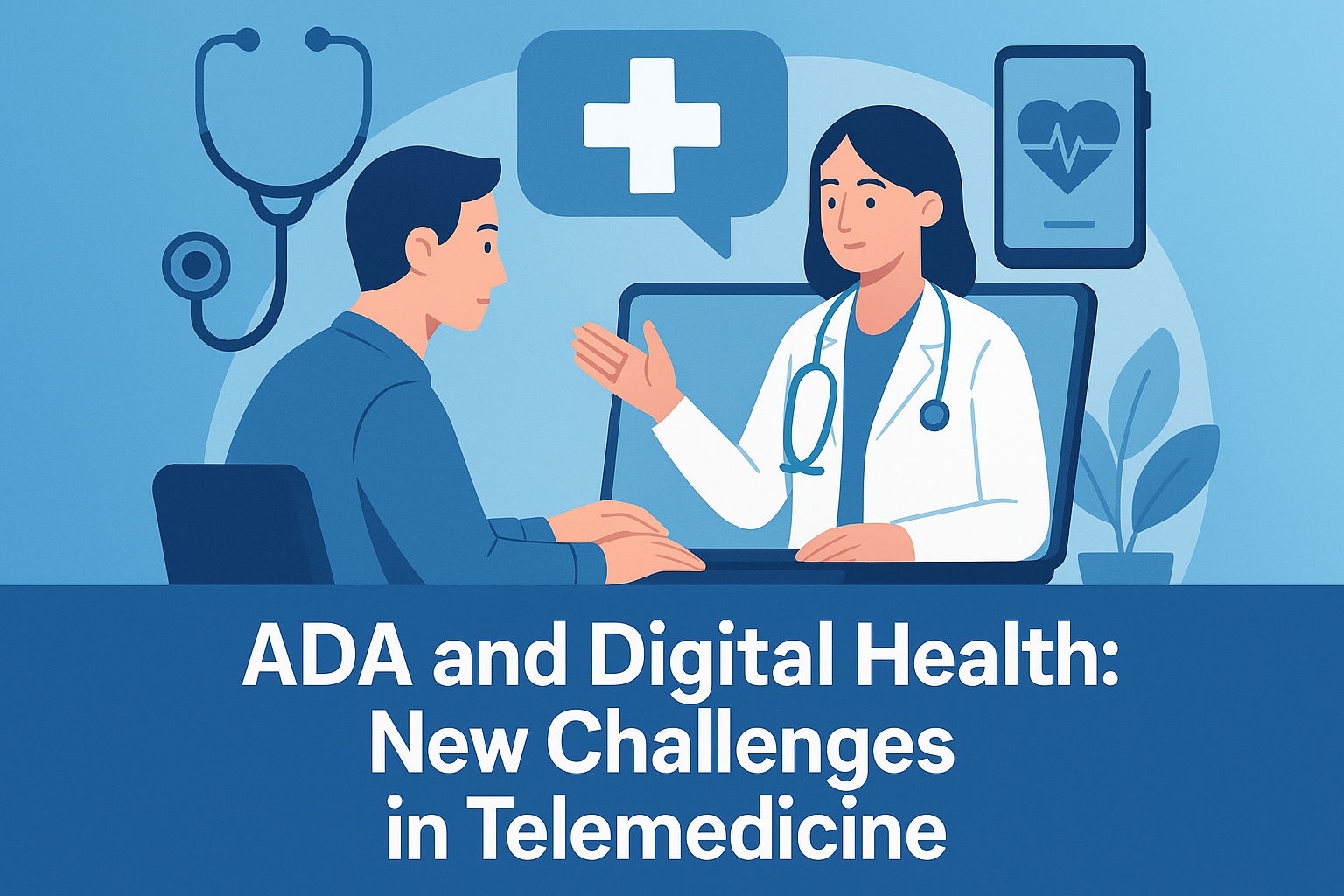
The rapid advancement of digital health technologies presents both opportunities and challenges for healthcare delivery. Among these challenges is the need to ensure compliance with the Americans with Disabilities Act (ADA) in the realm of telemedicine. The ADA, enacted in 1990, aims to ensure equal access to services and opportunities for individuals with disabilities. With the rise of telemedicine, which includes services such as virtual consultations and remote patient monitoring, ensuring ADA compliance becomes a complex but essential task. Understanding the intersection of ADA requirements and digital health is crucial for healthcare providers and technology developers, as it impacts the accessibility and usability of telemedicine platforms for all individuals.
Understanding the Americans with Disabilities Act
The ADA is a civil rights law that prohibits discrimination against individuals with disabilities in all areas of public life, including jobs, schools, and transportation, as well as all public and private places open to the general public. This comprehensive legislation is divided into five titles, each addressing different aspects of accessibility and nondiscrimination. Title III of the ADA specifically requires that public accommodations, such as hospitals and clinics, provide accessible services to people with disabilities. In the context of telemedicine, ensuring compliance with ADA is crucial to provide equitable healthcare access.
One real-world example of ADA compliance in telemedicine is the development of video conferencing platforms with built-in accessibility features. Platforms such as Zoom and Microsoft Teams have integrated features like closed captioning and screen reader compatibility to accommodate users with hearing or visual impairments. These examples reflect efforts to align digital platforms with ADA standards, ensuring that the transition to telemedicine maintains inclusivity.
The Importance of Accessible Telemedicine Platforms
As healthcare increasingly moves online, the importance of accessible telemedicine platforms cannot be overstated. An accessible platform ensures that people with disabilities can participate fully and equally in virtual healthcare services. This includes designing user interfaces that are navigable by screen readers, incorporating text-to-speech functionalities, and providing alternative text for images and charts. Ensuring accessibility not only adheres to ADA guidelines but also broadens the potential reach of telemedicine services, thereby improving healthcare outcomes for all.
A practical example is the MyChart patient portal developed by Epic Systems, which has implemented features to enhance accessibility. MyChart’s design includes easy navigation, visually adjustable layouts, and compatibility with screen readers, making it easier for patients with disabilities to manage health records, schedule appointments, and communicate with healthcare providers. This illustrates the significant impact that thoughtful design can have in making digital health tools accessible to a wider audience.
Challenges in Implementing ADA-Compliant Telemedicine
Despite the technological advancements, implementing ADA-compliant telemedicine poses several challenges. One primary challenge is the balance between rapid technological development and thorough accessibility testing. Often, new features are launched without adequate testing for accessibility, resulting in platforms that are difficult or impossible to use for individuals with disabilities. Another issue is that many healthcare providers are not fully aware of the ADA requirements as they pertain to digital health services, leading to unintentional non-compliance.
- Lack of awareness about ADA digital requirements
- Insufficient accessibility testing during development
- Technological constraints in legacy systems
- Limited resources for creating accessible content
For instance, a healthcare provider might use a third-party telemedicine app that lacks features for the hearing impaired, such as real-time captions or ASL interpretation services. Addressing these challenges requires a concerted effort to integrate accessibility considerations from the early stages of development and to train healthcare professionals on ADA compliance in digital domains.
Regulatory and Legal Considerations
Healthcare providers must be aware of not only ADA requirements but also various other regulatory and legal considerations that govern digital health technologies. Non-compliance can result in lawsuits and significant financial penalties. Ensuring compliance involves understanding both federal and state regulations that might have additional accessibility requirements. Furthermore, legal considerations extend to data privacy and security, particularly when integrating accessibility features that may involve third-party services.
In a notable case, a healthcare provider was sued for failing to make their telehealth platform accessible to users with disabilities. The lawsuit highlighted crucial lapses, such as the inability of hearing-impaired users to access consultation services due to the lack of real-time transcription. To prevent such legal repercussions, organizations must adopt a proactive approach to reviewing and updating their digital health interfaces to ensure compliance with ADA and other applicable regulations.
Practical Steps for Ensuring ADA Compliance in Telemedicine
To ensure ADA compliance, healthcare providers and tech developers can follow several practical steps. First, conducting thorough accessibility testing through methods like user testing with disabled individuals can provide valuable insights. Regular audits and updates based on user feedback and evolving standards are crucial. Collaborating with accessibility experts during the design phase ensures that platforms meet ADA requirements from the outset.
Secondly, training staff and users on accessible technologies promotes wider adoption and improves user experiences. Developing clear guidelines and checklists for designing accessible content, coupled with investment in assistive technologies such as speech-to-text applications, can greatly enhance service delivery.
| Step | Description |
|---|---|
| Accessibility Testing | Conduct user testing with individuals with disabilities |
| Regular Audits | Perform periodic reviews of digital interfaces |
| Training | Train staff on ADA compliance and accessibility features |
| Collaboration | Work with accessibility experts in design and development |
For example, integrating voice control features can help users with mobility impairments navigate telemedicine platforms more easily. This proactive incorporation of accessibility features demonstrates a commitment to compliance and inclusivity.
The Future of ADA Compliance in Digital Health
The future of ADA compliance in telemedicine relies on continuous innovation and vigilance. As new technologies such as artificial intelligence and machine learning are integrated into digital health, these tools must also be evaluated for ADA compliance. The inclusion of AI-based interpretive services, predictive text functionalities, and personalized user experiences further expands the reach of telemedicine, provided these technologies are accessible.
The ongoing evolution of digital health standards and regulatory guidance will play a pivotal role in shaping ADA compliance. Stakeholders such as healthcare providers, technology developers, and policymakers must engage in ongoing dialogue to address emerging challenges and leverage technological advancements to enhance accessibility. A strong emphasis on inclusive design and early intervention in development processes will be critical to navigating the future landscape of telemedicine.
Summary and Call to Action
The intersection of the ADA and digital health technologies, particularly telemedicine, presents both significant challenges and unique opportunities for improving healthcare accessibility. By understanding the core principles of the ADA and actively working to incorporate these in telemedicine platforms, stakeholders can ensure that individuals with disabilities receive equitable access to digital health services. Key takeaways include the importance of accessible platform design, the challenges of integrating ADA compliance, and the role of ongoing training and audits.
For healthcare providers and technology developers, the key benefit lies in creating more inclusive and user-friendly telemedicine services that comply with current regulations and meet the needs of a diverse patient population. To achieve ADA compliance in telemedicine, it is imperative to adopt a proactive approach, leveraging best practices in accessibility design and maintaining open communication channels with users to gain valuable feedback.
A simple but effective next step is to initiate an audit of current digital health platforms to identify accessibility gaps and areas for improvement. By partnering with accessibility experts, utilizing comprehensive training programs, and fostering a culture of inclusion, stakeholders can ensure that telemedicine remains a viable and equitable option for all patients.
The journey towards ADA-compliant digital health environments requires commitment and collaboration, but the impact of success will be far-reaching, ensuring that telemedicine continues to serve as a bridge to healthcare access for everyone, regardless of ability.
Frequently Asked Questions
1. What is the ADA and how does it apply to telemedicine?
The Americans with Disabilities Act (ADA) is a comprehensive civil rights law enacted in 1990 with the goal of eliminating discrimination against individuals with disabilities. It ensures equal access to services, opportunities, and benefits for people with disabilities, thereby fostering inclusion and equality. In the context of telemedicine, which refers to the use of digital communication tools such as video calls and remote monitoring to provide healthcare services, the ADA mandates that these platforms be accessible to everyone, including individuals with disabilities. This means telemedicine services must be designed and implemented in a way that allows people with various disabilities to use them effectively.
The application of the ADA to telemedicine involves ensuring the technology and content are compatible with assistive tools like screen readers and hearing aids. Moreover, telemedicine platforms must provide accommodations for those with mobility impairments, learning disabilities, or mental health issues, tailoring the service to their specific needs. This adherence to ADA principles not only minimizes legal risk for healthcare providers but also broadens access to essential healthcare services for the disabled community, fostering a more inclusive healthcare environment.
2. What specific challenges does telemedicine face regarding ADA compliance?
Telemedicine faces several key challenges when it comes to ADA compliance. Firstly, not all digital platforms are equipped with features necessary to accommodate individuals with disabilities. For instance, video conferencing tools may lack closed captioning services or incompatible designs with screen readers, making it difficult for individuals with hearing or visual impairments to participate fully. Another significant challenge is ensuring that all healthcare-related materials such as descriptions, forms, and instructions are accessible, which often requires reformatting or translating content into accessible formats like braille or audio descriptions.
Moreover, there is a technological divide where not all patients with disabilities may have access to the necessary devices or stable internet connections to utilize telemedicine services effectively. This gap creates an added layer of complexity in ensuring equal access. The healthcare providers themselves need proper training in ADA requirements and the use of accessible technologies, to identify and mitigate accessibility issues, and provide responsive support to individuals encountering barriers in accessing telemedicine services. Lastly, regulatory updates and advancements in assistive technologies necessitate that telemedicine platforms continuously evolve without compromising on ADA compliance standards.
3. How can telemedicine platforms ensure they are ADA-compliant?
To ensure ADA compliance, telemedicine platforms must prioritize accessibility from the very beginning of the design and development process. This begins with conducting thorough accessibility audits of their platforms to identify any existing barriers and address them systematically. Making sure that telemedicine solutions conform to the Web Content Accessibility Guidelines (WCAG) ensures that the digital interfaces are user-friendly for individuals with disabilities. This involves integrating features such as screen-reader compatibility, text enlargement capabilities, closed captioning, and navigational assistance.
Consulting with accessibility experts and involving people with disabilities in product testing can provide valuable insights into how the service can be improved. Providers should also prepare educational resources to assist both patients and healthcare professionals in utilizing accessibility features effectively. Establishing a feedback mechanism for users to report accessibility issues in real-time and having a dedicated team to address these concerns promptly is also integral to maintaining ongoing compliance.
Ultimately, telemedicine platforms should not view ADA compliance as a one-time checklist but as an ongoing commitment. Regularly updating the platform to incorporate the latest best practices in accessibility and responding to technological advancements and legal standards is crucial. Collaboration with advocacy groups, continued staff training, and a culture of inclusivity signify a platform’s dedication to providing equitable healthcare services through telemedicine.
4. What are some benefits of ensuring ADA compliance in telemedicine?
Ensuring ADA compliance in telemedicine presents numerous benefits that resonate beyond mere legal adherence. Primarily, it enhances healthcare access for individuals with disabilities, enabling a larger demographic to receive timely and efficient healthcare services without the barriers of in-person visits. This improved access can lead to better health outcomes, as patients can engage with healthcare providers more frequently and conveniently. Additionally, ADA-compliant telemedicine platforms can tap into a broader patient base, thereby increasing the potential market reach for healthcare providers and encouraging greater patient engagement.
Beyond these tangible benefits, telemedicine that adheres to ADA guidelines also fosters a more inclusive and equitable healthcare system. It reinforces the societal message that individuals with disabilities are valued members of the community who should receive the same opportunities in healthcare as everyone else. Compliance can also mitigate the risk of legal disputes and potential penalties associated with ADA violations, safeguarding the reputation and financial interests of the healthcare provider. Furthermore, accessible telemedicine platforms often translate into enhanced user experiences for all patients, as many ADA-compliant features benefit those without disabilities, providing a smoother and more efficient user interaction overall.
5. Are there any challenges in balancing ADA compliance with technological advancements in telemedicine?
Navigating the intersection of ADA compliance and ongoing technological advancements in telemedicine is indeed a challenge, yet one that is essential for providing equitable healthcare access. One primary difficulty is keeping pace with the rapid development of new healthcare technologies and ensuring that innovative solutions are inclusive from inception. As technology evolves, platforms must adapt their compliance strategies to accommodate emerging devices, software, and user-interface paradigms. This requires continuous monitoring of technological trends and proactive adaptation of accessibility features to new developments.
Another challenge lies in the need for ongoing staff training and education to familiarize healthcare providers and support staff with both the technological aspects of telemedicine and ADA compliance requirements. This necessity extends to understanding new accessibility tools and integrating them into existing workflows. Balancing the seamless incorporation of advanced technologies with the fundamental accessibility principles without compromising either aspect can be demanding, requiring dedication and resources from telemedicine providers.
Despite these challenges, approaching ADA compliance as a dynamic process that evolves alongside technological advancements can lead to innovative solutions that benefit both individuals with disabilities and healthcare providers. Engaging with cross-disciplinary teams that include accessibility experts, technologists, healthcare providers, and patients themselves can facilitate the development of telemedicine services that are inclusive by design, turning potential challenges into opportunities for enhancing healthcare delivery and accessibility.