The Americans with Disabilities Act (ADA) is a seminal piece of civil rights legislation that seeks to eliminate discrimination against individuals with disabilities. Particularly, Title III of the ADA pertains to public accommodations and commercial facilities, mandating that establishments like restaurants, hotels, and theaters be accessible to individuals with disabilities. Recent litigation cases highlight the ongoing challenges and implications of ADA compliance, with Kreisler v. Second Avenue Diner serving as a pivotal example. This case underscores the continuous struggle for equal access and illustrates the complexities businesses face in meeting ADA requirements. Understanding the nuances of this case offers critical insights into the importance of ADA compliance and the consequences of neglecting this legal obligation. The legal battle between Gregory Kreisler, a wheelchair user, and the ownership of Second Avenue Diner in New York City has brought ADA compliance into sharp focus, prompting businesses nationwide to reassess their accessibility measures. The implications of this case extend beyond the immediate parties involved, potentially affecting future litigation, regulatory policies, and the everyday experiences of individuals with disabilities.
Background of the Kreisler v. Second Avenue Diner Case
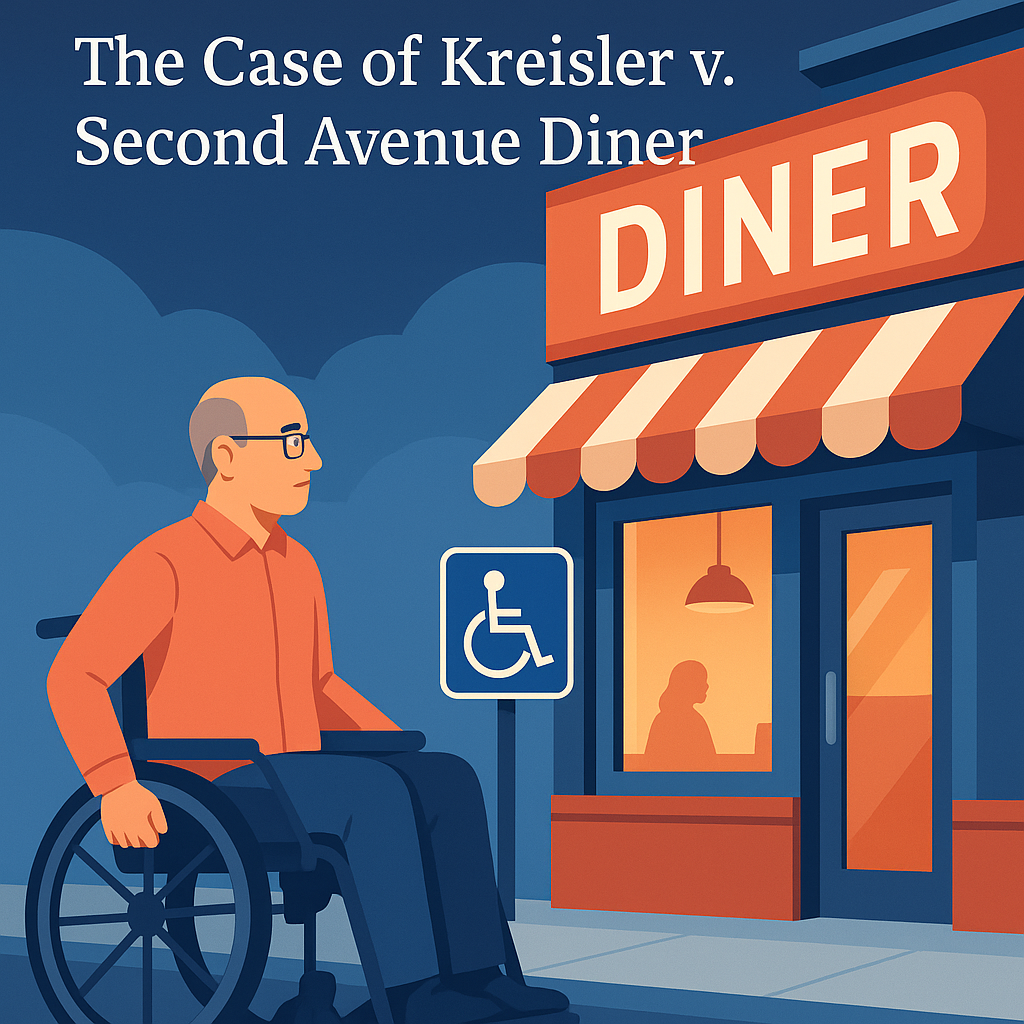
Gregory Kreisler, a resident of New York City who relies on a wheelchair for mobility, initiated legal proceedings against Second Avenue Diner in 2022. Kreisler alleged that the diner, a popular eatery among locals and tourists alike, did not comply with the ADA, as it failed to provide accessible entry for wheelchair users. The crux of the case revolved around the diner’s entrance, characterized by a step that precluded easy access for individuals with mobility impairments. This allegation was not solely based on the physical barrier, but on broader concerns regarding the diner’s lack of adequate accommodations for disabled patrons.
Second Avenue Diner, like many older establishments, faced challenges adapting its infrastructure to meet contemporary ADA standards. Its defense team argued that the modifications required to achieve compliance were structurally impractical and financially burdensome. However, the ADA stipulates that all places of public accommodation must make reasonable modifications to improve accessibility unless such changes would cause undue hardship. This balancing act between business feasibility and accessibility rights was central to the adjudication of the Kreisler case.
Key Court Findings and Rulings
The court examined several factors in determining whether Second Avenue Diner had violated the ADA. Key considerations included the nature of the existing architectural barriers, the practical challenges of modifying the building, and whether reasonable alternatives could ensure adequate access. Kreisler provided evidence that his attempts to enter the diner were thwarted and emphasized the lack of a portable ramp or other accommodations. His experiences highlighted the exclusionary impact of the diner’s inaccessibility.
Second Avenue Diner countered by detailing the architectural complexities inherent in retrofitting an older building. Nonetheless, the court ultimately ruled in Kreisler’s favor, suggesting that the diner could have employed more affordable strategies, such as installing a small portable ramp or providing alternative entrances, without incurring prohibitive costs. The ruling reinforced the principle that financial constraints do not absolve businesses from striving for compliance, especially when simpler solutions exist.
Broader Implications for the Business Community
The outcome of Kreisler v. Second Avenue Diner reverberated throughout the business community, serving as a cautionary tale for establishments resisting ADA compliance due to cost concerns. It highlighted the need for businesses, especially those housed in historic or otherwise challenging buildings, to prioritize accessibility in their operational strategies. The case also spurred increased awareness about the availability of tax incentives and financial assistance for businesses undertaking ADA improvements, thus challenging the narrative that compliance necessarily entails excessive expenditure.
Businesses were urged to conduct comprehensive ADA audits to evaluate potential areas of non-compliance and explore innovative solutions for accessibility enhancement. Kreisler v. Second Avenue Diner spurred discussions on integrating accessibility into the planning and design phases of new business ventures, encouraging inclusive design principles from inception rather than retrofitting at a later stage.
- Compliance with ADA is a legal requirement, not optional
- Court decisions reinforce the importance of reasonable adaptations
- Businesses must weigh financial constraints against legal obligations
- Increased awareness and education about accessibility incentives
- Proactive accessibility audits can preempt litigation risks
Impact on Individuals with Disabilities
From the perspective of individuals with disabilities, Kreisler v. Second Avenue Diner validated the fundamental civil right to equal access to public spaces. The case demonstrated how legal frameworks can be effectively used to challenge discriminatory practices and secure improvements in accessibility. It also emphasized the importance of knowing one’s rights and actively advocating for necessary changes.
For individuals like Gregory Kreisler, the case underscored the importance of resilience in the face of systemic barriers. It provided a tangible example of the positive outcomes that can be achieved through litigation, encouraging others to seek redress and advocate for their rights. Subsequently, disability advocates leveraged the publicity surrounding this case to draw attention to other areas with accessibility deficiencies, thereby fostering broader societal dialogue about inclusion and accessibility.
Legal and Regulatory Considerations Moving Forward
In the aftermath of Kreisler v. Second Avenue Diner, businesses and lawmakers alike have been prompted to reconsider the adequacy of existing ADA standards and their enforcement mechanisms. The case highlighted the inconsistent application of ADA regulations across different jurisdictions and the need for clearer guidance on reasonable modifications. It underscored the importance of robust enforcement mechanisms to ensure compliance and deter discriminatory practices.
Lawmakers have been urged to refine and expand ADA regulations to address deficiencies uncovered by cases like Kreisler’s. The push for legislative updates includes clarifying what constitutes an undue hardship and providing greater support for small businesses in their compliance efforts. Moving forward, the ongoing dialogue between disability advocates, business owners, and policymakers is crucial in evolving ADA compliance strategies to ensure they effectively serve the communities they are meant to protect.
| Aspect | Pre-Kreisler Case | Post-Kreisler Case |
|---|---|---|
| Business Awareness | Low | Increased |
| Regulatory Pressure | Moderate | High |
| Public Awareness | Limited | Enhanced |
| Litigation Risks | Moderate | Elevated |
| Compliance Incentives | Underutilized | Better-Uptake |
Conclusion
The Kreisler v. Second Avenue Diner case is a clarion call for businesses to reevaluate their ADA compliance strategies and prioritize accessibility in their operational frameworks. It highlights the necessity for businesses to remain vigilant about accessibility requirements and the evolving legal landscape surrounding them. The case reinforces the importance of proactive compliance measures, encouraging businesses to seek expert guidance and leverage available resources to meet their legal obligations. Importantly, it serves as a reminder of the power of individuals to effect change through legal channels, advocating for their rights, and inspiring broader discussions about inclusivity and equal access.
As ADA compliance continues to gain attention, businesses are encouraged to take tangible steps toward ensuring accessibility, whether through structural modifications, employee training, or customer service enhancements. Readers are invited to consider the accessibility of their own environments and advocate for improvements where necessary. Compliance is not simply a legal obligation; it is a step toward fostering a more inclusive and welcoming society for all.
In conclusion, whether you are a business owner, an advocate, or a citizen, the call to action is clear: prioritize accessibility, stay informed about legal obligations, and contribute to creating a society where everyone can participate equally. Together, we can build environments that are not just compliant with the ADA but truly inclusive for all individuals.
Frequently Asked Questions
1. What was the main issue in the Kreisler v. Second Avenue Diner case?
The primary issue in the Kreisler v. Second Avenue Diner case revolved around the accessibility of the diner for individuals with disabilities, as mandated by Title III of the Americans with Disabilities Act (ADA). The case was brought forth by Kevin Kreisler, who experienced accessibility barriers at the diner—barriers that undermined his ability to enjoy the facilities and services provided. Kreisler specifically pointed out structural obstacles that hindered wheelchair access, which included a step into the establishment, a lack of proper ramps, and inadequate restroom facilities. These obstacles are among the numerous compliance challenges businesses face under Title III, which requires public accommodations to ensure equal access to individuals with disabilities unless such modifications would fundamentally alter the nature of the service or result in an undue burden.
2. What does Title III of the ADA require from businesses like the Second Avenue Diner?
Title III of the ADA requires businesses that serve the public, such as restaurants like the Second Avenue Diner, to remove architectural and communication barriers in existing facilities where it is readily achievable. The term “readily achievable” is defined as easily accomplishable and able to be carried out without much difficulty or expense. Examples of modifications that could be considered readily achievable include installing ramps, making curb cuts in sidewalks and entrances, rearranging tables to allow access, providing accessible seating, and allowing service animals inside. It is a flexible standard, intended to encourage businesses to take responsibility for actively ensuring their facilities are accessible to everyone. The compliance also extends to ensuring that restrooms, hallways, and other parts of the establishment are accessible under specific ADA accessibility guidelines.
3. How did the court rule in this case, and what were the implications?
In Kreisler v. Second Avenue Diner, the court ultimately found that the diner was not in full compliance with the ADA, emphasizing that the failures to remove or modify the accesibility barriers were in violation of Title III. This ruling underscored the importance of proactively identifying and remediating accessibility issues—prompting businesses to assess their practices, facilities, and operations regularly. The decision highlighted that businesses must take reasonable and necessary measures to ensure accessibility, and it brought attention to the potential legal consequences and liabilities that could arise if compliance is neglected. As a consequence, many businesses not only look at this particular situation for precedence but also begin to more diligently engage with ADA requirements to avoid potential lawsuits and fines.
4. What can businesses learn from the outcome of Kreisler v. Second Avenue Diner?
Businesses can learn several vital lessons from the Kreisler case. First and foremost, it emphasizes the importance of understanding and complying with the ADA’s requirements for accessibility. This means conducting comprehensive audits of physical premises and ensuring that all public areas are accessible, which might involve retrofitting or modifying structures to remove physical barriers. Additionally, this case serves as a reminder to continuously monitor and update accessibility features to meet evolving standards and expectations. It encourages businesses to seek professional consultation or engage with disability advocacy groups to better understand potential areas of improvement and to foster inclusivity within their operations. Importantly, engaging in dialogue and gathering feedback from patrons with disabilities can reveal actionable insights into their unique accessibility needs, which can drive further improvements.
5. How can patrons with disabilities advocate for their rights in public establishments?
Individuals with disabilities can advocate for their rights by first making the establishment aware of any accessibility obstacles they encounter, as often business owners may not be intentionally noncompliant but may lack awareness or understanding of specific needs. Open communication can often resolve issues without litigation. In cases where direct action is ineffective, individuals can file a complaint with the Department of Justice or an appropriate state agency that oversees ADA compliance. Consultation with disability rights organizations or legal professionals specializing in ADA cases can provide guidance and support. Moreover, documenting encounters, as done by Kevin Kreisler in his case, can form a critical part of a legitimate claim, underscoring both personal efforts and any legal obligations unmet by the establishment. Advocacy extends beyond personal interactions and can encompass broader community efforts to raise awareness and push for legislative developments that strengthen accessibility laws and compliance measures.


