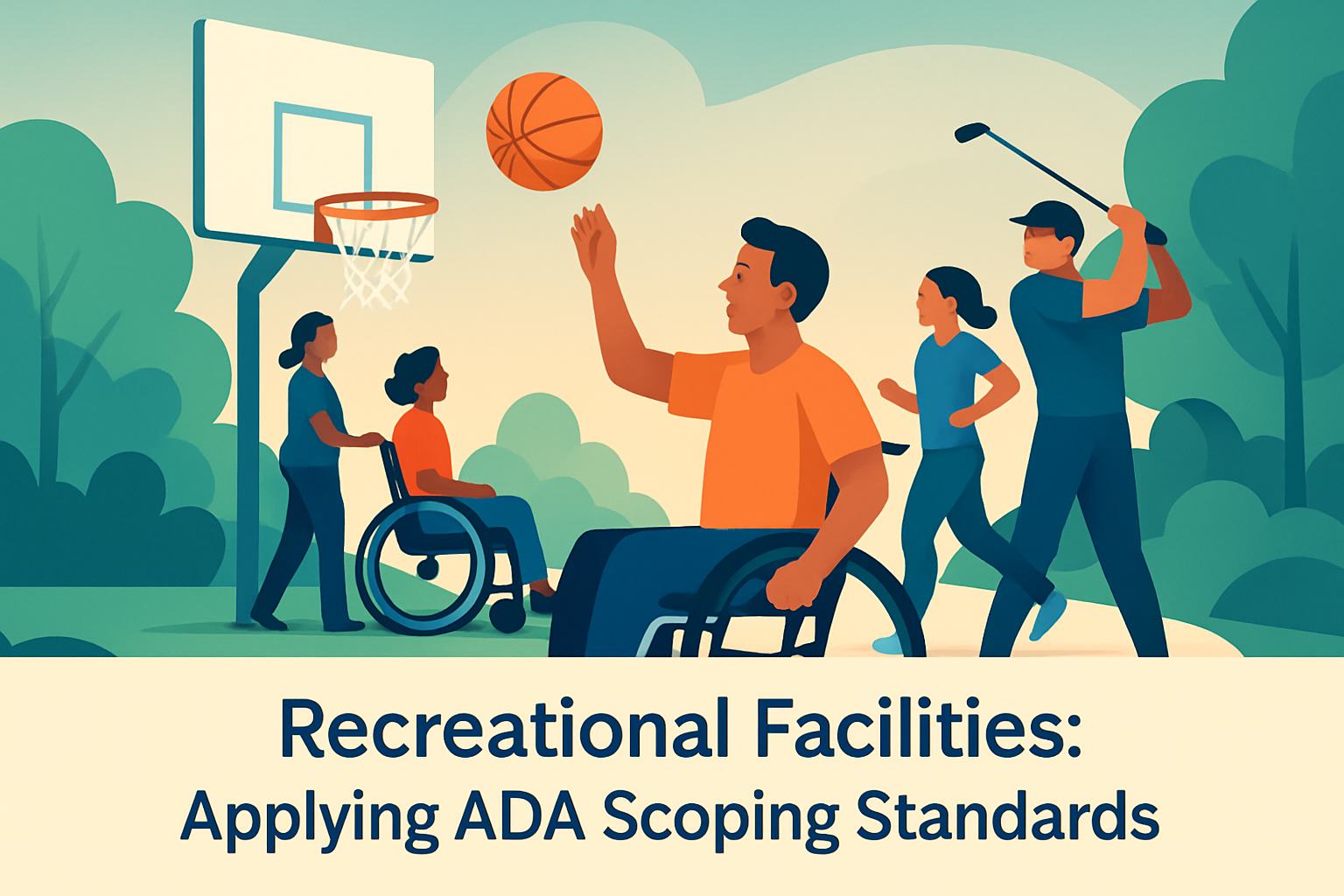
Recreational facilities play a crucial role in our communities by promoting fitness, leisure, and social interactions. However, for individuals with disabilities, accessing these facilities can be challenging if not designed inclusively. This is where ADA scoping standards come into play. The Americans with Disabilities Act (ADA) mandates that public and commercial facilities, including recreational settings, adhere to specific guidelines to ensure accessibility for all. These standards not only outline the structural dimensions and design requirements but also emphasize equitable participation for people with disabilities. This is important because it fosters inclusivity and ensures that everyone, regardless of physical capability, can enjoy and benefit from recreational activities. As society continues to evolve towards greater inclusiveness, understanding and applying ADA scoping standards in recreational facilities has become more critical than ever.
Understanding ADA Scoping Standards
The ADA scoping standards provide a comprehensive set of guidelines designed to make recreational facilities accessible to individuals with disabilities. These standards cover a variety of elements, including accessible routes, entrances, and parking areas. For instance, the guidelines specify the number of accessible parking spaces required relative to the total number of parking spaces, ensuring that individuals with disabilities can easily access the facility.
To illustrate the significance, consider a community pool. The ADA standards require that at least one accessible route leads from the parking area to the entrance of the pool. This route must be at least three feet wide and free of obstacles, making it easily navigable for wheelchairs or other mobility devices. By adhering to these standards, the facility ensures that all individuals, regardless of their mobility challenges, have the opportunity to enjoy the pool.
Recreational Facilities and ADA Compliance
Incorporating ADA compliance in recreational facilities not only promotes inclusivity but also enhances the overall user experience. Some key areas include playgrounds, sports fields, and trails. For example, playgrounds are required to have at least one accessible play component for each type offered, such as swings, slides, or merry-go-rounds. This ensures children with disabilities can participate alongside their peers.
Maintenance is another critical component of ADA compliance in recreational facilities. Regular inspections and upkeep are necessary to ensure accessibility features remain functional. For example, pathways to a baseball field should be regularly checked to ensure they are clear of debris and have a stable surface, accommodating individuals using wheelchairs or walkers.
Case Study: Accessible Trails
Accessible trails are a significant aspect of recreational facilities, offering opportunities for individuals with disabilities to enjoy nature. These trails must adhere to specific ADA standards regarding gradient, cross slope, and surface firmness. For example, a hiking trail in a national park may implement these standards by ensuring the path is no steeper than a 5% grade and is made of compacted gravel or a similar stable surface.
A real-world example can be seen in Golden Gate National Park, where trails have been designed with gradual slopes and sturdy surfaces to accommodate wheelchairs and strollers. This emphasis on accessibility allows visitors with mobility impairments to experience the park’s beauty alongside other visitors, reinforcing the importance and benefit of ADA-compliant trails.
Recreational Facilities Overview
- Playgrounds: Must include accessible play structures and surfaces.
- Swimming Pools: Requires accessible entry points like lifts or sloped entries.
- Sports Fields: Accessible routes and spectator areas must accommodate wheelchairs.
- Trails: Must adhere to specifications on slope, width, and surface materials.
- Gymnasiums: Provide adaptive equipment and include accessible exercise machines.
Benefits of ADA Standards in Recreation
The benefits of implementing ADA standards in recreational facilities are multifaceted. Apart from fostering inclusivity, these standards offer legal protection for facility operators, reducing the risk of lawsuits related to accessibility issues. Additionally, it enhances community reputation and attracts a broader range of users, contributing to the facility’s popularity and financial stability. For example, a gym that accommodates individuals with disabilities might see increased membership due to its inclusive stance.
An accessible gym might feature weight machines with adjustable seats that allow transfer from a wheelchair or have treadmills equipped with ramps. This ensures that individuals with varying abilities can engage in fitness routines effectively, promoting health and wellness within the community.
Designing for Visual and Auditory Impairments
When addressing accessibility in recreational facilities, it’s vital to consider individuals with visual and auditory impairments. Facilities can incorporate features such as tactile paths and audible signals to aid navigation for those with visual challenges. Furthermore, auditory assistive devices ensure that community centers or theaters are more accessible to those with hearing impairments.
An example would be a tennis club installing tactile markers on the court to aid players with visual impairments, while also providing headphones connected to an auditory system that announces each serve. Such modifications not only meet ADA requirements but enhance the experience and engagement for individuals with sensory impairments.
Planning and Implementation
The application of ADA scoping standards requires meticulous planning and implementation to ensure compliance. Facility management should begin with a comprehensive audit to assess current accessibility levels. Following the audit, a roadmap for necessary upgrades should be established, prioritizing key areas needing immediate attention.
Effective planning involves considering user feedback from individuals with disabilities and consulting with accessibility experts. This collaborative approach ensures all voices are heard in the design process, leading to a more inclusive outcome. For example, a city planning a new sports complex might involve local disability groups early in the design phase, seeking their input on desired accommodations.
Conclusion and Call to Action
To conclude, the application of ADA scoping standards in recreational facilities is a pivotal measure towards promoting inclusivity and ensuring equal access for all individuals. By understanding and implementing these guidelines, facility operators can create environments where everyone, regardless of disability status, can enjoy and participate in recreational activities. The key takeaways from this article emphasize the importance of inclusivity, the need for regular maintenance, and a collaborative approach in planning and execution.
For facility managers, the next step involves conducting an accessibility audit to determine current compliance levels with ADA standards and developing a strategic plan to address any gaps. Through commitment and collaboration, recreational facilities can transform into welcoming spaces that embody the spirit of equality and opportunity for all.
By taking these steps, facility managers ensure their venues are not only compliant but also inclusive, promoting a more connected and active community. Let’s work towards inclusivity in all recreational aspects, one ADA-compliant measure at a time.
Frequently Asked Questions
1. What exactly are ADA scoping standards in the context of recreational facilities?
ADA scoping standards refer to the specific guidelines established under the Americans with Disabilities Act that dictate how recreational facilities should be designed and constructed to be accessible to individuals with disabilities. These standards aim to ensure that people with disabilities can enjoy the same recreational opportunities as everyone else. They cover a wide range of design considerations, from the width of pathways and ramps to the types of gym equipment that must be accessible. These guidelines are vital because they eliminate barriers that can prevent people with disabilities from fully participating in recreational activities, thereby promoting inclusivity and equal access for all members of the community.
2. When designing a recreational facility, which areas require particular attention to meet ADA standards?
When designing a recreational facility, certain areas require particular attention to meet ADA standards. These include but are not limited to accessible pathways and entranceways, parking facilities with designated accessible spots, restrooms that can accommodate wheelchairs, and signage that is both readable and positioned correctly. Recreation-specific areas such as swimming pools need at least one accessible means of entry, such as a pool lift. Gyms must include equipment that allows for use by individuals with varying physical capabilities. Playgrounds should incorporate features like wheelchair-accessible ramps and surface materials that allow for easy movement. Each area in a facility must be reviewed carefully to eliminate barriers and ensure compliance with ADA standards, creating an environment where individuals with disabilities can participate without hindrance.
3. Are existing recreational facilities required to meet ADA standards, or is compliance only needed for new constructions?
Yes, existing recreational facilities are required to meet ADA standards, although the level of compliance might differ based on whether a facility is undergoing significant renovations or is newly built. For new constructions, full compliance with ADA standards is mandatory. However, for existing facilities, the ADA requires that any alterations that affect usability must bring the altered elements up to current compliance standards. This could involve retrofitting features like adding ramps, adjusting restroom facilities, or incorporating accessible seating. While the ADA recognizes that some older facilities might not be able to achieve full accessibility due to structural constraints, it emphasizes that reasonable modifications should be made to ensure accessible options are included wherever possible. Facility operators are encouraged to periodically assess and update their spaces to progressively meet ADA standards, promoting equal opportunity for all users.
4. How can recreational facility operators ensure they are meeting ADA scoping standards effectively?
Recreational facility operators can ensure they are meeting ADA scoping standards effectively by conducting comprehensive accessibility audits either internally or with the help of professional consultants specializing in ADA compliance. It’s essential to review every part of the facility against ADA guidelines to identify areas that need adjustments or improvements. Staff training is crucial, as knowledgeable employees can regularly maintain accessibility features and address compliance issues. Operators should also engage with the community, especially individuals with disabilities, to gather feedback on accessibility barriers that might have been overlooked. Keeping abreast of legislative updates related to ADA standards and making continuous improvements will help operators not only comply with the law but also provide a welcoming space for everyone. Additionally, maintaining transparent communication channels for participants to report accessibility concerns can aid in addressing issues promptly, ensuring that facilities remain inclusive and user-friendly.
5. What are some challenges facilities face when trying to comply with ADA scoping standards, and how can these be overcome?
One of the primary challenges facilities face when trying to comply with ADA scoping standards is the cost associated with retrofitting existing structures. Budget constraints can limit the extent of modifications, but phased implementation plans can spread out costs over time. Technical challenges might arise, such as the difficulty of integrating accessible features without compromising the design aesthetics or functionality of a facility. Collaborative efforts with ADA compliance experts and architects can provide creative solutions to such challenges. Resistance to change from stakeholders might also pose a barrier, necessitating awareness programs to underscore the importance and benefits of accessibility for everyone, including business and community value. Finally, facility operators can overcome these challenges by prioritizing accessibility as a key aspect of their strategic planning, which not only ensures compliance but also enhances the quality of life for all community members by fostering an inclusive environment.