The Americans with Disabilities Act (ADA), enacted in 1990, continues to be a vital piece of legislation ensuring that individuals with disabilities are given equal opportunities and are not subjected to discrimination. Over the years, the ADA has evolved, adapting to the changes in society and new technological advancements. These updates are particularly significant for public accommodations, which include businesses, nonprofits, and other entities that provide goods or services to the public. Understanding these updated requirements is essential for entities to remain compliant, but more importantly, to foster an inclusive environment that respects and supports individuals with disabilities.
In recent years, several amendments and guidelines have been introduced to address new challenges and to clarify existing obligations under the ADA. The 2010 ADA Standards for Accessible Design set specific criteria for accessible pathways, entrances, and services. These standards are intended to ensure that facilities are accessible and usable by everyone, regardless of their physical abilities. Keeping up with the latest changes in regulation can be challenging, but it is necessary for compliance and overall accessibility.
To better understand these complexities, this article delves into the latest ADA requirements for public accommodations, focusing on the significant developments and what they mean for businesses and public entities. In an evolving landscape, it is imperative that owners and managers of public accommodations proactively engage with these updates not only to avoid legal ramifications but to positively contribute to a more inclusive society. Whether you run a small business or are part of a larger organization, understanding and implementing these requirements is ultimately beneficial for everyone, including your patrons and staff.
Recent ADA Accessibility Guidelines
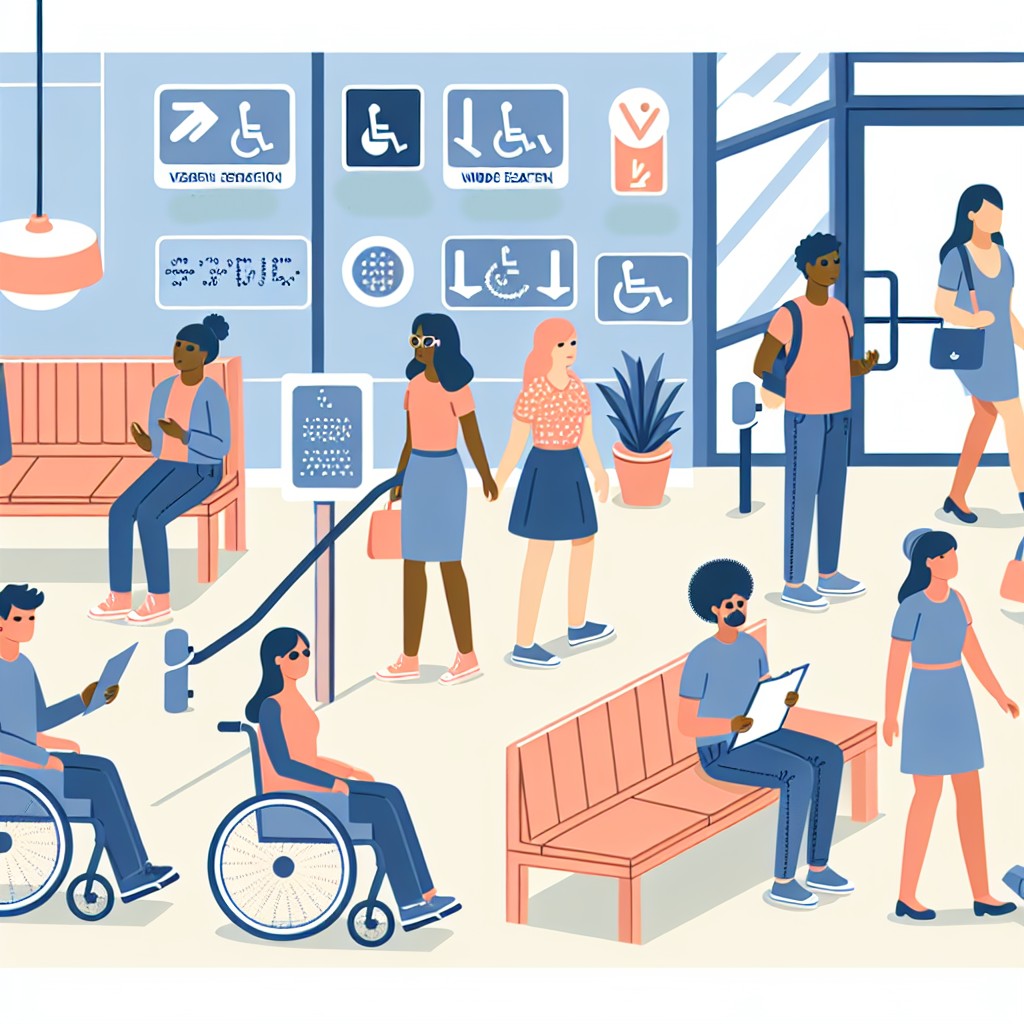
The ADA Accessibility Guidelines (ADAAG) are fundamental in setting the standards for accessibility within public spaces. The guidelines cover everything from parking lots to restrooms, ensuring accessibility at the physical site of businesses and public spaces. Recent developments have emphasized the importance of detailed compliance to ensure accessibility features are both effective and user-friendly. For example, specific measurements for ramps and the importance of clear signage have been highlighted in the updates. These guidelines ensure that individuals with disabilities can access public spaces with the same ease as those without disabilities.
Public accommodations must now pay closer attention to elements such as tactile warnings on floors near hazardous areas and the width of accessible pathways. Additionally, the guidelines emphasize the importance of maintaining accessible features. Regular maintenance checks and prompt repairs are necessary to prevent barriers from arising unexpectedly. This focus ensures that accessibility is not just a checkbox but a continuous, established element of a public space.
Moreover, technology has become a major focus in recent ADA updates. As society becomes increasingly reliant on digital tools, ensuring digital accessibility has become a priority. This includes making websites and online resources accessible to individuals using screen readers or other assistive technologies. Companies are encouraged to adopt Web Content Accessibility Guidelines (WCAG) to ensure their digital presence is also conformant with ADA principles.
The Importance of Training and Awareness
One significant development in understanding and complying with the ADA is the emphasis on training and awareness for staff at public accommodations. Understanding the legal obligations under the ADA is a starting point, but employees should also be equipped with practical knowledge and skills to support individuals with disabilities effectively. By cultivating an inclusive culture, organizations can ensure that employees are prepared to offer assistance and communicate effectively with all patrons.
Incorporating ADA training into regular staff orientations and professional development sessions is a powerful strategy. This training should cover topics such as how to respectfully offer assistance, understanding the basics of different disabilities, and the importance of service animals. Additionally, role-playing scenarios can provide experiential learning opportunities that help staff anticipate and resolve potential challenges.
Awareness is not just about understanding regulations but about fostering an environment of empathy and respect. When staff are instilled with a mindset that prioritizes accessibility and inclusivity, they are better equipped to create positive experiences for all customers. This approach not only fulfills legal obligations but also enhances customer satisfaction and supports brand loyalty among the diverse community of individuals with disabilities.
Web Accessibility: A Growing Focus
The digital revolution has significantly changed how businesses operate and interact with customers. As such, web accessibility has emerged as a crucial component of ADA compliance. Accessibility in the digital world is about ensuring that websites and online services are usable by everyone, including individuals with disabilities. This is where the Web Content Accessibility Guidelines (WCAG) come into play.
Recent updates have reinforced the necessity for businesses to ensure their online interfaces are accessible to individuals who rely on assistive technologies, such as screen readers. Compliance with WCAG involves several elements, including providing text alternatives for non-text content, creating content that can be presented in different ways without losing information, and ensuring navigation is accessible and understandable.
As businesses increasingly rely on digital channels, ensuring web accessibility has become not only a legal requirement but also a key business strategy. An accessible website enhances user experience for everyone and enables businesses to tap into a wider audience. Ensuring digital accessibility can lead to increased customer engagement, improved online interactions, and, ultimately, enhanced customer satisfaction.
Innovations and Technologies in Accessibility
The evolving landscape of technology provides new opportunities for enhancing accessibility in public accommodations. From advanced assistive devices to smart technologies, innovations are making it easier than ever to provide an inclusive environment. Businesses are beginning to integrate technology solutions such as voice-activated systems and mobile apps to support individuals with disabilities in navigating public spaces.
One exciting development is the increased use of beacon technology, which can provide real-time, location-based information to users’ personal devices. This technology can assist individuals with visual impairments by providing audible directions and information about their surroundings. Meanwhile, smart elevators and interactive kiosks equipped with speech recognition and other accessible features are further transforming public accommodations.
As these technologies continue to evolve, businesses and public accommodations have the opportunity to pioneer efforts in accessibility. By investing in innovative solutions and staying abreast of technological advancements, organizations not only ensure compliance with the ADA standards but also significantly enhance the experiences of their patrons with disabilities.
Compliance Strategies for Businesses
Ensuring ADA compliance is an ongoing process that requires diligence and commitment from all levels of a business. To stay ahead, companies should consider conducting regular audits of their facilities and online interfaces. These audits help identify areas of noncompliance and guide businesses in implementing necessary changes.
Working with ADA consultants or accessibility experts can provide valuable insights and guidance. These experts can help businesses understand the nuances of ADA requirements and how they apply to specific public accommodations. Additionally, involving individuals with disabilities in the design and review processes can offer firsthand perspectives and invaluable feedback on accessibility concerns.
Lastly, businesses should develop an ADA compliance plan that includes timelines, budgets, and responsible parties. The plan should be comprehensive, addressing both short-term and long-term goals for enhancing accessibility across all facets of the business operations. By proactively engaging in these strategies, businesses can ensure they not only meet ADA requirements but also create an inclusive environment for everyone.
Conclusion: A Commitment to Inclusivity
The Americans with Disabilities Act represents a pivotal commitment to equality and accessibility. As the landscape of public accommodations continues to evolve, understanding and implementing the latest ADA requirements is crucial for every organization. Keeping pace with the updates not only ensures legal compliance but also fosters an ethos of inclusivity and respect within communities.
Incorporating the ADA’s requirements into the core operations of businesses demonstrates a commitment to serving all individuals, regardless of their physical abilities. Beyond compliance, creating an accessible environment enhances the overall customer experience and invites greater participation from diverse segments of the population. It signifies a proactive stance towards nurturing diversity and inclusivity.
As we move forward, the role of innovation and technology in enhancing accessibility cannot be overstated. By embracing new tools and strategies, businesses can play a leading role in the journey towards a more inclusive society. The responsibility lies with each of us to ensure that accessibility is not just a requirement but a fundamental value ingrained in our public and private spaces.
Frequently Asked Questions
1. What are the main changes in the 2025 ADA requirements for public accommodations?
The 2025 updates to ADA requirements primarily focus on enhancing accessibility and inclusivity within public accommodations. One significant change is the increased emphasis on digital accessibility. With more businesses offering services online, these rules mandate that websites and online platforms be accessible to people with disabilities, ensuring compatibility with screen readers and other assistive technologies.
Additionally, the new requirements expand physical accessibility guidelines. This includes creating more detailed standards for accessible routes, parking, and entrances, ensuring that individuals with mobility impairments can easily navigate public spaces. The updates also introduce innovative guidelines for assistive listening systems in public venues, like theaters and conference centers, to aid individuals with hearing impairments.
Moreover, the 2025 ADA revisions emphasize the need for regular staff training to help employees better understand and implement ADA requirements. This ensures that employees are equipped to provide exemplary service to patrons with disabilities, enhancing the overall customer experience.
2. How do the new ADA guidelines impact small businesses?
Small businesses play a crucial role in serving diverse communities, and the updated ADA guidelines reflect this by aiming to strike a balance between accessibility enhancements and economic feasibility. For small businesses, complying with these new standards might initially seem challenging, but the updates provide practical, scalable solutions tailored to businesses with limited resources.
For example, the ADA recognizes that small businesses might not have the financial capacity to undertake extensive renovations quickly. Thus, it offers phased compliance options, encouraging businesses to prioritize the most critical accessibility enhancements. The guidelines also provide technical assistance and resources to help small business owners understand and integrate these changes effectively without disrupting their operations.
One key aspect is the reinforcement of digital accessibility, which many small businesses had begun addressing during the pandemic. Ensuring a website’s content is perceivable, understandable, and navigable by people with disabilities not only caters to legal compliance but also widens the customer base and enhances user experience for all visitors.
3. What are some technological advancements included in the 2025 ADA updates?
The ADA’s 2025 updates thoughtfully consider the proliferation of technology and its potential to enhance accessibility. A major addition is the emphasis on accessible information and communication technology (ICT). New provisions require businesses to ensure that their digital communications, including websites, mobile apps, and ticketing systems, are usable by people with various disabilities.
The updates integrate the Web Content Accessibility Guidelines (WCAG) 2.2, which provide a robust framework for developing accessible digital content. This includes ensuring that text has sufficient contrast, images have descriptive alt text, and navigation is keyboard-friendly. Chatbots and virtual assistants must now be engineered to offer options tailored to users with hearing or vision impairments and support interaction through voice commands or text.
Furthermore, the guidelines underscore advancements in smart technology, advising businesses to leverage connective technologies, like beacon devices, to aid navigation in complex spaces like malls or airports. The ADA encourages the deployment of such assistive technologies to personalize and enhance the service experience for everyone.
4. How will these new regulations influence employee training at public accommodations?
Employee training is central to the effective implementation of ADA requirements, and the 2025 updates prioritize this aspect. The new guidelines advocate for comprehensive training programs that cover both the technical aspects of the ADA standards and the interpersonal skills necessary to provide excellent customer service to individuals with disabilities.
Training programs will need to include components on digital accessibility, teaching employees how to assist customers using online services or accessible technologies autonomously. They will also focus on identifying and responding to accessibility barriers proficiently, whether in a physical space or a digital platform.
Additionally, scenario-based training is recommended, where employees are challenged to think empathetically and analytically to address various situations they may encounter. These programs aim to foster an inclusive culture within organizations, emphasizing the importance of accessibility as a fundamental business practice, not just a regulatory obligation.
5. Are there any new requirements for service animals under the 2025 ADA updates?
The 2025 ADA updates maintain rigorous standards concerning service animals, given the essential function these animals perform in assisting individuals with disabilities. The regulations continue to distinguish between service animals and emotional support animals, ensuring that businesses correctly identify and accommodate service animals as required by law.
One new addition clarifies the types of tasks service animals are trained to perform. The updates detail that service animals may assist with navigation, pulling a wheelchair, alerting a person to a sound, and preventing or interrupting impulsive behaviors, among other tasks. Businesses are advised to assume that a dog is a service animal unless the animal is generally out of control or poses a direct threat.
Training for staff now includes methods to interact appropriately with service animals and their handlers, recognizing the working nature of the animal and ensuring other patrons understand the significance of a service animal’s role. Educational materials and signage are encouraged to inform the public and prevent unnecessary confrontations or misunderstandings about service animal policies.